
EPISODE · May 11, 2026 · 2 MIN
A death gives way to happiness
from Korea JoongAng Daily - Daily News from Korea
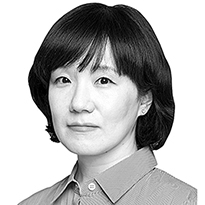
The author is a cultural columnist "Thud. I heard the sound of something snapping inside my chest. It was my lingering attachment, the part of me that had still wanted to remain connected to them despite everything. There are things one must protect as a person, because one is human. My mother was no longer human to me." — Cho Seung-ree, "The Confession of Yonggungjang"(2026) "Will God forgive a child who wishes for a parent to die?" This is the first sentence of the novel. It brought to mind the words of director Takeshi Kitano, who once said, "Family is something you would throw away if no one were watching." A mysterious fire breaks out at Yonggungjang, an old motel, killing all the guests staying there. The media mourn the victims of the disaster, but in truth, the victims were perpetrators of terrible violence. "A person died. And yet everyone became happy." The idea of a family whose members cherish and love one another may be nothing more than an illusion. There is also a reality in which people have no choice but to become evil in order to survive. Of the raw power of this novel, which captures the reality of life, in which good and evil are tangled together and people struggle desperately, novelist Jang Kang-myoung said it felt as if "a bulldozer was storming through my head." The author, who turns 40 this year, began gradually losing her sight at the age of 15. In 2003, she learned to write through remote classes offered by a welfare center. Now she works three days a week at her main job as a massage therapist and writes on the remaining days. "I could see the sun setting through the west-facing window. A red band of sunset slipped between the buildings and was gradually swallowed by darkness. I like this time. More precisely, I liked the moment when darkness devours light. That destructive landscape briefly soothes the boredom inside me. As darkness fell, I relaxed the facial muscles I had forced upward. Darkness hides the things one does not want discovered." The author's note serves as a kind of preface. "This story was conceived at a funeral hall that was strangely peaceful, where sighs of relief, rather than tears, had settled. Inside the human heart lives a single point of violent darkness. That darkness, especially toward those who are close and vulnerable, ends up tightening a noose around them in the name of 'obligation.' An obligation that is forced one-sidedly is not a sublime value but unmistakable violence. I dedicate this novel to those who, bearing the yoke of blood ties, are enduring their own hell." This article was originally written in Korean and translated by a bilingual reporter with the help of generative AI tools. It was then edited by a native English-speaking editor. All AI-assisted translations are reviewed and refined by our newsroom.
Embed this episode
NOW PLAYING
A death gives way to happiness
No transcript for this episode yet
Similar Episodes
No similar episodes found.
Similar Podcasts
No similar podcasts found.