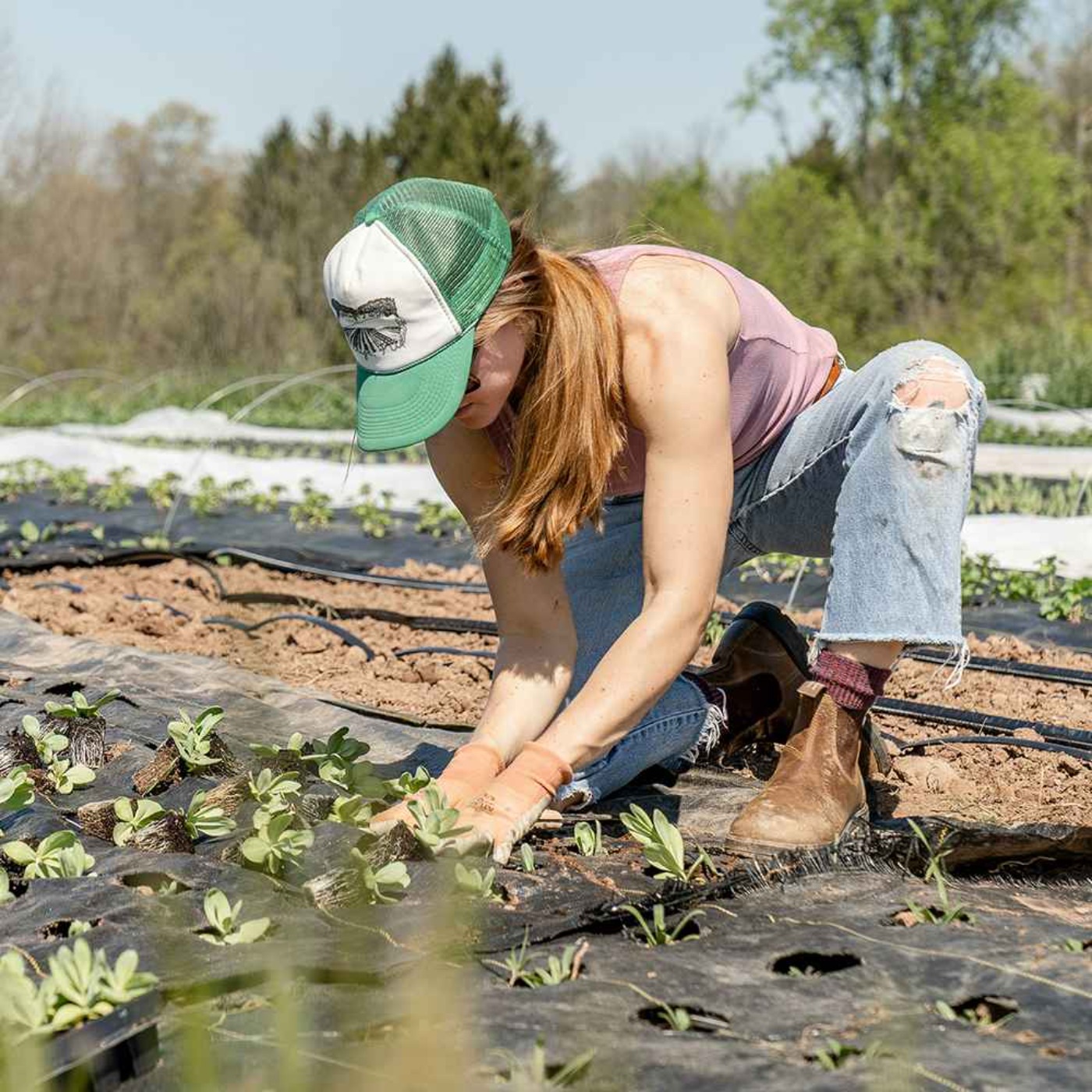
A debate on how to feed the world without ‘eating the earth’ episode artwork

EPISODE · May 30, 2025 · 1H 14M

A debate on how to feed the world without ‘eating the earth’

from Berkeley Talks

By 2050, the global population is expected to reach about 10 billion people. That means we need to find a way to feed nearly 2 billion more mouths in the next 25 years. Industrial farming practices have already destroyed countless natural ecosystems, and experts say that expanding farmland even further would have devastating consequences for the planet. In Berkeley Talks episode 227, UC Berkeley Professor Timothy Bowles and journalist Michael Grunwald discuss the impact of our current agricultural methods and debate the ways we can ramp up food production without causing more harm to the environment. “Agriculture is eating the earth,” says Grunwald, author of the forthcoming book We Are Eating the Earth: The Race to Fix Our Food System and Save Our Climate. Farmland, he says, now covers two of every five acres on the planet, “and those are acres that used to be forest and wetlands and savannas that stored a lot of carbon and sheltered a lot of biodiversity.”  In order to avoid further destruction, he contends, we must produce more food on land we already farm by improving the efficiency of our existing industrial systems.While Bowles agrees that expanding farmland isn’t the answer, he counters that industrial agriculture isn’t either; he argues that industrial farming is detrimental to the environment and human health and perpetuates social and economic inequality. Instead, he advocates for agroecology — sustainable farming that allows farmers to work with nature to create resilient and productive food systems. “It's already happening all over the world,” says Bowles, an associate professor in the Department of Environmental Science, Policy and Management at UC Berkeley and lead faculty director of the Berkeley Food Institute. “What hasn't been happening is the political will to make it the foundation of our food system.”“Coming back here to California, agroecology is when 1.6 million schoolchildren are eating lunches that are not taco beef sticks,” he continues, “but fruits and vegetables and whole grains that are supplied by California farms that are using climate-smart agricultural practices supported by state investments, and building on the successes of an organic agricultural industry that is currently [worth] $11 billion.”This conversation took place on April 17, 2025, and was sponsored by the Berkeley Food Institute. It was moderated by New York Times correspondent Kim Severson. Watch a video of the conversation.Listen to the episode and read the transcript on UC Berkeley News (news.berkeley.edu/podcasts).Music by Blue Dot Sessions.Photo by Zoe Richardson via Unsplash+ Hosted on Acast. See acast.com/privacy for more information.

By 2050, the global population is expected to reach about 10 billion people. That means we need to find a way to feed nearly 2 billion more mouths in the next 25 years. Industrial farming practices have already destroyed countless natural ecosystems, and experts say that expanding farmland even further would have devastating consequences for the planet. In Berkeley Talks episode 227, UC Berkeley Professor Timothy Bowles and journalist Michael Grunwald discuss the impact of our current agricultural methods and debate the ways we can ramp up food production without causing more harm to the environment. “Agriculture is eating the earth,” says Grunwald, author of the forthcoming book We Are Eating the Earth: The Race to Fix Our Food System and Save Our Climate. Farmland, he says, now covers two of every five acres on the planet, “and those are acres that used to be forest and wetlands and savannas that stored a lot of carbon and sheltered a lot of biodiversity.”  In order to avoid further destruction, he contends, we must produce more food on land we already farm by improving the efficiency of our existing industrial systems.While Bowles agrees that expanding farmland isn’t the answer, he counters that industrial agriculture isn’t either; he argues that industrial farming is detrimental to the environment and human health and perpetuates social and economic inequality. Instead, he advocates for agroecology — sustainable farming that allows farmers to work with nature to create resilient and productive food systems. “It's already happening all over the world,” says Bowles, an associate professor in the Department of Environmental Science, Policy and Management at UC Berkeley and lead faculty director of the Berkeley Food Institute. “What hasn't been happening is the political will to make it the foundation of our food system.”“Coming back here to California, agroecology is when 1.6 million schoolchildren are eating lunches that are not taco beef sticks,” he continues, “but fruits and vegetables and whole grains that are supplied by California farms that are using climate-smart agricultural practices supported by state investments, and building on the successes of an organic agricultural industry that is currently [worth] $11 billion.”This conversation took place on April 17, 2025, and was sponsored by the Berkeley Food Institute. It was moderated by New York Times correspondent Kim Severson. Watch a video of the conversation.Listen to the episode and read the transcript on UC Berkeley News (news.berkeley.edu/podcasts).Music by Blue Dot Sessions.Photo by Zoe Richardson via Unsplash+ Hosted on Acast. See acast.com/privacy for more information.

NOW PLAYING

A debate on how to feed the world without ‘eating the earth’

0:00 1:14:36

No transcript for this episode yet

We transcribe on demand. Request one and we'll notify you when it's ready — usually under 10 minutes.

Carnivores Don't Get Sunburn - Carnivore Diet Talks Carnivores Don't Get Sunburn - Carnivore Diet Talks Welcome to “Carnivores Don’t Get Sunburn,” where we have fun and explore the carnivore diet and its transformative power. Join us as we uncover real stories from individuals who have thrived on this diet, defying convention and embracing optimal health. Plus, stay tuned for our upcoming documentary featuring diverse carnivores overcoming health challenges. Learn more at www.carnivoredietdocumentary.com.Excitingly, we’re working on an upcoming documentary where we’ll feature carnivores from various walks of life, conquering diverse health challenges. Join us on this journey and learn more at www.carnivoredietdocumentary.com.Join us in uncovering the power of the carnivore diet. Prepare to be inspired, informed, and empowered to embrace optimal health and well-being.Welcome to “Carnivores Don’t Get Sunburn: Unveiling Real Stories of the Carnivore Diet.” Stay tuned for our upcoming documentary. Discover how this lifestyle can transform lives. Learn more at www.carnivoredietdocumentary.com IT IS WHAT IT IS with SHALLZ - SHALLY ZOMORODI Shally Zomorodi What?  "It is what it is" with ShallZ – Shally ZomorodiWhen? WeeklyHow long? 35 minutesEvery week, Mother of 4, wife, morning TV news anchor and ultimate hostess, Shally Zomorodi talks about life - its up's and downs and how to stay on track in her weekly podcast, ‘It is what it is.’  Known for her high energy, infectious smile and ability to see the cup as half full Shally talks about all things in life and how to work through its challenges. From parenting, marriage, friendships, current events to how to smile when it just seems impossible ‘It is what it is’ is the perfect podcast to help inspire you to dance through the rain. Tracking Nuclear Weapons Programs Center for Strategic and International Studies The CSIS Proliferation Prevention Program talks to experts about transparency and nuclear weapons. Cover Stories with Chess Life US Chess Chess Life Editor John Hartmann talks to the authors of each month's Chess Life cover story.

Frequently Asked Questions

How long is this episode of Berkeley Talks?

This episode is 1 hour and 14 minutes long.

When was this Berkeley Talks episode published?

This episode was published on May 30, 2025.

What is this episode about?

By 2050, the global population is expected to reach about 10 billion people. That means we need to find a way to feed nearly 2 billion more mouths in the next 25 years. Industrial farming practices have already destroyed countless natural...

Can I download this Berkeley Talks episode?

Yes, you can download this episode by clicking the download button on the episode player, or subscribe to the podcast in your preferred podcast app for automatic downloads.
URL copied to clipboard!