I, V, M. Yeah. We do three drive-ins before each episode. All those quantities actually quite like this.
But no, here we actually don't have much of a script. It's just a random idea that I had. And as I was thinking about it in my own head, I found that myself was bad conversation to have it with. So I thought, hey, who are the smartest folks that I know?
I didn't discuss this with. Unfortunately, they were not. So I had to make the right to make the same joke. So guys recently I read a book which I think I spoke about on the show before as well.
It's one of the books that I read. It's called Music a Subversive History by jazz musician and music historian called. I'm not quite sure how you pronounce it. G-I-O-I-A and I'll give the Amazon a good read's link in the bio.
I did that because one, I have fallen in love with Ted's writing and general thinking about culture and music over the last couple of years. And secondly, because the book wasn't history of music in the traditional blues inspired rock and rock inspired heavy metal, that kind of thing. In fact, this, what I said is just the very last few chapters. It talks about the history of music overall, right from what it means from an evolutionary point of view and how music in some shape of form has obviously been intrinsically important to humans.
So, you know, not from an entertainment point of view. How music has been important for hunter-gatherers to gaze the environment around them and to motivate tribes and all that. Before music was used for entertainment, it was used for a whole lot of other things, including keeping, including check and all that sort of thing. One theme that, yeah, it's quite fascinating and I've recommended for anyone who is a fan of either music or history.
And if you happen to be in that intersection then like it should be your next read. It's like, it's really well researched and it's funny as well. And he draws battles from like bark to karnatic music to heavy metal all the way back to old hunter-gatherer kind of music. And there's a lot of research and stuff that goes back out to us completely fascinatingly.
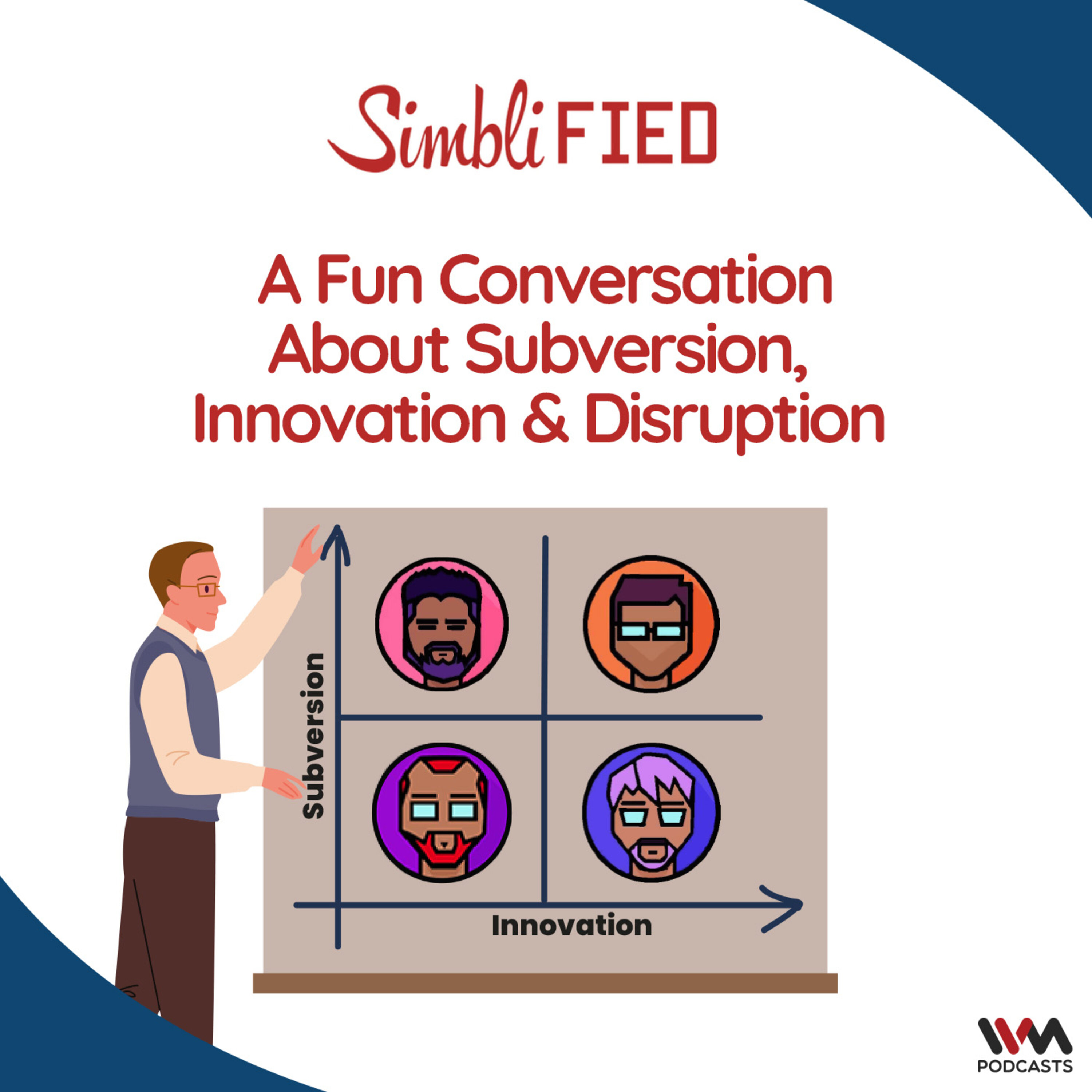
But one theme that was constant through the entire book and it's revealed in the title is a subversive history. So one of his takeaways is innovation in music always comes from the fringes, from the outside, the subversive aspect in that sense. And it is first resisted by the mainstream, then it gets co-opted by the mainstream and then it becomes the mainstream. And sadly, the initial originator of the subversion as it may be, which is now the mainstream gets shunted out.
And this is a theme that is repeated throughout history. I suppose from a musical point of view, the best one that at least I can give is an art form called The Blues Incidentally, Narayan and I were both at a festival celebrating the art form earlier this month. And The Blues was initially poor Black Pan's music, born from southern America on slave plantations and things, or slave run plantations I should say, or slave worked plantations, whatever the term is. And it initially became, it was initially co-opted by rebellious white teenagers and as it started becoming more popular, this devil's music or outsiders music slowly started getting into radio, white musicians started playing it.
And you would be forgiven for thinking that a lot of the great blues players from the 60s, 70s, 80s and maybe even today are actually white musicians. And in some sense, the original Black Art is never got their due and all that. So the blues are classic example of this, although I suppose that has been fixed to some extent right now. But this particular thing that was talked about is a theme that continues not just for music, but also art of many kinds.
He talks about how this is true for painting. And what I wanted to chat with you guys about is one, what do you think about? Two, if you can think of any other panels in our movie technology, maybe sport, for example, Tony. So yeah, we're not on for a while, so take it away from there.
We will note out that you'll talk about the innovators dynamite. We have to find episodes we have to speak about either that or you will not have. So yeah, that is actually the first thought that came to my mind in terms of the innovators dilemma itself. And basically, I think innovators dilemma was fleshed out from Clayton Christensen's original theory, which is called disruptive innovation, basically saying that disruption happens by something that enters at the lower end and then suddenly transforms the whole thing.
As in he had like definitions for three types of innovation, sustaining innovation, revolutionary means something that is improving and existing marketing market product. Revolutionary means something that is unexpected, but does not affect existing markets, right? Which means like if you had horse dog carriages to begin with, the first automobiles were revolutionary, but not disruptive, right? I said they were not accepted by the market at large because obviously no one felt the need for it.
But the actual disruptive one was when Henry Ford was able to sort of mass produce the model T and then it totally took over and killed the horse carriages as it were. So yeah, I mean building on from that obviously is the innovators dilemma and all of that, which basically says that the classic example is how Facebook tried to do meta and like stock price crashed and people are saying you can't do this, right? Which is classically that large companies or incumbents will find it very, very difficult to be the disrupters because there are too many barriers to them. They need their own existing fans or shareholders telling them you know you can't do this because we have written your value for life, expecting you to be doing the same thing and the market will never change.
And usually it's someone from outside that comes in. Yeah. And it's interesting you're saying using this example right now, I didn't expect that we go there. What's happening in social right now, I suppose is a good example.
Yeah. Where it's kind of interesting that Google can't change beyond the point because their entire revenue is kind of based on that. So they can't adapt. They probably could but they can't adapt so quickly because they're good and good so you can get good.
I have a different take on this but we'll take it later otherwise we'll disrupt it. No, there is a technology that's innovation in the internet and you know how it's basically when it's started. So there's this lovely quote by someone I read with that back in the day internet was an escape from real life and now real life is an escape from the internet. So you know that's how much it has disrupted and supported.
But did you come across that quote in real life or the internet? I don't think that's what it is. That's misinformation in real life. Yeah, JZU has spring bad.
Wow. So coming to sport actually so have you do you think there are parallels like this either like yeah there are two kinds of analysis that we're trying to draw you right one is the innovators type of a kind of thing and then this is what I said the subversion of the outside people and then we originally know it gets sidelined that kind of thing right. T20 click it maybe. Yes.
So I mean pretty much so. Is that a game changer? I don't know where it was. I believe it was on 22 year olds where.
What is it? But they were talking about this for all people and apparently him and I forgot who the other two people were they had pitched the idea of a league but at that point of 50 were correctly to the BCCA in the 90s. Okay. And they were basically like you know whatever go like let me in my chai and samosa types back then right.
And if you remember how I came about it was actually only because there was a real original T20 called ICL which is created in India outside of the habit of the BCCA and they were forced to sort of start a league and if you remember. Almost. Yeah. So in 2007 World Cup right India had played one international T20 before that right and then like we coincidentally wanted everything but practically BCCA had to do it simply and only because ICL came about right and right now the WPL is about to start for the women's previous first season is about to start and the only reason they see a started it despite so much noise for yours together is because Pakistan and Ramis Raja announced that they are going to start a women's premier league so then immediately BCCA had to do it.
So yeah usually I think there will be quite a few parallons in this regard but yeah practically that. Yeah that's kind of it when you said that right. So we romanticize all these fans of music romanticize classical musicians from whatever the 15, 16, 17, you know that thinking that they were the original geniuses and all that but the fact of the matter is they were way more capitalist than any of the musicians and things today and they could do a lot of their experiments only because of the massive pay-through mix that they were getting from the noblemen of the day. Indeed a lot of art in those days was they were able to do only because you had very rich folks who wanted music from these guys or music or art from these guys as a way to signal their status and their wealth and all that and it's kind of when you were saying that Toni it's like like oh PCV is doing this so we should also do this.
It's like they don't care about the art or in this case the sport itself or what it means for whatever it says in the press with the other people who get injured, they don't really care about it, they really just care about the signaling and status that this brings up with them. Pure power. I have to share yeah I have one thing to share here. No I thought you'd like to say.
It's very sweet for permission. It's very sweet. You have something to share and you would just keep going. No this is taking a point about disruption in music so around Akbar's time.
So I'm talking in context of Indian classical Hindustan classical music. Akbar's time the prevalent form of singing was something called Dhrupad. So Dhrupad is a very rule bound and so it's very regimented. It's a very strict way in which it has to be performed.
And even today I mean people do perform Dhrupad and it's deeply meditative and you know it's awesome in its own way but it is not that entertaining but that was how it was done. It was orthodox by the time of Akbar Thansing and Sangin Dhrupad and a few generations down. Aurangse was not much of a lad for music but after that there was this king called Mohamachar. So Mohamachar was probably Aranzeb's grandson or great grandson I don't remember.
And he had court musicians and one of the court musicians was so keen on so he just wasn't able to bust into the inner circle of Mohamachar's musicians. And they had a they had his court musicians everything. So he decided to invent a new form of classical music the same thing. And that was called Kaya which is what it's so it was so successful that it almost eliminated Dhrupad.
So Dhrupad is also performed today but it will be 0.1% of all the or maybe 1% of 5% of them. Really small fraction of it and all this happened in the 1700s and 1800s. It was I'm just connecting it back to your point about patronage, economics, professional pride whatever it was that led this guy his name was Niamat Ali Khan. So his lyrics he penned a lot of the lyrics of the hypersonic classical piece of music is called a cheese and the cheese is very short it has a what is the body it's called a sigh and sort of counter theme which is the antra so it goes.
And the antra part has the writer's the poet signature. So this guy is to sign his poetry as Sadaran and it would there would always be a dedication to Mohammed Shah who we called Rangilay. So it would be Mohammed Shah Rangilay and Sadaran. That was and Jeeze.
So you have must must. Okay sorry. Yeah. At least I will also the cheese to make it.
So yeah disruption in hypersonic classical. Hey fascinating. Because if you remember I mean you obviously do you for the longest time asked me to do an episode on Malayalam films are awesome. I think it's a lot of people now that put it out there.
Please. Yeah. No, no, but like I just felt inadequate with that. Probably get a better guess to do it.
But like the entire sort of Bollywood thing right which is happening right now is classical disruption right which is that earlier you had to cater to a large audience in a large market who could watch movies in a theater right and therefore it meant you had to basically appeal to a large audience and for economies of scale be you know relevant or relatable to huge number of people right which meant you could have to take the lowest common denominator in terms of the plot line in terms of characters in terms of nubans etc. And then like OTTs came about and suddenly practically all these regional films have found research and so to speak right which is to say that you a you don't need a high budget to produce a movie which you know is meant for a new audience. We now that the distribution is decentralized it can take its own shape and form right and like irrespective of what marketing you put into it if the product is good there will be enough ways in which the movie or the platform itself spreads. So much so that now Bollywood has started asking like you know what is going on in South India why are they doing such great reasons.
I think this is great because in some sense I think all innovation is kind of like you know kind of way it's kind of like shifting the overton window is that the right way to use the phrase. So I'm just going to read you know one small part from the review of this book which will circle back to this point as he writes only he has intent the guy who wrote the book I was talking about in language I quote throughout the book the shameful elements of song which is their links to sex violence magic ecstatic trance and other disredutable matters are actually sources of power serving the engines of innovation in human music making and this is another point that he makes when the mainstream becomes too sanitized it usually just takes somebody from the outside talking a little bit about the for a bit just a little bit for there to be interest in it and slowly that initial fringe interest becomes an instinct it's kind of crazy to think about how much a lot of the lyrical content that is there in music today we take for granted and parents won't have any problem playing that for kids but that might have been you know shocking back in the 60s as recent as the 60s and 50 in it like a lot of people's early songs by today's standards they are like they're like nursery vibes but back then just you know I don't know maybe just writing about being a dude from across the room and having romantic feelings might have been considered completely taboo and you know the further back in time you go all the more so not just for lyrics but also chord patterns and things like that there's a famous devil's try to own music for instance like you're not allowed to play these three notes together because they sound like devil and all that yeah so all these things that were initially either musically lyrically thematically women's role in music and all that all of these started out as not the you know later not the google of the day in music like saying that's why something new but something from the outside coming in and disrupting it and then having and because it appeals to a common part of humans it slowly becomes part of mainstream so one thing Ted loves doing is saying it's amazing how say a raunchy sex song of the 60s becomes the you know things that noble non-spain money for but in a completely sanitized version what is the hymn of you know this century if not sanitized version of the raunchy title song of a century back for instance and what you're saying is pretty much that with respect to music if you respect your film as well kind of like shifting the old and the middle can use can film mainstream cinema now have gay themes for instance or talk about this but you know that's kind of intense yeah and like I have this theory about I mean it's not a theory it's like just a random observation about when companies stop becoming cool places to work is when you have to start consulting in eagle for things right yeah yeah when Zuckerberg's touched at the company at low point would have thought that he would have had to yeah you can explain this way everything right like you when I have spent goodness was how many I was complaining about how brands are planned on social media and along comes Omato and does something strange and weird and now everybody's linked to just you know if not get out of their forms completely at least moving to casual Fridays and that's such step in yeah right so yeah maybe you can say that about technology itself as well right the moment being has introduced has dared to introduce chat GPT now suddenly everybody will want to do something like that without Tesla I mean whatever you think of mr. Musk without I don't think this would have happened I think companies would have just been stuck in their fossil fuel emails and what he spoke about in the last episode would have been comfy nothing but I mean I just want to say it's only innovation but it's an art of medicine technology it's really about shifting the overton between some way and those benefits if they are crude you then great in technology they are more likely to but in art maybe it takes a few years decades etc maybe why true pioneers are kind of like not given their view I don't know whether that's a that's a I have one question here is it innovation if it is not disruptive so do you know if it's not yeah it's like disruption disruptive do you have yeah so can you have innovation without being disruptive or subversive yeah like the first sorry first car as against incremental innovation as against a very radical innovation right no so basically the first car I mean to going back to Kristin's right the first car was actually a great innovation yeah but it was not a simple because the market wasn't ready for it or they didn't want it or they couldn't no it wasn't it was an expensive yeah it wasn't immediately disruptive but very rapidly it became so so the second so he speaks of the second over advantage in that sense right which is to say that the first person who comes along has to sort of establish the market and like you know give sell the value proposition to people because his theory is that the customer is never going to tell you what is the next disruptive innovation that you can bring about right so large companies just tend to listen to their customers which is like market wisdom but you'll never be able to come up with a disruptive innovation because you know it is not likely to come from the market itself for it to be disruptive it has to necessarily be like catching the market not necessarily just an innovation yeah and it may not even be immediately apparent right like I remember like like I'll be honest when the iPad first came out I thought like okay this is like this is just a bigger iPhone like this is pointless exactly not seeing that it could be used to a whole lot of things up which are phone couldn't who thought that one day airline pilots would replace their entire huge back of law so they could replace it with an iPad app right so yeah I think your point I think yes Tony you say sample of auto based and I can give you similar examples from music as well where there is some band in some part of the world that is doing something innovative but it's not necessarily going to change anything just because you've added a degree to your band doesn't mean that everybody around the world is going to sit up and say well now we need to add four instudents to our music to make it relevant I don't think so so yeah I think so innovation doesn't always need to be subversive yeah it doesn't need to be subversive or if it's not a characteristic definition of characteristic of yeah that thing said both innovative disruptive supposive all these are extremely subjective terms so yeah I think the classic example that she's used in innovation classes is the segue right which never really caught up with a huge thing but yeah it is a transportation device of the future and it always will be yeah that's right yeah sharp business will notice a train let us see if we can have trick next week but the kudos to simplified for never getting too big that we can't ever describe ourselves yeah that has been a strategy all along very cleverly it's a word so true that's why we always ask our listeners to read between the lines because some put worse who no like that actually didn't make sense at all things okay some people get better yeah that itself is going to be disrupted the day simplified starts making sense will be enormously shake up the foundations of civilization yeah this is the thing about innovation in simplified with actually makes sense actually say something useful actually make people smarter whole civilizational collapse yeah there's an awesome restaurant called highway comantac right so in bandra and it's just amazing so all and all our listeners who live in Bombay and who like seafood do visit just google highway comantac there's only one highway comantac and so it was founded by one you know now elderly gentleman who's always there at the cash counter and he is really serious he's like he's absolutely stoic and serious expression and he'll never he never so I have taken little kids there who you know got and done cute antics on his you know table and he still knows my so there is this theory that the day he smiles the whole universe the Maya Jala the universe will be exposed the whole universal vanish so the day simplified starts making sense I think yeah yeah before yeah I think as you're saying that I think there's just one final point on you know that dichotomy that you were trying to say is no is this innovation or whatever I think there is innovation and then there is perfection of a form if that makes sense like I think for example I would place and this is a using references that allow people to only I think Douglas Marillier was an innovator yeah and maybe there was some perfectionist I don't think every day was an innovator person I don't think he started something you know I think he just took it to like you see where I'm kind of going like yeah and he yeah like I would think of say like the classic example is the fosbury flop right big fosbury actually won only one competition he won only one competition okay because the first time he did it nobody knew what the fosbury flop was okay then immediately everyone saw it they're like oh this they can jump then everybody figured it out and like he I mean still attributed to him but like it's no longer his thing right someone else yeah already taken it out obviously I read and see many things about the details but one line I remember is actually quite relevant over here is why they are called the most innovative band that ever existed like each album is like a new paradigm in itself and they never ended up breaking each paradigm themselves they just paved the trade and the quickly moved out to the next one yeah leaving like fertile ground for a whole bunch of copycats to like each album had its own set of bands that followed right they just kept innovating and innovating so I suppose you know they to me they were innovators whereas a band like I don't know meeting Metallica I mean probably more perfection you know they can and existing are for me to do another interesting what what would what means though like is the template the innovation or is the iteration the like what do you find enjoyable about me I think the template there will be many many more templates than the then then there are memes because I don't know what the percentage is I'm I'm willing to wager that a very small percentage actually get to become memes yeah it's definitely my vote for the iteration so that's one of the delightful things that make this a question so complex right so I don't know I think the innovation comes from the meme itself and once it starts once a joke country as a like the success baby joke for instance I think the first time it was used for innovation but the next time it was used to kind of like make the same point in the same parallel that it stops me in innovation they probably have a funnier joke than usual but when that success baby is used in a completely different context I think that is when you will have innovation I think and maybe if you I think you're analyzing this more than you need to but because the rage for me for instance I think that was why that was such a huge hit because there was so much flexibility within those various characters each of them was a meme template by themselves and then you had different ones talking to each other plus it was so I don't know it was just flexible there was just so much possibility for mix and match and meme karaoke to happen in some sense that and then you had you know guys like Khushashogg making a completely Indianized version of it as well which opens eyes up you know completely I suppose I don't know whether that made sense but no no I was suddenly thinking about fusion food and how I mean one of Khushogg's favorite things to say is that there is no such thing as authentic food basically yeah your sort of taste but it's a color behind nostalgia and whatever suits that you will find as authentic but and by the way one of these points like this are in that book as well except instead of the term you're not talking about the year I think the year it all goes back to whatever flushes you're like I think it should change whatever floats your boat to whatever whatever whatever whatever whatever whatever you're like yeah like like one of the things about sushi right I think I heard this one most things are fish then like salmon never existed in Japan till like 20 years ago something and once Norway had like an abundant catch of salmon and they didn't know what to do with it and they had to do a lot of circus yeah they had to do a lot of circus to get these Japanese people to use it as sushi yeah yeah they gave it free for the first two years something yeah exactly yeah all right I think we have spoken about these things we've been trying to disrupt this episode with the anything so yes so signing off with stay safe stay innovative and stay subversive yeah stay subversive and stay simplified yeah