You now listening to vices and vultures podcast on cultures. Welcome back to the unpacked segment of vices and vultures where we share from our collection of solo interviews done by the co-hosts. What's going on everybody? This is a two.
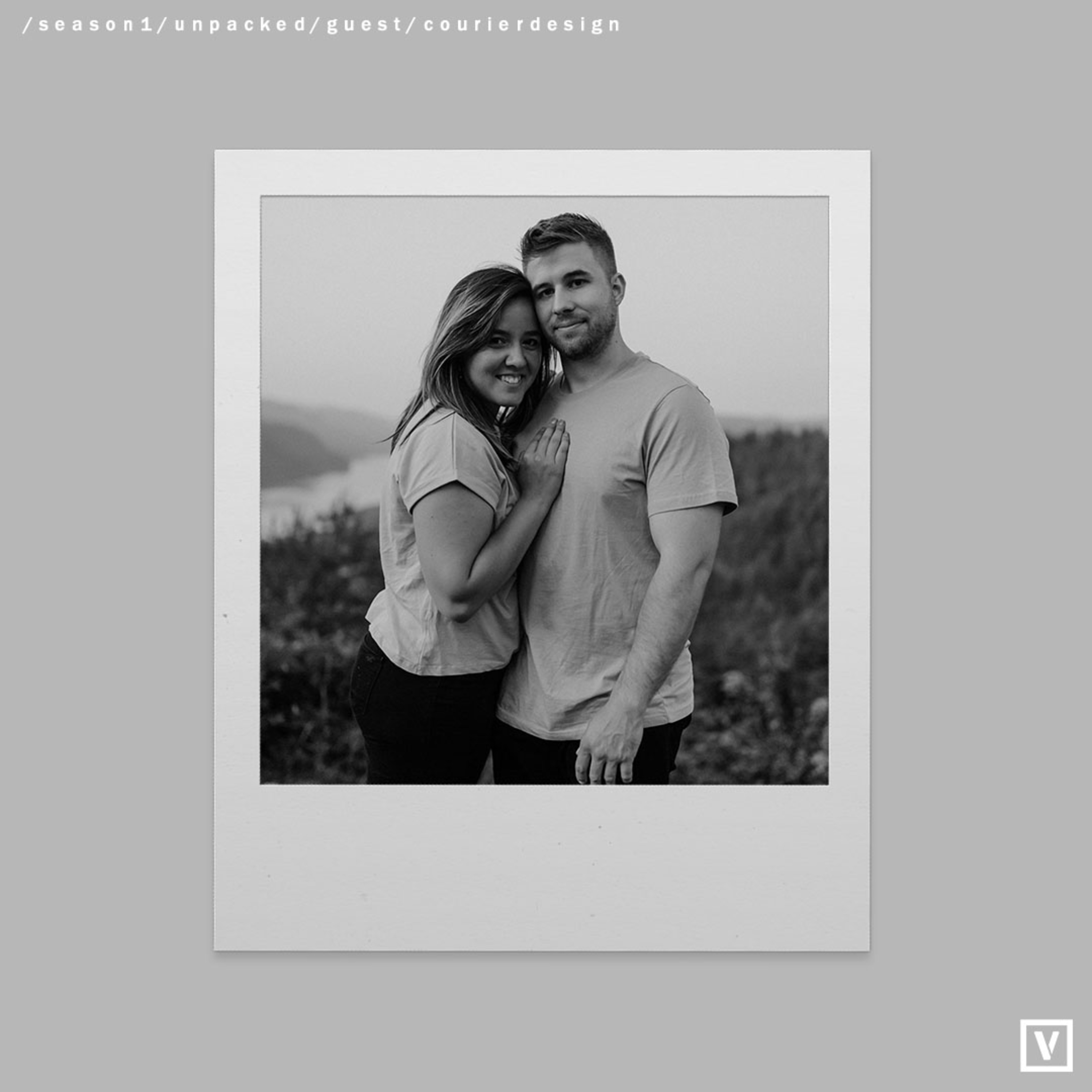
I've been documented on this podcast almost stressing the power of Instagram in my professional and personal life. It has led to many interviews you have heard so far in this season. The next one you will hear is no different, but it also highlights the importance of the platform and the guests you will hear. Yes, you will hear two voices next out of Ethan and Brie, the minds behind courier design.
Graphic designing to me is one of the most underrated aspects of marketing today. Both Ethan and Brie do such a fantastic job with it. Here are their stories. Right now for graphic design is a lot of packaging design right now and brand identity as you know.
So those are two things that we focus on a lot and it's a lot of fun. So your packaging seems to be a thing right now that we're working on. That's kind of continued and evolved so that's been a blast. Yeah, I've been seeing that from the wow.
So what about you Brie? I think we're starting to bring in a lot of animation too to a lot of the branding that we've been making. I'm really excited about that. We've worked on a couple of projects with some web designing and stuff like that, but still going to keep pushing that further as much as possible.
But you know, whenever the client's ready for it. Right. So is the animation something that has just barely started or like have you already been like messing around with it and seeing how it works for you guys? I've had a little bit of experience with animation within my background at an agency, but just recently we have really been pushing forward to wanting to include that as a service for courier design.
I think that's something that people can really value visually other than just like their logo being static or like if they want to use it in video and stuff like that, that would be great. Yeah, definitely. Definitely because it's starting to, it's almost as if we're media companies in a sense and everybody that has a brand identity wants to really push it forward has to just continue to think of ways of how am I going to get this brand identity, this concept of pop in front of everybody. So I think that's really awesome.
So before courier design was a thing because that is the company that you guys have put as both of you guys, correct? Yeah. So courier design actually started like a little bit before, I think it was even before we even started talking together. So I wanted to have a legal name, I came up with a name courier, this idea of being not just a messenger of someone who delivers, you know, and delivers something that's simple and straightforward and lasts long.
And since we started our relationship, that kind of evolved and I wanted her to be involved with that because she has a lot of skills and ideas that I don't have. So it works really well where we balance each other's strengths and weaknesses out so I can focus on my strengths and she can focus on hers. Yeah, it works pretty well. But before courier design, you want to talk about the agency stuff?
Yeah, I guess before I started to put my work into courier design, it was just kind of based off of an agent that I worked with. And I was working with a lot of animations and basically it wasn't a mini art director in a way. So I was in charge of a lot of clientele work that helped them launch their products. So it was a lot of work, a lot of hats.
Yeah, a lot of that work was it had a lot of tech design based. So yeah, but other than that, I kind of just wanted to focus on more of a simplicity design, which I think that Ethan kind of really helped open my eyes to that when we first started dating. So when I, well, before that, before when I first started falling him on Instagram. So and that's something that I really wanted to bring into my own design too.
So I was starting to dabble with trying to be more simple with my design. So that was pretty interesting. And that's kind of how our like relationships started in a way. Yeah, in some ways, right?
Yeah. Because we followed each other. I just I was interested in the content that she liked. And yeah, just kind of hit off from there.
And she liked the design content I post and stuff. And I kind of, you know, experiment a lot on my page. You know, I try a lot of different things and then it might go back to a certain direction and stuff, but she just happened to resonate with it. And that sparked up a conversation.
Yeah. So. So how long ago was this while this because not learning so much? Yeah, it's funny.
We don't really talk too much about how long ago it was because it's all gone by so fast. But it would have been 2016 is what I remember. It may have been before then that I followed you, but we had it was like, I followed a bunch of designers that wanted to kind of be influenced by. And he was, I don't know, it just became like, we had to start talking to each other through it was Twitter.
Yeah. There's some topic that you might have been in. Some design topic. I asked him a question about it and it just kind of evolved from there.
But I want to see, it might have been like maybe five years ago or five years ago. Yeah, it would have been summer around that. Yeah. It was mid 20s, well, like early early, early 2016, maybe like January.
That's what I would say. We don't have the messages. Right. No, that's kind of wild though because of how, because I think that was about the time that I started following you, Ethan.
And then like I started digging deeper and then I was like, oh, there's a brand and two like, oh, it's together. Oh, that's sick. Because like as I said before, there's not a lot of times that you will find the two people like in the same industry and be able to hit it off like on social media nonetheless because that's such a very rare type of scenario. But it's cool.
But it's cool. It's awesome. I think it became a thing because even it had been planted in your mind for at this point by a while. So was the strengths, weaknesses and the complimentary nature of it, did it come from just realizing that you were finally at a point where you can put this out and then you had somebody, you were also somebody that you're dating that can cover like and meet everything else?
Was that kind of just how it came about? Because you had kind of like preparation these opportunities. Sure. I think it wasn't an instant thing.
But I think obviously as we grew together as designers and we, you know, you go through our, like we both actually do have day jobs. Right. So, you know, the struggles you go through on those day jobs, just things designed thinking and different inspirations that we like and discussions like that. I mean, it's on a regular basis and it's kind of cool to have someone like that that you fully understand and different, not just one category, right?
So, but yeah, I mean, I think it just kind of evolved. It wasn't like a thing right away where you said you really wanted to do a career instantly, but you were interested in, I think, adventure. I didn't mention it for a while. Yeah.
But I saw that you had started the Instagram for Career Design and I kind of, but that's something that we had a conversation about like, oh, well, what do you see? Like in the future, like for design between like you and I or like you had asked me a question about like, oh, well, what do you want to do? Like, do you want to like stay at an agency job that, you know, that I was doing and I was like, no, I want to do something better, something different. And I had always had in the back of my mind, I'm like, I actually want to work for myself.
Like I want to be freelancer. Like, that's a bigger picture for me. And then you're like, oh, well, doing career designs, do you want to do it with me basically. And that's kind of when it started.
So, yeah, why not? Yeah. And just coming to reality with it, you know, that fact that her agency experience, like she got a ton of Photoshop, Mastering and other, you just kick starter campaigns, you know, learning how to, you know, show product design and like show how that like how to sell that, how to, you know, communicate the benefits of things and that. But I never really had a background in advertising stuff.
So that really helps. Like if we want to push for that, yeah, it's going to be versatile, right? Yeah, absolutely. So, and it's so interesting because having this conversation now, a couple of years removed from when this all began, it's just amazing to me how, how much power there is in just putting your first foot forward, your best foot forward and continuing to like be consistent.
Because that was the thing about you that I really appreciated was the consistency. I feel like a lot of people who are in the creative space get stuck in the rut because something else trips them up from being consistent because like it's more of like, I want to be, I'll only be consistent if I get this particular look or this whatever, but you just kept going and just you just trusted that evolve over time. So my, what I'm curious about is we're all guilty of being in our heads. But at what point were you like, let me take it to social media, let me take it to a marketing platform, so leveraging kind of just like, um, told yourself like, okay, this has to be a thing because okay, what I got you somebody saying right next to you because of it, you know what I mean?
Yeah, it's really cool. And it kind of was my mind thinking about it because none of that stuff was ever expected or planned too much. It was more, well, with Instagram, I think so my background, I didn't have a design job right out of college. I actually worked a normal job in the warehouse and that building is actually across from the building I work today.
So I do have a production designer for Victoria's Secret right now. That's my day job. And but anyways, back to the warehouse, I was actually, you know, I was just doing normal manual labor and it was pretty tough and stuff and I burned a lot of calories. I could eat anything and not, you know, gain an ounce.
But you know, it gave me a lot of time to think during that really sort of mindless job doing the same thing every day. And so I started, that's kind of when I started my Instagram, it might have been mid 2014 when I was doing a lot of photo editing with lots of grunge textures and very booty. And I was super into that environment. I still love that stuff today.
Yeah. I kind of wish I could do another account on that, but there's just no time to prioritize that. Oh, yeah, for sure. Yeah.
So yeah, it was a niche community of people who loved booty, like nature, photography with a lot of texture and grunge. And those people were all extremely supportive of each other. And I liked that. And that kind of that's what got me into Instagram even more.
And then I think also design history is a huge impact on the work I do today. I'm not sure how much you've kind of dug into, you know, some of the book posts I've done in the past, things like that. But that's really important stuff to my process as a designer. I think it pushes both of us.
Yeah. You know, just stuff that puts us in our place and we can learn from. I think that's really important. And so I mean, it's, we can go all day and kind of talk about how it all evolved.
Yeah, yeah. I mean, I think it's interesting to, I mean, I connected, I found things just like you said, I found things that interested me, different accounts and things that I saw was like, wow, that's really clean and straightforward kind of work. I want to be like that because I feel like my personality resonates with that no nonsense kind of mentality. So, I mean, everything in our past really makes us who we are today.
Right. So, I mean, I think it's a very different job that was no nonsense, right? I was influenced by industrial objects and things that are very mechanical and heavy and bold. And I liked that.
I mean, I embraced it, you know, it's like to be an Immanuel labor job for two and a half years, but it made me who I am today and like, to carry those things I learned on to design in a way. So a little bit. Yeah. That's awesome.
What I really like about what you said is the fact that, you know, you were able to just carve out time and just be like, you know what, even though I have his day job, I'm still going to put in time and just share this thing. It's like the most important thing. I remember when I started following you, because I think our timelines are pretty much like what you're telling about like the time in place, like I'm also remembering like where I was at during that time. So I remember during that time, I like got into production probably about a year before and I was like, you know what, let me just figure out my sound.
So just my 100 straight days and just like made something every day. And it was just, it's kind of like the what's going on right now. I believe it's 36 days of type, I believe. Yeah.
So it's kind of like that where it's just like it forces you to get into a creative mindset on a regular basis, something that ironically a lot of creatives kind of forget to do and then just just go and then look back and see like where that takes you because be like 36 days of type or like whatever else that keeps you consistent on social is like what a lot of people are looking towards and then you just create that community. So you mentioned that community too. So was it more of like, was it easy to find like the communities as far as design stuff? Because I feel that sometimes people can overwhelm by thinking, you know, about just diving into something like Instagram because there's a lot of different like little cultures that you can kind of get into.
So was it easy to navigate for you as soon as you kind of just like gotten to your head instead of sharing? I think earlier on, I was certainly more distracted by all the different stuff. I liked. Right.
But I got into that. I think those people were just they were really welcoming. So I stuck to that photo editing thing for a while. And that's I was into that because I liked album art work.
I loved I listened to a lot of heavy metal back then. I still do today, but that was yeah big influence even in high school before college. That was like huge to me. And I love that.
I actually connected with a guy Daniel McBride. He's designed like album art for some area records and him and I like every once in a while will comment on each other stuff and it's just cool to like connect with people that you look up to. Yeah, absolutely. Yeah, I think you know, like I said design history and stuff when I started understanding the mentality behind that I started finding designers like that.
And then I just kind of connected with some of them. And I think that became more focused. And then I understood like, well, the photo editing stuff is cool, but does it actually add value? And I think that now what we do, it's all about serving other people.
Like we do a lot of work for ourselves, but that's because that's work that we enjoy and we know there's always someone out there that will also enjoy it just as much as we do. So you know, you trick the system into getting paid, right? To do what you love. And those people love it too.
Yeah, imagine that it actually works. Yeah, no, I'm with that 100%. And I love what you had implied about the meaning behind what you guys do as well as career, because it is service at the end of the day. Like client work is, you know, something that everybody who has done some ounce of freelance or enough freelance knows that you have to prioritize what the client wants and they love you for that.
And that's like really for any business I teach. And so prioritizing the children's like happiness and safety and like the parents as well is like all part of like the plan of just, you know, sometimes just listening and just being like that's why this podcast is fun because like I get to listen to like the most unlikely of stories and it's just, it happens because I just sit and listen and like that's such a big part of service and work is just, you know, and even when you have so much to say it's just like fascinating how if you listen, the result always goes slightly better. Really, when you were starting to share your work, your design work on social media and eventually found out about Ethan's work, what was your mindset along that way? Have you always had a design like pension or was it something that kind of just came with job opportunities?
So it kind of came about like with job opportunities for sure. That was in the back of my mind. But I know my Instagram is kind of like, it's more of like based off of like socially what I'm up to when I'm doing. And that's kind of where it started.
And then I started, yeah, definitely more personable. And then I started out kind of like wanting to include like my artwork and I had like starting a 100 day project which was like 100 days of water coloring and I was like going hard on it and then just I don't know like I can't like totally. How far did you get? I'm curious.
No, I'd have to like go back and I don't even know if I've archived some of them. But that's kind of like I think that's when Ethan was noticing like that I was doing stuff on there. But like just was kind of like I wanted just like an artistic outlet for me because I do have a lot of, I have started out with going to school for design. But I do have like a very artistic background.
So I was like super into water coloring and painting and acrylics and stuff growing up. So that's something that like stuck with me. And so I wanted to kind of show that on my Instagram. And there was like here and there people would like comment like, oh they love this and that and stuff.
And so that kind of was cool. But design started becoming a thing prior to I think Ethan and I like having conversations. But it was very illustration based not like design like simplicity design simple design or go design any of that was definitely not that it was illustrations mostly just because I wanted to find like it was like a process of like growing. I appreciate it.
But it was a good thing because I was kind of pushing myself more into using illustrator or showing my work because I got to the point where I felt like I was just so discouraged. I would see so many people like so many Instagrams were like large and like massive so many followers and so much content. I mean I get like scared. Some of them probably bought them.
So let's be real. Yeah. You have to factor that in. Yeah.
It was it was kind of just like so that kind of made me hesitate on posting stuff. Right. It happens. That's the point where when we started talking I started posting more because he was like why do you care about like what people are going to say about your stuff.
And I was like yeah right. I don't know why. No. That's changed.
Yeah. Yeah. Actually it doesn't. Think about it.
Oh for real. I feel like everybody everybody kind of gets to that point of self conversation is like why are you spending time comparing just like go ahead and that's that was the driving force behind everything over the past couple years even though I had to like reposition it because what ended up happening was like I had to you know separate the music from the marketing because they were so like related but they weren't and it was so hard to like make that clear on social because like I didn't know anybody that really was like kind of like in that it was kind of just new territory for where I was. But what I like about your Instagram Bree is the fact that you integrate your design work and your lifestyle work or like not like some work but just your lifestyle. So like so seamlessly so it's just like yeah like you know she's designing for her year but she's also like going to concerts and like going out and even like just hanging out things like that.
Yeah. Like it's very casual. It's very it's very you know it doesn't ask for a lot and I think that's really cool because I feel like social media there's a lot of there's just a lot of reaching involved and it's just like you know why reach when you can just live the most honest you know the most honest life you can. So is this is it always kind of like this or you guys are just like super chill like kind of like do you still like going out or what's the lifestyle balance I guess between the design aspect, courier all this stuff 9 to 5 and then just managing that with relationship kind of go hand in hand at this point or what?
Yeah. Yeah. I think it does go hand in hand. Yeah.
I mean I think so because like we're in the same location so limited brands or L brands is what it's called there the parent company of Bath and Body Works which is where she works and then Victoria's Secret so our buildings are across from each other and we're I used to work in the warehouse in the back of her building now so she works in the front in the front office in the building I used to work in and then I yeah so I work in the front office of the other building across. They have a bunch of buildings they're a very big company. Right. But yeah it works pretty good because of location and her place is like real close to work so that's pretty awesome and we spend a lot of time here just because of time right we can prioritize things get things done quick right after work five minutes away so it's pretty awesome to do that and yeah I mean we love film we watch a lot of film too but you know and I play a lot of games so it's like we stay up late because it's like you can't do everything we do and not you know you have to have some downtime and have fun too.
Right. Yeah so it's like sometimes we're not doing any of that but other times you know it's nice to like take a change of pace so yeah it works out good I think. Yeah I think we have a good balance it really all depends on the amount of client work we do have to so like we come back home from work and we are like okay we have to meet the stud line so we'll jump on and start collaborating with each other or one person works on something the other person works on another work portion of that but yeah I think it's we don't really have like a determined like okay we can only have a designated like these many days with design or something that. Yeah it's more chill.
Yeah we don't relax it's nothing. Yeah it's intense when you have a lot of projects but it's also super fun and it's cool right now because we don't have any like crazy deadlines so we can do 36 days of type and we have more like passive income type thing opportunities like with beer labels like where their companies can basically pick out certain designers and if they pick us we get a cut you know so that's kind of cool. It's nice to have a lot of time to be able to come up with passion projects and stuff so I'm really excited for the upcoming stuff. Me too.
Different ideas and label ideas and things like that so hopefully we can execute all that pretty soon here without having you know crazy deadlines or something. Yeah that's awesome. Yeah that's awesome. I love how the casual approach just flows into like both aspects and it's just it's so super cool to just think about like how all this kind of just happened because you just took that best step forward and just like you know what let's start sharing this stuff and just start seeing like you know what the world thinks about this.
So are there advantages you guys find in being in both worlds where it's like you have the nine to five and you have the the freelance world. Do you find yourself like kind of borrowing from like from what both benefit and kind of just like feeding it all into each other? Yeah definitely. Do you want to speak to that a little bit?
On your side? I think yours. Maybe not as much for her because she had so much agency experience before. She was I mean you were super challenged right?
Oh yeah. I mean I was super challenged beforehand because you were more than than never made me. Yeah but now it's kind of it's easier of a job because everything is kind of separated out better within this corporation but I mean I mean what I bring to the table for her is still like site design this. Yeah and animation.
Yeah but that became like kind of thing out of like my own back pocket first. Yeah it's just an interest. Yeah. She's gotten good at it.
There's a lot of math and patience to the animation stuff and you know since we haven't showed anything because we're self-critical about like the 3D stuff but we want to get into C4D and do you know work with typography make it kinetic and things like that. Right. Yeah digital launch. She's digital for about the body works.
Okay. And the stuff is just not that much of a challenge. It's more like retail design is crazy right? So it's very fast paced.
It's all about getting things out as much as possible as fast as possible. There's not always that like wait check yourself make sure this stuff is long lasting because the way the company works is more based on you know that what's it what's it called? Impulsive kind of buying I mean to be up for on you know that's type of market that they because that's out there and most people there are more like emotional buyers. Yep.
In the female category too. Yeah. Yeah. So I don't get to really design or like get to use as much as like my 9 to 5 job like skills.
Okay. I mean like I probably would want to you know like curries. Yeah for sure. You know that's not what I'm trying to.
For sure. But that brings like very interesting dynamic because hey I was not aware of you know yes the emotional buying for sure but like the process behind that was not aware that I think that's I think that's right eye opening because it kind of says a lot about like what the process is like itself you know what I mean. Sure. Yeah large companies are interesting.
I mean there's so many facets of leadership too so there's a lot that we don't know and you know you have to do your very best to solve the problems that you're given and you know yeah so it's very fast based for me I work on print stuff so actually I you know as a production designer I've learned a ton of things and I've also been able to apply that to beer labels for example or chocolate packaging things like that because it's like those little details do matter you need to bays your things out you need to get the colors right the Pantone codes all that stuff does matter. Yeah. No you're not passionate about those things then maybe this is the right field for you right. Yeah exactly.
So yeah the details right you know all about that with music like you're going to play it a certain way that no you know if it's not exactly that way then you have to practice more so it's like that. You go like that you just that was just like my speech this whole past week. Yeah. Because you got a reminder you got to let them know but yeah that's that's super awesome and I really resonate with that.
And speaking of that I wanted to talk about just more of since Korea has been the thing for a while you guys have like really taken time to kind of establish who you guys are in the visual space at Instagram. Because what are like a few things that you had noticed along the way as far as bringing this because it's been in your head even for quite some time and being able to manifest it now like what are some things that you have like learned and seen especially for people who are listening there's a lot of people that are running through that are freelancers and things like that and just anybody who considers that because it's very viable these days. So what did you see kind of like in the process of Korea becoming an actual entity. Oh yeah I mean that's a little bit of a question for sure but you know I think that it's all about finding what you love to do really I mean you have to focus on that and you have to experiment a lot too.
When I was in the warehouse like you know when I had downtime maybe I was because I operated a crane right I would take my little field notes and if I had downtime I would be 60 feet up in the air and I would draw a little bit you know I would just think of things that inspired me things that I'd love to do. Like find things that you do and that make you smile and just figure out how to do that more and experiment with it and tell everybody around you in your life that you love to do that stuff. It's kind of funny to see what reactions it's crazy how many people don't do that. There's a lot of people you'll be around and they don't I don't know there's like who did someone make a law around that where you can't tell people what you're interested in.
Like I mean it's a weird thing a lot of people are you know they just don't stop to realize like you know just show people around you you never know what you could create what opportunities. I mean there were people who I connected with in the warehouse so I did like small little you know knock off jobs but it was like who kind of cool to you just perform and it's because you know I wasn't afraid to show them where I was into. Yeah. You bring up a very good point about that because just going back to just being confident I think there's a element of shame because you know even though there's so much more opportunity to be able to think so openly about like oh I want to like make this I want to make this particular project a business and then I'll see that type of thing.
It's very ambitious it's you know a lot of there's a lot of trains of thought that still exist today that don't necessarily support that because it's unrealistic about a lot of things like that so but you know putting your best way forward and showing people what you can do is always something. Do you want to add to that breeze or anything that you realize this this thing still fruition like to add to what Ethan says as far as what you learned as a freelancer as a designer as an entrepreneur basically. Yeah I mean I guess don't be afraid to post your stuff and if you have an idea and you want to make it into a side project do it because that could literally be something that leads into your style your or a new process that you find or a client that's going to reach out to you. And I think that was like something that really Ethan always pushes me to do constantly so yeah whether it's just like a project or just posting like don't be afraid of that because you know you have nothing to fear it's just Instagram.
Yeah it's just Instagram. Yeah it's just Instagram and a lot of people put you know these ideas and like they think that someone says better than someone. Just like just like to do it. Yeah it's even nature and you have to get over it and not be so human sometimes.
I was like I was very gary view of you like that. Just get over it you know just um you know just do great do great stuff. That has been really it's been really cool to kind of just you know sit and talk about not only freelance based stuff but just like how that intertwines into your life I really appreciate the opportunity to talk to you guys and it's really cool to kind of like see you guys face to face over face time and kind of you know feeling like the gaps of like what I've kind of just seen over the years what you guys are doing is really cool. You have an idea of kind of what's next or you're just kind of taking one step at a time so you're kind of kind of serves people in the next five years probably.
Yeah definitely in the next five years. Yeah I mean there's no like real specific expectations we definitely take it day by day and you know just do what we love as much as possible. So there's I mean a handful of different fields of interest that are interested in our stuff so that's kind of cool. But yeah yeah I don't know I mean it's that's there's no like you know specific thing that we expect right.
Yeah we have an advisor that surprised it brings us you know because they brought us this surprise. Yeah true. Yeah. It's a fun part about it.
Yeah absolutely. Thank you for taking the time to listen to this episode of Vices and Vultures and considering being a supporter of this project even leaving a review on your preferred podcast platform was along with us. There's more information about this episode as well as who we are in the show notes. Vices includes all of our social media links so you can see us and not just hear us.
Vices and Vultures is brought to you by aesthetic and is based in the great state of New York. Be sure to subscribe to this podcast for more episodes and tune in next time to Vices and Vultures.