
EPISODE · Jul 6, 2026 · 7 MIN
A German Ear Listens to China — and Likes What It Hears
from KLASSIKOM=Innovations in classical music · host Rudolph Tang
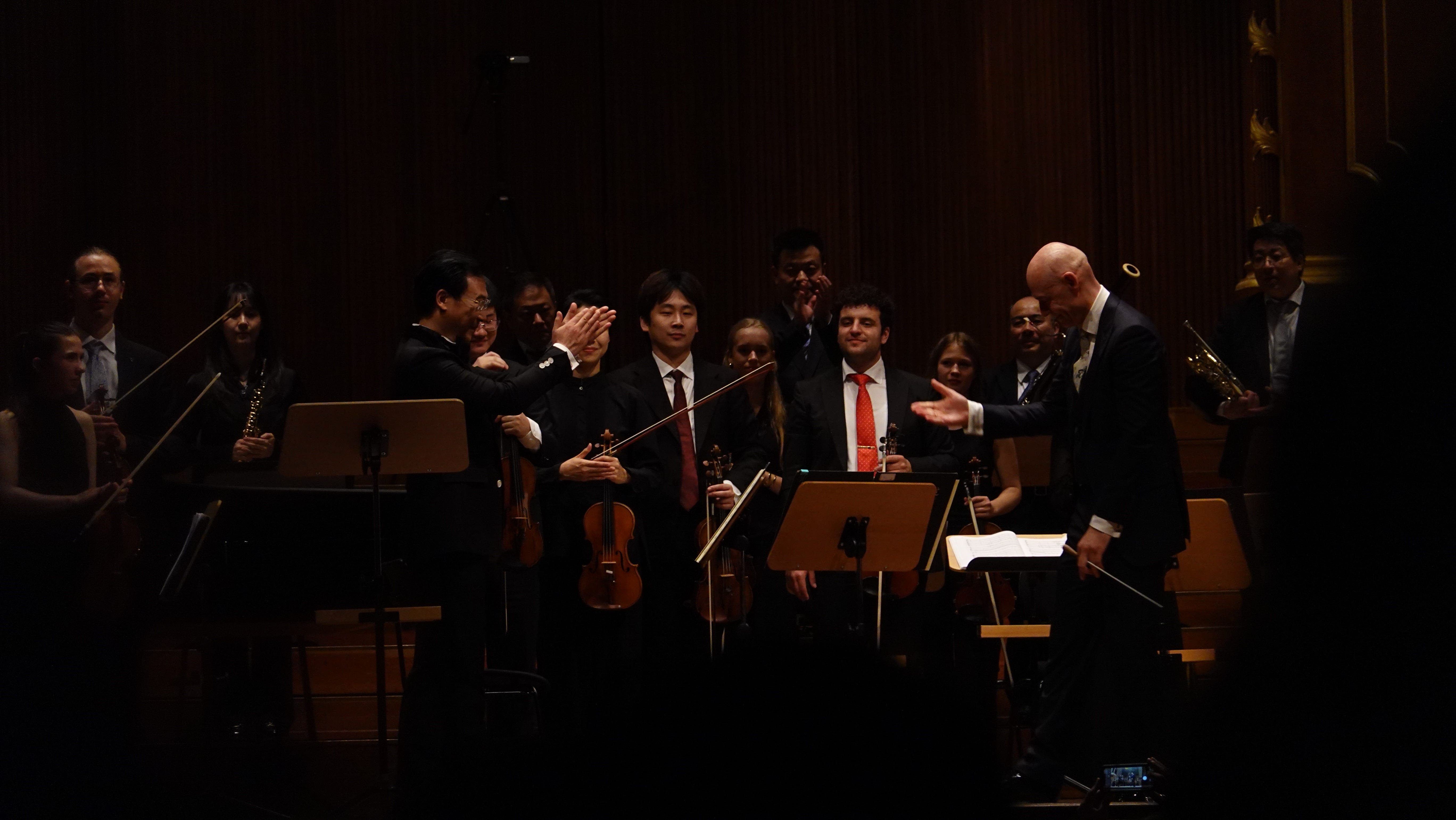
He was born in Hamburg, grew up in its orchestras, and is weeks away from his graduation recital. But for violinist Ilya Altınçınar, a student at the Hochschule für Musik und Theater Hamburg in the class of Professor Caroline Onimus, the concert at Laeiszhalle on June 19th offered something his conservatoire training hadn’t yet: the experience of sharing a stage with seasoned professionals from a different musical tradition entirely.Interviewed ahead of the concert that night, Altınçınar — whose parents are from southern Turkey, giving him a personal familiarity with musical cultures beyond the Western canon — spoke warmly about what it meant to perform alongside the members of the Shanghai Conservatory of Music Chamber Orchestra, all professors at the Shanghai Conservatory of Music. For a student still completing his degree, the encounter carried a particular weight.The programme itself was an unusual one. Works by Mahler and Ravel, typically performed with piano accompaniment, were presented here in chamber orchestra arrangements, a format Altınçınar found well-suited to the music, noting that the fuller orchestral sound offered a tonal balance that a solo piano or harp might not always achieve. Chinese art songs rounded out an evening that moved between Western Romanticism and the pentatonic landscapes of Chinese music, the latter something Altınçınar associated with nature, harmony and stillness, and which he found deeply calming.The concert’s centrepiece was baritone Prof Liao Changyong, one of China’s most celebrated singers. Altınçınar, listening as both a musician and a native German speaker, was struck not only by the richness and presence of Liao’s voice, powerful enough to fill the hall on the strength of his vibrato alone, but by the exceptional clarity of his German diction. For a language often considered forbidding in its density of consonants, Liao’s text was, in Altınçınar’s assessment, entirely and effortlessly intelligible.His graduation recital, featuring Beethoven’s Violin Sonata in A minor, two Sarasate Spanish Dances, and the complete Bach Partita in D minor, lies just ahead. But on this June evening in Hamburg, the young violinist found himself part of something broader: a concert that brought Shanghai and Hamburg into the same room, and made the distance between them feel, for a few hours, very small.Interviewed and filmed on June 19th, 2026 in Hamburg. This is a public episode. If you would like to discuss this with other subscribers or get access to bonus episodes, visit klassikom.substack.com
Embed this episode
Ready to play
A German Ear Listens to China — and Likes What It Hears
No transcript for this episode yet
Similar Episodes
No similar episodes found.
Similar Podcasts
No similar podcasts found.