
EPISODE · Apr 14, 2025 · 39 MIN
A Journey Through the History of the Cross
from Mercy Unbound · host Dr. Bryan Thatcher
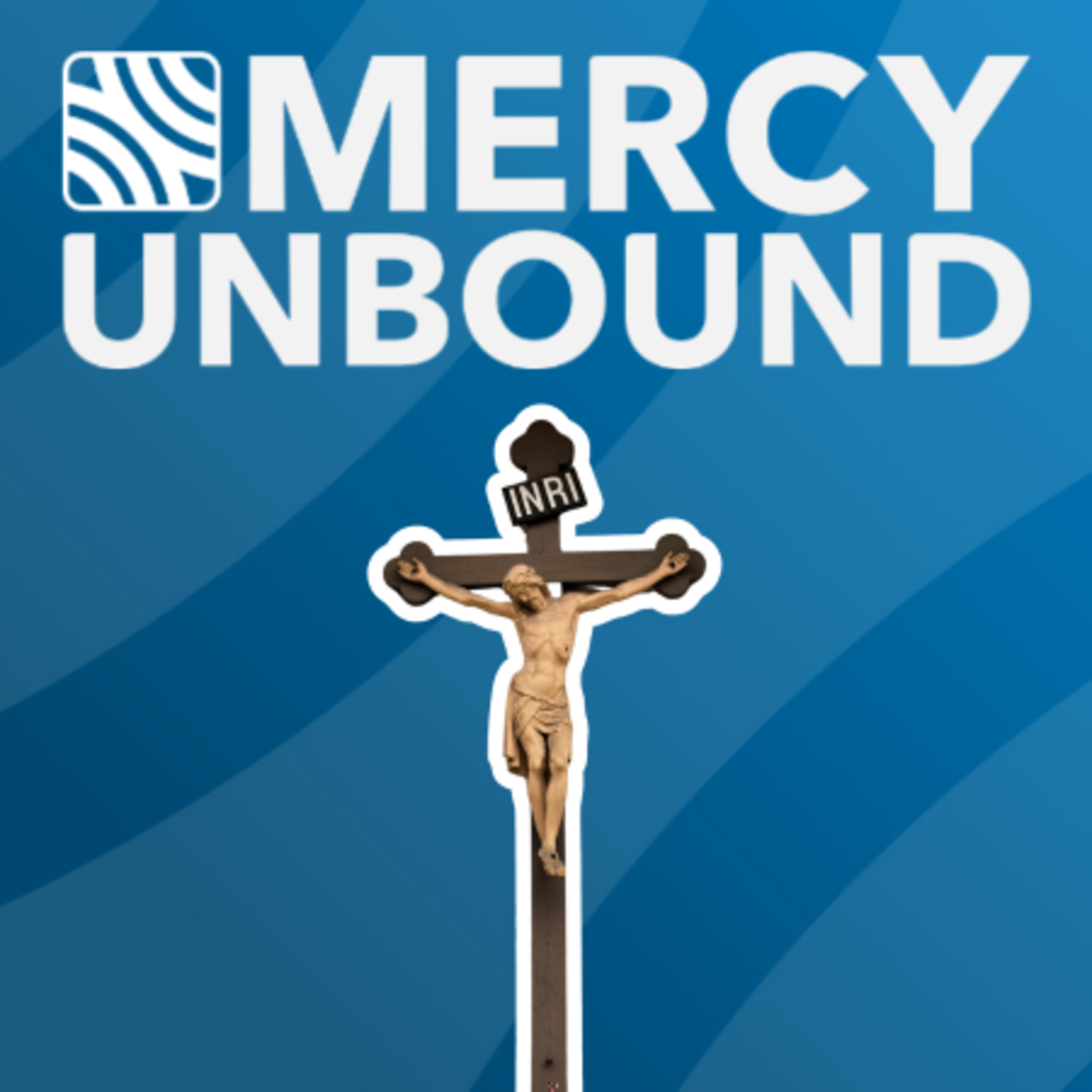
Dr. Helen Hoffner, Ed.D., is a professor, in the School of Education at Holy Family University in Philadelphia, Pennsylvania. She is also a program coordinator and oversees the reading specialist program at the university. Her scholarly interests include researching the origins of religious traditions and artifacts. In this podcast episode, we discuss her book, The Cross – A Universal Symbol, available at ShopMercy.org (use the code CRUS at checkout). This book explores the different types of crosses found throughout the world.Symbols in crosses When we see a cross, we instinctively think of Christianity. However, the cross predates the Christian faith and has held various forms and meanings long before the birth of Christ. For example, the ancient Egyptians used the ankh—a cross with a loop at the top—to symbolize life.Most modern crosses are derived from either the Greek Cross or the Latin Cross. The Greek Cross, also called Crux Quadrata (Square Cross), resembles the mathematical plus sign, with four arms of equal length. The Latin Cross, known as Crux Immissa (Imposed Cross), has a longer base stem. Distinct from these is the Russian Orthodox Cross, also called the Eastern Orthodox or Byzantine Cross. This cross features three horizontal bars that symbolize Christ’s Crucifixion. The small top bar represents the sign placed above Jesus' head by Pontius Pilate, inscribed with Iesus Nazarenus, Rex Iudaeorum (Jesus of Nazareth, King of the Jews, abbreviated as INRI). The middle bar signifies where Christ’s hands were nailed. The slanted lower bar represents the footrest of the cross, often interpreted as symbolizing the destiny of the two thieves crucified alongside Christ—one to salvation and the other to eternal punishment (perdition).Another notable inscription found on crosses is IHS, an abbreviation of the Holy Name of Jesus in Greek. The Fleur-de-Lis cross, frequently associated with France, is another symbol representing the Blessed Virgin Mary and various saints. This “flower of the lily” is a sign of purity and has also been used to signify the Holy Trinity.Crucifixion depictionsThe book also explores depictions of Christ on the cross. The word “crucifixion” comes from the Latin cruci fixus, meaning “fixed to the cross.” Traditionally, Christ is shown with his arms outstretched, but the artist Peter Paul Rubens uniquely portrayed him with his arms raised above his head, forming a Y-shaped figure.Dr. Hoffner shares the fascinating meaning behind the cross and its symbolism across cultures and faith traditions.
Embed this episode
NOW PLAYING
A Journey Through the History of the Cross
No transcript for this episode yet
Similar Episodes
No similar episodes found.