A space odyssey #2: How to study moon rocks from the Soviet sample return mission Luna 24 (39c3) episode artwork

EPISODE · Dec 28, 2025 · 53 MIN

A space odyssey #2: How to study moon rocks from the Soviet sample return mission Luna 24 (39c3)

from Chaos Computer Club - recent audio-only feed · host Paul Koetter

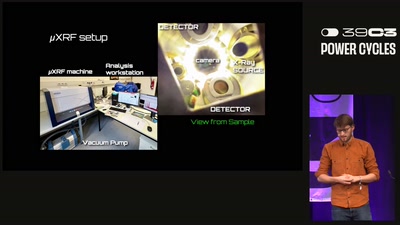
It is 1976 and the USA long stopped going to the Moon when a Soviet automatic landing station called Luna 24 descends to the Lunar surface. It touches down on 3.3 Billion year old rock formations at a place no mission has ever gone before. What exactly happened remains a mystery to this day, but the space probe managed to take a 2.3 m long drill core from the Lunar regolith, packaged the sample in a genius way and launched it for its voyage to Earth. Some days later the sample entered earths atmosphere and landed in remote Siberia and ended up in our hands more than 50 Years later. We tell the story of the sample, the people that brought it to Earth and how we analyzed it with the newest methods including µm sized high intensity X-ray beams, 30kV electron beams and LN2 cooled infrared spectrometers. In this talk, members of the Museum for Natural History in Berlin will present the story of a Luna 24 sample retrieved by the GDR from the USSR. The sample has been almost "lost" to time. When it fell into our hands, we started understanding its historical and scientific significance, produced specialized sample containers and initiated curation efforts of the sample while slowly understanding its history and geochemical composition. ### Luna 24 Moon Mission What happened on the 18th & 19th of August 1976 on the moon? Why was this landing site chosen and how was the sample retrieved and brought back to Earth? Which way did the scientists handle these extremely precious samples? Picture: Музей Космонавтики (CC0 1.0) ### Methods and Results Which methods can be utilized to gather new information from such a sample without destroying it? Which storage and curation methods must be used to preserve its value for the scientists that come after us? How did advanced analytical methods like µCT, electron microscopes, µ X-ray fluorescence spectrometers and nitrogen-cooled infrared spectrometers contribute to our understanding of the sample? Fly with us to the moon! This work has been developed together with Christopher Hamann. Licensed to the public under http://creativecommons.org/licenses/by/4.0 about this event: https://events.ccc.de/congress/2025/hub/event/detail/a-space-odyssey-2-how-to-study-moon-rocks-from-the-soviet-sample-return-mission-luna-24

It is 1976 and the USA long stopped going to the Moon when a Soviet automatic landing station called Luna 24 descends to the Lunar surface. It touches down on 3.3 Billion year old rock formations at a place no mission has ever gone before. What exactly happened remains a mystery to this day, but the space probe managed to take a 2.3 m long drill core from the Lunar regolith, packaged the sample in a genius way and launched it for its voyage to Earth. Some days later the sample entered earths atmosphere and landed in remote Siberia and ended up in our hands more than 50 Years later. We tell the story of the sample, the people that brought it to Earth and how we analyzed it with the newest methods including µm sized high intensity X-ray beams, 30kV electron beams and LN2 cooled infrared spectrometers. In this talk, members of the Museum for Natural History in Berlin will present the story of a Luna 24 sample retrieved by the GDR from the USSR. The sample has been almost "lost" to time. When it fell into our hands, we started understanding its historical and scientific significance, produced specialized sample containers and initiated curation efforts of the sample while slowly understanding its history and geochemical composition. ### Luna 24 Moon Mission What happened on the 18th & 19th of August 1976 on the moon? Why was this landing site chosen and how was the sample retrieved and brought back to Earth? Which way did the scientists handle these extremely precious samples? Picture: Музей Космонавтики (CC0 1.0) ### Methods and Results Which methods can be utilized to gather new information from such a sample without destroying it? Which storage and curation methods must be used to preserve its value for the scientists that come after us? How did advanced analytical methods like µCT, electron microscopes, µ X-ray fluorescence spectrometers and nitrogen-cooled infrared spectrometers contribute to our understanding of the sample? Fly with us to the moon! This work has been developed together with Christopher Hamann. Licensed to the public under http://creativecommons.org/licenses/by/4.0 about this event: https://events.ccc.de/congress/2025/hub/event/detail/a-space-odyssey-2-how-to-study-moon-rocks-from-the-soviet-sample-return-mission-luna-24

NOW PLAYING

A space odyssey #2: How to study moon rocks from the Soviet sample return mission Luna 24 (39c3)

0:00 53:58

No transcript for this episode yet

We transcribe on demand. Request one and we'll notify you when it's ready — usually under 10 minutes.

Breaking News Show | eTurboNews Juergen Thomas Steinmetz News is relevant to the global travel and tourism industry, human rights and global issues.Breaking news when it happens and only from the source. That Hoarder: Overcome Compulsive Hoarding That Hoarder Hoarding disorder is stigmatised and people who hoard feel vast amounts of shame. This podcast began life as an audio diary, an anonymous outlet for somebody with this weird condition. That Hoarder speaks about her experiences living with compulsive hoarding, she interviews therapists, academics, researchers, children of hoarders, professional organisers and influencers, and she shares insight and tips for others with the problem. Listened to by people who hoard as well as those who love them and those who work with them, Overcome Compulsive Hoarding with That Hoarder aims to shatter the stigma, share the truth and speak openly and honestly to improve lives. HOMELAND HOMELAND The Church is a body not a building. It's the bride of Jesus Christ! Jesus is coming back for a mature bride. That means it's time for the church of Jesus Christ to move from milk to meat. This is the hour of maturity!HOMELAND is an announcement that the church is being set free. Only the church has the ability to transform the world. The kingdom's of this world will become the kingdoms of our Lord and Savior!All of creation has been waiting for this moment! Sons and daughters of God are rising up and taking their seat! LIGHTS, CAMERA, SMILE! Creatives Club Media Lights, Camera, Smile, is a podcast for anyone with a dream to share something with the world, out of the overflow of themselves - be it their mind, their heart, their personalities, and much more. Each of us are alive in this moment in time, with an innate ability to have ideas and create various things to benefit both ourselves and the people around us for a reason, and here, you will find the encouragement, the inspiration, and the motivation to do just that. Hosted by Cicily, founder of Creatives Club, she dives into various topics surrounding creativity and business. Exploring entrepreneurship for creatives in a corporate reality, sharing tips and tricks in a media centered company, answering questions regarding what a creative actually is are just a few of the things discussed on this podcast. Be encouraged to create for yourself as Cicily gets vulnerable by pivoting the camera to herself for the first time.To submit questions for Cicily to answer, or have her address certain t

Frequently Asked Questions

How long is this episode of Chaos Computer Club - recent audio-only feed?

This episode is 53 minutes long.

When was this Chaos Computer Club - recent audio-only feed episode published?

This episode was published on December 28, 2025.

What is this episode about?

It is 1976 and the USA long stopped going to the Moon when a Soviet automatic landing station called Luna 24 descends to the Lunar surface. It touches down on 3.3 Billion year old rock formations at a place no mission has ever gone before. What...

Can I download this Chaos Computer Club - recent audio-only feed episode?

Yes, you can download this episode by clicking the download button on the episode player, or subscribe to the podcast in your preferred podcast app for automatic downloads.
URL copied to clipboard!