
EPISODE · May 20, 2026 · 3 MIN
A ‘working Assembly’ needs cooperation
from Korea JoongAng Daily - Daily News from Korea
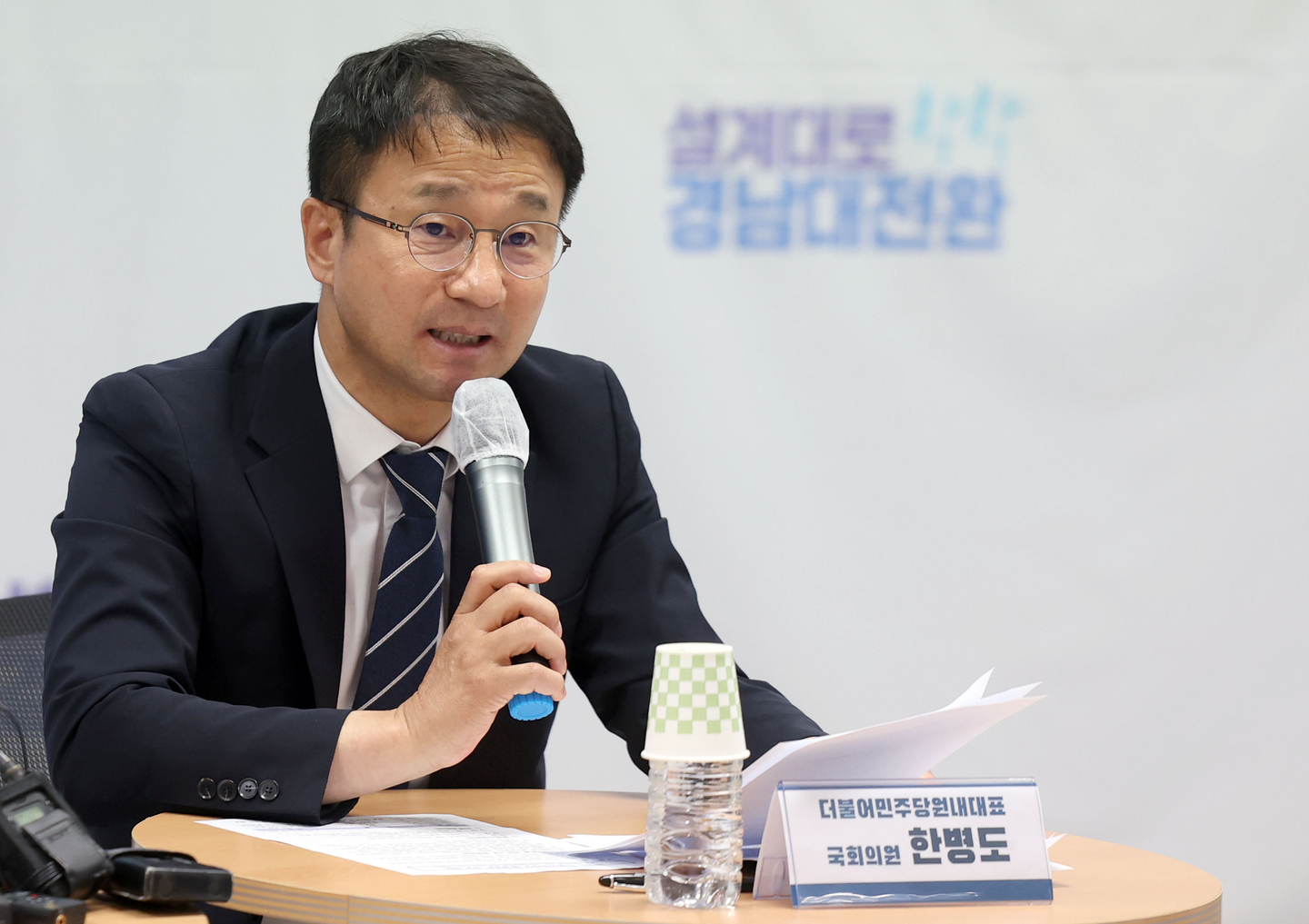
Han Byung-do, floor leader of the Democratic Party (DP), said Wednesday that the ruling party would ensure the second half of the 22nd National Assembly would function according to the principle of a "working Assembly" and would not allow parliamentary procedures to become tools for obstructing state affairs. Regarding the chairmanship of the Legislation and Judiciary Committee, traditionally one of the most contested posts during negotiations over Assembly leadership, Han added that he had "no intention" of yielding the position to the opposition People Power Party. His remarks followed controversial comments by DP leader Jung Chung-rae, who recently said he had even considered taking all standing committee chairmanships for the ruling party during negotiations over the Assembly's second-half structure. Han himself had previously made remarks to a similar effect. Meanwhile, Cho Jeong-sik, recently selected as the DP's candidate for National Assembly speaker, also stirred controversy after saying he would prioritize speed over bipartisan cooperation in passing legislation tied to the government's agenda. The DP's heavy-handed operation of the Assembly is hardly a new phenomenon. Still, such comments emerging even before formal negotiations over committee assignments have begun are deeply concerning. They suggest the ruling party views the opposition not as a partner in dialogue aimed at finding broadly acceptable compromises, but as an obstacle blocking the government's agenda. Attempting to exclude the opposition merely because it opposes government policies or legislation is a classic feature of majoritarian dominance. It also conflicts with the parliamentary democratic principle of checks and balances. Under the National Assembly Act, a party holding a majority of seats can theoretically monopolize all 18 standing committee chairmanships. Yet previous Assemblies distributed those positions between ruling and opposition parties according to seat ratios and often assigned the Legislation and Judiciary Committee chairmanship to the opposition. The practice reflected a parliamentary belief that power subject to oversight ultimately benefits both the public and the state. When political conventions are overturned through numerical strength alone, the harmful consequences of unchecked power inevitably follow. The DP itself recently experienced such backlash when it aggressively pushed a special counsel bill on alleged prosecutorial manipulation, only to face criticism that it was intended to help cancel the president's criminal indictment. The party was ultimately forced to retreat. A truly "working National Assembly" begins with recognizing the opposition and engaging in deliberation together. Speed alone cannot justify excluding dissenting voices. One-sided rule and legislative efficiency are not synonymous. This article was originally written in Korean and translated by a bilingual reporter with the help of generative AI tools. It was then edited by a native English-speaking editor. All AI-assisted translations are reviewed and refined by our newsroom.
Embed this episode
NOW PLAYING
A ‘working Assembly’ needs cooperation
No transcript for this episode yet
Similar Episodes
No similar episodes found.
Similar Podcasts
No similar podcasts found.