
EPISODE · Nov 8, 2021 · 1H 2M
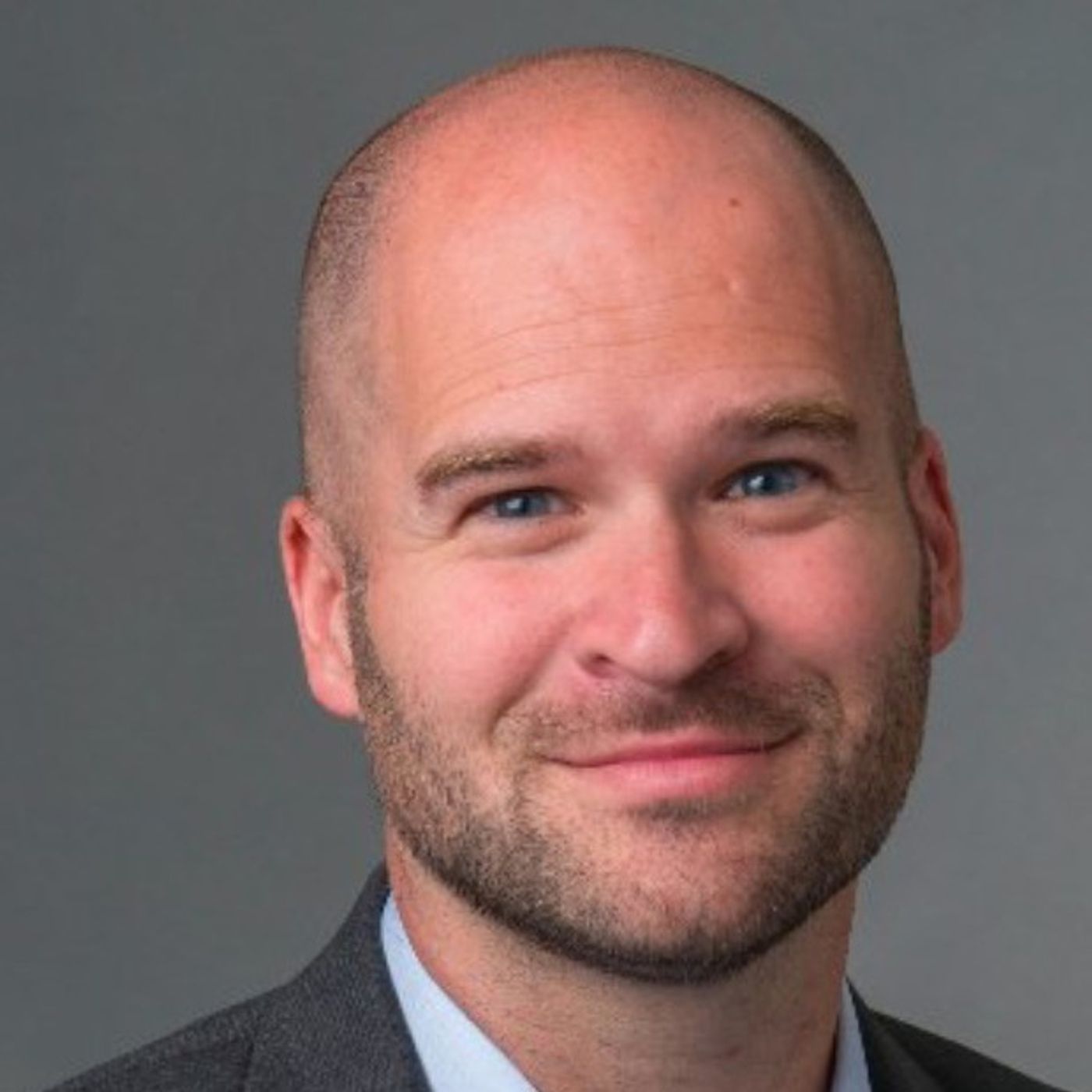
Aaron Wright: On The Rise of DAOs and Blockchain Governance.
from Boardroom Governance with Evan Epstein · host Aaron Wright, Evan Epstein
(0:00) Intro (2:22) Start of interview (3:04) Aaron's "origin story". He got interested in Bitcoin early on, and collaborated on the launch of Ethereum. He co-authored a book called The Rule of Code, Blockchain and the Law (2018). He's been constantly playing around with the technology itself and he co-founded OpenLaw, which makes it easy to create legal agreements that work with Ethereum. Most recently he's been spending a lot of time pulling together a bunch of DAOs. (5:13) How blockchain can disrupt corporate governance. (6:35) The history of DAOs (6:35). Dan Larimer's Decentralized Autonomous Companies (DACs) article (2013). The concept of DAOs picked up with the Ethereum blockchain. Beyond just corporations, to organizations generally. A lot of people think about blockchain as a system to transfer value in a fast way (~12 mins for Bitcoin and ~12 secs for Ethereum). But beyond this transfer of value, blockchain can also be understood as a system to coordinate disparate people with a set of smart contracts. This allows a new way to structure organizations. (12:13) The story of The DAO (2016). "It was pretty revolutionary in terms of its objective." After the project got hacked, it led to "quite a dramatic (governance-related) decision to fork the Ethereum network." For a number of years, people had "PTSDAO", they were afraid of other hacks. "But about 2-2.5 years ago that started to change, PTSDAO began to wear off and developers began to look at this problem again." New DAO platforms and tooling emerged, the most notable example of them was Moloch DAO (it provided grants to Ethereum projects). More innovation followed, and DAOs were capable of not only giving grants but also making investments. "There has been a sort of explosion of DAOs." To put some numbers to it, "In Feb 2019 there was ~$10m in these DAO like structures with ~2,000 users, today depending on the numbers you look at, it's north of $10bn with several hundreds of thousands of users." (20:30) His article "The Rise of DAOs: Opportunities and Challenges" (Stanford Journal of Blockchain, Law & Policy, 2021). Questions on legal frameworks for DAOs: partnerships, LLCs, new state DAO LLC laws: Vermont and Wyoming. Unincorporated Non-Profit Associations (UNAs). Wrapped and unwrapped DAOs. How to think about interests in DAOs (securities or something different like member-managed partnerships). Separating economic and governance rights. Are tradable governance rights securities? Grey zone. (29:58) His take on The LAO (the DAO that he co-founded focused on venture investments). "This was an effort to reboot the original The DAO concept but in a compliant US law format." It's structured as a Delaware LLC, with changes in its operating agreement that waived fiduciary duties and conflicts of interests. Core decision-making was delegated to a smart contract (code). They pooled capital (in Ether), members were only permitted to purchase up to 9% of the LAO (most purchased between 1-2%). There are about 75 members, scattered around the world, chatting via discord, all decisions are made via blockchain-based voting. "It's created a hive-mind." "Instead of having a few people in charge like in a VC fund, you have a collective group." "The decision-making has been pretty great." "The members of the DAO have been able to move faster than traditional VC funds, generating a higher rate of return (still early so TBD) and better at predicting the future of the market, such as with NFTs." "A network of capital deployers" (37:21) On DAOs' decision making (7 day voting period), rough consensus (no quorum requirement) and internal mechanisms. Faster and better decision-making (time will tell if the latter is true). Each member is provided with "ragequit" rights (automatic redemption rights). "[I]t usually happens at the beginning, when they join a DAO and they either don't have the time to participate and they feel they should, or they decide they didn't like the opportunity as much." (41:20) - On FlamingoDAO and Non-Fungible Tokens (NFTs). Inside The LAO many members wanted to back NFT projects. A question emerged internally to either invest in the projects or buy the art. They decided to do both. In Oct 2020 Flamingo DAO was born. Now they have 9 different DAOs ("about $200m in ETH has been contributed to these DAOs", over 200 people): The LAO (VC investments, it can invest in equity or tokens, could lead a round, draft a term sheet, nominate a board member who could be any member of the DAO - it hasn't done so yet). How people can become members (accredited investors). Flamingo DAO (NFT projects and art). "It started with a contribution of about 6,000 ETH ($6M at the time) and now if new members want to join they are valuing Flamingo DAO's interests at over $1 billion." (in just a year of existence!) Neptune DAO (DeFi) Neon DAO (Metaverse). "It was opened up last week, it took 40mins to close. It's a $20 million vehicle." ("that process for a VC fund or hedge fund would take 3-6 months."). Red DAO (digital fashion) ReadyPlayer DAO (gaming) Museo (NFT-native museum, art collection) Two more in development. (52:33) On Sequoia's move to a permanent fund, "[I]t mirrors the structure of our DAO network." The LAO operates like a DAO of DAOs (like Sequoia's permanent fund). (53:59) His fascination with DAOs: "a lot of it is corporate governance theory at its core." "Blockchain technology is providing a laboratory to play around and geek out on corporate governance." "Maybe [in a digital world] it's better: 1) to have rough consensus voting instead of quorum voting, 2) to have a broader base of decision makers for investing instead of a few people [like in a traditional VC fund], 3) to have more flexible redemption rights instead of lock-up windows or capital calls, 4) to have people provide more capital upfront, 5) to delegate voting rights to other members (different ways to provide proxy voting). (56:49) His favorite books: Infotopia by Cass Sunstein (2006) Road to Serfdom by F.A. Hayek (1944) Fans, Bloggers and Gamers. Exploring Participatory Culture. by Henry Jenkins (2006) The Wealth of Networks by Yochai Benkler (2006) Code and Other Laws of Cyberspace by Lawrence Lessig (2000) (58:02) - His mentors: Jimmy Wales (founder of Wikipedia). Gil Penchina (former CEO of Wikia). When he was a lawyer in private practice he learned a lot from the litigators and corporate attorneys he worked with. David Roon (co-founder at OpenLaw, soon to be re-named Tribute Labs) Brett Frischman (mentored him at Cardozo Law School) (1:00:05) An unusual or absurd habit that he loves: loves walking. (1:00:30) The living person he most admires: his mother. Aaron Wright is an Associate Clinical Professor of Law at Cardozo Law School; Co-Founder at OpenLaw, The LAO, FlamingoDAO. You can find him on Twitter @awrigh01 If you like this show, please consider subscribing, leaving a review or sharing this podcast on social media. You can follow Evan on social media at: Website: boardroom-governance.com X: @evanepstein LinkedIn: https://www.linkedin.com/in/epsteinevan/ Substack: https://evanepstein.substack.com/ YouTube: https://www.youtube.com/@BoardroomGovernance __ To support this podcast you can join as a subscriber of the Boardroom Governance Newsletter at https://evanepstein.substack.com/ __ Music/Soundtrack (found via Free Music Archive): Seeing The Future by Dexter Britain is licensed under a Attribution-Noncommercial-Share Alike 3.0 United States License
Embed this episode
What this episode covers
Welcome to the Boardroom Governance Podcast. I’m your host, Evan Epstein. In this episode, I talk with Aaron Wright, an Associate Clinical Professor of Law at Cardozo Law School and Co-founder of OpenLaw. Aaron has extensive experience researching, writing and working with blockchain technology, Ethereum and Decentralized Autonomous Organizations or DAOs. In this podcast, we talk about how blockchain technology could disrupt traditional corporate governance. We specifically talk about DAOs, and his real-world experience with The LAO, Flamingo DAO and other DAOs that he’s involved with focused on venture investing, NFTs, DeFi, the Metaverse, Gaming, Internet Art and other ventures. I loved exploring with Aaron the concept of DAOs and the next frontiers of corporate governance. I thoroughly enjoyed this conversation, and I hope you do too. If you like this show, please consider subscribing, leaving a review or sharing this podcast on social media. You can find all the show notes on the website boardroom-governance.com and please feel free to subscribe to the Boardroom Governance Newsletter at evanepstein.substack.com
Ready to play
Aaron Wright: On The Rise of DAOs and Blockchain Governance.
No transcript for this episode yet