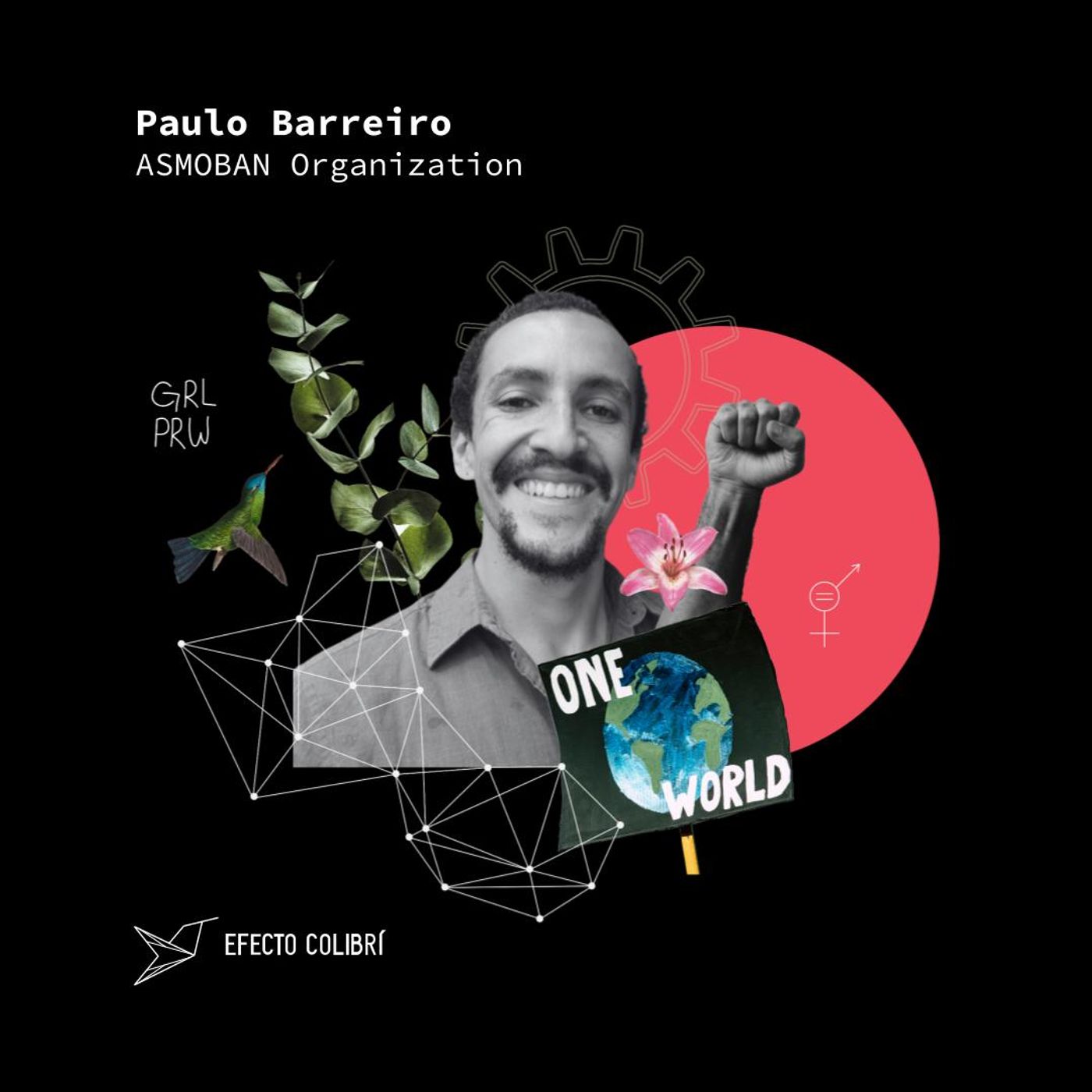
Adaptive governance: Community development through ecosystem learning episode artwork

EPISODE · May 9, 2024 · 40 MIN

Adaptive governance: Community development through ecosystem learning

from Proyecto Co · host Efecto Colibrí

Today we are going to Esperança-Condurú ecological corridor of Southern Bahia in Brazil to understand that we have a lot to learn from nature and from communities that have been organizing themselves in a natural and horizontal way.  Paulo Sanjines Barreiro is an academic that studies how collective action of the local civil society organization ASMOBAN has improved critical life conditions in the Esperança-Condurú ecological corridor. An investigation for which he won Stone Soup´s Award on Research in Social Innovation 2023. Today, we talk about ecosystem governance, collective action and the values needed to make it happen. “An ecosystem is s a dynamic set of relationships that are collaborating towards self sustenance” - PauloIn this episode you will hear about:Passion for Nature and Community (05:00): The importance of having passion for nature, inspired by its connection to life and understanding oneself better through nature. Paulo tells us how  his early childhood experiences near Lake Titicaca in Bolivia shaped a fascination with people living in sync with nature's rhythms, and more, shifted his career path to work closely with forests and communities, now residing in Southern Bahia, surrounded by nature.Impact on Health and Well-being (14:00): The interviewed experienced a health decline due to a fast-paced, goal-oriented lifestyle working long hours. Rediscovered healing through nature, relying on natural remedies and lifestyle changes to recover from gastritis. Emphasizes the importance of slowing down and prioritizing health in the context of nature's influence.Understanding Ecosystems (23:30): Ana and Paulo define ecosystems as dynamic relationships fostering self-sustenance, resilience, and the progression of life from basic to complex forms. The academic shared his studies of watershed ecosystems and recognized the challenge in translating ecological knowledge for effective human conservation.Human Ecosystems and Education (32:00): The conversation engages in policy analysis and evaluation for ecosystem governance in the tropics, focusing on collective action within communities. They advocate for a shift in educational paradigms, valuing traditional wisdom, contemplation, and a holistic view of life rather than practical utility.Observation, Policy Building, and Collective Intelligence (44:30): A description of observed community interactions, serves as a mirror, and engages in policy-building processes within local associations. To finish, he highlights the importance of collective intelligence in community development, emphasizing flexibility, adaptation, and a shared sense of purpose.This conversation beautifully unravels a journey from personal passion for nature to applying this passion in community-driven environmental governance, intertwining health, education, policy analysis, and the dynamics of collective intelligence within ecosystems.Paulo Sanjines Barreiro holds a masters in science focused on ecosystem markets and governance from Yale Forestry School. He has ample experience in field research on integrated landscape management for both policy and socio-economical analysis. He is well acquainted with and worked in both public and private sectors; Paulo has managed and monitored large protected areas in Bolivia, coordinated and monitored ecosystem conservation projects in Southern Bahia, where he resides since 2012; and continues to act as both grassroot activist and researcher for ASMOBAN (explained below) on climate education and food sovereignty community based projects in Southern Bahia.The Neighbor's Association of Bairro Novo (ASMOBAN for its acronym in Portuguese) was founded in 2012. The Association has a unique network governance approach with its more than 10 nodes, or initiatives, among them the “Community Fair Saberes e Sabores”, created in 2019, as a solidarity economy strategy to generate family income; and the “Educational and Community vegetable garden”, called Hortinha by the children, created in 2021, to contribute to the nutrition and education of children and adolescents using alternative pedagogical approaches such agroecology. The Fair and the Hortinha directly benefit people in situations of food and economic fragility, residents of Bairro Novo. Thus, offering spaces of solidarity economy and community rooting with an important political, economic and socio-environmental role.This is a produccion and distribuition for Efecto Colibrí - Your podcast site for an inclusive, just and regerative reality.

Today we are going to Esperança-Condurú ecological corridor of Southern Bahia in Brazil to understand that we have a lot to learn from nature and from communities that have been organizing themselves in a natural and horizontal way.  Paulo Sanjines Barreiro is an academic that studies how collective action of the local civil society organization ASMOBAN has improved critical life conditions in the Esperança-Condurú ecological corridor. An investigation for which he won Stone Soup´s Award on Research in Social Innovation 2023. Today, we talk about ecosystem governance, collective action and the values needed to make it happen. “An ecosystem is s a dynamic set of relationships that are collaborating towards self sustenance” - PauloIn this episode you will hear about:Passion for Nature and Community (05:00): The importance of having passion for nature, inspired by its connection to life and understanding oneself better through nature. Paulo tells us how  his early childhood experiences near Lake Titicaca in Bolivia shaped a fascination with people living in sync with nature's rhythms, and more, shifted his career path to work closely with forests and communities, now residing in Southern Bahia, surrounded by nature.Impact on Health and Well-being (14:00): The interviewed experienced a health decline due to a fast-paced, goal-oriented lifestyle working long hours. Rediscovered healing through nature, relying on natural remedies and lifestyle changes to recover from gastritis. Emphasizes the importance of slowing down and prioritizing health in the context of nature's influence.Understanding Ecosystems (23:30): Ana and Paulo define ecosystems as dynamic relationships fostering self-sustenance, resilience, and the progression of life from basic to complex forms. The academic shared his studies of watershed ecosystems and recognized the challenge in translating ecological knowledge for effective human conservation.Human Ecosystems and Education (32:00): The conversation engages in policy analysis and evaluation for ecosystem governance in the tropics, focusing on collective action within communities. They advocate for a shift in educational paradigms, valuing traditional wisdom, contemplation, and a holistic view of life rather than practical utility.Observation, Policy Building, and Collective Intelligence (44:30): A description of observed community interactions, serves as a mirror, and engages in policy-building processes within local associations. To finish, he highlights the importance of collective intelligence in community development, emphasizing flexibility, adaptation, and a shared sense of purpose.This conversation beautifully unravels a journey from personal passion for nature to applying this passion in community-driven environmental governance, intertwining health, education, policy analysis, and the dynamics of collective intelligence within ecosystems.Paulo Sanjines Barreiro holds a masters in science focused on ecosystem markets and governance from Yale Forestry School. He has ample experience in field research on integrated landscape management for both policy and socio-economical analysis. He is well acquainted with and worked in both public and private sectors; Paulo has managed and monitored large protected areas in Bolivia, coordinated and monitored ecosystem conservation projects in Southern Bahia, where he resides since 2012; and continues to act as both grassroot activist and researcher for ASMOBAN (explained below) on climate education and food sovereignty community based projects in...

NOW PLAYING

Adaptive governance: Community development through ecosystem learning

0:00 40:50

No transcript for this episode yet

We transcribe on demand. Request one and we'll notify you when it's ready — usually under 10 minutes.

On the Floor with Little Fern Little Fern Salon Step into the world of Little Fern Salon, where two hairstylists, Female co-owners,  serve up behind-the-chair secrets every other week. From the chaos of running a business to heart-to-hearts with clients, nothing is off-limits in this unfiltered look at salon life. Expect juicy stories, unexpected twists, and a touch of drama, all served with a side of wit and style. Each episode is a reminder that no day—or conversation—is ever ordinary in our little corner of the world. XOXO, Fern Girlz Explicit TCAST: The Future of Data & AI TARTLE The Data Intelligence Podcast (TCAST) explores the intersection of AI, data privacy, and ethical technology. Join Alexander McCaig and Jason Rigby as they decode the future of data ownership, artificial intelligence, and digital privacy with industry leaders, researchers, and innovators.Each episode delivers actionable insights on:AI and machine learning developmentsData privacy and ownership strategiesEthical technology implementationReal-world applications of data intelligenceFuture trends in digital identity and data marketplacesPerfect for tech leaders, data scientists, privacy advocates, and forward-thinking professionals looking to understand and shape the future of data and AI.Presented by TARTLE, pioneers in ethical data exchange and AI enhancement. New episodes every week.The show is hosted by Co-Founder and Source Data Pioneer Alexander McCaig and Head of Conscious Marketing Jason Rigby.What's your data worth? Find out at (https://tartle.co/)Watch the podcast on Yo Explicit The Lindroth Hockey Podcast Andrew Lindroth The Lindroth Hockey Podcast is brought to you by co-hosts/son and father duo, Andrew & Jim Lindroth! This weekly show interviews hockey players, coaches, and GMs from around the world, bringing you behind-the-scenes access to the world of professional hockey!Follow us on social media!Andrew Lindroth- Twitter, @andrewlindrothh | Instagram @andrewlindrothJim Lindroth- Twitter, @JLindroth | Instagram @Jlindroth007 Explicit The Boys Josh The Boys podcast is hosted by Josh Dziekan and co hosted by Luke Bouse. We talk about current news topics and anything else we feel like. Explicit

Frequently Asked Questions

How long is this episode of Proyecto Co?

This episode is 40 minutes long.

When was this Proyecto Co episode published?

This episode was published on May 9, 2024.

What is this episode about?

Today we are going to Esperança-Condurú ecological corridor of Southern Bahia in Brazil to understand that we have a lot to learn from nature and from communities that have been organizing themselves in a natural and horizontal way.  Paulo Sanjines...

Is there a transcript available for this episode?

Yes, a full transcript is available for this episode. You can read the complete transcript on the episode page.

Can I download this Proyecto Co episode?

Yes, you can download this episode by clicking the download button on the episode player, or subscribe to the podcast in your preferred podcast app for automatic downloads.
URL copied to clipboard!