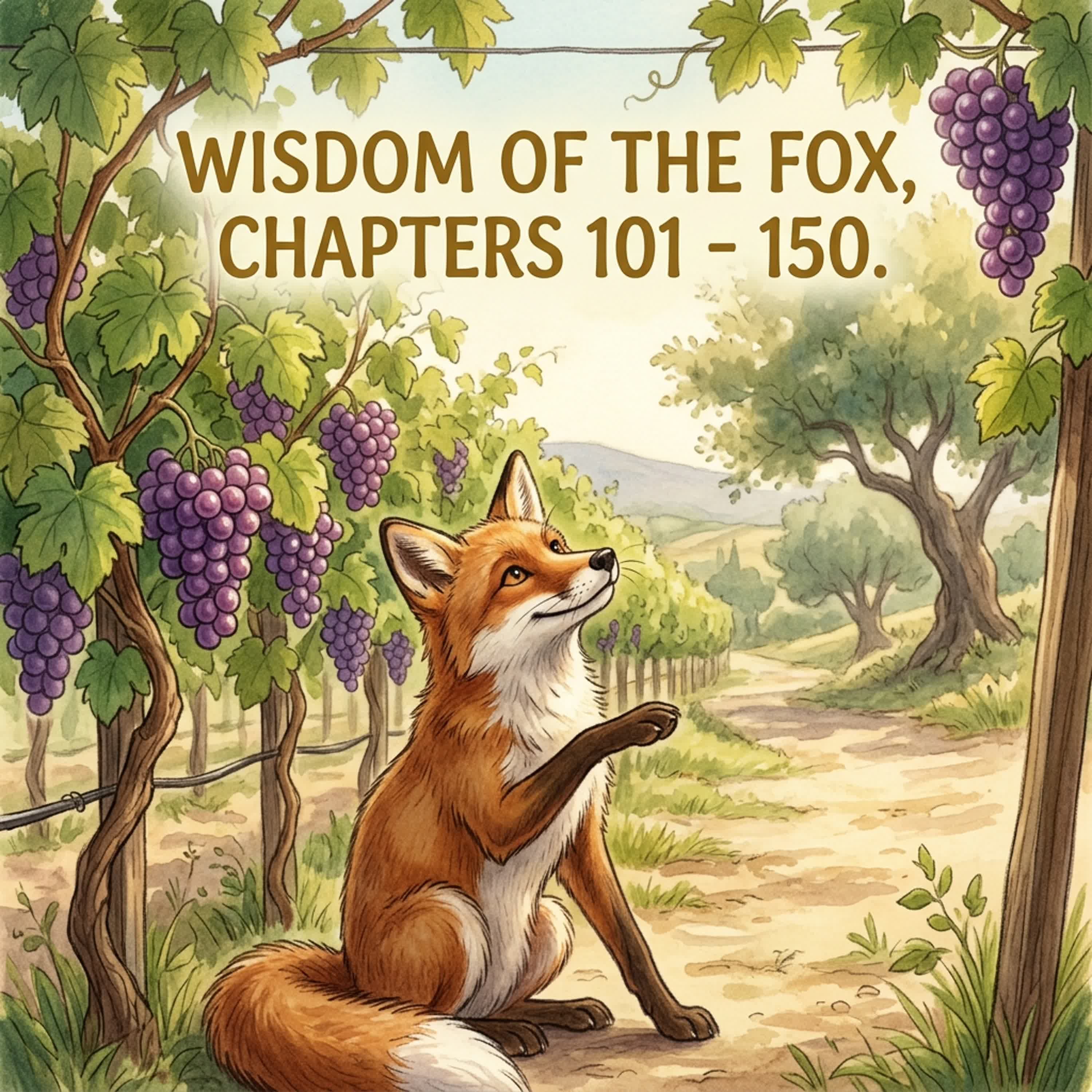
Aesop's Fables - 03 - Chapters 101-150
from Wisdom for the Present: Western Wisdom Literature Hosted by Kanu Emeruwa
What if we start with an intriguing hook about the psychological theater of human life and how the dramatic encounters in Aesop’s Fables expose the raw mechanics of modern survival? Instead of cozy bedtime stories, these fables act as a stark psychological mirror. When we treat these fables as a masterfully constructed play of human behavior, we see how their stark conflicts map perfectly onto our 21st-century boardrooms, algorithms, and relationships. The opening conflicts of this behavioral drama dismantle our deeply held illusions of contracts and cooperation. When the Lion and the Wild Ass team up for a hunt, the Ass expects a fair, equal split based on shared labor. However, the Lion immediately divides the spoils using a pseudological, bureaucratic show of categories to justify taking everything under the threat of violence. This opening act reveals a brutal truth: in the presence of a profound power imbalance, agreements are only as durable as the willingness of the stronger party to respect them. This psychological play goes deeper into the dark arts of manipulation and the traps of the human ego. In the conflict between the Cat and the Cock, we see the anatomy of gaslighting, where a bad-faith actor uses rational debate as a mere "costume" to distract their prey while preparing to pounce. We also witness the tragic comedy of the Mother Frog, who is so terrified of her own insignificance when confronted by an Ox that she literally inflates her physical scale until she bursts. These characters illustrate how we artificially inflate our lifestyles or exhaust ourselves in unwinnable debates with predators who have already decided how the interaction will end. In the next acts, we watch the chaotic breakdown of logic and the costly wars of attrition. When the Lion and the Bear exhaust themselves fighting to a standstill over a kid goat, they surrender the entire prize to a sideline-watching Fox—a perfect warning against draining our resources in ego-driven battles. Furthermore, when the public in the theatre rejects a real, squealing pig in favor of a clown's polished imitation, we see our collective preference for comfortable, highly filtered lies over unvarnished reality. We reject the real pig because it creates cognitive friction, choosing instead the polished, artificial performances of success and romance. Ultimately, reclaiming our agency requires shedding our "human suits" of superficial fixes and taking raw, uncomfortable action. Like the Waggoner who sits in the mud screaming for Hercules, we often outsource our responsibility to protect our egos from the pain of failure. But real transformation only begins when we put our own shoulders to the wheel, map our instinctual triggers, and refuse to provide the "feathers" for the very arrows that shoot us down. This episode challenges us to run our own earthenware audit, calculate the cortisol cost of the luxurious "town" larders we chase, and step out of the predatory games altogether. In This Episode * The Illusion of the Contract: Why partnerships with a massive power imbalance are only as strong as the stronger party's willingness to honor them. * Logic as a Costume: How bad-faith actors reverse-engineer justifications to disguise their pre-determined motives, mirroring modern gaslighting. * The Economics of Attrition: How ego-driven conflicts deplete our vital resources, leaving the spoils to opportunistic onlookers. * Cosmetic vs. Structural Change: Why changing our circumstances (the "human suit") fails to alter our core, instinctual behavior under stress. * Shattering Learned Helplessness: Why we must stop waiting for a savior (Hercules) and take direct personal agency to generate real progress. * The Tragedy of Comparative Ego: How artificially inflating our scale to match others leads to emotional and financial bankruptcy. * The Cortisol vs. Calorie Calculus: Balancing high-stress luxury against the simple peace of a low-stress environment. Practical Reflection * Where in your life are you bringing a logical, fact-based argument to someone who operates purely on power? * What is the specific "mouse" or trigger in your life that causes you to abandon your highest intellectual resolutions under stress? * What "feathers" are you unknowingly providing to stabilize the very arrows that are shooting you down? Suggested Substack Excerpt Delve into the brutal psychological truths hidden inside Aesop's ancient fables. Learn how to identify bad-faith actors, manage your instinctual triggers, and choose the economics of peace over the high cost of unchecked ambition. AI Disclosure This episode was created using Google NotebookLM Audio Overview, based on human-curated source material, structured guidance, and editorial review. AI is used as a tool for clarity and delivery, not as a replacement for thoughtful study or engagement with the original texts. Copyright © 2026 Wisdom for the Present / Kamashcu Production Studios. All rights reserved. This is a public episode. If you would like to discuss this with other subscribers or get access to bonus episodes, visit wisdomforthepresent.substack.com
Embed this episode
No transcript yet.