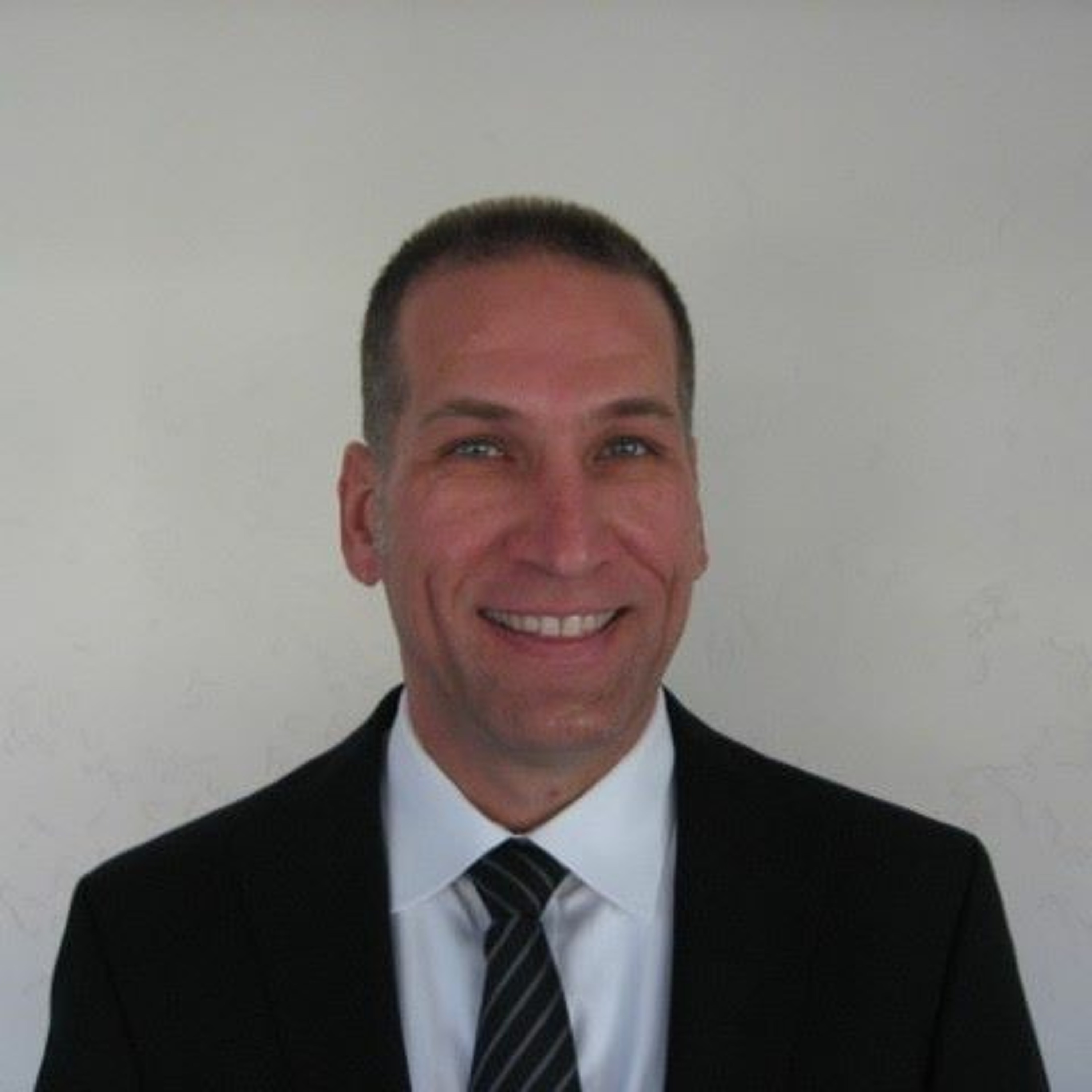
Hello and welcome to the A-Ferm Podcast. I'm your host, Paul Marshall. Today, we'll be speaking with Wendell Connor from HUD's Office of Public and Indian Housing. All about their Enterprise Risk Management program.
Hello and welcome to the A-Ferm Podcast. Today, we have Wendell Connor from HUD Public and Indian Housing. Welcome. Welcome.
Thank you. We've also got our co-host today, Tal Ciman. Good afternoon. So we'd like to start off just if you Wendell, if you don't mind, just giving us a basic overview of your program, your agency, your mission, and kind of some of the unique aspects of the risks.
Sure. So I work for the U.S. Department of Housing, Urban Development, in the Public and Indian Housing Division, or P-I-H. P-I-H is responsible for managing a budget of about $28 billion, and we're looking at about 3.2 million units of affordable housing throughout the United States.
So we have regional offices in nine regions. We have about 1,300 employees in the Office of Public and Indian Housing. And we also have a decentralized operation, which we'll get into this, I'm sure. One of the challenges of breaking down the cylinders and bringing it to one P-I-H.
All right. And in terms of your risk management program, if you were going to say, where are we in a majority continuum, where one is ad hoc? In other words, it's happening, but there's not a lot written down in terms of the structure and how you do it. Two would be defined, everything is written down, but it doesn't always happen that way.
Three would be regularly implemented, in which case you're following the policies and procedures and everybody kind of rolls with that playbook. Four would be measured and managed where you're learning from your processes, and then you're trying to make them better. And five would be optimized. It's very mature, and you guys have learned a lot, and you're thinking, I don't think this program can get very much better this.
Yeah, I think we're somewhere in between a three or four on that scale. We've been at it now for almost three years. It actually took us about five years in total to get off the ground, but our risk committee has actually been meeting three years. But I can tell you, we've accelerated in the last six months.
We've had a change in leadership in our Office of Public and Indian Housing that has become an executive champion, if you will. So we're at the stage now where we're doing our annual risk assessments, and we're at the stage where we're improving our existing processes. Fantastic. Now, how are you organized?
Where does the CRO exist within the organization, and what kind of officer division supports its practice amongst the organization? Yeah, so that's an excellent question. So HUD actually has their own chief risk officer, his name is Larry Costigan. I'm the chief risk officer for the Office of Public and Indian Housing, which is one of the divisions that would report up to the mothership HUD, if you will.
I sit at the real estate assessment center, which is one of the 12 different divisions within P.I.H., but I do report directly for the purpose of risk management to the general deputy assistant secretary, which is the highest civil service level employee in the Office of Public and Indian Housing. Are there dedicated staff that support the ERM processes and meetings and training and artifacts? There is. It's a very interesting arrangement in our office in that I also manage another group called the Quality Assurance Subsystem, which is a group of CPAs that primarily do quality control reviews of auditors.
So part of the reason we ended up with this function is because of the in-house expertise we already have. I do have a staff of four that are dedicated solely to doing enterprise risk management, but I'm able to supplement that staff with the existing CPAs and MBAs that I have working for me for that other aspect of our operations. Well, let me ask you too. So where did the idea come to start a program like this over there?
I mean, where did this all come from? Yeah, you know, so we started before A123, have this as a requirement. And what happened is we were having problems with high profile public housing authorities having financial failure. So the general deputy assistant secretary at the time, her name was Deborah Hernandez, recognized the need for risk management.
Maybe didn't recognize the need for enterprise risk management, but it was through those initial conversations and desire to improve our oversight of troubled housing authorities that our ERM program emerged. Okay. And how do you got how does yours enterprise risk management office interface with a larger HUD ERM department level program? So that's a good question.
So, I would say the agency-wide ERM effort was about two years behind where we are in Pih, but there's a working group that meets on a regular basis, on a biweekly basis, which is designed to incorporate each of the different program offices into the larger HUD ERM system. We have a process where our risks roll up to the to the HUD level risk and we're responsible for managing the Pih level risks. Hopefully that answers your question. Yeah, that's great.
And in terms of the different categories of risk where you have your operational mission risk, you have mission support strategies, you have mission support structures, CIO, Chico, CFO, privacy, administrative services, like reputation risk for the overall agency within HUD or your impact on HUDs reputation, compliance risks, maybe information security program risk, how much, how much of those different categories are now part of the program, which ones aren't and kind of why aren't they? And then what's the general trend towards what might get blended in and might not? So at the agency level, all of those risks are currently being managed at our Office of Public and Indian Housing level. We've spent a lot of time working on strategic risk and spent a lot of time working on operational risk.
And actually it was that operational risk that was the hook that got us to where we are in the maturity model. So our risk committee is made up at the Pih level of our Deputy Assistant Secretaries that are responsible for each of our program areas and it's chaired by our general Deputy Assistant Secretary. Getting Deputy Assistant Secretaries that may not have the background in risk management, it may not even have the accounting backgrounds to understand completely internal control and management and the foundations of enterprise risk hooked to the idea of enterprise risk management. It was those operational risks that really got them interested in running the day-to-day operations.
And actually going all the way back full circle, it was the troubled public housing authorities in our portfolio that keeps everybody interested and keeps this whole thing working for us. Well, you know, it's nobody likes a crisis and nobody likes a bad story, but it's definitely encouraging to hear how an agency took a challenging situation and turned it into an opportunity to strengthen management processes in a way that make it more agile and more able to see and avoid risk coming down the future. What a great credit to your organization. You guys have done that.
Thank you. So, I mean, since you have the right folks in the room, the committee, you know, and not to what extent does this drive budgeting and strategic planning and this kind of thing. Let me hop right on that because that was actually one I was going to talk about next to is like in A11, which beat A123 to the punch on ARM, they made the program tied to strategic planning, and then there's specific sections that talk about that the overall objective is to get away from the silo sequential decision-making where everybody runs around to the agency head and says, oh, I got this problem. You got a fund.
You got a staff need to fix this problem. And then the next one runs into the office and then the budget office and the cheat coke have a trail of two or three four executives in a quarter come in and say, oh, you know, the agency had just said this was their number one issue. You got to solve it. And instead, you go to this portfolio decision-making where you have risen to the top, a series, you know, several, several different challenges to the organization such that that risk group and then agency leadership can allocate a limited amount of funds and the FTE and management attention to optimize the performance of the organization.
Are you guys, does your risk program work along those lines? How does it stack up against this decision-making process from silo sequential to more portfolio decision-making? I'm really glad you asked that question because that probably with all practitioners was our greatest challenge. Getting out of that silo mentality, looking at it from a strategic standpoint, in the government space, especially, I think you have very good program managers, but maybe not the world's most trained at strategic thinking.
So pulling up what we were trying to do to think more strategically is something we've worked a lot on. We do tie our risk to our strategic plan. Getting our committee members and our participants to really understand what that means is still a work in process. But that's where we've really seen substantial improvement in the last three to six months.
Are you getting those exciting conversations where people talk about optimizing the agency instead of optimizing a bureau or a work area? We are, especially with some of the risks that we foresee coming up in the next five to ten years. So we've gone from this crisis management mode to starting to think strategically about what the policy directives are going to cause to our portfolio of affordable housing units over the next five to ten years, which is a huge paragon shift from the Department of Public and Indian Housing. It's showing that ERM really is a tool, once understood by your leadership, that can really help you optimize your operations.
Right. Well, I want to understand your role too, as the Chief Risk Officer and your staff, what role do you have in the actual response to some of these risks? I mean, are you the ones that help facilitate getting them known, or do you also facilitate some of the responses? Yeah, so what's interesting about our arrangement is the risk division portion versus what I would call our consulting and audit portion of the other part of the group that I manage.
We do get involved in some of the mitigation strategies because again, we have the accountants in the consulting type of arm, but from a purely risk management point, we're just the facilitators. We will offer services to the program offices as a service in a consulting manner. For example, if we've identified a process that needs to be re-engineered because I have those accountants on staff, they might be part of the team that goes in and helps facilitate the process improvement. Right, exactly.
Okay, on your profile, do you guys have a centralized written document that serves as the subset of highest risk that has been approved by either your risk counselor or your agency head? Is this written subset of highest profile risk, something that's in place? It is. That's fantastic.
That's hard to describe. I'll tell you how we developed our first profile, which is maybe different than some other people. All this, but it really did help us from the cultural change. So we actually went down all the way to the staff level managers, and the first time we did our profile, what we did is we just said, what are your five biggest risks for your program office that you manage?
We took each of those risks, and then we saw patterns across the 12 different offices that we have, and we summarized those to our 10 highest risks. It was from that 10 highest risk that the agency called our five highest risks that made it to the HUD overall risk register. Very good. That conversation across those 12 offices, I'm sure, was one of your pinnacle moments of the program coming together.
Was that one of the first times that they had this agency participation, or did they do that during the bunch of formulation and strategic planning? This was the first time that we went down to that level. Now, in subsequent years, we went with just the high level managers to refresh our risk register, but that, along with we did a 10-city training program about what we were trying to accomplish, we really thought that that whole culture change was a critical element of what we were trying to do. By having everybody all the way down to the staff level understanding why we were making this switch to enterprise risk management, I think it's paying dividends now in year three and year four.
That's fantastic. Let me ask more on that because a lot of folks we've talked with, they say one of the biggest things is trying to get buy-in from folks. I know you said the operational is something to put people in, but you specifically in your group, how did you go out and get buy-in on this? Did you have to campaign for it or meet with folks individually or did you have support to get buy-in on this program?
That's a really good question as well. It took a lot of hand shaking, a lot of phone calls, and early on, our goal when we were having our enterprise risk management meetings were just to get to the next meeting, just to show the individuals involved where the value play is. We live in a world where people think very short term and they want to see results. In our early meetings, it's like we've met five times and we don't have any results yet.
Where you're dealing with systemic problems that may take two to three years to really put the right strategic fix in place, how do you convince a group of people to keep going? Our goal is just to have that next meeting so over time they would get more socialized with the concept. With this cultural change you're talking about, I know it can be really challenging. We have conversations rolling out a program where people, you're trying to get them to have this discipline-documented discussion about risk, which is where the real value comes from.
But people don't have the same understanding of the words and there's a little bit of technical vocabulary that helps have a more disciplined discussion. I remember having a 30 minute discussion on what is a risk. And so when a lexicon or a risk strategy guide that lays out your risk identification analysis, prioritization, reporting process, what have you put in place to help make those conversations less frustrating, more meaningful, more specific, more disciplined. Did you have that situation and address it?
How did you guys do it? Well, you just talked about your one of our programs. So what we did early on is we did develop a lexicon and then when we did that 10 city training, we tried to introduce those concepts early on to everybody within our organization, from senior leadership, NPIH, all the way down to line staff, so we'd be speaking the same language. In addition to going to actual field offices where we did a webcast that's still available on YouTube for anybody that wants to see what we did.
What's it called? And so do HUD P-I-H-E-R-M and it should come up in the YouTube search engine or we can provide that to you. There's an extra benefit for pod listeners right there. That's right with the link to that one.
That's free, no charge. But you can see exactly what we did and then surprisingly I forget what the number of hits we were up to, but more than you would think, we're actually going out and looking at that site either that or one of my friends was just laughing at me over and over and over and watching it. That's very good. Do you guys have a risk appetite statement?
If so, how many of the different categories of risk? Do you have a statement for mission, mission support, privacy, information security program, any other areas like financial would be obviously very big with you guys because of financial indicators that are tied together with housing programs. What do you have? How did you put it together?
What made it to list? What did it make it to list? That's really one of our existing shortcomings. We've attempted multiple times to introduce that concept and get that document prepared.
It's still a work in process. We have a long way to go before we'll have something to offer. How does that impact your strategic planning? When we do a strategic planning, sometimes agencies have a mix between executives want to make sure that their target is 100% achievable.
Sometimes you end up with these targets that are actually below existing performance. My strategic target is striving to do less than last year. There's not a lot of operational risk, not to hit that, versus executives knowing it's okay to set an ambitious and challenging target that's supposed to drive innovation and process change and efficiencies in order to achieve them. How is your strategic planning going in those kind of terms without a risk appetite?
Or would you think a risk appetite statement would make a difference? Well, certainly a risk appetite statement would make a difference. We really struggle with the whole concept of materiality and what matters and what doesn't matter. Sure.
When we're sending those targets and those within that whole operational risk I've been talking about, identifying that even though you might have 50 small entities, their impact on our portfolio doesn't touch the one or two large entities. We have one entity that receives about 20% of our total funding. Without a well-defined risk appetite statement, we really struggle. That's the one piece of our operation that we still have to build out.
I would add to that, I think most folks are taking this opportunity to track risk and try to mitigate risk. I'm not sure how much on the opportunity side. I guess for government agencies, not necessarily think about things in private sector terms or revenue and things like that. Is there any equivalent to that?
Were you guys looking for opportunities as well as risk? That's very interesting because our meeting on Tuesday, we talked about mergers and acquisition models that you would see in the private sector. The public housing industry is really in a private sector called a shakeout period where we're downsizing our footprint in the investment in affordable housing in the United States. You're going to have a need for providers that are not as efficient as other providers to be consolidated.
We've started talking about using some of those business techniques that you would more typically see in the private sector. I would say the one thing that ERM has given the Office of Public and Housing is a more of an entrepreneurial look to how they manage their issues in the public housing space. Could you look at things like M&A, organizational change, reorganizing, what are the pros and cons and risks of all those kinds of things? I think there's a lot of tools here available beyond just what bad things could happen.
What good things could happen? There might actually be positive outcomes for that. What I'm talking about are third party providers that are going to show our programs that we're starting to talk about things like economies of scale and more efficient delivery of the federal awards programs, all of which are steps in the right direction for the federal government. I think we're interested to hear what are your goals for the next few years?
What do you want to see your organization's program move? The next level of maturity here? What are you looking at? Certainly that risk appetite statement is something we really need to work on continuing to educate the senior leadership and B.I.H.
on the benefits of the enterprise risk management program and then incorporating that further into HUD entity level ERM. One of the things that we as risk managers at P.I.H. and at January and FHA did, we recognized there was going to be a need at some point to pull it all up at the HUD level. We started meeting before we even had a HUD risk officer to make sure that we had common framework so that whoever got that job, Larry, he owes us one now, makes it a lot easier for him because we had the structure in place.
Right, and so you had a framework that allowed on a prospective level risk from different areas to be combined in a way that still made sense for senior leaders to compare and act on. That's great. P.I.H.O.s office of general counsel, chief privacy officers. Both of these offices largely are risk management offices for an agency.
I heard when OGC said that his job is akin to supervising a classroom of kid and a gardener running around the classroom, each holding scissors to keep everyone from getting hurt. He said that because I know there's so many legal issues out there that OGC is. P.I.H.O.s, a privacy officer seems like they're everywhere in every major process change, business change, information management, and they see their jobs as managing the risk for the organization. How have you been able to pull OGC and P.I.H.O.
privacy office otherwise it probably sounds like a performance information officer. Your privacy office and OGC, how have you been able to pull them into your risk organization? Did they throw these off insensitive risks on the table with the larger senior group and have these candid discussions of what's on the table in their offices? Yeah, so at our public and Indian housing level, we haven't had involvement with either of those offices other than from a consulting standpoint on some legal issues.
So far we've avoided that concern. At the HUD level, I'm sure that will become an issue as we become more mature. Well, and related, how about the Inspector General's office? What's your kind of coordination or what we're doing?
I was afraid you'd ask me. What everybody's always curious about that. Now when OGC gets to say, I love my Inspector General's office, they're my favorite people. That's true.
So that's always the right answer. At the HUD level, Larry's done a lot of work to lay the groundwork on our interactions with the Inspector General. I think as the rest of the industry struggles with this, how much information we would hope that it becomes a partnership. I think both sides could really benefit from leveraging the expertise of the other side.
And with complete understanding of what ERM is trying to accomplish, I think we could create more efficiencies within the federal government space, or at least with the HUD space, where you're not running out trying to put in mitigation to risks that really don't exist because they came up in an audit report. So we are working on that relationship. I'll let you know the future of how that turns out. With programs, I know programs are really concerned about what my sticks up want to risk register, a risk identification, a risk description, measures on how far along this risk is to be in actualized and probability and impact, whatever.
Is that something that the IG can get? Is that something that could be for you? And I know some agencies are working with making policies in their programs that say anything that's on the lower level registers is management, pre-decisional information, it's changing all the time in a work environment. So it's not subject to IG audit or FOIA.
Only the final profile at the top that gets approved by senior leaders is decision information. And therefore IG, you audit that, you audit how we're doing our risk management according to our policies and procedures. How have you, any of those conversations with IG, how you guys work that out? I haven't directly.
I'm not sure exactly what Larry has done. I know he's really been working on that relationship. I would hope, well, my view on this is agency risks are usually pretty well known by the managers and also by the inspector general. Yeah, they're all riskless.
Right. It's pretty straightforward. So again, my hope, not just at HUD, but overall in the federal spaces that we view these things as partnerships. So we are all focused on what needs to get fixed or needs to be addressed going forward and we do it in a cooperative manner.
Fantastic. Well, I just have one last question for you. Just curious what you think about A-FIRM. Does that be a helpful organization?
You've attended some of the summits of that. I'm just curious. Oh, yeah. I want to give a shout out to A-FIRM.
When we were in our very infant stage of trying to put ERM members of ERM community memory, of which our ERM, A-FIRM members have come and helped us, gave us best practices, advice, looked at our practice. So my recommendation to anybody that's trying to start out, ERM practice, or if you're in the early stages, use A-FIRM as a resource. That's fantastic. We would not be where we are right now without the assistance of A-FIRM.
Well, no, man. That's been a great conversation. Thank you. I really enjoyed it.
Thanks for joining us. Well, that's the podcast. Thank you very much for joining. I hope you enjoyed it.
Check us out at A-FIRM.org. We have more information about the organization and other podcasts that are available. We have several more podcasts coming up in the next month. I'm an exciting guest, so we hope you will tune in.
So until next time, this is Paul Marshall signing out. Thanks for listening to A-FIRM podcast.