
EPISODE · Jun 4, 2026 · 58 MIN
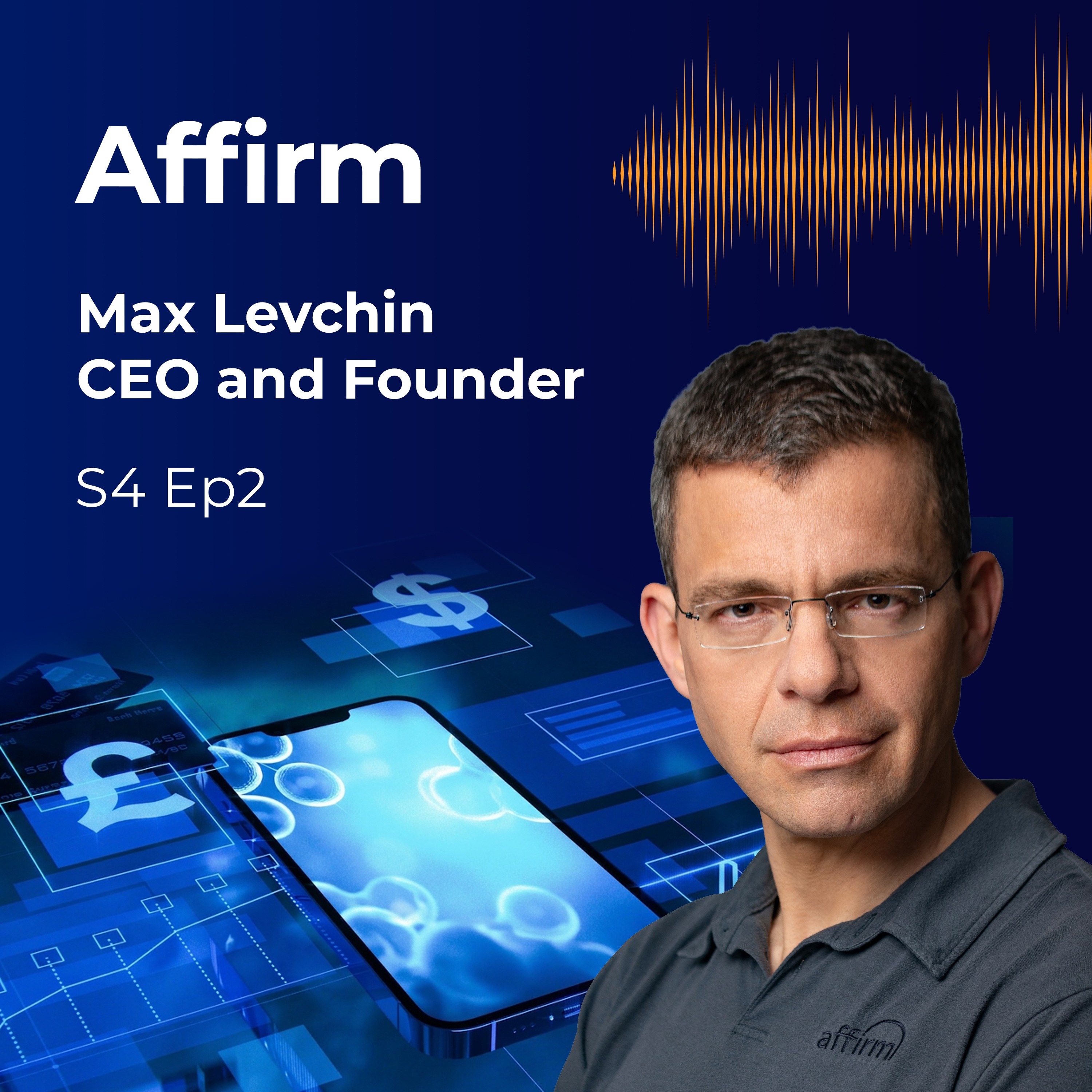
Affirm: Why Shoppers are Walking Away from Credit Cards
from Invest in Progress
Affirm’s buy now, pay later service offers shoppers a transparent alternative to credit cards. It tells consumers up-front what monthly charge they face, promises no late fees or hidden charges – and in many cases offers a zero percent interest rate. Co-founder and chief executive Max Levchin reveals how the business originated in his own “painful” experiences with credit cards, and how AI-powered shopping agents could supercharge its future.Background:Scottish Mortgage first invested in Affirm in 2019, when it was still a private company.Today, the listed business provides credit to millions of customers across the US, Canada and the UK when they make online and offline purchases, and it has its sights set on further expansion and taking a greater share of business away from the incumbents in the credit card industry.“No one loves thinking about money because it’s a drag, it’s complicated,” Levchin tells investment manager Tom Slater in this interview. “It doesn’t have to be this way. And we’ve proven that for our little niche, big as it is… we can alleviate the burden.”In this podcast, the two discuss how Levchin came to build Affirm after his prior success at PayPal, the technology that underpins the company’s ability to tailor loans to each customer and purchase, why merchants are keen to cover the cost of zero percent credit from a third party, and how AI-powered shopping agents could impact the firm. Timecodes:00:03 Coming up…00:48 Introduction02:25 Max Levchin interview begins02:51 A transparent alternative to credit cards04:05 A threatened amputation08:52 Lessons from PayPal11:44 Returning to the world of fintech14:28 A terrible credit card experience18:15 Attracting early investors22:14 How Affirm works25:48 The appeal to merchants28:36 Focusing on the Affirm Card31:23 Underwriting data provides a ‘powerful moat’35:41 Why permit credit for luxury purchases?39:25 Listening to your gut42:20 How big could Affirm get?45:39 AI agentic shopping48:54 What the world looks like if Affirm fulfils its mission50:38 Claire Shaw and Tom Slater on the investment case57:35 Podcast lookaheadGlossary (in order of mention):Point-of-sale lending: Credit offered at the moment a customer buys something, either online or in a shop.Network effects: The effect where a product or service becomes more valuable as more people or businesses use it.Fintech: Technology-driven financial services, such as digital payments, lending or banking tools.Charge-off: When a lender writes off a debt as unlikely to be repaid, usually damaging the borrower’s credit record.Delinquent/delinquency: A loan or credit account becomes delinquent when the borrower is late making required payments.IPO: Initial public offering: the process by which a private company lists its shares on a public stock market.Accrued interest: Interest that has built up over time on a loan or balance.CMO: Chief marketing officer, the executive responsible for a company’s marketing strategy.Competitive moat: A durable advantage that makes it hard for competitors to copy or overtake a business.Cash flow: The movement of money into and out of a person’s or company’s accounts.Total addressable market: The total revenue opportunity available if a company could reach all possible customers for its product.Operating expense: Day-to-day business spending, such as salaries, rent or marketing.AI agent: An AI system that can carry out tasks or make decisions on a user’s behalf.Net promoter score: A customer loyalty measure based on how likely users are to recommend a company or product.Flywheel: A business dynamic where one improvement drives another, creating self-reinforcing growth.Read the transcript.Check the podcast description to ensure this content is suitable for you. Your capital is at risk. Presenter: Claire ShawExecutive Producer: Leo KelionLine producer: Jessica RooneyBroadcast Technician: Samual O’Hare Editor: Jody Black Hosted on Acast. See acast.com/privacy for more information.
Embed this episode
Ready to play
Affirm: Why Shoppers are Walking Away from Credit Cards
No transcript for this episode yet
Similar Episodes
No similar episodes found.
Similar Podcasts
No similar podcasts found.