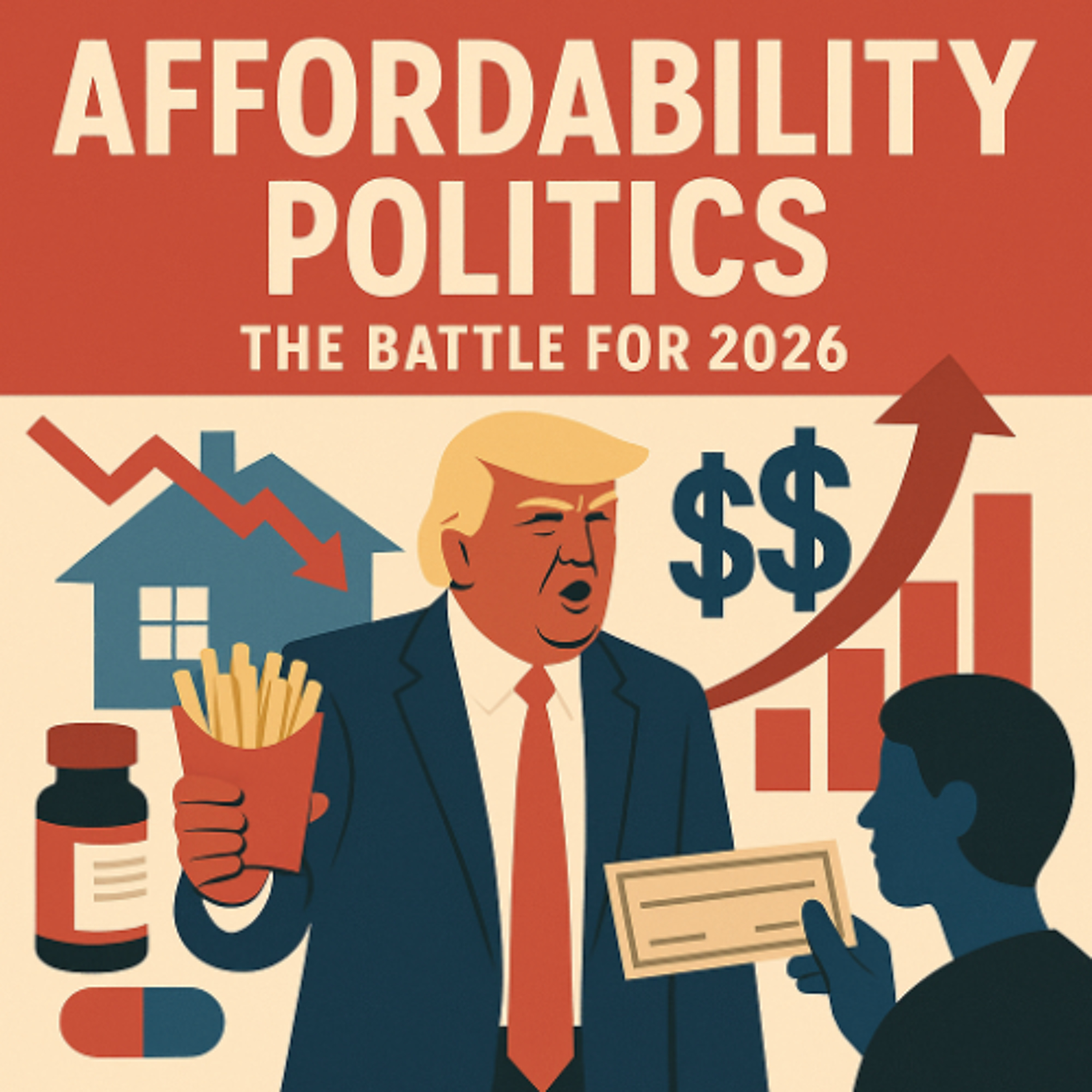
Affordability Politics: The Battle for 2026 episode artwork

EPISODE · Nov 19, 2025 · 11 MIN

Affordability Politics: The Battle for 2026

from The Rock of Talk · host Eddy Aragon

Affordability has emerged as the defining political theme heading into the next election cycle. Democrats successfully used it in recent municipal races, and now Donald Trump is embracing the message, framing Republicans as the true champions of economic well-being. Yet the narrative is complicated by soaring tech profits, widening inequality, and a cultural shift in which elites increasingly downplay displays of wealth. Even New York City’s Flatiron Building residents reportedly resisted the arrival of high-end retail, signaling the desire to appear “with the people.” Trump’s strategy mirrors this trend. He has leaned heavily into imagery of populist relatability — hosting a “McDonald’s impact summit,” repeatedly highlighting his fast-food habits, and joking that he is the nation’s “first McDonald’s fry cook president.” He blames President Biden for inflation and an affordability crisis rooted in shutdown policies. Trump cites certain falling prices — breakfast items down 14% at McDonald’s, egg prices down 86% — to argue conditions are improving. Eddy identifies the administration’s three major affordability proposals and critiques each. First, the 50-year mortgage aims to reduce monthly payments, but Eddy argues it merely traps borrowers in massive long-term debt while ignoring the real problem — a housing shortage. The solution is to build 3–4 million new homes, not to extend loan terms. Second, tariff-funded $2,000 checks are meant to boost disposable income. Eddy contends the idea is unrealistic: the funds should go toward national debt, Congress won’t approve it, and the government cannot afford such payments. Third, healthcare reform centered on direct payments is labeled a political loser. The ACA’s true issue, Eddy argues, is fraud, not subsidies, and meaningful reform requires reducing waste and adding work requirements. The broader message: affordability matters, but poorly designed policies won’t fix structural problems in housing, healthcare, and income. Real solutions require supply increases, fraud reduction, and stricter qualification standards — not gimmicks.

Affordability has emerged as the defining political theme heading into the next election cycle. Democrats successfully used it in recent municipal races, and now Donald Trump is embracing the message, framing Republicans as the true champions of economic well-being. Yet the narrative is complicated by soaring tech profits, widening inequality, and a cultural shift in which elites increasingly downplay displays of wealth. Even New York City’s Flatiron Building residents reportedly resisted the arrival of high-end retail, signaling the desire to appear “with the people.” Trump’s strategy mirrors this trend. He has leaned heavily into imagery of populist relatability — hosting a “McDonald’s impact summit,” repeatedly highlighting his fast-food habits, and joking that he is the nation’s “first McDonald’s fry cook president.” He blames President Biden for inflation and an affordability crisis rooted in shutdown policies. Trump cites certain falling prices — breakfast items down 14% at McDonald’s, egg prices down 86% — to argue conditions are improving. Eddy identifies the administration’s three major affordability proposals and critiques each. First, the 50-year mortgage aims to reduce monthly payments, but Eddy argues it merely traps borrowers in massive long-term debt while ignoring the real problem — a housing shortage. The solution is to build 3–4 million new homes, not to extend loan terms. Second, tariff-funded $2,000 checks are meant to boost disposable income. Eddy contends the idea is unrealistic: the funds should go toward national debt, Congress won’t approve it, and the government cannot afford such payments. Third, healthcare reform centered on direct payments is labeled a political loser. The ACA’s true issue, Eddy argues, is fraud, not subsidies, and meaningful reform requires reducing waste and adding work requirements. The broader message: affordability matters, but poorly designed policies won’t fix structural problems in housing, healthcare, and income. Real solutions require supply increases, fraud reduction, and stricter qualification standards — not gimmicks.

NOW PLAYING

Affordability Politics: The Battle for 2026

0:00 11:48

No transcript for this episode yet

We transcribe on demand. Request one and we'll notify you when it's ready — usually under 10 minutes.

No similar episodes found.

No similar podcasts found.

Frequently Asked Questions

How long is this episode of The Rock of Talk?

This episode is 11 minutes long.

When was this The Rock of Talk episode published?

This episode was published on November 19, 2025.

What is this episode about?

Affordability has emerged as the defining political theme heading into the next election cycle. Democrats successfully used it in recent municipal races, and now Donald Trump is embracing the message, framing Republicans as the true champions of...

Can I download this The Rock of Talk episode?

Yes, you can download this episode by clicking the download button on the episode player, or subscribe to the podcast in your preferred podcast app for automatic downloads.
URL copied to clipboard!