
EPISODE · Jun 14, 2022 · 35 MIN
Afrofuturism takes center stage at second annual MSU Juneteenth celebration
from MSU Today with Russ White · host Russ White
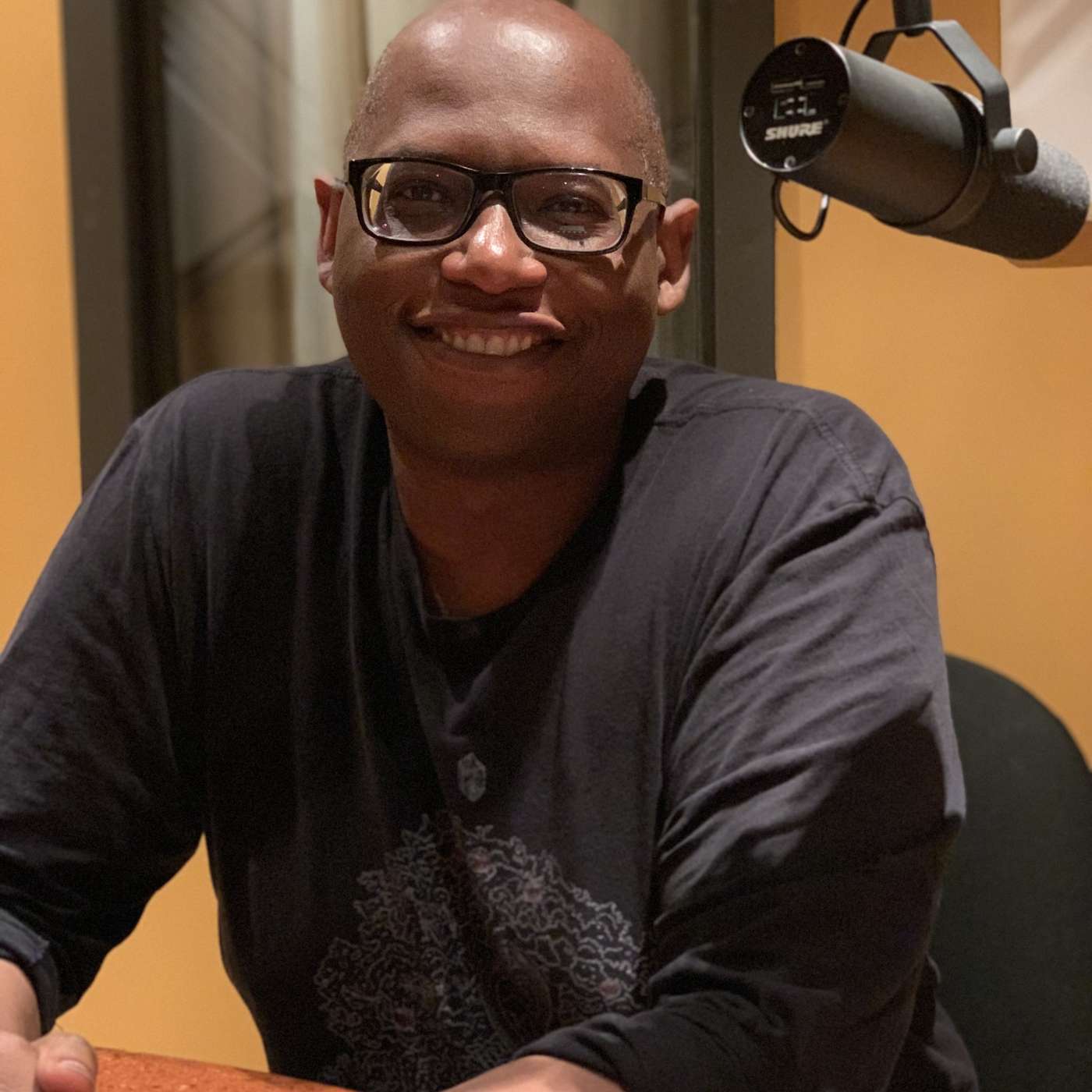
This year's keynote speaker is College of Arts and Letters English professor Julian Chambliss, who has a focus on popular culture, comics, and digital humanities, and his research explores race, identity, and power in urban spaces. His address is titled “Not Only Darkness: The Legacy and Future of Black Speculative Practice.” Chambliss' keynote will focus on Afrofuturism, what it is, and its impact on society today. His keynote will also examine the relationship between Afrofuturism and speculative practice, which refers to the exploration of new ideas and pathways that will ultimately lead to liberation. What is Afrofuturism and what has been its impact on society?“Afrofuturism is the intersection between speculation and liberation born of African diasporic experiences. It often touches on science, technology, and knowledge production and how we do that and what are our aims are for that. Ultimately, Afrofuturism is really rooted in a set of concerns that are connected to the Black experience, and it’s theorized by people who are concerned with hierarchies and control and oppression looking through ways to create a system that's less hierarchical, less oppressive, more equitable, and safer. Ultimately, the impact of that is that there is a group of people, regardless of discipline, who are committed to the idea of trying to create a more equitable and safe society. That is the thing that makes Afrofuturism so appealing.”What is speculative practice and what is its relationship with Afrofuturism?“Afrofuturism is a term that's really describing Black speculative practice. Afrofuturism was really important when it was coined in 1994 because it captured a set of practices that Black people were having. But in a hierarchical system, Black people's contributions, actions, and perspectives get erased. And so, what the term does is it calls attention to Black people who have had to speculate around liberation over and over again because the system they've been involved in is unequal. They're thinking about ways to make it more equal. It's very difficult for us to think about the United States today without the context of African Americans. In moments good and ill. Slavery is an ill. The good is its coming to an end. African Americans have been a part of this country from the beginning and their contributions in every one of those stages is something that we can't really deny.”What is the significance of Juneteenth and how has commemorating it evolved?“Juneteenth is a particularly complex holiday in part because it has come to the center of public awareness at a time when African Americans are increasingly articulating a set of understandings about the nature of a coercive society and a systemic anti-Blackness in a new way. I think one of the things that's interesting about Juneteenth is that there is an idea of commemoration within it that is celebrating the triumphs of African Americans in a very particular context and it's celebrating that context unapologetically, I would argue. This is a holiday or a commemoration that's very well known within the Black community, but it only recently became a federal holiday. And I think it has a lot to do with the fact that we had a Black president; so, celebrating Blackness is okay.“At some very basic level, Juneteenth represents the celebration of the end of a horrible system. For people of African descent and their allies, that's a very important thing. It was a horrible thing. Let's celebrate its end. That has not necessarily been the case in the public square for decades upon decades. It makes a lot of sense to say, hey, let's celebrate this thing and celebrate its perspective on the American experience.”How do Juneteenth and Afrofuturism fit together and complement each other?“With Afrofuturism, there's an element of going back to recover the reality, the knowledge, the production, and the contributions of people of color. There's also a shifting from a Eurocentric perspective to a more open, diverse one. A more open and diverse society celebrates a major milestone related to African American freedom and its contributions to the broader American context. One of the benefits of African American speculation around liberation is really a more liberal society, a more equal society for everybody. And that is also something that we can all as Americans agree on and understand.”What are some key messages you hope to convey in your talk at MSU's Juneteenth celebration?“I'm going to try to define Afrofuturism and try to define what it is and try to make clear this transformation, this shift in perspectives, that is represented by it and how Juneteenth and commemoration and memory from an African American or African diasporic perspective is different. But in that difference is a kind of affirmation of the ideology of liberation that's very important to the United States. There's an element here where the Black experience is American history, too. Commemoration around the Black experience is an American commemoration. It is not unreasonable for every American to celebrate their fellow Americans' feeling of pleasure about the end of a great evil. I think that's one of the things about Juneteenth that's particularly interesting because the story of Juneteenth is very particular in the sense that it's not exactly celebrating emancipation. It's celebrating the moment that people in Texas find out about emancipation. And so in an era of viral messaging and instant transfer of ideas, both good and bad, you have to stop and think. In January of 1865, they passed the 13th Amendment. It's not until June that the people in Texas know that they're free. The question I always ask is are you free if you don't know you're free?“With Juneteenth, we're seeing literally the end of an oppressive system crystallize in a particular moment. The news reaches these people. These are the farthest reaches of the Confederacy. That's when it's over. When everybody knows, that's when it's over. The idea that there's a kind of element of truth made real by a particular moment when information arises, when the order is made and said out loud. That's the moment. That's the clarion call that rung the bell. That's the end of the evil. And you can point to it. From a historical standpoint, there are moments where things don’t have a definitive stop. It just doesn't seem as bad anymore. I think about the pandemic. Is the pandemic over? No. But this is one of those things that's a great human suffering and we can point to its end. Like, this is the moment. And I think that resonates with people in a very particular way.“The American experience is integrated into the Black experience and the Black experience integrated into American experience. The nature of those integrations, though, when you tell it from the Black perspective, it is this speculation around liberation. Then you have a more liberal society. You have a more open society. Black history is American history and a history that tells a struggle and a strife, but that struggle and strife gets you a better world. I think, if we thought about it that way, then we have a better sense of why Black history or Chicano history, all the histories of the people on the margins, matter. Because those are the people who have to ideate around what it means to be free. Because they're at the bottom; they're on the outside. What does it mean to be free in a system where my lived experience has told me I'm not free? That becomes the real trauma. And, of course, it plays itself out every day now.
Embed this episode
What this episode covers
Afrofuturism is the central theme of Michigan State University's second annual Juneteenth celebration. Juneteenth, on June 19th, is a federal holiday that commemorates the emancipation of enslaved African Americans in the United States.
Ready to play
Afrofuturism takes center stage at second annual MSU Juneteenth celebration
No transcript for this episode yet
Similar Episodes
No similar episodes found.
Similar Podcasts
No similar podcasts found.