
EPISODE · May 25, 2026 · 1H 14M
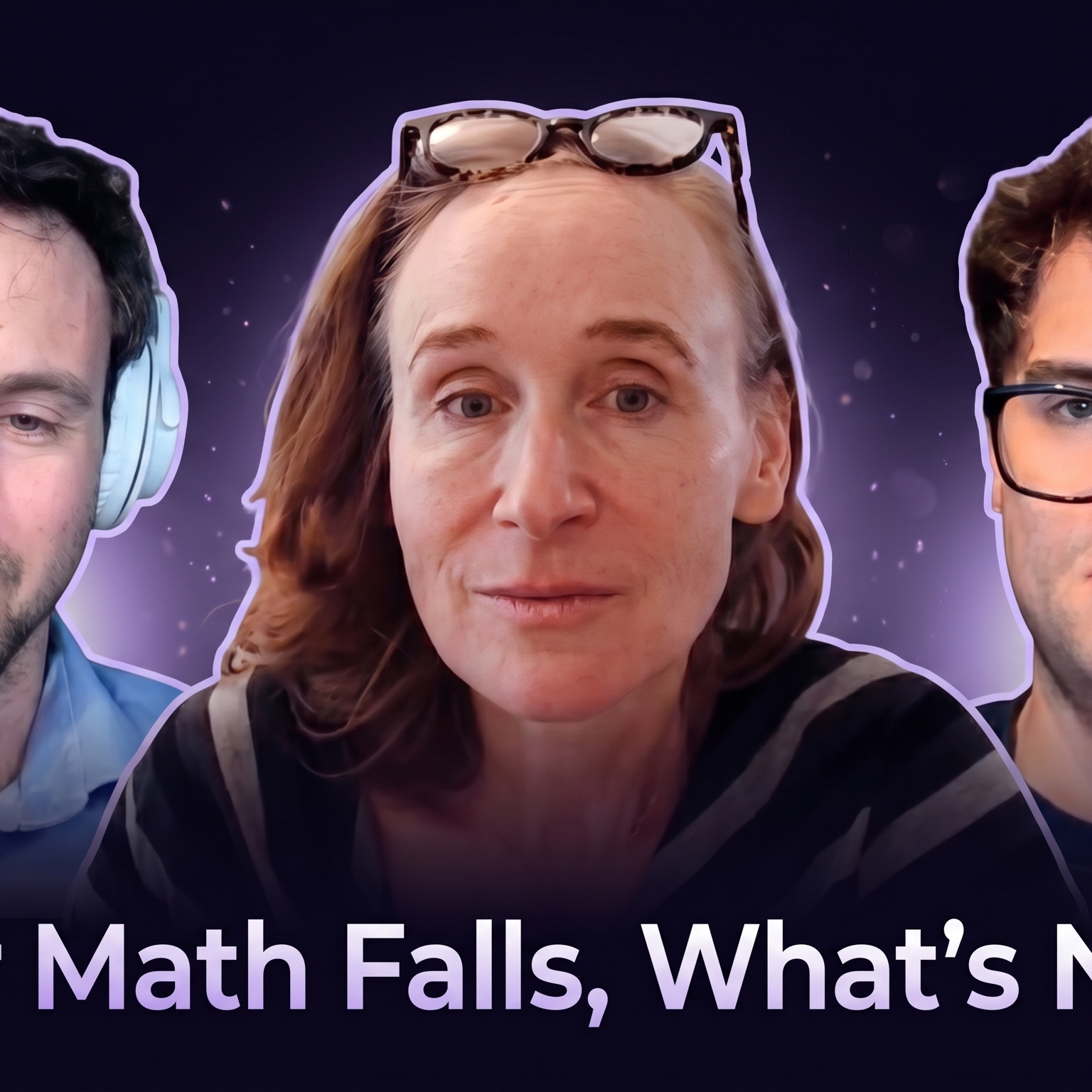
After Math Falls, What's Next? with Julia Kempe (NYU/Meta)
from The Information Bottleneck · host Ravid Shwartz-Ziv & Allen Roush
Julia Kempe on Why Math Will Fall Next, Superhuman Provers, and the Return of the Renaissance ResearcherIn this episode, we sit down with Julia Kempe, a Professor at NYU's Center for Data Science and researcher at Meta FAIR's Foundations of Reasoning team, for a wide-ranging conversation on the future of AI research.We dig into why verifiable domains like mathematics may be on track to "fall" the way Go did. With formal verification through Lean and the Mathlib infrastructure, LLM agents can now generate and check proofs at scale, and Julia makes the case that a new industry of automated mathematical discovery is closer than most mathematicians believe. We explore why Erdős problems are already falling, what's still missing for harder fields like analysis and physics, and how synthetic data, curation, and verification fit together.From there we get into the energy and scaling limits of frontier models, the case for academic research that big labs can't pursue, how to advise PhD students when Claude can already do their first-year work, the rise of AI safety and security as research priorities, and Julia's optimistic argument that AI tools are bringing back the Renaissance generalist - the researcher who can finally work fluently across math, biology, and beyond.Timeline00:00 — Introductions01:00 — Defining reasoning and verifiable domains04:00 — Lean, Mathlib, and the formalization of mathematics10:00 — Constructive proofs, Erdős problems, and the new wave of "AI mathematicians"14:00 — Will math be "solved"? Art, photography, and the changing nature of creative work18:00 — Why physics is harder than math22:00 — Moravec's paradox, evolution, and why robotics lags behind language27:00 — The Renaissance is back: generalist researchers in the age of AI29:00 — Advising students: math, programming, and what core education still matters32:00 — Teaching and assessment when GPT can do the homework35:00 — Anti-AI backlash, energy costs, and the security threat40:00 — Scaling vs. efficiency42:00 — Model collapse, synthetic data, and what's left to squeeze from the internet44:00 — What's exciting next: AI for science, safety, robotics, memory, and planning47:00 — Annotation costs as a proxy50:00 — Superhuman models and what security even means against them52:00 — AlphaGo as precedent for verifiable superhuman performance54:00 — Hallucination, the Mirage paper, and whether these are solvable problems56:00 — Why coding isn't fully solved yet58:00 — Agent security, prompt injection, and the Wild West of deployed agents1:01:00 — Regulation: what's needed and what's possible1:04:00 — Advice for PhD students and what research academia should pursue1:09:00 — Startup opportunities: robotics, security, and AI for finance1:12:00 — Closing thoughts: use the tools, and build grassroots AI for goodMusic:"Kid Kodi" - Blue Dot Sessions - via Free Music Archive - CC BY-NC 4.0."Palms Down" - Blue Dot Sessions - via Free Music Archive - CC BY-NC 4.0.Changes: trimmedAbout: The Information Bottleneck is hosted by Ravid Shwartz-Ziv and Allen Roush, featuring in-depth conversations with leading AI researchers about the ideas shaping the future of machine learning.
Embed this episode
NOW PLAYING
After Math Falls, What's Next? with Julia Kempe (NYU/Meta)
No transcript for this episode yet
Similar Episodes
No similar episodes found.
Similar Podcasts
No similar podcasts found.