
EPISODE · Jul 5, 2025 · 5 MIN
After the Term Sheet: Why Every Great VC Needs a Cynic in the Room
from Not for Distribution · host Alex Randall Kittredge
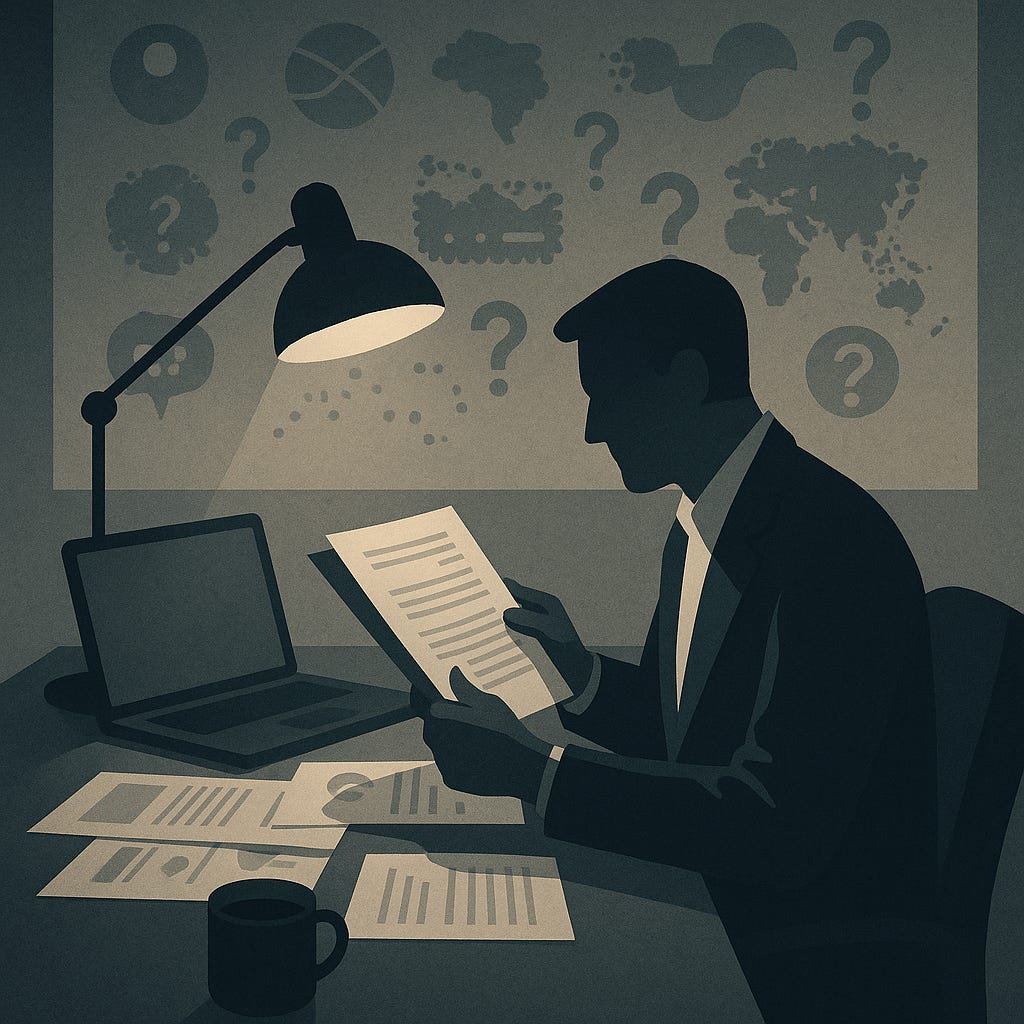
When people think about venture capital, they imagine pitch decks, panels, and parties. Few picture the silent hours behind a locked door, combing through compliance records, scraping registries in foreign jurisdictions, and chasing whispers of reputational risk.Between 2019 and 2021, I served as a Senior Risk & Intelligence Analyst embedded in the venture arm of a multibillion-dollar family office. My job was simple, but not easy: quietly and surgically vet early- to growth-stage companies across Series A through E. Over the course of two years, I supported diligence on over 15+ venture capital investments across AI, manufacturing, climate tech, and media.These weren’t consumer fluff plays or copycat apps. They were frontier tech companies: climate modeling platforms, linear generators for distributed energy, on-demand digital manufacturing systems, batteryless sensors, and industrial IoT security. The kind of businesses where a mistake isn’t just costly, it’s existential:The Truth About DiligenceMost diligence decks are performance theater. They’re packed with models, charts, and five-year plans that no founder believes will unfold as written. My work was different. I was tasked with answering three uncomfortable questions:* Can this founder be trusted?* Is this business what it claims to be?* Is there any latent risk we’re going to wish we found sooner?This meant deep background checks, political exposure screenings, and reputational analysis that went far beyond LinkedIn and Crunchbase. I reviewed litigation histories in the U.S. and abroad. I validated incorporation documents, traced IP ownership, and cross-referenced supplier relationships in regions with less-than-transparent governance standards, among other sources and methods.Sometimes we found red flags. Other times, we found a smoking gun…Lessons from the Edge:1. The best founders leave breadcrumbs.The most trustworthy Founders and CEOs didn’t just have clean records, they had reputational infrastructure. A track record of co-founders rejoining them, board members who vouched without prompting, vendors who spoke off the record with respect. It’s hard to fake consistency across stakeholders. Trust, like credit, builds over time, and it compounds.2. Markets move fast, but risk moves faster.One company in the tech space was impressive on paper, but its co-founder’s prior startups had all declared bankruptcy and left investors holding the bag. It never made the mainstream news, but it changed our risk calculus completely. If you’re not reading between the lines, you’re already behind.3. Due diligence is asymmetric warfare.Founders pitch at full volume. Risk analysts work in silence. The job wasn’t to “win” the meeting, it was to keep the fund from losing its credibility or making a bad venture bet. That required rigor, detachment, and often saying “no” when everyone else wanted to say “yes.”4. It’s not the risk you see. It’s the risk you explain away.The most dangerous investments weren’t the ones with obvious problems, they were the ones with subtle issues investors talked themselves out of investigating. A disputed patent. A strategic partner with opaque ownership. A founder’s past role at a defunct entity with lingering liabilities. Each one is easy to dismiss. Until it isn’t.This Substack is reader-supported. To receive new posts and support my work, consider becoming a paid subscriber.The Real Work of VentureToday, the word “diligence” gets thrown around like a formality. But in practice, it’s the last true lever of control investors have before the money leaves the building.Good diligence isn’t just about finding what’s wrong. It’s about articulating what might go wrong, and equipping the investment committee with eyes wide open. It’s risk storytelling. Strategic paranoia. A final act of fiduciary fidelity in a world chasing exponential upside.I walked away from those 15+ deals more cautious, but also more convinced: Venture is not a gamble when the diligence is honest, the work is thorough, and the team trusts its analysts to tell the truth, even when it stings. Especially when it sinks the deal.Have a diligence war story of your own? Or want a playbook for startup red flag detection? Hit reply or leave a comment—I’m offering a venture diligence checklist for those interested in learning more.This Substack is reader supported. Consider becoming a paid subscriber to support my continued work. Get full access to ARK Strategy at alexrandallkittredge.substack.com/subscribe
Embed this episode
Ready to play
After the Term Sheet: Why Every Great VC Needs a Cynic in the Room
No transcript for this episode yet
Similar Episodes
No similar episodes found.