A great lesson for children to learn is the value of money, how to spend it, save it, and share it. Hello, I'm Charles Denny. This is Agcast, brought to you by the University of Tennessee Institute of Agriculture. Is that a policy?
You've heard the phrase, show me the money? Well this is, I Am the Money. Fourth-rateer Matthew Patterson represents a dollar amount himself, the number plastered to his chest. Now he has to find some of his buds also assigned a dollar figure to add up to what they owe the bank.
It's fun, frantic, and a way for kids to gain confidence with cash. For when we go to stores, and if they don't give us the right amount of money back, we can tell them. These students at Decaturville Elementary in Decatur County are playing the deposit game, learning the importance of keeping some of what you earn and putting it in the bank. JC Romines thought it was cool.
I liked about how you got to pair up with people and you got to pair up with three people and add it together. That's what I liked about the game. Marcy Hethman is one of the creators of this new UT Extension program called Money Is Elementary in many Tennessee schools. At that I just very important to get some of the concepts in and get them over the feeling that it's intimidating.
Sometimes we're uncomfortable with things that we don't use a lot, and if we don't give children practice with money, then that becomes one of those things that they're introduced to later that they don't feel comfortable with. So what we've noticed is that even as adults, a lot of us are a little intimidated by financial issues. So if we start talking about these things much earlier than the kids have a higher comfort level. Hethman says Keylessons include learning that being good with money isn't luck, it takes work.
Kids don't always relate money to math. It is a mathematical skill to be able to manipulate money. So we started with playing with money. So the first unit, the first part of each unit is going to be playing with money.
So we'll have a lesson or two about how they can add money together, what values mean in money, what a quarter is, what the units mean, and then how they can manipulate that. The second level is going to be my money. How does money relate to me? What can I do with money?
So kind of an idea. If I have a certain amount of money, how would I budget that? How would I use that? What does a budget mean?
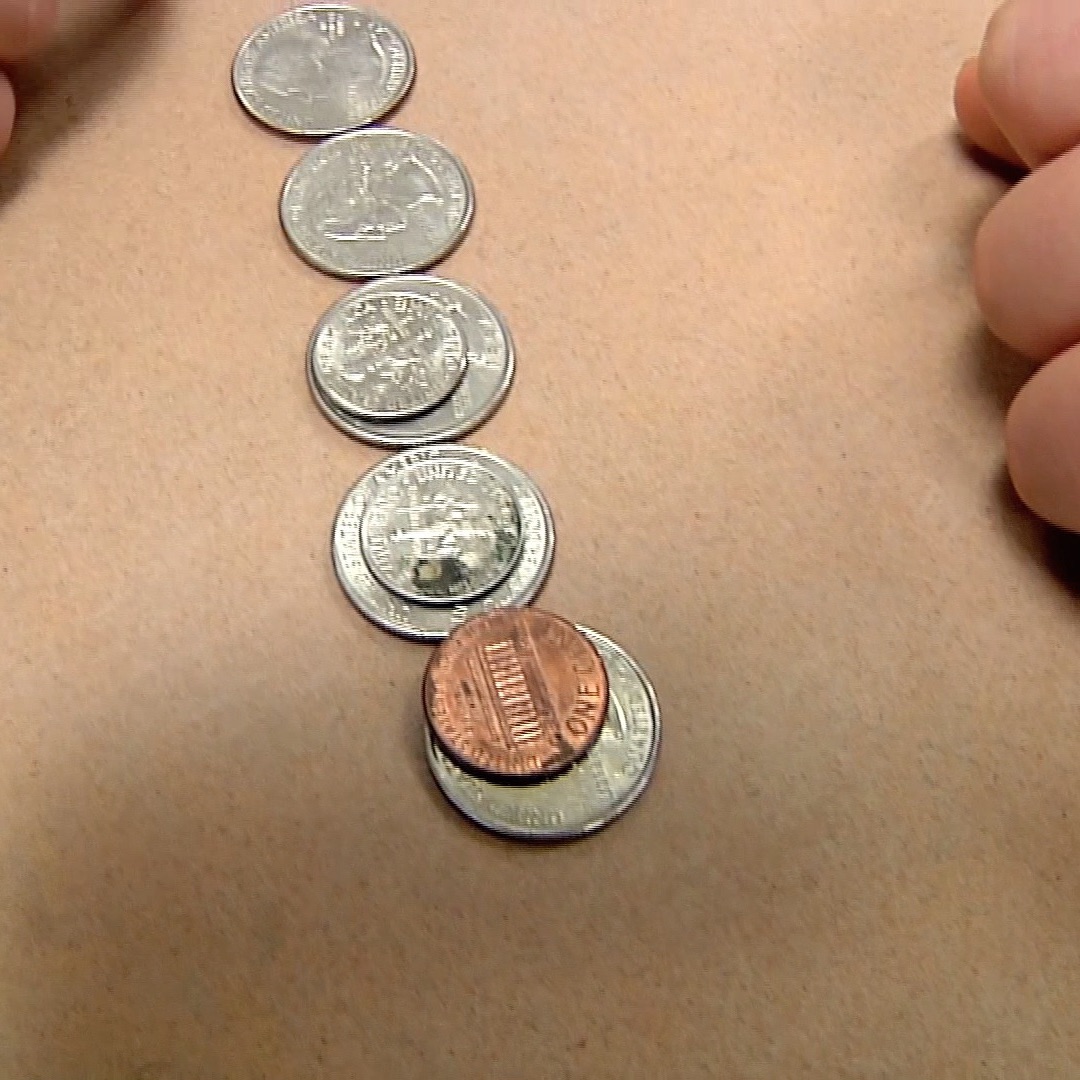
And then the final section of each unit is going to be about an economic concept of some kind called the world of money. To help grasp these concepts, the kids learn by counting actual coins. Program leaders like Dr. Ann Berry with UT Extension don't want children to just see plastic being used by their parents, but to understand there's a value assigned to money.
We want our families to be financially stable. And the earlier you can start teaching the money concepts the better because it's not something that they have to learn once they are on their own. We want them to know and practice them early. And so at each grade level, there are different concepts that students or children are able to comprehend and we develop these lessons based on those concepts.
There's lessons that have been developed with a credit union league for even pre-K because there's about saving and spending and sharing and you can start early. Alright, that's important that you need to know how to make change because what happens if you don't get enough change back when you go to Boston? You're going to go to Vancouver. Yeah.
The Cater County UT Extension agent Charlotte Moore leads one of the pilot counties for money is elementary. Well, we all use money and we all love money. And so I think it's important that kids understand the value of money. They need to understand how to count change.
They need to understand about savings. And try to teach kids to have a little money to spend, some to save and then some to share. UT Extension experts say money should never be the center of our lives but it's still important to give it proper attention. A lesson that's never too early to learn.
Thanks for listening. I'm Charles Denny. For more real life solutions provided by the UT Institute of Agriculture, go to our website at ag.tenacy.edu.