The tree's your friend. The tree's my friend. Yeah, so you're going to hunt this under. This brings tree hunting to, like, seriously a whole new one.
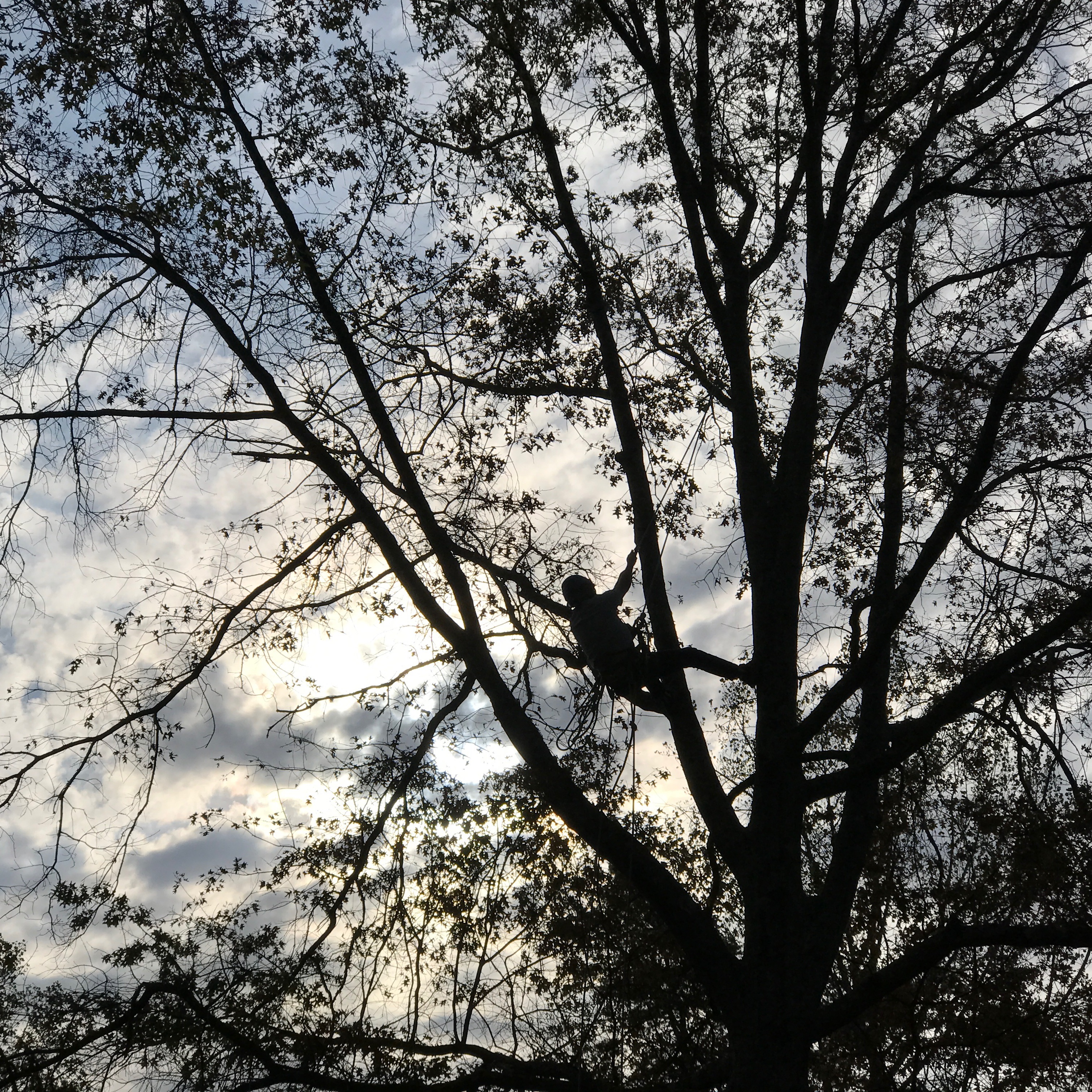
Geared up with a harness and ropes, Carrera Romanini is learning to climb a tree like a first-year forestry student. She's a communications coordinator with UTIA's Ag Research Unit, and tree climbing is a new experience. Helping Carrera learn ropes is Dr. Sharon Jean-Philippe, an associate professor specializing in urban forestry.
This is AgCast, brought to you by the University of Tennessee Institute of Agriculture. I'm Doug Edlund. While many people think of forestry as a rural occupation, there's an increasing need for urban foresters as cities seek to manage ecosystems and improve quality of life. Recently, AgCast talked with Dr.
Jean-Philippe about urban forestry and its outlook for the future. You have your street trees, trees and parks, residential, commercial areas, mainly all vegetation within an urban area. Are more and more cities hiring urban foresters? That answer is a definite yes.
As urbanization continues to happen within the United States and globally, vegetation needs to be managed because vegetation has more than just an aesthetic purpose. It has ecosystem services purposes, such as cooling the environment, such as having wildlife benefits. Also, vegetation within urban areas is used to mitigate stormwater issues, also intercept air pollution issues that happen within urban areas due to that built-up environment. So for these challenges that urban areas are facing, then urban forestry is a vital component to the well-being of the citizens and to the future of the cities, correct?
Definitely correct. It's especially looking at managing these ever-going metropolitan areas, such as if you think about Nashville. Nashville consists of just not Davidson County proper, but everything that's surrounding it. Knoxville is another ever-going metropolitan area.
You have Knoxville, but then you also have Anderson County that's kind of encroaching on it, and then other counties surrounding it. What's your approach to teaching urban forestry? Well, I am completely hands-on. And when I mean hands-on, I'm like for students to actually get out and experience the urban environment.
One thing I like to do is, in the dead of summer, walk kids across the bridge. Our bridge on campus currently has no vegetation on it. It's hot on that bridge. Why is it hot?
Because the concrete is re-radiating heat off of it. And then I take those same students and I walk them through our campus garden, and it's much cooler. And I ask, why is it much cooler? What is that vegetation doing?
It's serving a purpose. So your students can expect a lot of hands-on learning in your class. Yes, yes. From tree climbing to actually going in and studying tree law.
Vegetation law is very important. Trying to understand adjoining property owner issues, boundary line issues, municipality issues, as far as whose tree is it on that abutting street. So, you know, I try to encourage and engage students within urban forestry as a whole. So for people who don't understand forestry, there's a lot more to this than just watching the trees grow, so to speak, right?
Definitely. You know, within urban areas, the soil has been definitely, as I call it, altered to where, you know, people, when they look at a tree, they only can see the above ground. But I try to take my students to the below ground, what's actually happening in the soil environment, which people really don't think about. Compaction is one of the leading issues, like the leading issues, within urban forestry right now.
I'm trying to understand how to decompact the soil that had to be compacted because we have to build on it. So, you know, how can we actually make this urban environment more conducive to wanting to grow plants? And I think as having plants as they have their thought, maybe they'd be forethought. And this will be a very important thing in the future as we talk about climate change.
No, no, you're definitely correct. The more vegetation that we have within these urban areas can help mitigate those climate issues by helping to cool the environment. Okay, all right. So what's the job outlook for your students?
Depending on where you want to go, public or private, the biggest sector right now is utility forestry. The majority of my students that have left actually went into the utility sector part, which is public. I've had students actually become city urban foresters. Yay, it does.
But that outlook is very, very good. One final question. How was it teaching Carrera how to climb a tree? It was interesting, to say the least.
She's been my oldest participant thus far. But she caught on pretty fast. So you use the tree to climb? You always use the tree.
So just walk back down the tree gently. Yep. Yeah. Good job.
Thank you. Safely back on the ground, Carrera can check another item off her bucket list. Safe to say she's not going to be quitting her day job anytime soon. But for those looking for a career with upward mobility, urban forestry might just fill the bill.
For more real-life solutions provided by the UT Institute of Agriculture, go to our website at ag.tennessee.edu.