This is AgCast, brought to you by the University of Tennessee Institute of Agriculture. Is the grass really greener on the other side, and is your turf tough enough? I'm Charles Denning. Fire up the mower, all for science.
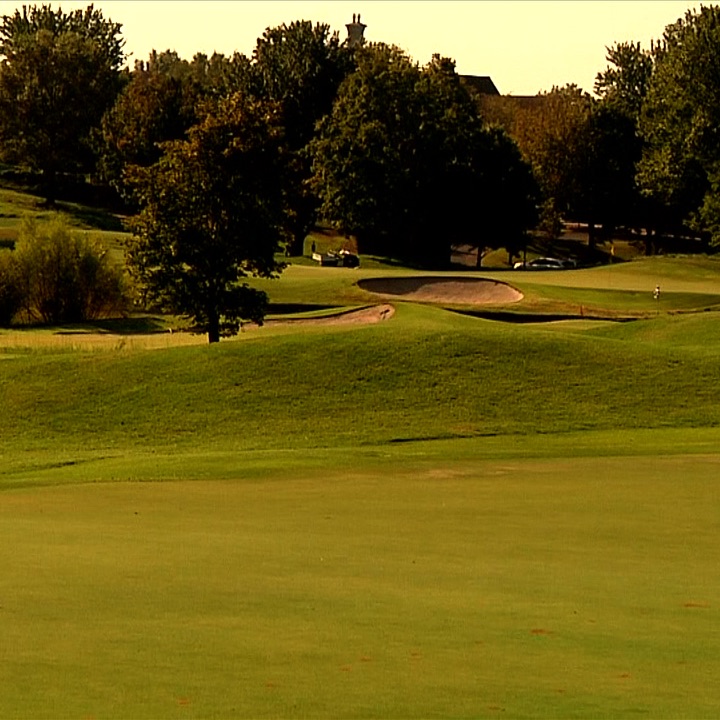
But from the academic side, turf grass management is much more than just cutting grass. Turf grass management, a concentration in the Department of Plant Sciences at UT's Institute of Agriculture, is a diverse program that combines the study of grasses, soils, water, and pests. Turf managers are involved with the production and maintenance of grasses for recreational, aesthetic, and environmental uses. This program is offered to those interested in careers in golf course, athletic field, and commercial turf management.
A key component is making fields safer to prevent injuries, especially in sports like soccer and football. Dr. John Sorokin is a plant scientist, teacher, and researcher. Our turf program has more than doubled in the last couple of years.
We got, I think, critically low, I would say down to about 15 to 17 students, and now we currently have right at 50 students in the program. So it's a combination of why it's come up, and I think the key to life is recognition, and we increase the awareness of turf grass and careers in turf grass because we've continually had 100% job placement. Sorokin says they work with students, even adjusting the academic calendar so many can start internships before a semester ends. In terms of marketing the program, faculty have identified a certain type of student they want, perhaps someone once active in sports.
Well, it's almost like staying in the game. You play high school football, soccer, baseball, lacrosse, and you don't get a college scholarship, but you love it and you want to be around that game. Ryan Hammett likes to hang around tennis courts, but not only did he play in high school, he spent a little time on the most famous courts in the world this past summer, up close with Serena Williams, Andy Murray, and Roger Federer. I firmly believe that they can produce the best grass in the entire world, so just being able to be a part of that every day, you learn something new.
The quickest of our tournament by far will still have some work. Ryan Hammett didn't just go to Wimbledon, he worked there. The turf grass science major from UT's College of Agricultural Sciences and Natural Resources had an internship in London where he cared for the grass courts on the hallowed grounds at the All England Club. As a tennis fanatic, I've always dreamed of going to Wimbledon, so upon arriving there, it was the most surreal feeling I've probably ever had, and then getting to continue to go every day after that made the experience what it was, which was absolutely amazing.
UTIA turf students have also done internships at Fenway Park in Boston and legendary golf courses like Wingfoot in New York, and past graduates are now working for universities like Miami and Rutgers. Sports is the common thread for many of these experiences for students and future possible careers, and one emphasis with UTIA turf research is sports safety. Dr. Sorokin and crew recently hosted an athletic research forum with people representing the National Football League and top European soccer clubs all coming to Knoxville.
That's when and where UTIA turf science unveiled a proposal for a new athletic field research facility on UTIA's East Tennessee Research and Education Center. Our vision here is to launch what would establish a revenue-generating sports complex that is research-focused, so it would be a facility where athletes could come in and participate in basketball, volleyball, football, soccer, rugby, lacrosse, whatever sport, but we can evaluate them in terms of the best way for them to perform and be safe playing those sports from the turf to the footwear they're wearing to the type of sport they're playing. Already there's research going on there to make athletic fields safer. One area of study is field wear and tear, and it includes a machine that simulates what a 300-pound lineman might do to grass over the course of a football game.
We have a wear machine, so when we establish the grasses, we simulate a wear machine, and we developed this, because when I was a graduate student, I was a wear machine, or an undergraduate, and she said I actually put on soccer cleats and ran back and forth, and I thought, man, man versus machine, machine's better. So we built a machine that simulates football traffic. But if it's a machine that goes back and forth, and when we do two passes, it does 56 cleat marks per square foot, which is the same number of cleat marks that occur during one NFL or college football game on either 40-yard line between the hash marks, which is the highest wear area during the game. I think one of the questions we don't have a good answer for yet with the strategy is, will you have enough barricade left in the floor to control weeds that might germinate later than crabgrass?
That's UTIA's Dr. Jim Brosnan talking to golf course superintendents and athletic field managers. This past September, the turfgrass team hosted a field day at the Little Course in Franklin, Tennessee, to showcase this economic impact and the vast amount of research going on at the UT Institute of Agriculture. More than 300 were in attendance.
Turf specialists with UT's Institute of Agriculture work with superintendents around the state and around the world, for that matter, to give them information to maintain and improve golf courses. Well, we work in concert with golf course superintendents as a resource, so when they will have a problem, whether it's a weed management problem or a disease management problem or any sort of agronomic problem related to their golf course, there's a relationship where they can reach out to UT for guidance and advice about how to move forward. And that relationship has many different shapes and faces. It can be one-to-one consultation and advice through a site visit or email discussion.
And bottom line, whether we're talking golf, sports, or even lawn care, Swacken says the turf industry has an enormous impact on our state's economy. One that's difficult to measure, but we did an economic impact with our ag-econ department and funded by the Tennessee Turf Association primarily. And it was for 2013, I believe it was, and Turfgrass contributed $5.4 billion a year annually to the Tennessee economy. So for every $1 spent, it generates $1.66 back to the state, which is huge.
And it's, you know, there's 66% of that is home lawn market. So we think golf, we think sports turf, but really the home lawn market is the biggest one. Swacken sees a busy future for turf science at UTIA. Researchers there have important work to do, and they hope they'll have added resources to help them in this effort.
You know, I feel like I've got the best job in the world. I get to do research in the field that I, you know, pun intended, I guess, but think I can make a difference in. I've become really passionate about trying to make sports fields safer. Thanks for listening.
I'm Charles Denny. For more real-life solutions provided by the UT Institute of Agriculture, go to our website at ag.tennessee.edu.