
EPISODE · Jun 30, 2026 · 1H 14M
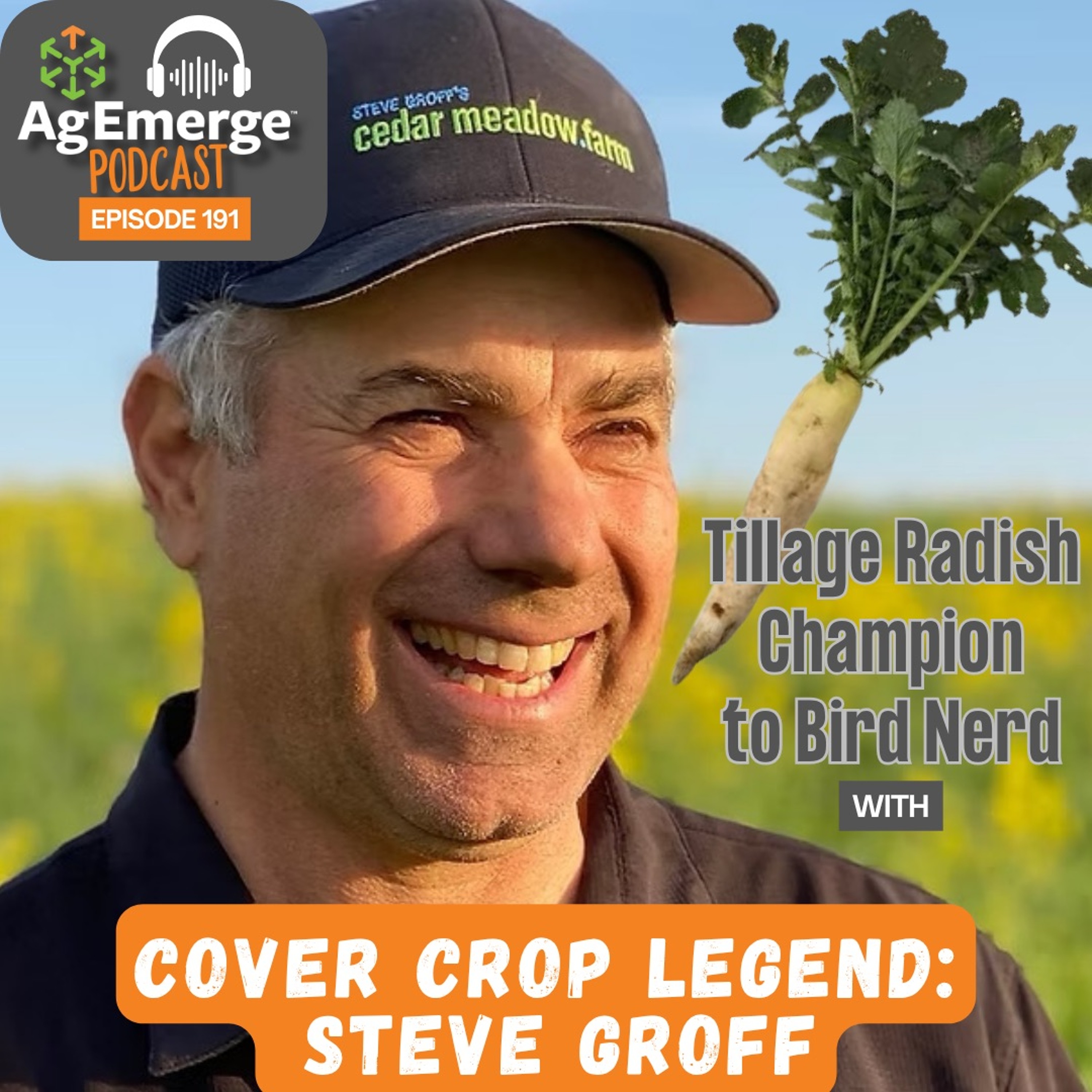
AgEmerge Podcast 191 with Steve Groff
from Ag Emerge Podcast · host Hosted by Monte Bottens
Steve Groff continues to provide agricultural thought leadership. Sure, he's an author, speaker, farmer and recently claimed himself as a bird nerd. But one of Steve's hallmark accomplishments, is developing and promoting the tillage radish. Hailing from Holtwood, Pennsylvania, Steve's Cedar Meadow farm became Regenified certified in 2023. From initial conservation efforts, through integrating cover crop diversity, to projects like biochar and nutrient-dense crop testing, Steve shares the real-world impact of these practices on the Chesapeake Bay watershed, illustrating how strategic land management can clean polluted estuaries while increasing farm profitability. Monte and Steve discuss the importance of farmer education, public engagement, and bipartisan collaboration to promote sustainable agriculture that benefits us all. Plus, hear about his recent adventures in fiber crop innovation, including custom flax planters and processing opportunities that could revolutionize U.S. fiber industries and reduce reliance on imports. Enjoy a great catch up conversation with Steve Groff by clicking below. Steve's Website: https://www.stevegroff.com/ Regenified and Cedar Meadow Farm: https://regenified.com/farm/cedar-meadows/ Steve's Book: The Future-Proof Farm: https://www.stevegroff.com/book Timestamps: 02:55 - Market shifts: variety packaging and customer preferences 03:37 - Steve's personal farm story and history of no-till since 1982 07:32 - Regenerative agriculture: growing food for health and future generations 08:11 - Challenges of farming on steep, rocky terrain in Lancaster County 09:44 - Land costs, succession, and land transfer strategies 13:43 - Water quality concerns in Chesapeake Bay and conservation efforts 16:37 - Nutrient management, manure regulations, and local innovations 19:33 - Progress in Chesapeake Bay restoration and the role of cover crops 20:58 - Biochar research and its potential benefits and challenges 22:04 - Nutrient runoff issues in the Mississippi Delta and alternative management strategies 23:58 - The potential of Maryland’s cover crop payment programs 25:38 - Lessons from regulatory and incentive approaches across states 30:41 - The role of government, incentives, and public awareness in environmental stewardship 32:36 - The personal impact of water clean-up on community life and future opportunities 33:47 - Linking soil health to human health: the food as medicine movement 36:17 - Innovative tools like cover crop roller development and their origin stories 43:39 - Extending cover crop benefits to pumpkins and specialty crops 45:23 - Moving toward nutrient-dense foods and the role of regenerative practices for health 47:26 - Opportunities in fiber crops: hemp, flax, and market potential 50:17 - The influence of high-profile advocacy and policy in advancing regenerative agriculture 54:45 - The importance of diverse viewpoints and bipartisan support for farm sustainability 56:06 - Linking soil health improvements to health costs and chronic disease prevention 58:28 - Hemp industry challenges: regulation, infrastructure, and market development 61:04 - Innovations in fiber crop equipment, including planting systems for hemp and flax 64:08 - Long-term biochar research plans and soil health impacts 65:22 - Future directions: high tunnels, specialty crops, and nutrient density testing 67:22 - Upcoming events and Steve’s focus on hands-on farm work and family 70:25 - The divine story behind the farm’s historical crops and future crop opportunities 72:43 - Final thoughts: observing nature, curiosity, and the farmer’s role in ecosystem health
Embed this episode
NOW PLAYING
AgEmerge Podcast 191 with Steve Groff
No transcript for this episode yet
Similar Episodes
No similar episodes found.
Similar Podcasts
No similar podcasts found.