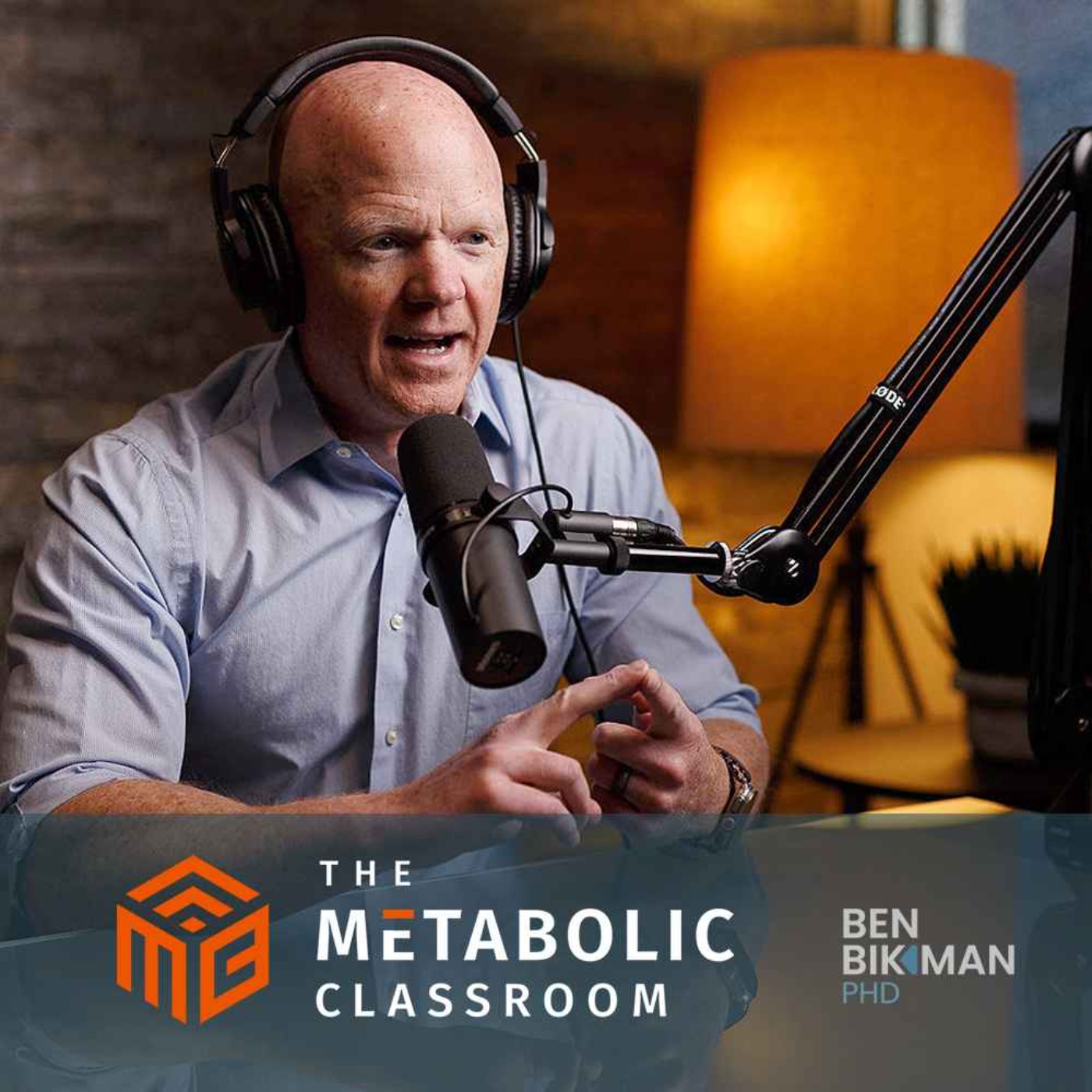
Aging, and the Life of Fat with Dr. Ben Bikman episode artwork

EPISODE · Mar 13, 2024 · 32 MIN

Aging, and the Life of Fat with Dr. Ben Bikman

from The Metabolic Classroom with Dr. Ben Bikman

In this episode of The Metabolic Classroom, Professor Ben Bikman, a biomedical scientist specializing in diabetes, metabolism, and fat tissue, delves deeper into the topic of fat tissue, focusing specifically on its storage locations and the factors influencing them.Dr. Bikman emphasizes the complexity and nuance of fat tissue beyond its commonly recognized role in energy storage, insulation, and cushioning, highlighting its function as an endocrine organ that produces various hormones and signals.Ben begins by discussing the enzyme lipoprotein lipase (LPL), which plays a crucial role in fat storage by pulling fats off circulating triglyceride-rich lipoproteins in the bloodstream. He explains how the expression and activity of LPL are influenced by factors such as insulin, exercise, and sex hormones, particularly testosterone and estrogen.The lecture explores how sex differences play a significant role in fat storage patterns, with males tending to store fat centrally around the abdomen due to increased LPL expression induced by testosterone, while females typically store more fat in subcutaneous depots such as the breasts, buttocks, and hips, influenced by estrogen. Ben also discusses the impact of menopause on fat storage, noting shifts towards central fat deposition in women as estrogen levels decline.Additionally, Dr. Bikman touches on the effects of aging on fat storage, explaining how fat cell number tends to plateau in adulthood and decrease in older age, leading to hypertrophy (enlargement) of existing fat cells and potentially ectopic fat deposition in organs like the liver and pancreas.The lecture concludes with Ben addressing the difference between hyperplasia (increased fat cell number) and hypertrophy (increased fat cell size) in subcutaneous and visceral fat depots, emphasizing the metabolic implications of storing fat in different locations. He also briefly mentions the influence of non-caloric signals, such as chemicals leached from plastics, on fat cell growth.Overall, the lecture provides a comprehensive overview of the multifaceted nature of fat tissue storage, highlighting the interplay of hormonal, physiological, and environmental factors in shaping fat distribution and its metabolic consequences.Learn more at: https://www.insuliniq.com Hosted on Acast. See acast.com/privacy for more information.

In this episode of The Metabolic Classroom, Professor Ben Bikman, a biomedical scientist specializing in diabetes, metabolism, and fat tissue, delves deeper into the topic of fat tissue, focusing specifically on its storage locations and the factors influencing them.Dr. Bikman emphasizes the complexity and nuance of fat tissue beyond its commonly recognized role in energy storage, insulation, and cushioning, highlighting its function as an endocrine organ that produces various hormones and signals.Ben begins by discussing the enzyme lipoprotein lipase (LPL), which plays a crucial role in fat storage by pulling fats off circulating triglyceride-rich lipoproteins in the bloodstream. He explains how the expression and activity of LPL are influenced by factors such as insulin, exercise, and sex hormones, particularly testosterone and estrogen.The lecture explores how sex differences play a significant role in fat storage patterns, with males tending to store fat centrally around the abdomen due to increased LPL expression induced by testosterone, while females typically store more fat in subcutaneous depots such as the breasts, buttocks, and hips, influenced by estrogen. Ben also discusses the impact of menopause on fat storage, noting shifts towards central fat deposition in women as estrogen levels decline.Additionally, Dr. Bikman touches on the effects of aging on fat storage, explaining how fat cell number tends to plateau in adulthood and decrease in older age, leading to hypertrophy (enlargement) of existing fat cells and potentially ectopic fat deposition in organs like the liver and pancreas.The lecture concludes with Ben addressing the difference between hyperplasia (increased fat cell number) and hypertrophy (increased fat cell size) in subcutaneous and visceral fat depots, emphasizing the metabolic implications of storing fat in different locations. He also briefly mentions the influence of non-caloric signals, such as chemicals leached from plastics, on fat cell growth.Overall, the lecture provides a comprehensive overview of the multifaceted nature of fat tissue storage, highlighting the interplay of hormonal, physiological, and environmental factors in shaping fat distribution and its metabolic consequences.Learn more at: https://www.insuliniq.com Hosted on Acast. See acast.com/privacy for more information.

NOW PLAYING

Aging, and the Life of Fat with Dr. Ben Bikman

0:00 32:03

No transcript for this episode yet

We transcribe on demand. Request one and we'll notify you when it's ready — usually under 10 minutes.

No similar episodes found.

No similar podcasts found.

Frequently Asked Questions

How long is this episode of The Metabolic Classroom with Dr. Ben Bikman?

This episode is 32 minutes long.

When was this The Metabolic Classroom with Dr. Ben Bikman episode published?

This episode was published on March 13, 2024.

What is this episode about?

In this episode of The Metabolic Classroom, Professor Ben Bikman, a biomedical scientist specializing in diabetes, metabolism, and fat tissue, delves deeper into the topic of fat tissue, focusing specifically on its storage locations and the factors...

Can I download this The Metabolic Classroom with Dr. Ben Bikman episode?

Yes, you can download this episode by clicking the download button on the episode player, or subscribe to the podcast in your preferred podcast app for automatic downloads.
URL copied to clipboard!