Agroecology- Agribusiness Dialogues
from Agribusiness Matters Hosted by Venky Ramachandran
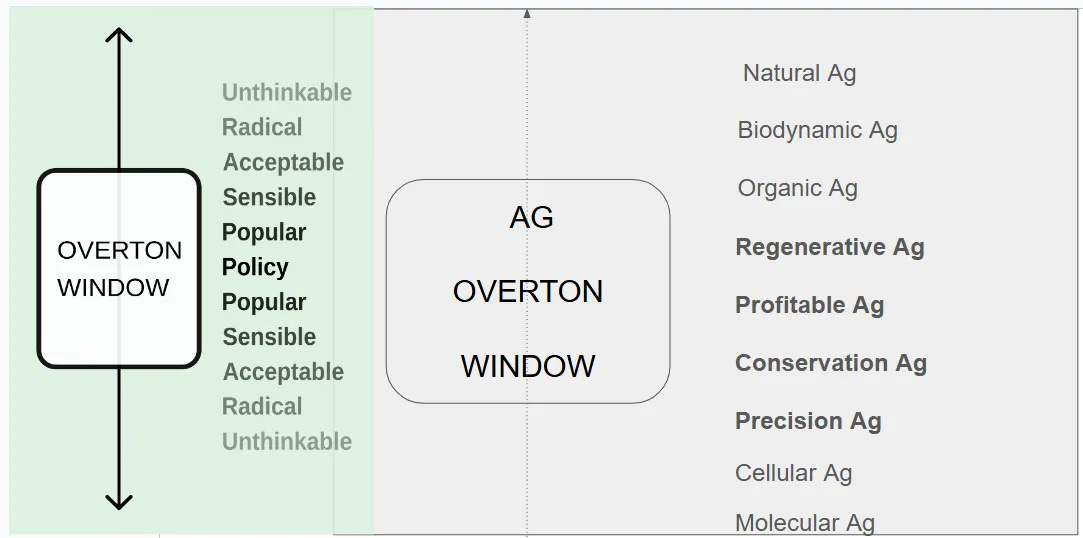
Amidst the illicit romances we often hear in the Ag Overton Window under the garb of “Regenerative Agriculture”, let’s get this straight: Agroecology and Agribusiness have largely been unfriendly with each other. The former hates the latter for pushing soil health as a tertiary problem while the latter hates the former for subsisting on doles and nonprofits without a clear demand curve from regular, cost-conscious consumers. Can the two get back to talking terms? Can the levers of scale and branding operate without sacrificing biodiversity? How do we facilitate this partnership into a mutually beneficial one? Yeah, you are right. Easier said than done. The nearest analogy (I can think of) that could accurately paint the complexity are the Meter gauge and Broad gauge railway tracks in Indian Railways. When you visit old forests of India, you will discover meter gauge railway tracks that were abandoned once broad gauge became the de facto norm. In 2015-16, according to one estimate, Indian Railways had approximately 60,510 kilometers of broad gauge (1.676 m) track and 3,880 kilometers of meter gauge (1.000 m) track. That more or less tallies with the distribution of Agribusiness and Agroecology in the country. Agroecology today, practiced in the real sense of the word, is as isolated as the meter gauge tracks that have been kept aside for heritage purposes in Indian Railway. The meat of the problem is this: Agribusinesses today have built their scale-driven broad-gauge production and post-harvest systems (System B) across the country that are unsuitable for meter-gauge (System M) production and post-harvest systems meant for Agroecology. When you build high-density System B production systems for, say, banana, your marketing and logistics costs have been factored based on the velocity of these production systems. Your traders and buyers know to come during the harvest and collect everything at once. And so when you transition towards low-density (albeit high-resilient) System M production systems, your marketing, post-harvest and logistics systems have to be redesigned completely from different first principles. How do we build the enabler post-harvest System M for Agroecology and strengthen the infrastructure that can compete with the System B? Few moons ago, I hosted a couple of Agroecology-Agribusiness Dialogues to tackle this complex challenge with a bevy of diverse panelists working in the realms of agroecology, technology, policy, social entrepreneurship and grass-roots change maker organizations. The panelists of the first dialogue were * Pallavi Shigwan, Lead Marketing, Godrej Agrovet * Rangu Rao, CEO Safe Harvest * Manish Kumar, CEO Utopia Ville * Shameek Chakravarty, CoFounder Farmizen. The conversation was a fun ride, traversing through the uncharted waters where Agroecology and Agribusiness could share the same boat. I discovered these fascinating insights through this dialogue: 1/ System M operates on host-centric microbiome- centric approaches to plant nutrition. When farmers who have been habituated to System B experiment with System M, they expect fast results and are willing to consider only when economics take a front seat. It takes a strong behavioral shift to help them acclimatize with the transition. ‘We are present in big retailers as well as e-commerce platforms, and our product basket is available in 16 cities in India. Our topline is growing year on year, and our projection is that we will be profitable in the coming two financial years.” - Rangu Rao, CEO, Safe Harvest in a recent interview 2/ Safe Harvest recently pivoted from offline to online retail: Their product basket shifted towards high gross margin products, which also carry the advantage of being low inventory in the marketplace. Safe Harvest is working hard to bridge the trust deficit inherent in System M when they expect consumers to pay premium for the “pesticide-free” promise their brand carries. 3/ Utopia Ville is working to arrest distress migration. Manish shared stories from Bihar where farmers are shifting en masse from Paddy to Tobacco, using 2500-10000 kg per hectare of Urea in an act of desperation to boost incomes. Utopia Ville is building rural tourism infrastructure to help farmers diversify their incomes. 4/ Farmizen focuses on demand driven logistics and subscriptions to mitigate the risks of building System M from ground up and reduce wastage. System B is optimized for price, availability and convenience, especially with the advent of quick commerce. System M should ideally be optimized for consumer health, farmer incomes and planet health. With the rapid scale of System B, it’s evident that we have been optimizing for wrong parameters. Farmizen Academy aims to educate consumers to address this gap and more importantly share the burden among consumers and farmers. Isn’t it far more reasonable instead of entrusting farmers with the complete burden of transitioning from System B to System M? 5/ How is agribusiness marketing changing in persuading farmers to transition from System B crop nutrition products to System M crop nutrition products? Farmers opinions typically tend to depend on government institutions, distributors and influential farmer influencers and competitions could help in convincing the actual potential. 6/ How do we design better credit products for farmers transitioning from System B to System M ? Rangu shared his experience facilitating FPOs with low-interest funds through farmer financial institutions (NAB Kisan) and NBFCs. It is difficult in System M context as the marketable surplus is low. When aggregation becomes a challenge for smaller FPOs, debt works better (in the absence of working capital), especially with an informal arrangement among channel partners to keep the debt in their books, while passing the cost of the debt to Safe Harvest. Safe Harvest has been able to crack this model (shifting from Term Loans to Cash Credit Loans to Infrastructure Loans with bank guarantees) to formalize this arrangement between them and their channel partners without lock-in arrangements for FPOs. This model has helped farmers take calibrated risks. 7/ Uttarakhand, Kerala, Rajasthan have been driving the rural experiential tourism trend in India and other states like UP are keen to follow suit. Rural Hygiene is a challenge while acculturing rural organisers to urban guests’ cultural norms. 8/ How do you educate consumers on the merits of building System M? Brands like Akshayakalpa are taking the lead. We haven’t had the equivalent of FoodPharmer for the world of agriculture. We haven’t studied the experiments of technologists turned farmers. How do we make their experiments profitable? So, what do you think? How happy are you with today’s edition? I would love to get your candid feedback. Your feedback will be anonymous. Two questions. 1 Minute. Thanks.🙏 💗 If you like “Agribusiness Matters”, please click on Like at the bottom and share it with your friend. This is a public episode. If you'd like to discuss this with other subscribers or get access to bonus episodes, visit www.krishidotsystem.com/subscribe
Embed this episode
No transcript yet.