
EPISODE · Jul 21, 2026 · 15 MIN
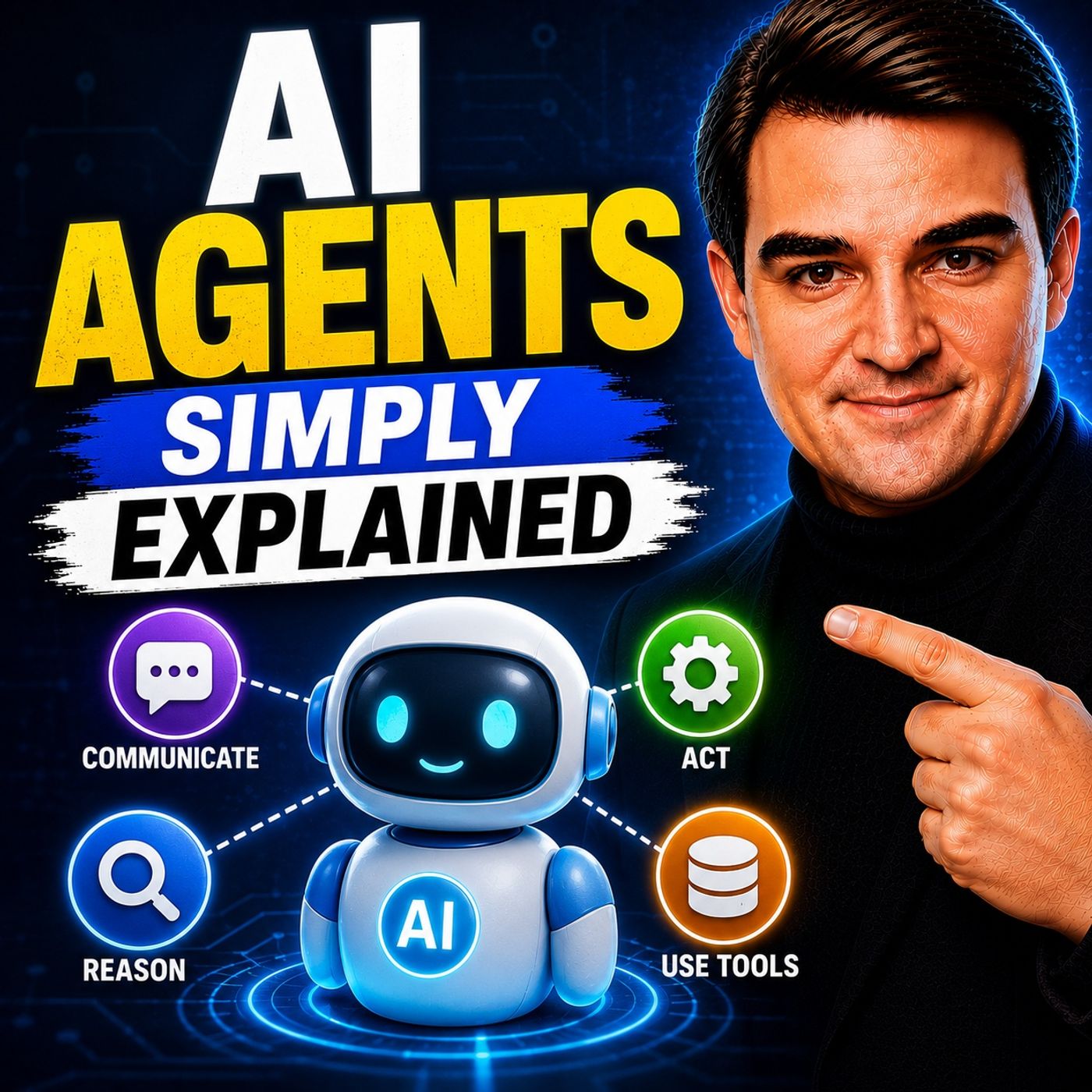
AI Agents - Simply Explained
from M365.FM - Modern work, security, and productivity with Microsoft 365 · host Mirko Peters - Founder of m365.fm, m365.show and m365con.net
Welcome to another episode of Knowledge Nuggets with Mirko Peters. In this episode, we're exploring AI Agents—one of the fastest-growing concepts in artificial intelligence and the foundation of Microsoft's vision for the future of work. The term "AI agent" is often used interchangeably with chatbot, but they're fundamentally different. A chatbot answers questions. An AI agent pursues goals. It can reason, make decisions, interact with business systems, perform tasks autonomously, and report back when the work is complete. Throughout this episode, you'll learn what makes AI agents unique, how Microsoft enables them across Microsoft 365 and Azure, and which platform you should choose depending on your requirements.CHATBOTS VS. AI AGENTS The easiest way to understand AI agents is by comparing them with traditional chatbots. A chatbot is reactive. It waits for a user to ask a question, generates an answer, and the interaction ends. Its memory is usually limited to the current conversation, and it cannot perform work outside the chat interface. An AI agent works very differently. Instead of simply answering questions, an agent receives an objective and determines the necessary steps to accomplish it. It can access calendars, send emails, update SharePoint lists, create documents, interact with business systems, and complete workflows without continuous user supervision. Think of a chatbot as a receptionist answering questions at the front desk. An AI agent is more like a project manager who coordinates multiple tasks, communicates with different systems, and returns once the objective has been completed. WHAT MAKES AN AI AGENT? An AI agent combines several capabilities that extend far beyond language generation. Modern agents can:Reason through complex problemsPlan multiple stepsUse external toolsAccess enterprise knowledgeMake decisionsExecute actionsLearn from contextWork autonomously toward a goalRather than generating isolated responses, agents continuously evaluate what should happen next until the assigned task has been completed. This makes them ideal for business automation, customer service, IT operations, HR, procurement, finance, and countless other enterprise scenarios.MICROSOFT'S THREE AGENT BUILDING OPTIONS Microsoft provides three different approaches for building AI agents. Agent Builder Agent Builder is the simplest option. Included with Microsoft 365 Copilot, it enables users to create no-code agents simply by describing what they want in natural language. Knowledge can be sourced from:SharePointOneDriveTeamsWebsitesUploaded filesOrganizational dataThis makes Agent Builder perfect for departmental knowledge assistants and internal Q&A solutions. Copilot Studio Copilot Studio introduces low-code capabilities. Developers and power users can connect over a thousand business systems through connectors, build custom conversation flows, trigger workflows automatically, and publish agents to Microsoft Teams, Microsoft 365 Copilot, or external websites. It's designed for organizations that want AI agents capable of interacting with real business processes instead of simply answering questions. Azure AI Foundry Azure AI Foundry provides complete developer control. Organizations can choose different AI models, build multi-agent architectures, customize orchestration logic, integrate advanced memory, and deploy enterprise-scale AI workloads running on managed Azure infrastructure. Foundry is the platform of choice for professional AI engineering teams building production-ready AI solutions.KNOWLEDGE, MEMORY, AND TOOLS An AI agent becomes valuable because it combines reasoning with enterprise knowledge. Depending on the platform, agents can retrieve information from:Microsoft GraphSharePointTeamsOneDriveDataverseOutlookExternal business systemsCustom APIsUnlike traditional AI models that rely only on their training data, enterprise agents continuously ground their responses using current organizational information. This dramatically improves accuracy while reducing hallucinations and ensuring answers remain relevant to the latest business data.DIGITAL IDENTITIES FOR AGENTS One of Microsoft's most significant innovations is giving AI agents their own digital identities. Each enterprise agent receives an identity within Microsoft Entra ID, similar to a human employee. This identity can include:A mailboxOneDrive storageTeams presenceSecurity permissionsAuthentication credentialsBecause agents authenticate through Microsoft Entra ID, they follow the same permission model as human users. If an agent isn't authorized to access a document, it cannot retrieve or use that information. This creates a secure foundation for enterprise AI adoption.WORK IQ AND ENTERPRISE GROUNDING Microsoft uses Work IQ to provide agents with organizational context. Instead of relying purely on general AI knowledge, Work IQ searches:EmailsDocumentsTeams conversationsCalendar eventsSharePoint contentMicrosoft Graph dataEvery query respects existing security permissions. Users only receive answers based on information they are already authorized to access, preserving enterprise security boundaries while significantly improving response quality.REAL-WORLD PROCUREMENT AGENT The episode demonstrates Microsoft's procurement agent as a practical example. The workflow begins with an approved agent published through an internal agent catalog. After receiving procurement policies, supplier information, and purchasing guidelines, the agent can independently:Evaluate supplier optionsCompare pricingReview SLAsCreate purchase ordersUpdate SharePoint tracking systemsReport progress through Microsoft TeamsUsers simply assign the objective while the agent coordinates the individual tasks autonomously. This illustrates the transition from AI assistants toward digital coworkers capable of performing meaningful business work.Become a supporter of this podcast: https://www.spreaker.com/podcast/m365-fm-modern-work-security-and-productivity-with-microsoft-365--6704921/support.
Embed this episode
What this episode covers
Welcome to another episode of Knowledge Nuggets with Mirko Peters. In this episode, we're exploring AI Agents—one of the fastest-growing concepts in artificial intelligence and the foundation of Microsoft's vision for the future of work. The term "AI agent" is often used interchangeably with chatbot, but they're fundamentally different. A chatbot answers questions. An AI agent pursues goals. It can reason, make decisions, interact with business systems, perform tasks autonomously, and report back when the work is complete. Throughout this episode, you'll learn what makes AI agents unique, how Microsoft enables them across Microsoft 365 and Azure, and which platform you should choose depending on your requirements. CHATBOTS VS. AI AGENTS The easiest way to understand AI agents is by comparing them with traditional chatbots. A chatbot is reactive. It waits for a user to ask a question, generates an answer, and the interaction ends. Its memory is usually limited to the current conversation, and it cannot perform work outside the chat interface. An AI agent works very differently. Instead of simply answering questions, an agent receives an objective and determines the necessary steps to accomplish it. It can access calendars, send emails, update SharePoint lists, create documents, interact with business systems, and complete workflows without continuous user supervision. Think of a chatbot as a receptionist answering questions at the front desk. An AI agent is more like a project manager who coordinates multiple tasks, communicates with different systems, and returns once the objective has been completed. WHAT MAKES AN AI AGENT? An AI agent combines several capabilities that extend far beyond language generation. Modern agents can: Reason through complex problems Plan multiple steps Use external tools Access enterprise knowledge Make decisions Execute actions Learn from context Work autonomously toward a goal Rather than generating isolated responses, agents continuously evaluate what should happen next until the assigned task has been completed. This makes them ideal for business automation, customer service, IT operations, HR, procurement, finance, and countless other enterprise scenarios. MICROSOFT'S THREE AGENT BUILDING OPTIONS Microsoft provides three different approaches for building AI agents. Agent Builder Agent Builder is the simplest option. Included with Microsoft 365 Copilot, it enables users to create no-code agents simply by describing what they want in natural language. Knowledge can be sourced from: SharePoint OneDrive Teams Websites Uploaded files Organizational data This makes Agent Builder perfect for departmental knowledge assistants and internal Q&A solutions. Copilot Studio Copilot Studio introduces low-code capabilities. Developers and power users can connect over a thousand business systems through connectors, build custom conversation flows, trigger workflows automatically, and publish agents to Microsoft Teams, Microsoft 365 Copilot, or external websites. It's designed for organizations that want AI agents capable of interacting with real business processes instead of simply answering questions. Azure AI Foundry Azure AI Foundry provides complete developer control. Organizations can choose different AI models, build multi-agent architectures, customize orchestration logic, integrate advanced memory, and deploy enterprise-scale AI workloads running on managed Azure infrastructure. Foundry is the platform of choice for professional AI engineering teams building production-ready AI solutions. KNOWLEDGE, MEMORY, AND TOOLS An AI agent becomes valuable because it combines reasoning with enterprise knowledge. Depending on the platform, agents can retrieve information...
NOW PLAYING
AI Agents - Simply Explained
No transcript for this episode yet
Similar Episodes
No similar episodes found.
Similar Podcasts
No similar podcasts found.