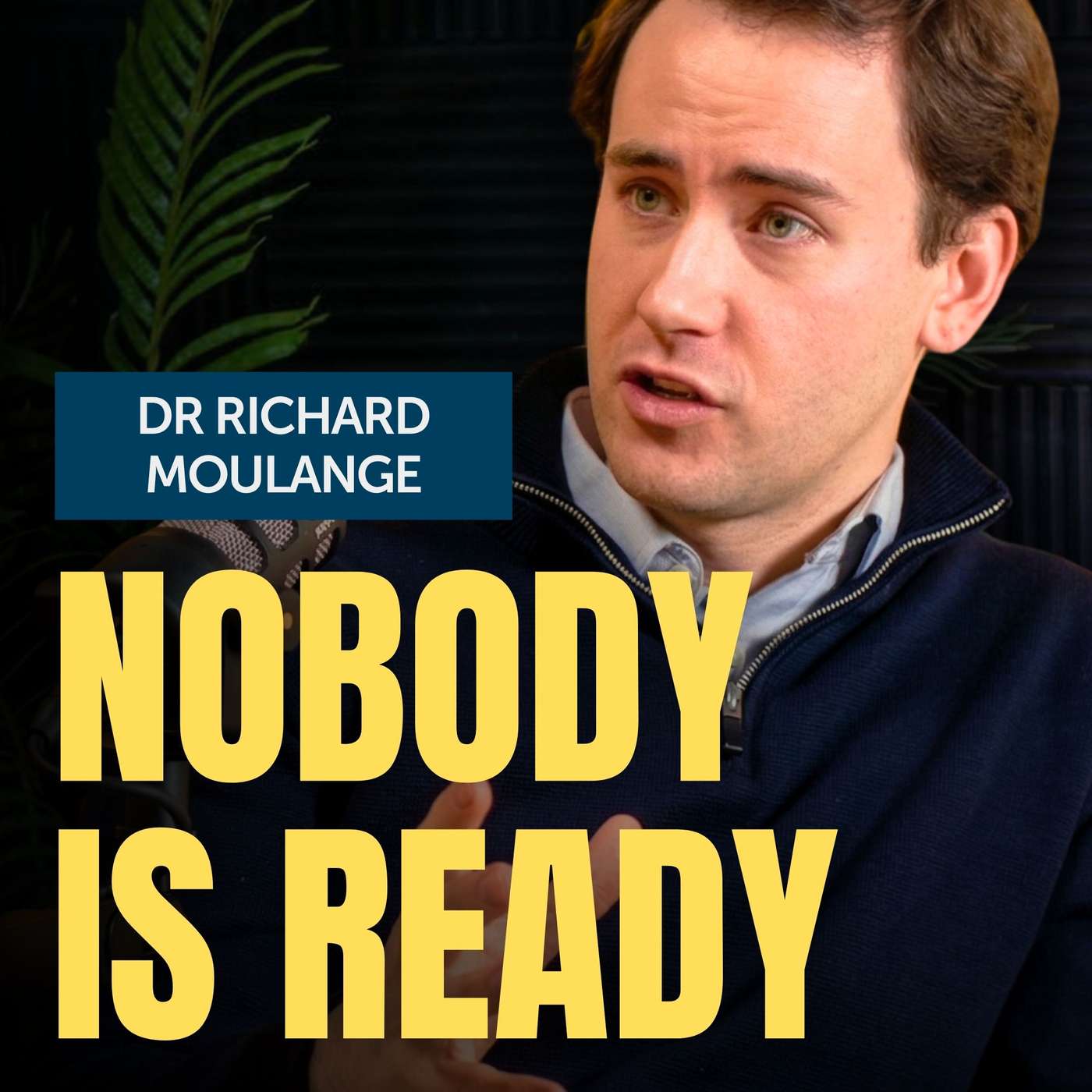
#241 – Richard Moulange on how now AI codes viable genomes from scratch and outperforms virologists at lab work — what could go wrong? episode artwork

EPISODE · Mar 31, 2026 · 3H 10M

#241 – Richard Moulange on how now AI codes viable genomes from scratch and outperforms virologists at lab work — what could go wrong?

from 80,000 Hours Podcast · host The 80,000 Hours team

Last September, scientists used an AI model to design genomes for entirely new bacteriophages (viruses that infect bacteria). They then built them in a lab. Many were viable. And despite being entirely novel some even outperformed existing viruses from that family.That alone is remarkable. But as today’s guest — Dr Richard Moulange, one of the world’s top experts on ‘AI–Biosecurity’ — explains, it’s just one of many data points showing how AI is dissolving the barriers that have historically kept biological weapons out of reach.For years, experts have reassured us that ‘tacit knowledge’ — the hands-on, hard-to-Google lab skills needed to work with dangerous pathogens — would prevent bad actors from weaponising biology. So far, they’ve been right.But as of 2025 that reassurance is crumbling. The Virology Capabilities Test measures exactly this kind of troubleshooting expertise, and finds that modern AI models crushed top human virologists even in their self-declared area of greatest specialisation and expertise — 45% to 22%.Meanwhile, Anthropic’s research shows PhD-level biologists getting meaningfully better at weapons-relevant tasks with AI assistance — with the effect growing with each new model generation.In today’s conversation, Richard and host Rob Wiblin discuss:What AI biology tools already existWhy mid-tier actors (not amateurs) are the ones getting the most dangerous boostThe three main categories of defence we can pursueWhether there’s a plausible path to a world where engineered pandemics become a thing of the past.Learn more and read the full transcript on the 80,000 Hours website. This episode was recorded on January 16, 2026. Since recording this episode, Richard has seconded to the UK Government — please note that his views expressed here are entirely his own.Links to learn more, video, and full transcript: https://80k.info/rmAnnouncements:Our new book is available to preorder: 80,000 Hours: How to have a fulfilling career that does good is written by our cofounder Benjamin Todd. It’s a completely revised and updated edition of our existing career guide, with a big new updated section on AI — covering both the risks and the potential to steer it in a better direction, and how AI automation should affect your career planning and which skills one chooses to specialise in. Preorder now: https://geni.us/80000HoursWe're hiring contract video editors for the podcast! For more information, check out the expression of interest page on the 80,000 Hours website: https://80k.info/video-editorChapters:Cold open (00:00:00)Who’s Richard Moulange? (00:00:31)AI can now design novel viruses (00:01:11)The end of the 'tacit knowledge' barrier (00:04:42)Are risks from bioterrorists overstated? (00:18:50)The 3 key disasters AI makes more likely (00:23:14)Which bad actors does AI help the most? (00:30:43)Experts are more scary than amateurs (00:42:07)Barriers to bioterrorists using AI (00:47:32)AI biorisks are sometimes dismissed (and that’s a huge mistake) (00:49:43)Advanced AI biology tools we already have or will soon (01:05:12)Rob argues that the situation is hopeless (01:10:57)Intervention #1: Limit access (01:19:38)Intervention #2: Get AIs to refuse to help (01:34:28)Intervention #3: Surveillance and attribution (01:44:18)Intervention #4: Universal vaccines and antivirals (01:58:28)Intervention #5: Screen all orders for DNA (02:12:01)AI companies talk about def/acc more than they fund it (02:21:57)Can you build a profitable business solving this problem? (02:28:44)This doesn't have to interfere with useful science (much) (02:33:08)What are the best low-tech interventions? (02:35:16)Richard's top request for AI companies (02:40:17)Grok shows governments lack many legal levers (02:55:44)Best ways listeners can help fix AI-Bio (02:58:54)We might end all contagious disease in 20 years (03:06:12)Video and audio editing: Dominic Armstrong, Milo McGuire, Luke Monsour, and Simon MonsourMusic: CORBITCamera operator: Jeremy ChevillotteTranscripts and web: Elizabeth Cox and Katy Moore

Last September, scientists used an AI model to design genomes for entirely new bacteriophages (viruses that infect bacteria). They then built them in a lab. Many were viable. And despite being entirely novel some even outperformed existing viruses from that family.That alone is remarkable. But as today’s guest — Dr Richard Moulange, one of the world’s top experts on ‘AI–Biosecurity’ — explains, it’s just one of many data points showing how AI is dissolving the barriers that have historically kept biological weapons out of reach.For years, experts have reassured us that ‘tacit knowledge’ — the hands-on, hard-to-Google lab skills needed to work with dangerous pathogens — would prevent bad actors from weaponising biology. So far, they’ve been right.But as of 2025 that reassurance is crumbling. The Virology Capabilities Test measures exactly this kind of troubleshooting expertise, and finds that modern AI models crushed top human virologists even in their self-declared area of greatest specialisation and expertise — 45% to 22%.Meanwhile, Anthropic’s research shows PhD-level biologists getting meaningfully better at weapons-relevant tasks with AI assistance — with the effect growing with each new model generation.In today’s conversation, Richard and host Rob Wiblin discuss:What AI biology tools already existWhy mid-tier actors (not amateurs) are the ones getting the most dangerous boostThe three main categories of defence we can pursueWhether there’s a plausible path to a world where engineered pandemics become a thing of the past.Learn more and read the full transcript on the 80,000 Hours website. This episode was recorded on January 16, 2026. Since recording this episode, Richard has seconded to the UK Government — please note that his views expressed here are entirely his own.Links to learn more, video, and full transcript: https://80k.info/rmAnnouncements:Our new book is available to preorder: 80,000 Hours: How to have a fulfilling career that does good is written by our cofounder Benjamin Todd. It’s a completely revised and updated edition of our existing career guide, with a big new updated section on AI — covering both the risks and the potential to steer it in a better direction, and how AI automation should affect your career planning and which skills one chooses to specialise in. Preorder now: https://geni.us/80000HoursWe're hiring contract video editors for the podcast! For more information, check out the expression of interest page on the 80,000 Hours website: https://80k.info/video-editorChapters:Cold open (00:00:00)Who’s Richard Moulange? (00:00:31)AI can now design novel viruses (00:01:11)The end of the 'tacit knowledge' barrier (00:04:42)Are risks from bioterrorists overstated? (00:18:50)The 3 key disasters AI makes more likely (00:23:14)Which bad actors does AI help the most? (00:30:43)Experts are more scary than amateurs (00:42:07)Barriers to bioterrorists using AI (00:47:32)AI biorisks are sometimes dismissed (and that’s a huge mistake) (00:49:43)Advanced AI biology tools we already have or will soon (01:05:12)Rob argues that the situation is hopeless (01:10:57)Intervention #1: Limit access (01:19:38)Intervention #2: Get AIs to refuse to help (01:34:28)Intervention #3: Surveillance and attribution (01:44:18)Intervention #4: Universal vaccines and antivirals (01:58:28)Intervention #5: Screen all orders for DNA (02:12:01)AI companies talk about def/acc more than they fund it (02:21:57)Can you build a profitable business solving this problem? (02:28:44)This doesn't have to interfere with useful science (much) (02:33:08)What are the best low-tech interventions? (02:35:16)Richard's top request for AI companies (02:40:17)Grok shows governments lack many legal levers (02:55:44)Best ways listeners can help fix AI-Bio (02:58:54)We might end all contagious disease in 20 years (03:06:12)Video and audio editing: Dominic Armstrong, Milo McGuire, Luke Monsour, and Simon MonsourMusic: CORBITCamera operator: Jeremy ChevillotteTranscripts and web: Elizabeth Cox and Katy Moore

NOW PLAYING

#241 – Richard Moulange on how now AI codes viable genomes from scratch and outperforms virologists at lab work — what could go wrong?

0:00 3:10:30

No transcript for this episode yet

We transcribe on demand. Request one and we'll notify you when it's ready — usually under 10 minutes.

That Hoarder: Overcome Compulsive Hoarding That Hoarder Hoarding disorder is stigmatised and people who hoard feel vast amounts of shame. This podcast began life as an audio diary, an anonymous outlet for somebody with this weird condition. That Hoarder speaks about her experiences living with compulsive hoarding, she interviews therapists, academics, researchers, children of hoarders, professional organisers and influencers, and she shares insight and tips for others with the problem. Listened to by people who hoard as well as those who love them and those who work with them, Overcome Compulsive Hoarding with That Hoarder aims to shatter the stigma, share the truth and speak openly and honestly to improve lives. The Small Business Startup School – Business Notes | Financial Literacy | Retail Psychology – For Professionals & Entrepreneurs The Small Business Startup School Inc. Starting or buying a small business? While personal circumstances may vary, business patterns remain timeless. On The Small Business Startup School, we explore strategies, insights, and practical solutions to help entrepreneurs confidently navigate their journey.Hosted by Ola Williams—a retail entrepreneur, fintech founder, and financial coach with over two decades of experience—this podcast marries financial awareness and retail psychology with optimism to deliver actionable takeaways.Join us to learn, grow, and connect as we uncover the keys to business success.Let’s continue to learn together and be encouraged to keep on connecting! DIOSA. Carolina Sanper This podcast is a sacred space created by Carolina Sanper where you connect with your inner wisdom and embody your magnetic feminine power.It is the realization that the mystical realm is where you plant the seeds of your desired reality.It is a portal to your true essence: awareness, presence, and receiving with ease. Welcome home, DIOSA. 🖤 XXX Tech by SOVRYN Dr. Brian Sovryn The crossroads between technology, sensuality, and metaphysics - and the longest running anarchist podcast in the world! Brought to you by Dr. Brian Sovryn.

Frequently Asked Questions

How long is this episode of 80,000 Hours Podcast?

This episode is 3 hours and 10 minutes long.

When was this 80,000 Hours Podcast episode published?

This episode was published on March 31, 2026.

What is this episode about?

Last September, scientists used an AI model to design genomes for entirely new bacteriophages (viruses that infect bacteria). They then built them in a lab. Many were viable. And despite being entirely novel some even outperformed existing viruses...

Is there a transcript available for this episode?

Yes, a full transcript is available for this episode. You can read the complete transcript on the episode page.

Can I download this 80,000 Hours Podcast episode?

Yes, you can download this episode by clicking the download button on the episode player, or subscribe to the podcast in your preferred podcast app for automatic downloads.
URL copied to clipboard!