Thank you for coming to this first thing on a... Nine o'clock on the last day of the conference. Thank you. I think it'll be worth your while. I'm the Ampuli. I'm a New Zealand-based filmmaker, and I'd like to acknowledge the Wurundjeri people of the Koolam Nation before we start. I'm really grateful to the AIDC for bringing me over to take part in what is always such an inspiring few days, and especially to help moderate this session, because I think the documentary musical is a development in our genre that has really pushed the boundaries of the documentary form.
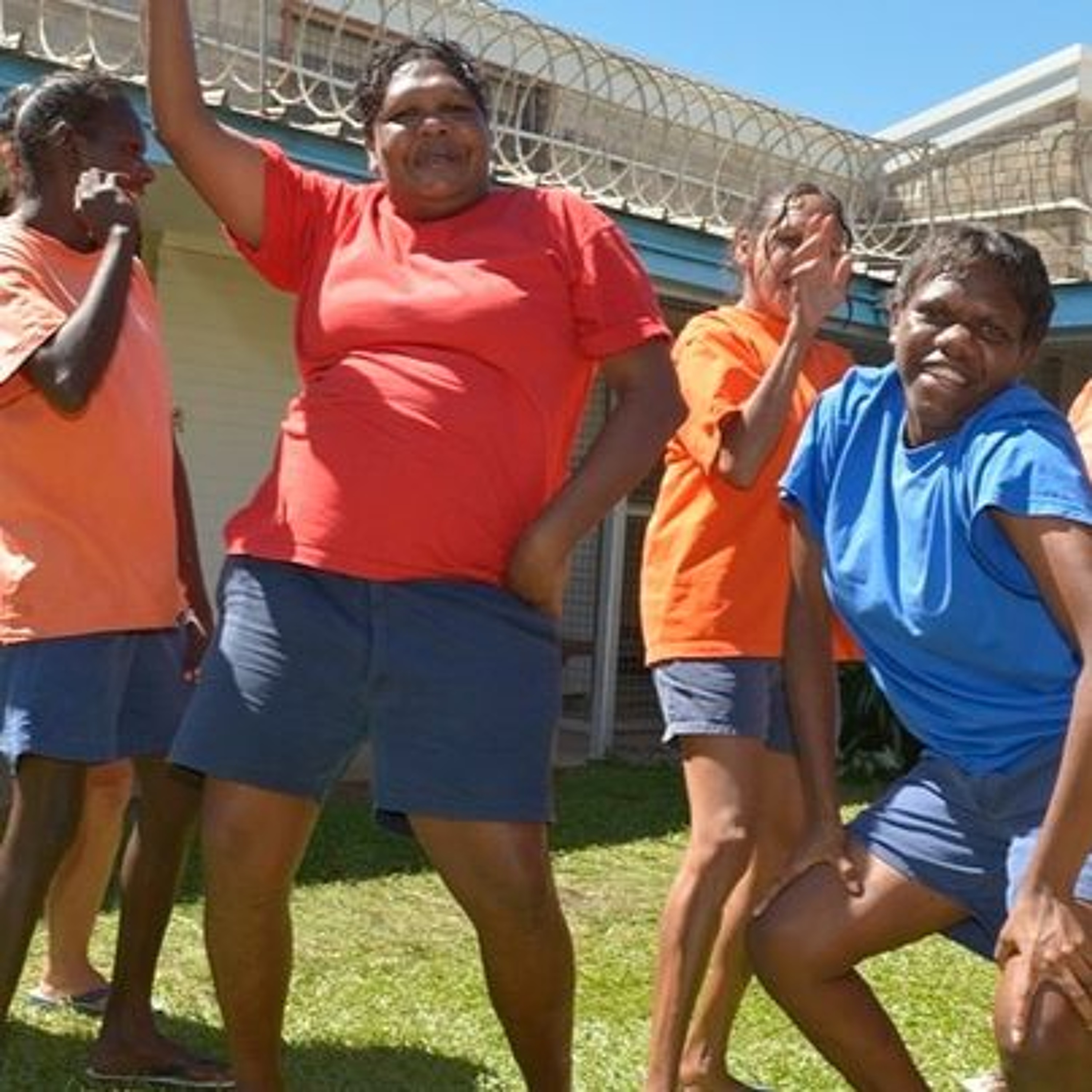
This session is about deconstructing the documentary musical. So before I start, I think we should just clarify what a documentary musical is, and I think I can do that best by explaining what it isn't. It isn't a musical documentary like the Rolling Stones film Shine a Light, nor is it a documentary that explores the power of music as something like Amandla, A Revolution in Four-Part Harmony did. Those are great films, but they are music documentaries, and what we're here to talk about today is documentary musicals. In my mind, and this is what we're going to talk about in the session, a documentary musical is a documentary that uses music as a language to explore subject matter that might have nothing to do with music, where performance is integrated into the narrative structure of the story. And the film we're talking about today, which did this so beautifully, is Kellrick Martin's Prison Songs. Prison Songs was a good pitch winner. It is screened at festivals around the world, has been nominated for numerous awards, too many for me to list them all here, but I will mention that it won the World Humanitarian Documentary of the Year award at Banff, which is amazing.
It now forms a central element of a national campaign to reduce Indigenous incarceration in Australia. So I'd like to induce the creative team behind this amazing documentary. Sitting next to me is director and co-producer Kelrick Martin. Kelrick's a Boon of our man from Broome, Western Australia. Kelrick has a varied career in the industry. He's been a presenter on both radio and television, a radio producer, a television series producer, and of course a documentary filmmaker. He was NITV's first commissioning editor, and he runs Spearpoint Productions, from where he has established himself as a key figure in WA's Indigenous screen production sector, particularly in his role as Indigenous manager for Screen West.
This being a documentary musical, of course the music team was crucial to the heart and soul of making the film. So on the stage we have Casey Beneteau and Shelley Morris. Shelley is a proud Yanua and Wardaman woman from Northern Territory. She's a singer, songwriter, performer, composer, and Shelley brought her keen interest in social justice and utilising music as a healing tool to this beautiful film. Casey Beneteau may be familiar to some of you as the co-host of Super Flutie on RRRFM or as a member of the Norells.
Casey's a musician, writer, broadcaster, MC, actor, and in today's conversation, a composer. These guys, you're in for a treat, because aside from anything, Casey's brought a guitar. That's like a threat. I've brought a guitar and I'm not afraid to use it. Harry Bardwell. Harry will be familiar to some of you. He's been around a little while. Harry is currently managing... That wasn't loaded. Harry's currently managing Beyond West for Beyond International. Harry's a producer, a documentary filmmaker. He's been a network executive. We're not going to hold that against him. And a commissioning editor. Prison Songs, I'm going to start with Harry because Prison Songs began, as I understand it, Harry, because you were having a conversation with a British-based filmmaker named Brian Hill. Brian is a London-based documentary filmmaker who's picked up three BAFTAs, which I think is...
Freaking greedy, if I have to say so myself. Three BAFTAs. And he's made a number of documentary musicals, including Drinking for England, Feltnham Sings, and Songbirds. And Harriet and Brian had worked together in the past. So, Harriet, can you just tell me a little bit about how it all began?
Thanks for coming. Yes, we will be playing music so you can just ease into the day. Yeah, Brian and I had worked together for a long, long time dating back to Sylvania Waters, actually. It was a project we made together a long time ago. Brian, over the last 10, 15 years, had developed the documentary musical and as a result of putting poetry in as narration into films, gradually getting people into singing, and that led to him winning a BAFTA IV.
I think did he win a BAFTA for Drinking for England? No, it was nominated, but I think Felton Sings won. He won one for Felton Sings. And we were looking at doing something like this together for SBS. And for a number of reasons, it took ages to get it, not least of which was just getting into prison. Finding a prison that would actually allow us to have the access that we required and do something as strange as getting people to run around singing and dancing in the middle of their prison sentence. And so by the time we got all that together...
Brian came out and he's an executive producer on the show and helped mentor Kelrick and I to actually make the film. So it wasn't our original idea, but I think Kelrick in particular made it into an original film that moves the form forward from where Brian had done it and applied it to the culture of the Northern Territory in addition to that, my two colleagues here, am I right? I think that the important thing, I'll just sort of make a statement, which Brian always likes to make as well, that the reason why these films seem to work is they sound bizarre when you explain it, but when you actually see it... the use of music places everybody on a different plane. When you're making the film, it gives the people who are involved, the production team, the director and the subject, because they're working together to make a song. When you actually sing that song, not only are you not being judged on your level of articulateness in English, your ability to speak, you're not being judged, you're placed on a different plane that is accepted in our culture to do with poetry and music. And similarly,
If you don't necessarily like the people that you're looking at, you tend to not listen to them very much for very long. If they suddenly start singing, the audience will go with it for a lot longer. This, we've found, works quite well on television. It works extremely well in small groups where people are watching it and then talking afterwards, which is part of the reason why it's gone into this Good Pitch outreach program. I think it might be interesting to look at Felton Sings at this point.
which was a juvenile prison in London that Brian got into and made this film working with a composer and poet whose name I can't remember, we worked with closely, who wrote these poems that the prisoners recited. That was sort of an earlier version of something that certainly informed us. So Brian came out and worked with us to show us the way which we're going to talk about of crafting these films. Well, maybe we should, because I think the process of the film is... the same as a normal documentary and very different from a normal documentary. So I think we should just sort of deconstruct those similarities and those things that make a difference. So, Kellogg, maybe talk to me a little bit about, obviously, in any documentary, casting it, which is actually what you do in a documentary. You choose your central characters the way you would in any film. How did you go about casting this documentary? What did you look for? Was it about singing voices or was it about story or was it about personality? Tell me how you went about it. Yeah.
Look, I guess when we approach this, understanding the issue is probably the most important thing and trying to get your head around how complicated Indigenous over-incarceration is in this country. I think people tend to assume that it's a fairly kind of homogenous group of people that are ending up in jail. It's actually quite the opposite. The reasons why people are in prison in the first place are diverse. And so I guess for my purposes in casting this film, I wanted to represent that diversity.
But I also wanted to represent the cultural diversity within that particular prison, Barramone, Northern Territory, which is a very unique prison. And I do thank Harry for busting his arse to get us inside there because it's an intriguing mix of both the remote cultural groups, people that live in remote areas being interred in one location, but also people who grew up in a more urban environment. And so it's quite intriguing in that sense. But yes, certainly we want to try and cast people with different stories, people who come from different backgrounds. We didn't really care if they could sing or not.
obviously it would help, but we weren't quite concerned about that. For us, it was much more about the story itself and the characters and their ability to be able to present themselves and just be able to articulate how they felt and what they were thinking and all that sort of stuff. And so as I understand it, and we'll bring Shelley in on this too, you sat down with the prisoners that you were going to work with and you did extensive interviews with them. Shelley, can you tell me a little bit about what happened at that stage and how those interviews morphed into music? I think when we were...
Kelrick and their mum were doing all their interviews. It was listening to key things that were coming up and there was many issues that were quite common. Well established that you were there in the room right? Yeah I was there and listening on headphones and writing my notes and yeah so that was the there was reoccurring themes that were coming back and yeah it was quite emotional too obviously you know the hours of footage that. you know, Kellrick and them, but yeah, that stuff didn't make the film, but there were definitely, it was quite, you know, moving as well, quite emotional. So you're listening to the interviews, the prisoners are telling their stories, and then you take those stories and you start to write songs. Can you tell me how that process worked? How you approached the writing the songs, the connection to what these people said, and how much you could bring to their stories? How did that work? And then, of course, we were looking for another writer, and then they found this wonderful human on my right here called Casey Panetto. And so...
We had the themes ready to go and so we got together. So by the themes you mean the sort of thematic? Like grog, the alcohol, domestic and family violence and things like that. Jealousy. Yeah, all these emotions and things that were coming in and through that we sort of had some key moments so we were picking out bits of the stories really and working with that. I think it might be worth talking a little bit about Silver Princess and how you and Casey, you were playing it before and I think it's actually worth, I was thinking when you had the guitar out before,
listening to the two of you do that song and then sing the clip, if you guys don't mind doing it that way around. Because I think that's the way it would have been in the process. Well, the way it would start is we were actually getting transcripts as we were writing the songs. We had a very short window in which to write the songs. Tell us the window. It was about a week. How many songs? A week and a bit. It was ten days. Ten days and we wanted ten songs. We didn't quite get to ten songs. We got nine, eh? Yeah, we got nine.
Song of Day. They did a fucking awesome job. Unbelievable. But because we were getting sort of transcripts through at the same time as we were starting to write them, we had the thing where we sort of had copies of the transcripts we'd come through, get out the highlighter pen and go, oh, this section, this is particularly speaking to me. And it was interesting. I was just thinking then when we were playing that opening clip of Max during Waking Up in Berrimar, when he's talking about his mother saying, you know, him saying, at least I didn't hurt anybody, and she's saying you hurt everybody. There were a few occasions like that when you're going through the transcripts and you'd highlight something, you'd go, that's a terrific piece, and then you'd go.
that's going to be in the movie as it is. That's going to be like, we're going to have to play that interview clip. So there's no point in putting that into a song. So you had to be, they had to be sort of more widely themed rather than taking moments and going, oh, we must make a song out of that because then you're just robbing Peter to pay Paul in the interview. And were you talking, were you sort of talking all the time together? I mean, did Kellogg ever say to you, you need to get this line in or was it not really? No, no. We worked on the themes. We wanted a specific set of themes. Yes. And they were taken out of each of the characters and each of them.
So we knew the broad scope of what we were trying to achieve. Yeah, there's a song about, obviously, the alcohol issue, which we knew would be something that would be prevalent within the film. There was the story of prison being a sanctuary, of being a place that rejuvenates rather than being a sort of a punishment. So just working on those themes, I think these guys just went for it. And it was an absolute pleasure to see or hear all the stuff that would come back from these guys. And just before we do sing that song, I just wanted to... There was a reason why the song's cheeky.
One is, you know, I do extensive work in remote communities and I'm employed or working alongside many different organisations. And it's don't sniff petrol, don't drink, don't smoke, don't swear, don't have sex, don't nothing, don't laugh, you know, everything is no. So, and I thought, well, the alcohol issue in Australia is not just a black issue, it's an issue. And so it's like, you know, the one that Brian did in Drinking for England or something like that. And so I just wanted it to be really...
clever and that's where Mr Bonetto comes in and funny because you know just of course everybody knows if you drink too much and fall down you know and swear and punch someone in the head well that's no good but everyone knows that so that's why I just wanted to reiterate that because you're just over all the no's and don'ts. I mean that is the joy of this form isn't it that you can explore things with humour and with irony and just music opens up all those doors that would sound you know in a subject alcohol it's a freaking dry subject in it at the end of the day it's dry and so you took something and gave it life. Get that guitar out my friend. I guess it's more about sort of break. For me, it was more about sort of breaking preconceptions. It's Aboriginal people. Oh, well, they're not allowed to drink because they're Aboriginal and obviously they have problems with alcohol. And it's like, well, Aboriginal people are people at the end of the day. And if they want to have a drink, then like any other Australian, they can have one if they want. Except we get chucked in jail. And why not for the reasons of celebrating and having a good time like everybody else does? Yeah, except we get chucked in jail. If I was with Harry, I'd be in the paddy wagon. He'd be just going, no, see you later. No. I want to tell you about my precious love. About the sweetheart I've been dreaming of. A special someone always there for me.
A very pretty kind of company. She got a beauty I can celebrate. The kind of body I appreciate. And when I hold her in the firelight. She helps me make it through the night. I'm talking about alcohol. I never had a chance at all. You had me from the start. You poured into my heart. Brightened up my day.
Hey, alcohol, you pick me up and let me fall. You cut me down to size, a devil in disguise, and I can't get away. Now let me tell you about a sweet romance, the kind of lover who can make me dance. You get me dizzy with a magic kiss, intoxicated with a taste of love. It's like I'm walking in a happy clock. You make a party out of every crack. You drive me crazy and you make me shout. You know you really knock me out.
I'm talking about alcohol. I never had a chance at all. You had me from the start. You're pouring through my heart. You're fighting off my day. Hey, hey, hey. Alcohol. You pick me up and let me fall. You cut me down to size. The devil in disguise. And I can't get away. Now it's late and I can't think straight. I think I'm wasted. Wasted. Drank a flood of that monkey blood and I'm blind.
Okay, so trumpet solo, right? And I did a trumpet solo on the demo and then went into my horror when I saw the final film. It's still my trumpet. I cannot play the trumpet for the life of me. But then it kind of worked for the song, you know, to have this trumpet half falling apart.
Now let me tell you about the morning sun. He pointed at me like a load of gun. I can't remember what I did and said. Got a hammer banging in my head. I guess my lover left me high and dry. But there are others who can testify. To all the trouble that we got into. And what my baby made me do. I'm talking about alcohol.
I never had a chance at all. You had me from the start. You fall into my heart and brightened up my day. Hey, hey, hey, I'll come. You pick me up and let me fall. You cut me down to size, the devil in disguise, and I can't get away. I said you cut me down to size, the devil in disguise, and I can't get away. Hey.
That's waking us up. So aside from anything, how often do you watch a documentary that makes you kind of want to dance? So just talk us through now. So you guys write these beautiful songs. How do you present the songs to the inmates that you're going to use to perform, or who are going to perform them? How did that process work? Talk us through the recording process of that song, and then we'll have a look at it. Well, first of all, I probably should point out that when I heard the song and knew that it was going to be included in the film, I was convinced I was going to hell as an Aboriginal filmmaker. But I guess it was just kind of just get in there and just do it, really. So we had the recordings.
We sat down with each, because each of these songs you realise is custom made for each particular inmate. And we were, I wanted to say too, we were very conscious of keeping the forms of them very simple and all that sort of stuff. Not writing the kind of song where you sort of get halfway through a bridge and then it goes into three, four time and sideways because you can just imagine someone trying to teach an inmate who doesn't normally sing how to approach that song and it being more trouble than, you know, you just wouldn't get it down. You wouldn't get a version of the song down. So we were very conscious of trying to write forms that were accessible.
And so I guess we just played them the song. I know there was a studio in the prison. Tell me a little bit about what happened. How did it work? Deconstruct it. Harry, what happened?
Well, first of all, the guys came down here and actually in Melbourne wrote the songs, laid the songs out as a basic track. Yeah, I did. I've got a home studio and just sort of put demos together. Which were then worked up with Tim Cole, who was the music producer, and taken back to the prison where we created, we got a prison demountable, which was lockable, which was a studio, and created it into a studio. You tell us, and then Shelley largely worked with Tim.
And the prisoners. Yeah, well, Killerwick first and Harry were picking and what that word is? Sharing. No, sharing who's going to sing what first. So the songs were created because this grog song, this alcohol song, you know, was shared over some stories and issues that related to their lives. And then...
Yeah, I had the job of going in and I think you were there for a couple of first times when we played the songs to everyone. And, you know, it's kind of like your life's on the line because you can go, oh my God, what happens if they don't like it? Anyway, but everyone was incredibly stoked and quite moved at the piece that was written for them. And then obviously rehearsals and that's just going in and finding the time and the space. And to get anything to anyone in any prison is incredibly difficult. So you've got the guards that hate your guts, you know.
That's just how it is. You've got the really racist ones and you've got the really generous kind, think this is awesome. And so they're the issues that we were dealing with every single day and we were there quite a lot. And, like, who are you? I'd seen you about 20 times. Yeah, I'd seen you 20 times and they're just like, you know, and who do you think you are walking around this prison? So, yeah, it was very challenging at times. But I really enjoyed that process. So the actual process was, so we...
And you'd correct me if we create... So the songs were written and laid down as a guide track with Casey. So you'd have a song track and a music track? After the interviews. After the interviews. So we had an interview. At this point, as filmmakers, we had the characters, we had the interviews, and then we had the songs. The songs are being meshed with who will sing these songs. We knew partially that we were adapting that. Kellrick's thinking about where he's going to actually shoot them, how he's going to shoot them. We bring the prisoners in, rehearse them, get them to...
Coleric had already spent a long time working with the prisoners, getting their confidence, getting them to express their lives. Many of these people had never spoken about the stories that they're telling. Then you had to get them up to the stage where they felt confident to be able to sing it. So you give them the song basically in basic form and coach them through it. They learn the song, they learn how to sing it, they lay it down. Often, actually, in the final film, there's bits, even to this day, of Casey and Shelley still in the background of the songs. With Tim gradually meshing all this together, he then subsequently...
takes those basic songs and makes them into tracks, which to make the film, we put on a boombox and then played them and made them as a clip. So you're making a pop video in a prison. Yeah. So tell us a little bit about that. How did you get the trust? I mean, those people are vulnerable.
from the start, normally, and then you're asking them to dance around the courtyard and through the laundry room and what have you. Talk to me a little bit about Trust, which is a big part of any documentary, but I think in this one it's exceptionally so. Yeah, look, I think, as you say, it's incredibly important when you're making any film. I think time, investing time, and being very clear up front what it is that we're doing and how are we going about it and the implications of being involved in the film as well. I mean, I think I've probably said this a million times and these guys are probably sick of hearing me say it, but before we would do anything with anybody.
We would be very clear that the documentary isn't just like a newspaper where people read it and then they throw it away the next day and they forget about it. It's something that is in existence for a very, very long time. It's highly likely that the grandchildren of these particular participants will see this film. So it's about being very clear about that from the beginning and just sort of explaining the importance of the message that they have to tell and the impact that that message could potentially have for others who may be quite vulnerable like them. So, yeah, it's pretty important, I think. And the process of choreographing the routines.
You can talk us through that a little bit. How did that work? Well, I'm the choreographer, I can tell you right now. We had a choreographer come in and work with the ladies and the men to put those performances together. And as Casey mentioned before, keeping it simple for people who aren't traditionally dancers, although there were some pretty awesome dancers in there. And that person just happened to be my brother, who was a former dancer with Bangara. And I think everyone just had a bloody good time. If you see the size of that courtyard of those women are in when they're performing that song, that's their world.
days and weeks of the year. They don't really get out of that very much. So for us to come in and say, come on, let's have a dance and sing to this crazy song and put a performance on, they loved it. That's right. I was going to say, that's where it breaks the other way when we talk about the necessity of establishing trust and their vulnerability and all that sort of stuff is absolutely true, of course. But the other half of it is they're also all very, very bored because they're all just in a prison where every day is the same and there is nothing to do to change up the thing. So if someone comes in and goes, and today you're going to be, you know. Dancing for a documentary. Yeah, that's right. It said it well.
That's different. And, of course, the thing that was really wonderful and Harry and Kellrick and all of us on the team had always said, you know, you're the boss of this, your story, and if you don't like it, you can cut it out. So everything was... Bits went back to everyone so everyone can see it. And, of course, they saw the film before anyone else. And there were so many things. You know, I live in Darwin, so I know a lot of their family. So before it went to air, you know, Max's mum's a good friend of mine. So those sort of things were important. There were so many other issues around it, which was really wonderful. And I was very proud to be a part of that it was transparent and easy to see and that you were in charge of your own story. It was certainly freaking, particularly when we were doing the dancing stuff.
The warders were constantly, what are you doing? You're supposed to be coming in here and making a documentary. These people aren't supposed to be shown to be having fun. It was a bit of a, but luckily we had the support from the top. If we hadn't had it, we couldn't possibly have done it. But the guy who was the commissioner of the prison was totally behind us and it's a very top-down structure. Had you shown him any songbirds or Felton Sings? We took Felton Sings in and showed all the prison management before we started.
which was the original clip that I showed you. Because it's hard to explain if you don't have it. They were going, OK, well, that's not a very good film because it was about a different prison system. But he certainly went with us because it's a top-down structure. And I think just deconstructing it at a production level for a moment...
Most of the films that have been made in this form have been made inside institutions or quite closed environments. They seem to work best in those sort of places. Because it is a musical, you are trying to involve an entire community in creating a musical. You're not creating a concert, which is hard for them to conceive for a while. Because you're integrating, you're observing them and then making these song and dance routines. And it works best in a closed environment. Inside a prison or a school or an institution that's very top-down, you have to get the top people to agree.
And then everybody else falls in because obviously when we're inside a prison, you know, some of the film was shot inside Maximum. We were walking around all the time in a small group with warders around us. We couldn't leave anything down on the ground. You know, it was very tightly controlled. And everybody was constantly saying, oh, we're going to have to pay overtime for this. You guys can't, you know, blah, blah, blah. You know, like it was quite... They were generous, but we were in a prison or a hospital or a school. You know, they're the places where these films work.
And did you have, were there inmates that said, you know, I don't want, I want to be involved, keep that fucking camera out of my face? There was actually, there was one situation where we were halfway through filming and a guy tried to create a riot around us. And I must say, hats off to the... Actually, hard for me to say this, but I actually got a lot of respect for the people that look after those prisons. It's a very hard job. And particularly while we were there, they carried it out in an extraordinarily clever way that they managed difficult situations. And if you were to sort of look at the differences between how people, what the music brings to the message you're trying to...
what you're trying to say as a filmmaker, how much impact do you think making it as a musical documentary rather than just... If you got into a prison and made a documentary about incarceration, what's that about? Boring. No one's going to watch that. I mean, I had made films in prisons before, particularly dealing with Indigenous inmates, and no one watched it. No one was interested. And I think that it's just the nature of the audience, really. Aboriginal people, OK, maybe. Oh, and they're prisoners? Oh, hell no. And it's like, I'll go and watch Bloody X Factor on Channel 7 or some crap. So, you know, you really are battling an audience in that regard. So, bye.
engaging in the musical form, as Harry was explaining before, you are engaging in the audience in a different way. And I think that's quite intriguing for people that are watching Indigenous films in particular or Indigenous characters on the screen because, again, so many people have these preconceptions about who these people are and what they're going to say and how they're going to feel and that kind of built-in sort of stereotype. So to use music to break that down I think is absolutely fantastic and I think we were quite successful in doing that. How tricky was it? You know, we were talking to Shelley last night a little bit about putting words in people's mouths. So making sure that the lyrics were...
articulating something important, but not putting words into somebody's mouth that they wouldn't themselves necessarily have occurred to them to say. Just talk a little bit about that balance, taking those interviews and holding the truth of the interview, but still making it into a song. Yeah, and also when we were working with Case, we always spoke, oh, Blackfella, we wouldn't say that, but we might say that. But then when we even got to then working with the participants in the film, even then it changed again. So beauty became booty.
in the film because that's what he heard and that is great and yeah when they sing the songs they interpret them back yeah then it's reinterpreted and some of them changed quite radically and that was that was always part of the design uh there's a track in it called the middle which is a um a uh it's hip-hop it's sort of vaguely my version of very low rent roots kind of backing for a track and it's a it's a two-person hip-hop and the two guys who were doing and i wrote a hip-hop track you know, full of the authentic Indigenous experience as envisioned by me. Diggly, diggly, you know, deeply felt and realised. And they threw most of it out, but that was sort of the point. That was the, you wanted to take, and it's always the point. You're providing a guide. Yeah, but it's always the point in any of these projects, not just documentary musical, but in any musical at all, and I guess actually in any script writing sense at all too, what you're hoping is to be able to take the words to someone and say, now make it your own.
And in the case of this, it was really important that they make it their own because, yeah, I listened back to the original rap I wrote this morning, actually, on the way in. I went, yeah. Can't get much whiter than that, Casey. But I must say, though, too, at the start of the process, I was very much, I remember in the first meeting we had in Darwin, I was sort of like, well, I'm really reluctant about speaking up, you know, lest I be the doofus-y, ignorant white guy in the room continually, you know, speaking up from the wrong perspective. And these guys were very explicit about saying, no, that's kind of your role.
is to say that and that way everyone's getting everyone's perspectives and all that sort of stuff. Yeah, that is important. And it was a great collaboration. I feel very stoked. We both worked incredibly hard on that. And you guys didn't have any fun at all, eh? Not at all. Well, actually, there wasn't a lot of time for fun because we were working on sometimes three songs a day.
And that's intense work. New melodies, new styles. And also stylistically, we wanted to reach out a little bit more and not just keep it all same-same. Desert reggae, saltwater reggae, we just wanted to move into different genres that were appropriate to the heart of the song. You know, we were trying to do a Nick Cave song which sounded in the end like a totally not a Nick Cave song. But, you know, we sort of start, that guy's like a Nick Cave song, isn't he? And that should be, we tried with our characters to put an appropriate song with them. In some cases it modified largely. And also, you know, the language groups, you know, English isn't a lot of our family first language. It could be third, fourth, fifth, sometimes sixth language. And so, yeah, it was important too. And I, yeah, I was like, maybe I need to ask you a question, Calric. I mean, yeah, I've got to ask you a question now. There we go. So why did we do,
predominantly in English. I mean, why did we... Because Casey didn't know how to do... Oh, that's right. Yeah, no, I mean, as in not the thing, yeah. That's correct. Thank you. You've answered my dumb-ass question that I've been asked two years later. How much do you think... What do you think, the inmates who took part in the film, did you see them grow from the experience of taking part? Did you see this...
You know, as you said before, often in documentary you're asking people an opinion and no one's ever asked them before. I mean, in ordinary documentary you find that. You're actually asking somebody what they feel and what they think and no one's ever asked them before. And I'm just curious to know, particularly in this environment and the opportunity to sing and be in a dance room, did you see that have an impact on them as individuals? Anyone? Well, they all look... Oh, Harry's going to talk. In that clip, the guy sitting on the steps, he was one of the first people that we interviewed. He was quite depressed when we first talked. He's quite a different person when he's singing in the laundromat.
or he appears to be. And that was about four months later. By the time he actually, from the beginning of doing the interviews, wrote the songs, maybe not four months, but several, a couple of months later, he'd been involved in this thing, he'd been rehearsing, he'd been working with the other prisoners. Some of the prisoners took a lead in this, Max in particular, the guy who was in the first clip. helped all these guys a lot. And it became something that they were doing. It was a project. And they were rock stars. And, hey, brother, what are you doing in there? You know, sing the song. Oh, we're doing the songs now, et cetera. You know, so it became a big thing in the prison. And that song and dance act with the alcohol was near the end of our shoot. And you could see the difference in that person that's being involved in that period. And in terms of those individuals, so they're experiencing an arc in their lives by taking part. How were you, what was your feeling about the structure of the film in terms of the arc that you wanted the audience to go on?
The journey. Again, it's like any documentary. You kind of have an idea when you're filming it, and then when you get into the edit room, you throw that away and you start again. I think the fact that we had the songs first really helped us to kind of think about the structure of the journey, the highs and lows. The fact that each of the songs has its own particular style, which is done not just from reflecting the participant in the interview, but also reflecting an audience's taste as well. If we'd done it all, hip-hop, I'm pretty sure we would have.
chase everybody away from the film so we had to make sure there was that diversity in there as well so yeah it was Just sort of the arc of the film itself, where you wanted to take the audience in the film. Well, again, I think just to be clear, it was never about apologising for the people that were in the film. We were very clear and understanding and upfront with people participating as well that it's not our role as documentary filmmakers to try and declare innocence on these particular people and victims of the system and all that sort of stuff. At the end of the day, they've been through the justice system and they've been found guilty and that's why they're inside jail. Our process was much more about just exploring who these people were and how they came to be there and giving that opportunity.
to them to speak about that. So yes, in terms of the arc, it was very much about taking audiences on a journey that reflected not just individual experiences of incarceration, but the broader experience of Aboriginal people going through the jail system as well. Those of you who haven't seen the film, one of the things I was really impressed with by the film is that one of your characters says in the film, you know, I killed my girlfriend. You didn't shy away from the fact that this isn't all about, as you say, victims in prison. there's been stuff go down stuff's gone down and and like you know max at the front he owns it man he owns it i hurt people and that's really great too that there's a sense of ownership because they own their situation they kind of own the songs that's just my this is my personal view but i think that's really powerful the thing in the film um i'm just i'm i do want to open it up to the audience first after the audience to you guys for for questions but i'll just ask one so you've taken the film back in they've seen the film how do they respond obviously, to the film. What's the response been? Well, they loved it. I don't think I've ever been more terrified. We were terrified, too. We still have the, you can leave the film at any point card on the table. So we're taking this final version of this film into the prison. You might walk out with a 15-minute film by the end of it. Well, that was a very real possibility. But, yeah, it was absolutely terrifying. But I think it went down pretty well. Yeah, and one of the really lovely, he'd just retired, guards, I don't know what they're called, officer.
Screw whatever. He's a lovely man. And he goes to me because we didn't even have a screen to show. We had to show it on laptop. Yeah, that's right. Because there's just no facilities. So anyway. Good luck finding a DVD player in a prison. Yeah. And so anyway, we did that. And on the way out, he goes, oh, my God. He goes, that's really awesome. Because I just thought it'd be just like, you know, boring. You know, he couldn't keep his eyes off the screen. And everyone was incredibly happy and proud. And as I said, I was stoked to be working on such a film that had intent, you know.
transparency and integrity. And, you know, their mob's still close and ring and Facebook when they're out and sometimes they've got to go back in for a visit. But, yeah, there is a long-term, especially from my point of view. And I live in Darwin, so we get to see. Were there any requests for changes?
There were a couple of changes. There were a couple of errors that we fixed. Somebody's age was wrong. But in the overall scale of things, there was one particular song, which you haven't seen today, which we had to completely restructure as a result of some family business and some issues. Sorry business. What was that, sorry? Sorry business. It was complex, but it can get very complex. And it was sorted, and he's still in the film, and he agreed.
It actually, you know, from a producer's point, suddenly cost another 10 grand to sort this problem, to actually fly back up and down from Perth to Darwin about three times. But we did, we started, I had never actually met the commissioner until I screened him the film. And we were, you can imagine how sweaty that was to actually show this film. Big boardroom, lots of suits. Yeah, it was just a one-on-one to start with. And he said, I wasn't too sure about, I started watching it and I wasn't too sure about that Baron Hilton, which is the bit that we had right at the very beginning. Oh, I get it. And he said, I really, he really liked it. And he asked whether it could be used for his outreach program. And I thought, great.
and after that so we then went and screened it to each of the prisoners often in the scripts of one or two so they felt totally happy about uh talking about any problems that they had and nobody had any problems with the exception of this one particular very technical cultural issue and um I said, oh, the boss likes it. I mean, oh, it'll be crap. And then they liked it. So that was a huge, you know, from the production side that everybody liked the film. Did you have, was there, there's victims involved? Yes. So what was the, was there a process in terms of dealing with the victims on the outside if there'd been crimes and violence? There was an official process where, so the selection process of getting the guys was quite complex. And first of all, you had to get people who wanted to be in it. Then you decided from those, we selected people. Then the prison went through and...
said who are those people they thought were okay to be in the film. We then had to appeal against half of their decisions and get a lot of them back in the film. Then in about four or five situations where there had been violent crime against people, we actually had to go and get the family's involvement and got their approval. And that all went through. The film was screened. There were a few Facebook and social media comments at the end saying, these guys are starring as heroes. What about the...
problems that they cause when they're on the outside etc etc but there wasn't like, I would say, a 98% positive reaction. Sure, sure. I just wondered, is there another song that you guys love that you would want to share with us? That's a bit cruel because we didn't plan that. But is there one more? Can you do it? No pressure. But it's just so great to have you both here and, you know, we don't have to pay extra. I don't think what we should do. What should we do, Shelf? Whatever. God has a reason because that way I can just play the guitar. Yes. So the film closes with a beautiful spiritual song of a woman who's been busted for importing a large amount of drugs who...
is also, for anybody who hasn't seen the film, is also a pastor. And so this is her song. Well, the lights come down. It's good. I've known hard times before Fortune overturning Done my share of learning Got so I fell to the floor To cry out to the saviour To brighten my behaviour Now I've been tested And suffering come I cling to the clifftop and dangling frog. Darkness below me, I can't let it go. Hold on, cause deep down I know God has a reason, God has a plan. Destiny man, for each woman and man. I know that he moves mysterious ways. Give me the strength to get through this. Give me the strength.
to get through these days oh give me the strength get through these days see that was worth getting up This morning. Yeah, sorry, I only sang half of it. I had a brain fart. And I was stoked to write that. She was overwhelmed with that song. She was so proud to send it to her family. And she was a beautiful singer. It was funny because when I first met this lady, I was thinking, hey, look, that looked like Angel. She just was so helpful, so kind. I went, oh, but she's in Prisoner.
I wonder what you're here for. Serious crime. And she's Maori rather than Aboriginal. And so I thought that was moving outside your... There was no intention to do actually an Indigenous film specifically. There's 85% Indigenous incarceration in that film, in that prison.
We started out and we did have some white girls. We did have non-indigenous inmates who we had shortlisted to be involved in the film. They just dropped out. Last question for me, sorry. Did anyone get hassled by the others? Oh, you wanker, what do you think you're doing? You think you're big? Was there any of that kind of aggro from the prisoners who weren't involved that you know of? Well, I mean, you have to kind of assume that something along those lines must have been going on, but there wasn't anything that was evident while we were there. We had a couple of very strong people. Phil, the guy who opens, who's doing the Beram Hilton, was a very strong person inside the prison.
And I think if he was on board, everybody else would have to pay attention. And that's often the case in documentary. And also the prison provided us with a... a guide who was a recently retired senior warder who was also an elder in the community, and that was an excellent bridge between the prisoners and the prison authorities. Kind of like a fixer, in a way, with the prison wall. So even though he wasn't officially employed by the prison still as his role, he just had enough of a reputation and experience. Which is important. I think deconstructing how these films are made, that is a very important thing that you actually have to have both with the institution or wherever it is that you're trying to put this thing on and the subjects. You need people on your side, don't you? The documentary's all about having people on your side. Correct, getting the doors open.
When they performed, generally everybody else had to be locked away. So there would often be a certain amount of grumbling and rumbling and then the poor dude that was singing would actually have to walk out in the quadrangle by himself in front of the cameras and sing. But because the songs were great, what we got in the way of doing was everybody would be locked away watching and then we'd just play the songs for a while and they loved the songs. And so that worked for us as well, just in the actual making. So everyone's going, hey, that's a good song. Then they start singing and yelling out and go, you know, go brother, etc.
Having a strong story, I think, is one thing. I think having people watch it is another. And I think you need to have that level of entertainment in there in order to engage people. So I think that that was kind of the strategy moving forward with the form, was to have a way for people to be reached through the music. From my perspective, I think entertainment is incredibly important for any film. And that was certainly the case with this one. And I think this is really important. It's not medicine, you know what I mean? There has to be something in there, some sugar in there as well, to kind of make it a bit more digestible. Yeah, totally agree with you. And also that, you know...
Nobody just sit around and not laugh in there. It's quite a funny place, you know. It's really hysterical. I like the best days out there. I don't want to go home. I thought this was too much fun. No, truly. It's really... So that I think was important too, to just don't sit around and sorry, ass, you know, head down. Of course there's that too, but there's a great support network for each other, you know, especially the woman's side. And that's really...
There's a humanity that exists within the walls of film. That's right. To me, that's at the film's core as well. The fact that if you don't show the folks with the sense of humour and the folks having fun, then you're dehumanising them again in another way. You're just saying, here they are. They're just those wretches. They're bad. And that was in the film as well. You know, the depression, and you could see it.
internal struggles. So we were very clear up front that it was a documentary musical, that there would be a level of singing involved and our initial approaches to the prison and to the inmates themselves was through the internal music program that they ran within the prison. So there was a facilitator there, a music teacher. Jeff was just an absolutely amazing bloke who really helped us to bridge what could have been a very uncomfortable documentary group. There's a bunch of people who are going to get filmed and kind of give some reassurance to those guys that we were on the up and up and that we were good intentions, but also that we were going to be doing music. It wasn't just going to be sitting in front of a camera and talking about how terrible your life is. I like the thought of saying something like that's incredible, that trauma that you suffered. Now, three, four. I think actually as an outsider, having seen the film and without knowing any of you, it's really obvious that the work you do,
in your own life, that your connection with these issues and the work you do comes through in this project. And I can't even actually imagine somebody else. Well, I was about to say, I think Shelley was probably in some ways more important to this film than I was as a director. I wasn't going to say that. No, I was saying that. Not too fast. No, I'm serious, because this is a lady who obviously, before we even came up with this concept, had been working with Indigenous communities, using music therapy to talk through these types of issues with people, to go into prisons and do the same thing within the prison system up there in Darwin. So, you know...
Why reinvent the wheel? It's like the best person, the most qualified person in the country to be on this film. I loved, you know, what Kellrick had done because when he watched it, this is how I felt, and we were just about living in that place, as I said, but when we watched the film... I forgot that they were incarcerated. I just saw people. And that was really incredible. And well done to you, Kel, for that. As I said before, I mean, I think the editing room is an incredibly different process altogether in a way. When you're making a documentary, it's a whole other way of making a film, in a sense. But, yes, there was certainly a lot of interviewing. Did we do audio interviews? I can't remember. I think we just went and did the interviews. We did about five-hour interviews with each of our key people.
Two cameras. So you get those interviews, transcribe them, then write the songs, and then pull it all back. And did you do any editing before you recorded the numbers? Had you gone in and done any sort of, okay, we're going to go from that bit into a song? Or did you do everything after? Everything was done in the edit room. But did you split the edit? No. It was one edit. Because we were trying to get back into the prison as quickly as we could.
Because we had the prison. You know, you didn't want anything to stop once you got going. So trying to get back as quickly as you could. It was about four months, I think. But that was fairly consistent and going in. But it wouldn't have been that long to teach them the songs. So they got their songs and then laid down their tracks. How long would that take? Well...
So the process was these guys did the temp versions. And so they had a CD. Each of the inmates had a CD within the prison to listen to so they could familiarise themselves with the song. And then we made a date basically to come back in and record those. How much later was that? I'm trying to remember. It wasn't. It wasn't. It seemed like that. It wasn't.
About maybe three weeks to record it? It wasn't a big gap. Wasn't it? No. So that's interesting. They were immersed. They had a recording of you two singing the songs that they could listen to before. And then that was laid down and they kind of just sang over the top of that. And we sort of said to them, look, we're going to be back in X weeks and we're going to be filming, recording, sorry, recording the tracks in the studio with our music producer and then that would be turned into the final version. Called auto-tune. Yes. But you did have to coach them through. Yeah, I had to coach, yeah, a lot of...
Yeah, because if you look at the first interviews and then you look at them doing their song, it's nearly like they're different people because of the self-confidence that came out. Malcolm was, you know, terrified. Low literacies, you know, some of our family. And, yeah, they nailed it. And I was suggesting so proud. I've been working with Renato from Groot. We turned, actually, this film into a stage musical for the Darwin Festival. So he got employment out of that. And so I'm contacted with Molly, Malcolm, Max. Yeah, I think that's about it from the film.
I know Dale's family very well. Yeah, so it's an ongoing process. The film was, in NAIDOC week, was... So what happened is we filmed that and then they basically closed the prison. They were in the process of closing the prison while we were filming it. And they moved everybody to a new prison, which did have audio-visual. So during NAIDOC week last year, it was screened to the entire prison in Darwin. Since then, we have got a large amount of Good Pitch money and we're creating a... The Good Pitch people are creating a campaign for the film to go out.
for local groups, a series of towns in New South Wales in the beginning, and then hopefully moving across Australia and going back to Northern Territory, but also for professional screening inside prisons and the judicial system. lawyers, judges, cops, and correctional services. So not necessarily running that in another prison, but certainly this being used as a resource for other people in the justice system. And Max's dad's a QC. He's a mother from Lajamanu, a Wallabri mob. And he made, well, because of that connection, all the QCs as lawyers and judges in Darwin watched it. We were very moved and said, oh, maybe, you know, it's changed my perspective on my decision-making. So that was quite cool.
And if the purpose of documentary is to knock down walls, I think, you know, you've really... We weren't recommending that any of those inmates actually knock down walls. Knock down walls. No responsibility. It is an example of a film with a long tail, though. I fear, Harry, you'll be fielding calls for many, many years to come. You can buy the album right now. Excellent question. Through Karma. And it is on iTunes, as is the film. I'd like you to thank these guys for making a beautiful film. You have been listening to an ACMI podcast. For more recordings, go to soundcloud.com slash ACMI online or the ACMI website.