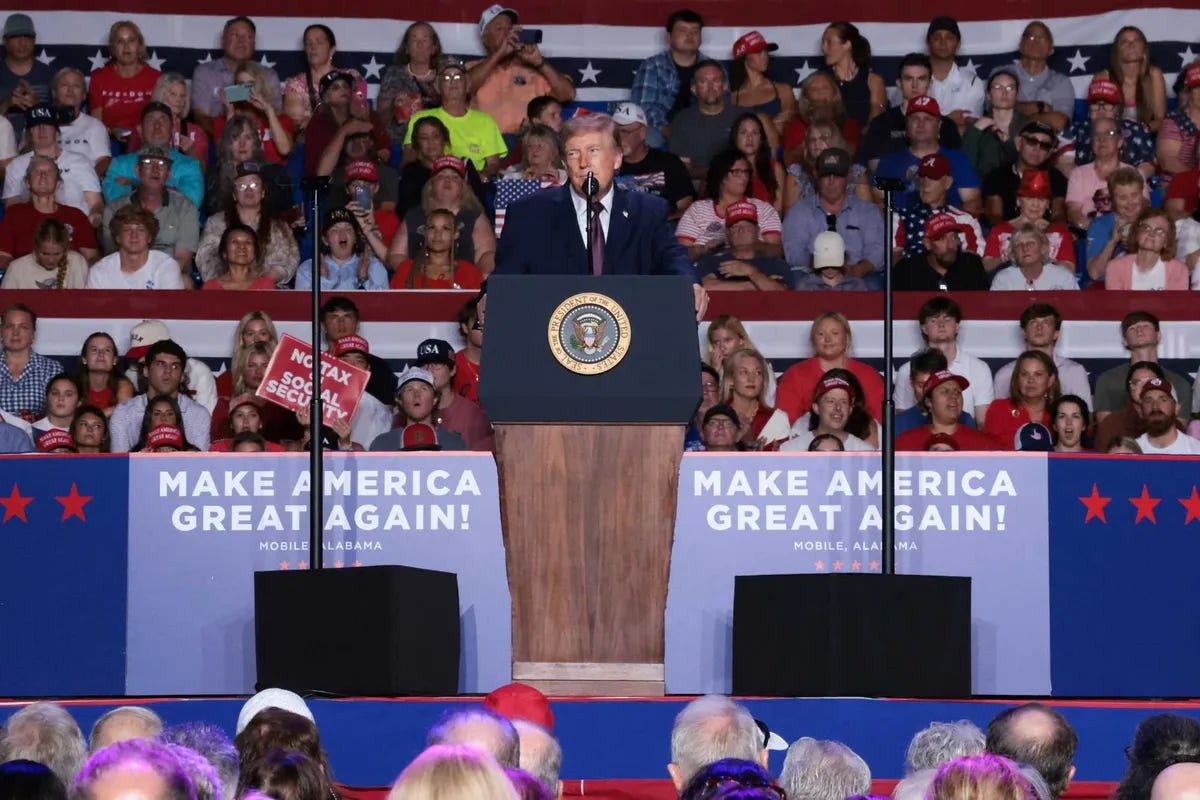
'All hell broke loose': Expert warns Trump's midterm danger zone comes after voting ends
from Systemic Error Podcast Hosted by Paulo Santos
What happened RawStory reports that voting-rights journalist Ari Berman believes the likeliest opportunity for Trump administration interference in the midterm elections would come after voting ends, during ballot counting and certification, when close margins could make targeted federal action more consequential. Appearing on the debut episode of the “Stress Test” podcast, Berman said the Justice Department, Department of Homeland Security, or other agencies could invoke a pretext to intervene. He also stressed that this remains a warning, not an accomplished plan: according to Berman, the Justice Department had lost 25 federal-court attempts to obtain state voter rolls, while proposals to stop mail voting or seize election equipment through emergency powers or martial law were a “huge stretch.” Berman ultimately predicted that Trump would blame others and move on if Republicans lost. RawStory provides no evidence that federal agencies have decided to manipulate a result, and it does not establish that any post-election intervention will occur. The power sits in government The relevant power does not belong to voters accused of fraud, local officials processing ballots, or election workers counting late into the night. It belongs to the president and the federal officials who control agencies capable of opening investigations, demanding records, manufacturing legal conflict, or lending official credibility to allegations about an election. That distinction matters because “interference” can become a foggy abstraction. Institutions do not mobilize themselves. Officials issue orders, lawyers file claims, and political appointees decide whether the machinery of government will administer an election or place it under suspicion. Failure is not harmlessness Berman’s account describes an administration that has so far failed to obtain state voter rolls through federal litigation. That is evidence of institutional resistance, not evidence that the effort was benign. Losing in court does not erase the attempt to expand federal leverage over election administration. Nor does limited formal authority eliminate political power. A president may lack the lawful capacity to seize ballots yet retain enormous power to pressure allies, amplify accusations, provoke litigation, and turn ordinary counting procedures into evidence of conspiracy for supporters already primed to distrust an unfavorable result. The pretext is the mechanism The critical word in Berman’s warning is “pretext.” Close contests naturally involve provisional ballots, recounts, litigation, and delayed certification. Those routine features can be repackaged as proof that something illicit occurred. That is how misdirection works: scrutiny moves away from powerful officials seeking new authority and toward election workers, state administrators, or voters whose ballots remain to be counted. Deliberate political escalation is then reported as generalized “chaos,” as though disorder simply descended rather than being cultivated by identifiable actors. Trump’s joking exhortation to “cheat like hell,” as described by RawStory, does not by itself establish an operational plan. But Berman’s characterization of it as projection points to a familiar propaganda tactic: accuse opponents broadly, weaken confidence in advance, and preserve a ready-made explanation for defeat. The article hedges against itself RawStory packages Berman’s remarks as a looming “danger zone,” but his own assessment is notably restrained. He says Trump possesses little direct election power, calls the most extreme scenarios implausible, and predicts retreat rather than a successful seizure of the process. That tension should have been made explicit. The reporting supports concern about where pressure might be applied; it does not support certainty that a coordinated federal intervention is coming. Sensational framing blurs that distinction and risks converting a useful institutional warning into suspense-driven political content. The systemic error The larger pattern is not that one politician possesses unlimited control. It is that American election coverage repeatedly treats the post-vote period as political theater instead of an administrative process vulnerable to pressure from officials with unequal power. The sharper question is therefore not whether “all hell” will mysteriously break loose. It is whether judges, state officials, federal employees, and party leaders will use their authority to enforce lawful procedures—or help convert an electoral loss into an accusation against the system itself. Thanks to Raw Story Source: ‘All hell broke loose’: Expert warns Trump’s midterm danger zone comes after voting ends This is a public episode. If you would like to discuss this with other subscribers or get access to bonus episodes, visit paulstsmith.substack.com
Embed this episode
No transcript yet.