
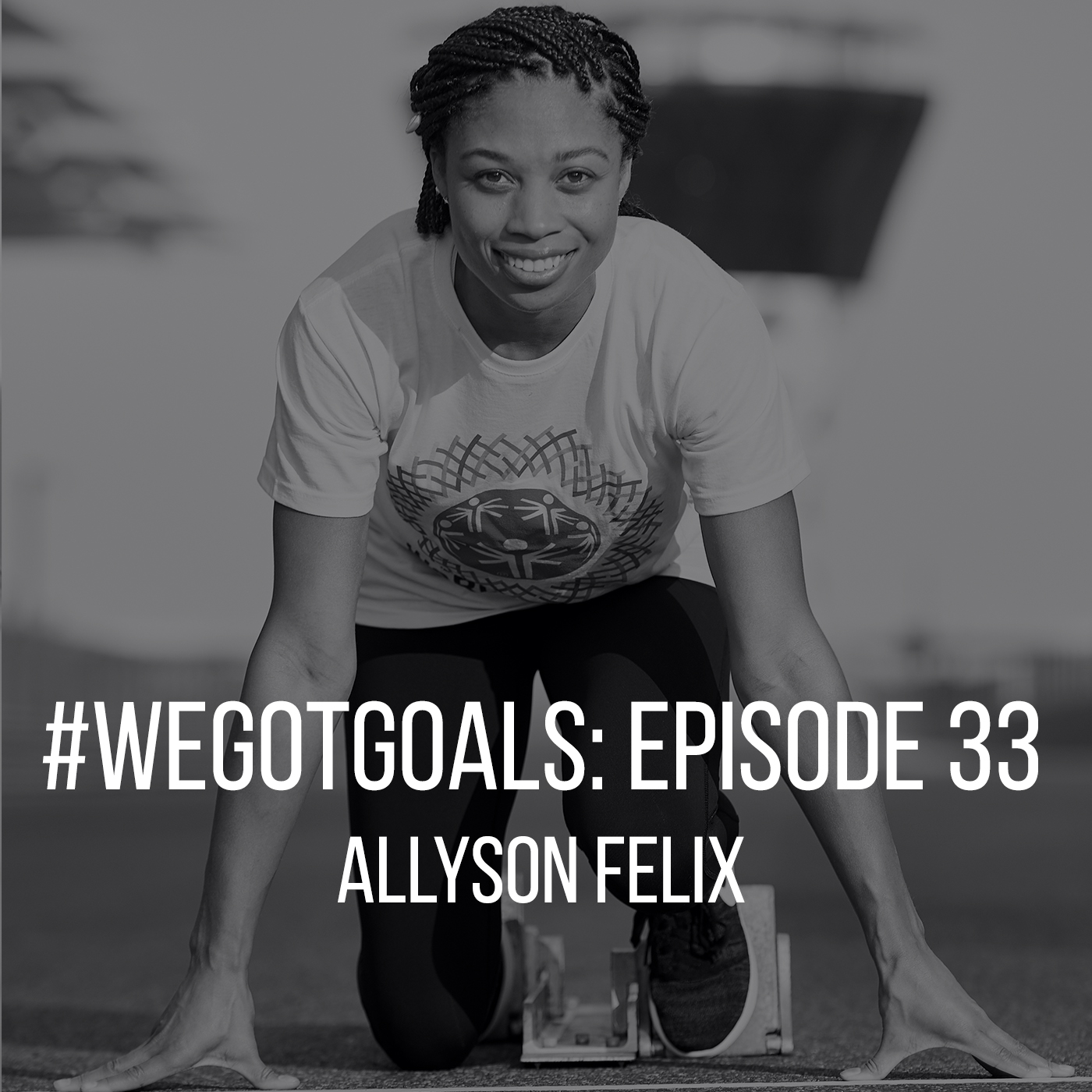
EPISODE · Dec 19, 2017 · 15 MIN
Allyson Felix, Olympic and World Champion, Breaks Down Her Massive Goals
from #WeGotGoals by aSweatLife · host aSweatLife
In 2004, then-18-year-old sprinter Allyson Felix went to the Athens Olympics aiming to win gold in the 200-meter dash—and took silver to Jamaica’s Veronica Campbell. In Beijing in 2008, the two lined up for a rematch, with the same result. But Felix never took her eyes off the ultimate target, an individual gold medal in the 200 meters. In 2012, she finally achieved it. Of all her accomplishments—her eight other Olympic medals (including five other golds), her 11 World Championship victories—that one holds the most meaning, she told me on this week’s episode of #WeGotGoals. “It was eight years of being dedicated and sacrificing and having doubts—you know, is this ever going to come together?” she said. “So being able to accomplish that goal represented so much for myself, and also all the people who supported me.” Few mortals can even fathom the type of success Felix has seen in her sport. How is it even possible, I asked her, to work toward goals that are so audacious, so otherworldly? Her answer: one day, one hour, one track session at a time. “Whether that looks like getting through a workout in certain times for a specific day or even to the sense of, I want to do something that takes me out of my comfort zone, I want to try a different event, something I’m not as comfortable with—those are all smaller goals that help me reach some of the bigger ones that can feel just a little harder to achieve,” she says. It’s a mindset that’s obviously paid off, making her one of the most decorated athletes in track and field history. Along the way, she’s faced setbacks and obstacles, including those early Olympic defeats and a serious hamstring injury in 2013. “I don’t think I ever really get over those moments,” she says. “But they’re always fuel. They’ve taught me so much.” Felix also finds energy and inspiration in aiding others—especially children—in achieving their goals. She spoke with me on the phone from Abu Dhabi, where she was working to help athletes with intellectual disabilities prepare for sprint events in the upcoming Special Olympics World Summer Games, to be held there in 2019. “To me, this kind of work is just so meaningful. It truly changes lives. And so to be able to be a part of that, to see people reach their individual goals—it’s a different type of rewarding,” she said. After all the hardware she’s earned over her 15-year career, Felix isn’t anywhere close to hanging up her track spikes. She’s still looking to compete at the World Championships in 2019 and even to earn a spot on her fifth Olympic team at the 2020 Summer Games in Tokyo. Getting there will require just the right balance of hard work and recovery to keep her body healthy, a line that shifts along with her physiology as she ages. She knows the barriers will be significant—but that’s exactly why she keeps at it. “I love to challenge myself, I love to do something that doesn't come easy,” she said. “I'm looking forward to the whole process and journey.” You can follow that journey—along with Felix's work with organizations like Special Olympics—on Twitter and Instagram. --- Show transcription: JAC: Welcome to #WeGotGoals, a podcast by aSweatLife.com on which we talk to high achievers about their goals. I'm Jeana Anderson Cohen, and with me I have Kristin Geil and Cindy Kuzma. KG: Good morning Jeana. JAC: Good morning. Cindy you talked to Allyson Felix this week right. CK: I did. Oh my gosh it was such an honor to speak with her and I apologize for the quality of the audio. She was on a cell phone. But what a treat to talk to this multiple gold medalist, Olympian, and World Champion. She's had an incredible career as a sprinter, and I was so glad to speak with her about her goals. KG: Well, what kind of goals is she working on right now? CK: She is still—believe it or not her first Olympics was in 2004—and she still has her sights set on the Tokyo Olympics in 2020. So if you do the math there, that is incredible. She’s also taking a long term view thinking beyond her career as an athlete. And some of the work that she’s doing right now she was in Abu Dhabi to work with the Special Olympics and really doing a lot of work to help children people with intellectual disabilities and others get a lot out of participating in sports as well, and so that is something that she is working on in the long term too. JAC: Recovery is really important to her. How does she balance the hard work she has to do to achieve these big physical goals with getting rest and recovery? CK: Yes she made a point of talking about recovery and rest and how essential it is to have that balance as a high level athlete. She builds in a couple of weeks of rest after every season. She makes sure that after a competition she gets enough rest. And really every day she has to balance the work that she needs to do with the recovery that her body needs. And she notes that that equation has kind of changed as time has passed too, that the older you get the more you remember the harder work outs you did when you were younger and you think you have to do those you get the same results. But that equation just changes your body changes your physiology changes. And she's really conscious about maintaining the right balance as she continues into the later stages of her career. KG: When you were training for any big goal but you know especially something like the 2020 Olympics that seems so massive and so high up on the mountain top that taking the first step could be really daunting or you wouldn't even know where to start. So how does Allyson Felix balance those huge goals with smaller more tangible ways to break it up? CK: Yes she definitely breaks everything down year by year month by month day by day workout by workout she's focused on what she has to do that day. When she gets out of bed in the morning she thinks about that and I'm sure she keeps her sights set on those big huge goals too. But she really also makes sure that she has a clear focus on the steps along the way to get there and those process goals I think can be really served her well obviously in the long run. JAC: And here is Cindy with Allyson. CK: Well Allyson thank you so so much for joining me today. Now you Allyson Felix have 25 medals in total, nine Olympic medals six of them gold 16 World Championship medals 11 of them gold. If I got any of that wrong feel free to correct me, I think I counted right. AF: It’s all good. CK: On #WeGotGoals we typically ask people about a major goal they've achieved and how they got there. But those kinds of goals are just so so out of this world. I mean how do you even approach massive goals like those and how do you do it in a way that’s helped you sustain a successful career for so long? AF: Well, I think that for me it's really helpful to break a goal down. Because even for myself you know when I think about the things that I want to accomplish I’ve always been someone who set my goals really high. But I think at times you know, you can set a goal and it can just seem a bit overwhelming. And so that, I have noticed that in my career and so I've always tried to kind of work backwards and think about you know how am I going to accomplish this? What does that look like? How can I break that goal down into what I need to do each month or each week all the way down to something, a week, or even setting a daily goal. And so that's always helps big goals to seem more manageable and just more of a reality. So that's something that I’ve done over the years to help me get through. So whether that look like getting through a workout in certain times for a specific day or even to the sense of, I want to do something that takes me out of my comfort zone. I want to try a different event, something that I'm not as comfortable with. Those are all smaller goals that help me reach some of the bigger ones that can feel just a little harder to achieve. CK: Oh, that makes so much sense and I feel like a lot of times when I’ve talk to accomplished athletes I feel like they do, they have process goals like that that take them to those bigger goals. When you think back over all that I mean can you pinpoint one accomplishment that’s been the most meaningful to you? Or do they all have their own special meaning? AF: I think they definitely all have different meanings, different parts of the journey and different times in life but one that immediately comes to my mind is within my first individual gold medal at the Olympics. And that happened for me in 2012. But before that it was actually at my third Olympics. I had been to two games prior and had gotten silver medals to the same person and so to me, accomplishing that goal really just meant a lot because it was eight years being dedicated and sacrificing and having doubts, you know, is this ever going to come together? So being able to accomplish that goal represented so much for myself and also all the people who supported me, you know. All the people who were on my team and who helped me to get to that moment. It's just, it was such a group effort as well. So that's one that sticks out in my mind as being a huge accomplishment. CK: You mentioned the support of your team and also some of the challenges that you ...
Embed this episode
NOW PLAYING
Allyson Felix, Olympic and World Champion, Breaks Down Her Massive Goals
No transcript for this episode yet
Similar Episodes
No similar episodes found.
Similar Podcasts
No similar podcasts found.