
EPISODE · Apr 11, 2021 · 10 MIN
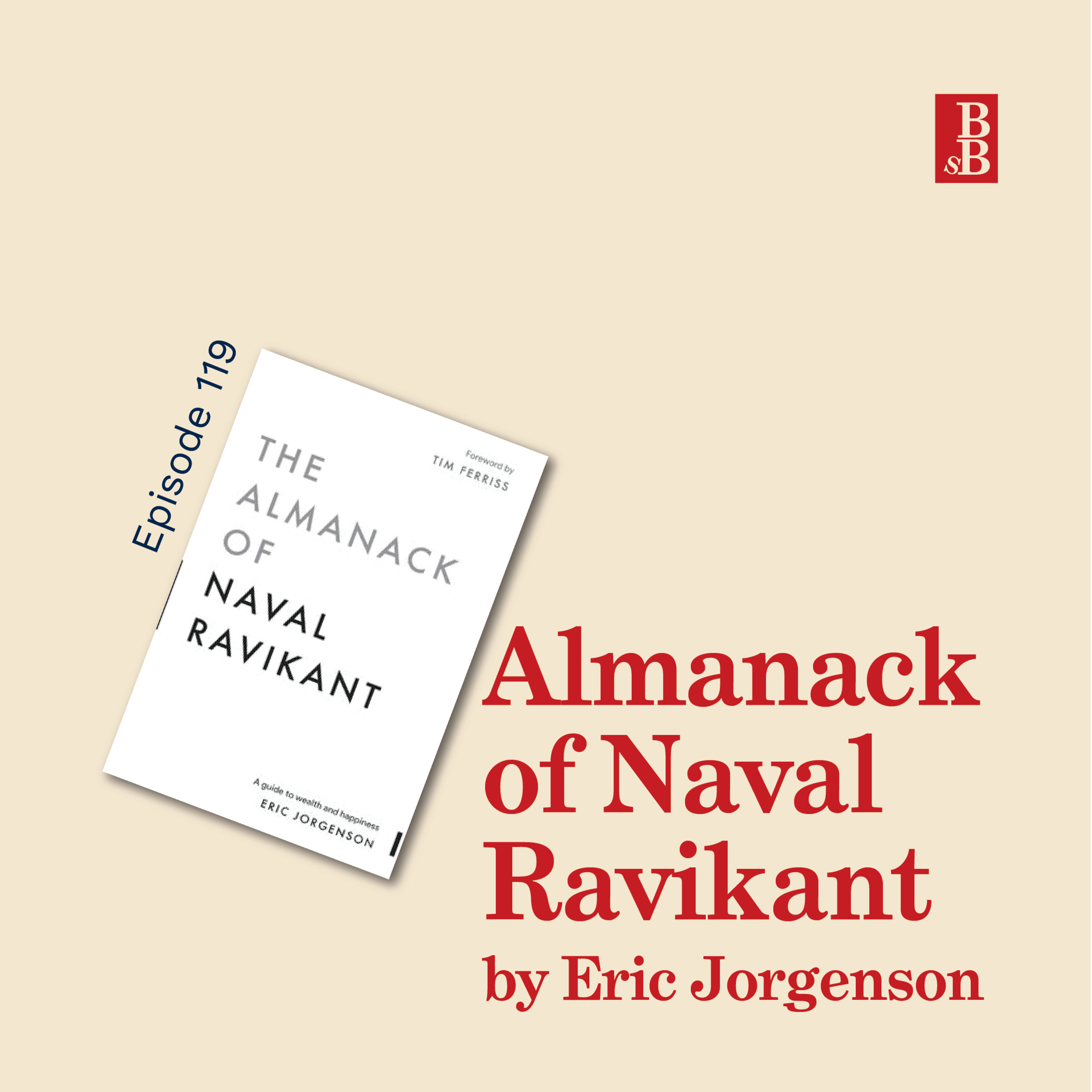
Almanack of Naval Ravikant by Eric Jorgenson: the principles behind wealth and happiness
from Steph's Business Bookshelf Podcast · host Steph Clarke
About the book Getting rich is not just about luck; happiness is not just a trait we are born with. These aspirations may seem out of reach, but building wealth and being happy are skills we can learn. So what are these skills, and how do we learn them? What are the principles that should guide our efforts? What does progress really look like? The Almanack of Naval Ravikant is a collection of Naval’s wisdom and experience from the last ten years, shared as a curation of his most insightful interviews and poignant reflections. This isn’t a how-to book, or a step-by-step gimmick. Instead, through Naval’s own words, you will learn how to walk your own unique path toward a happier, wealthier life. Sources, links and more information: https://www.navalmanack.com/ About the AuthorsNaval Ravikant is an entrepreneur and Investor. He is founder of Angellist, Epinions, and Vast.com He is an Angel investor in Twitter, Uber, Yammer, and 100+ more. Naval has become widely followed for his thoughts on startups, investing, crypto, wealth, and happiness. Eric Jorgenson is the author of the book. He’s a product Strategist at Zaarly and writer. His business blog, Evergreen, has educated and entertained more than one million readers since 2014. He is also on a quest to create—and eat—the perfect sandwich. Big idea #1 - Develop mental models These are your foundation. And this foundation is critical. Naval describes mental models as compact ways to recall your own knowledge and having those solid fundamental truths will allow you to think more clearly, make fewer decisions and therefore act faster. These can be in all different domains; it could be wealth and happiness or health or work or time, whatever it happens to be. But you might have some that actually are fundamental across almost any domain. Side note: wealth is very different to being rich. This is defined in the book. The best way to build mental models is to read, especially from some of the baseline ideas such as science, maths, and philosophy. Particularly science and maths, where there’s generally a true or false, or basic fundamentals such as the laws of physics, etc. And yes, of course there's still things we don't know, but findings the underlying mental models means that you're going to have high quality ideas as a starting point and a solid foundation to build on. Naval actually goes as far as to recommend an hour a day of reading on those particular topics, particularly science, maths, and philosophy. But also says that you should read what you love until you love to read, if you don’t already have a reading habit. The book is filled with these mental models and principles that Naval uses. One of them for example, is that if you can't decide, the answer is no. (Note, this reminds me of Derek Sivers’ work of ‘hell yeah or no’). Similarly, he says, if you can't split between two different decisions, you should take one with the most short-term pain on the basis that things with short-term pain are probably going to have greater long-term benefits. Having that mental model of ‘greater short-term pain = greater long-term benefits’ means that it helps him make decisions faster when he's trying to pick between two different things. You can then overlay this with other basic principles such as compound interest or evolution, and you've then got momentum to start making decisions in a much faster, clearer, and more rational way. PSST. Consider supporting the podcast with your next book purchase. Save the Steph’s Business Bookshelf affiliate stores for Book Depository (Global) or Bookshop.org (US) in your browser. Big idea #2 - find your leverage This runs across the two main topics in the book of wealth and happiness. One of the key ideas he talks about is time. He talks about time in the sense of wealth, and how you're using time to build wealth, and happiness, by having control of your time. So leveraging your time, your brain power, your effort, and essentially working smarte, is the key to wealth and happiness. He says the year he became the most wealthy, he worked the least. This is because he had got to the point where he could maximise his leverage, and he had learned what he needed to leverage to do so. But, what should you leverage for the greatest gains, and how that has changed from previous generations? For Warren buffet, for example, capital was where you could find maximum leverage. But now it's things like code and media and attention. Naval says that this comes down to ‘learning to sell or learning to build’. You need to be able to do one or the other, and if you can do both, that is amazing. With that in mind, he talks about the idea of ‘earning with your mind, not with your time’. So not just trading hours for time, because that does have a ceiling, but the more you can earn with your mind in and reach multiple different people asynchronously, the better. And yes, unsurprisingly, he believes that 40hour work weeks are a relic of the industrial revolution times and need to be left where they belong. There is an important point that underlines all of this. He says that no one is going to value you more than you value yourself… which is a useful reminder. Big idea #3 - embrace death There is an overwhelming sense of calm perspective in this book and in Naval’s writing. He comes across like someone who has found what works and is just having fun, living life, learning, reflecting, and repeating. Fittingly, at the end of the book, there is a section on acceptance, especially being able to accept the things you can't change (very relevant and useful right now). And a particular, a piece on embracing death. This is all right before the section of the book about taking responsibility for yourself and your own actions and own happiness, so it’s interesting how accepting death, or accepting things you can’t control, will help you take more responsibility. “You're going to die one day. And none of this is going to matter. So enjoy yourself.” It’s a great way of looking at life more generally, but also particularly at work, because we often do take it a little bit too seriously, don't we? But actually, so little of that is going to matter, and that fact should free us, rather than depress us. Because maybe we can have a bit more fun and maybe there is less risk in failing than we think, because none of it's going to really matter. (I mean, don't do anything really bad, just take things less seriously). Naval is only 47, so it's not like he's coming at this with 90 years or 100 years behind him. I think that is quite inspiring, that you can find that level of acceptance and peace and ability to have fun and enjoy things, without necessarily having lived your whole life to have that perspective. Support my book habit: https://www.buymeacoffee.com/stephsbookshelfSee omnystudio.com/listener for privacy information.
Embed this episode
NOW PLAYING
Almanack of Naval Ravikant by Eric Jorgenson: the principles behind wealth and happiness
No transcript for this episode yet
Similar Episodes
No similar episodes found.
Similar Podcasts
No similar podcasts found.