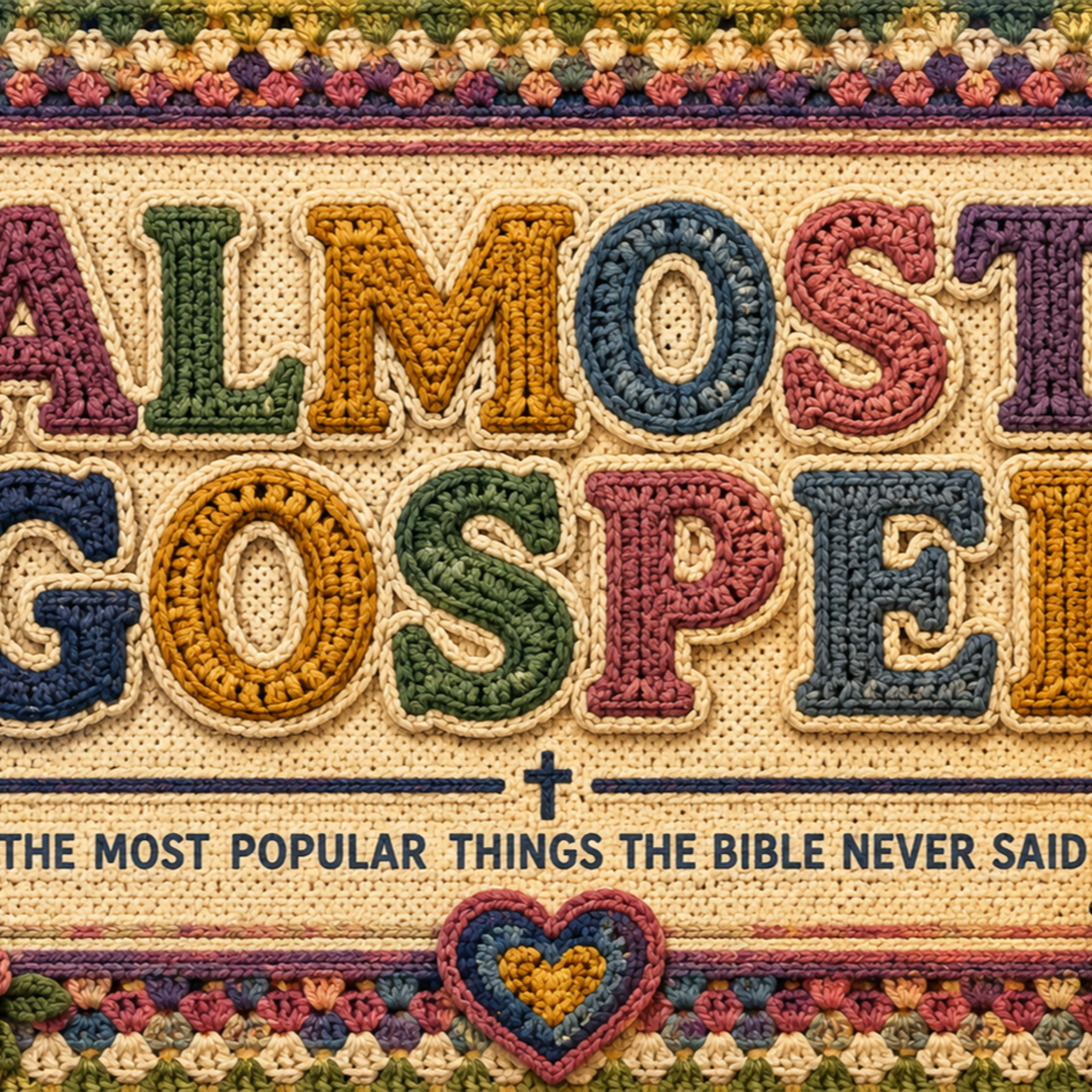
Almost Gospel - Week 3 "The Gospel of Moralism" episode artwork

EPISODE · Jul 12, 2026 · 49 MIN

Almost Gospel - Week 3 "The Gospel of Moralism"

from Eastview Baptist Church Teaching Podcast · host Eastview Baptist Church

WEEK 3 – "The Gospel of Moralism"                               The Lie: "Being Good, Is Good Enough"Opening Reading: John 8:1-11The Three SayingsCleanliness is next to godliness. Spare the rod, spoil the child. Hate the sin, love the sinner. These three sayings focus on external behavior while missing heart transformation. Big Idea: Jesus did not come to IMPROVE behavior; He came to TRANSFORM hearts. Teaching Movements:"Cleanliness is next to godliness."Point 1: God cares more about inward holiness than outward appearances.Matthew 23:25-28 – Woe to you Pharisees; you clean the outside of the cup, while the inside is full of greed and self-indulgence..Psalm 51:10 – Create in me a clean heart, and renew a steadfast spiritClean HANDS without a clean HEART accomplish nothing.What the Bible actually emphasizes:Purity of heart (Matthew 5:8) Inner holiness (1 Peter 1:15-16) Spiritual cleansing (Psalm 51) God is far more concerned with INWARD TRANSFORMATION than OUTWARD TIDINESS. "Spare the rod, spoil the child."Point 2: Biblical discipline is discipleship.Hebrews 12:5-11 – Endure hardships as disciple, if you are not disciplined you are not legitimate sons and daughters of GodEphesians 6:4 – Fathers do not provoke your children to anger by the way you treat them, bring them up in instruction and discipline that comes from the LordGod's model is not PUNISHMENT but FORMATION.Many assume this comes directly from Proverbs. The exact phrase originated in a poem by Samuel Butler.It comes from the epic-length 17th-century poem ”Hudibras”, written by Samuel Butler (1612-1680), a cheeky British poet who enjoyed mocking religious extremists and hypocrites.[1]Proverbs does discuss discipline (Proverbs 13:24), but its advice is the OPPOSITE.24The one who will not use the rod hates his son, but the one who loves him disciplines him diligently. "Hate the sin, love the sinner."Point 3: Grace and truth belong together.John 1:14 – The Word became flesh and made His home among us…Luke 5:31-32 – Healthy people don’t need a doctor, the sick do…The phrase "hate the sin, love the sinner" is not Scripture.Jesus did something better. He LOVED SINNERS while CALLING THEM TO REPENTANCE.While many view it as a useful summary of Christian ethics, the phrase itself never appears in Scripture.The concept has historical roots reaching back to thinkers such as Augustine of Hippo.It’s from St. Augustine. His Letter 211 (c. 424) contains the phrase Cum dilectione hominum et odio vitiorum, which translates roughly to “With love for mankind and hatred of sins.” The phrase has become more famous as “love the sinner but hate the sin” or “hate the sin and not the sinner” (the latter form appearing in Mohandas Gandhi’s 1929 autobiography).[2] Gospel InvitationReligion says: "Clean yourself up."Jesus says: "Come to Me and I will make you new." Conclusion:The false gospels of self-reliance, comfort and moralism are all inverted remnants of the truth; in reality…We are WEAKER than we think. God is WISER than we think. Grace is GREATER than we think. [1] https://www.thisdayinquotes.com/2017/11/spare-the-rod-and-spoil-the-child/[2] https://www.catholic.com/qa/who-said-love-the-sinner-hate-the-sin

WEEK 3 – "The Gospel of Moralism"                               The Lie: "Being Good, Is Good Enough"Opening Reading: John 8:1-11The Three SayingsCleanliness is next to godliness. Spare the rod, spoil the child. Hate the sin, love the sinner. These three sayings focus on external behavior while missing heart transformation. Big Idea: Jesus did not come to IMPROVE behavior; He came to TRANSFORM hearts. Teaching Movements:"Cleanliness is next to godliness."Point 1: God cares more about inward holiness than outward appearances.Matthew 23:25-28 – Woe to you Pharisees; you clean the outside of the cup, while the inside is full of greed and self-indulgence..Psalm 51:10 – Create in me a clean heart, and renew a steadfast spiritClean HANDS without a clean HEART accomplish nothing.What the Bible actually emphasizes:Purity of heart (Matthew 5:8) Inner holiness (1 Peter 1:15-16) Spiritual cleansing (Psalm 51) God is far more concerned with INWARD TRANSFORMATION than OUTWARD TIDINESS. "Spare the rod, spoil the child."Point 2: Biblical discipline is discipleship.Hebrews 12:5-11 – Endure hardships as disciple, if you are not disciplined you are not legitimate sons and daughters of GodEphesians 6:4 – Fathers do not provoke your children to anger by the way you treat them, bring them up in instruction and discipline that comes from the LordGod's model is not PUNISHMENT but FORMATION.Many assume this comes directly from Proverbs. The exact phrase originated in a poem by Samuel Butler.It comes from the epic-length 17th-century poem ”Hudibras”, written by Samuel Butler (1612-1680), a cheeky British poet who enjoyed mocking religious extremists and hypocrites.[1]Proverbs does discuss discipline (Proverbs 13:24), but its advice is the OPPOSITE.24The one who will not use the rod hates his son, but the one who loves him disciplines him diligently. "Hate the sin, love the sinner."Point 3: Grace and truth belong together.John 1:14 – The Word became flesh and made His home among us…Luke 5:31-32 – Healthy people don’t need a doctor, the sick do…The phrase "hate the sin, love the sinner" is not Scripture.Jesus did something better. He LOVED SINNERS while CALLING THEM TO REPENTANCE.While many view it as a useful summary of Christian ethics, the phrase itself never appears in Scripture.The concept has historical roots reaching back to thinkers such as Augustine of Hippo.It’s from St. Augustine. His Letter 211 (c. 424) contains the phrase Cum dilectione hominum et odio vitiorum, which translates roughly to “With love for mankind and hatred of sins.” The phrase has become more famous as “love the sinner but hate the sin” or “hate the sin and not the sinner” (the latter form appearing in Mohandas Gandhi’s 1929 autobiography).[2] Gospel InvitationReligion says: "Clean yourself up."Jesus says: "Come to Me and I will make you new." Conclusion:The false gospels of self-reliance, comfort and moralism are all inverted remnants of the truth; in reality…We are WEAKER than we think. God is WISER than we think. Grace is GREATER than we think. [1] https://www.thisdayinquotes.com/2017/11/spare-the-rod-and-spoil-the-child/[2] https://www.catholic.com/qa/who-said-love-the-sinner-hate-the-sin

NOW PLAYING

Almost Gospel - Week 3 "The Gospel of Moralism"

0:00 49:12

No transcript for this episode yet

We transcribe on demand. Request one and we'll notify you when it's ready — usually under 10 minutes.

That Hoarder: Overcome Compulsive Hoarding That Hoarder Hoarding disorder is stigmatised and people who hoard feel vast amounts of shame. This podcast began life as an audio diary, an anonymous outlet for somebody with this weird condition. That Hoarder speaks about her experiences living with compulsive hoarding, she interviews therapists, academics, researchers, children of hoarders, professional organisers and influencers, and she shares insight and tips for others with the problem. Listened to by people who hoard as well as those who love them and those who work with them, Overcome Compulsive Hoarding with That Hoarder aims to shatter the stigma, share the truth and speak openly and honestly to improve lives. The Small Business Startup School – Business Notes | Financial Literacy | Retail Psychology – For Professionals & Entrepreneurs The Small Business Startup School Inc. Starting or buying a small business? While personal circumstances may vary, business patterns remain timeless. On The Small Business Startup School, we explore strategies, insights, and practical solutions to help entrepreneurs confidently navigate their journey.Hosted by Ola Williams—a retail entrepreneur, fintech founder, and financial coach with over two decades of experience—this podcast marries financial awareness and retail psychology with optimism to deliver actionable takeaways.Join us to learn, grow, and connect as we uncover the keys to business success.Let’s continue to learn together and be encouraged to keep on connecting! HOMELAND HOMELAND The Church is a body not a building. It's the bride of Jesus Christ! Jesus is coming back for a mature bride. That means it's time for the church of Jesus Christ to move from milk to meat. This is the hour of maturity!HOMELAND is an announcement that the church is being set free. Only the church has the ability to transform the world. The kingdom's of this world will become the kingdoms of our Lord and Savior!All of creation has been waiting for this moment! Sons and daughters of God are rising up and taking their seat! DIOSA. Carolina Sanper This podcast is a sacred space created by Carolina Sanper where you connect with your inner wisdom and embody your magnetic feminine power.It is the realization that the mystical realm is where you plant the seeds of your desired reality.It is a portal to your true essence: awareness, presence, and receiving with ease. Welcome home, DIOSA. 🖤

Frequently Asked Questions

How long is this episode of Eastview Baptist Church Teaching Podcast?

This episode is 49 minutes long.

When was this Eastview Baptist Church Teaching Podcast episode published?

This episode was published on July 12, 2026.

What is this episode about?

WEEK 3 – "The Gospel of Moralism"                               The Lie: "Being Good, Is Good Enough"Opening Reading: John 8:1-11The Three SayingsCleanliness is next to godliness. Spare the rod, spoil the child. Hate the sin, love the sinner. These...

Can I download this Eastview Baptist Church Teaching Podcast episode?

Yes, you can download this episode by clicking the download button on the episode player, or subscribe to the podcast in your preferred podcast app for automatic downloads.
URL copied to clipboard!