
EPISODE · Jun 3, 2026 · 7 MIN
Along Dulle Trail, travelers can see a thousand faces of Korea
from Korea JoongAng Daily - Daily News from Korea · host WOO JI-WON
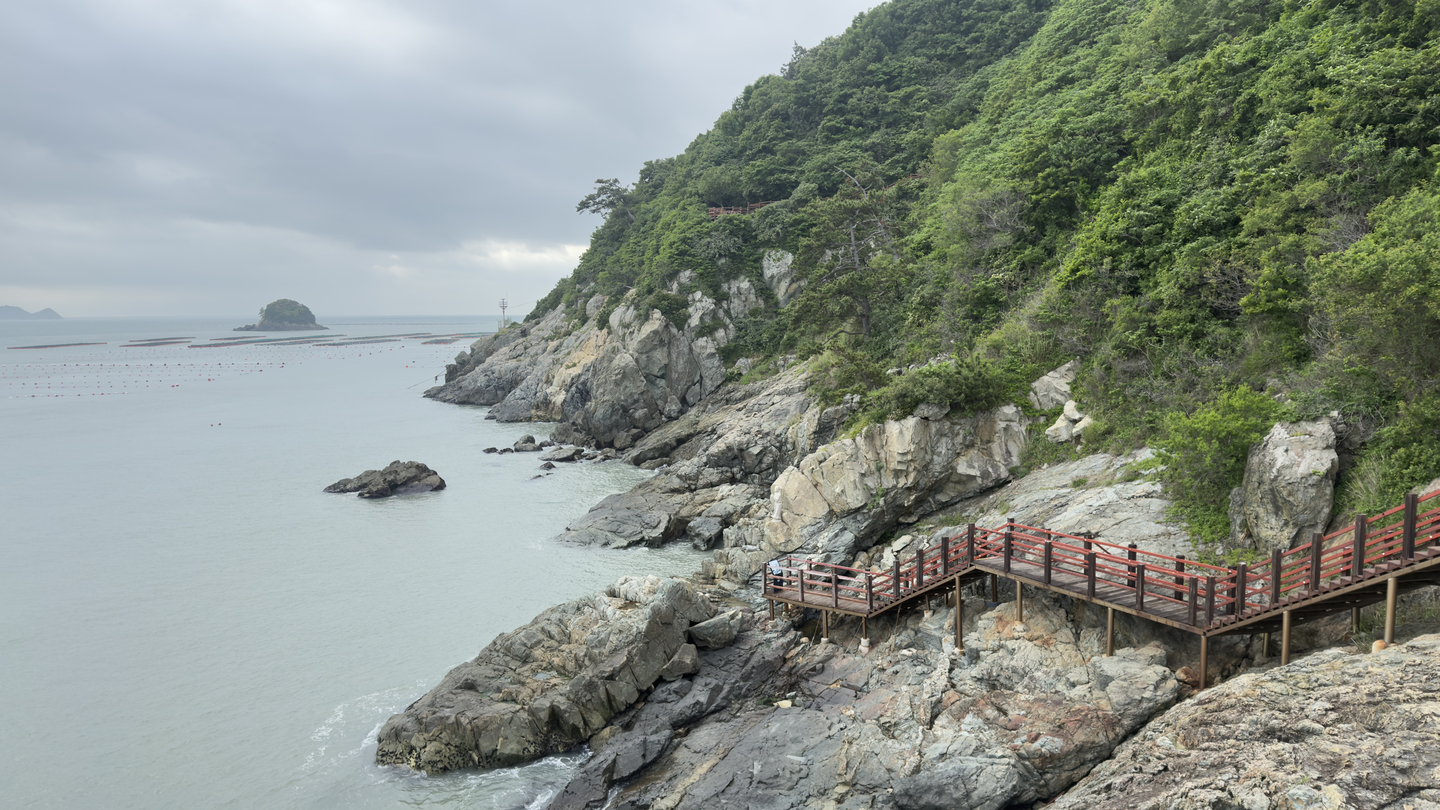
This article is by Woo Ji-won and read by an artificial voice. GANGJIN, South Jeolla — The sea never really leaves you on the Korea Dulle Trail. One moment it emerges beyond dense pine trees, and the next it glimmers past wild tea fields, above temple rooftops and even along roadside paths, always finding its way into view. The 4,500-kilometer (2,800-mile) trail network connects the coastal edges of the Korean Peninsula, stretching along the east, west and south coasts as well as the borderlands near the DMZ. For years, the government has worked to stitch together Korea's coastlines alongside nearby villages and regional destinations into one continuous trail, hoping to lure travelers beyond major cities and into quieter, often overlooked corners of the country. Since the trail's official completion in September 2024, 251 people have completed the entire course, taking many from two to four years, according to the Korea Tourism Organization (KTO). But far more have taken on the four individual trails that make up the larger trail. The trail's major appeal lies in how naturally it blends walking with travel itself. One stretch may lead to mountain and seaside temples, and another to historic neighborhoods where travelers can dive into the city's local cuisine. Here are a few sections of the Namparang Trail and Seohaerang Trail in South Jeolla that offer a glimpse into the scale and variety of the Korea Dulle Trail. Namparang Trail's course 83: Mount Mandeok's Dasan Chodang In 1801, a man was exiled to Gangjin, a quiet county in South Jeolla on Korea's southern coast, amid the persecution of Catholics. For the last 10 years of his 18-year exile, he lived in a humble chodang, a small thatched cottage, at the foot of Mount Mandeok. His name is Jeong Yak-yong, better known by his pen name Dasan. He is now remembered as one of the greatest scholars of the Joseon Dynasty (1392-1910). Today, the site is known as Dasan Chodang. Past hanoks (traditional Korean houses), many now operating as guesthouses known for hearty breakfasts, a narrow forest road in Mount Mandeok leads toward the lonely site of his exile. At the entrance hangs a small bow tied to a fence with "Namparang Trail" written on it. Yet exile was not entirely lonely for Dasan. He had a dear friend. About 30 minutes away on foot is Baengnyeonsa temple, where he would meet the Venerable Hyejang, who was also his teacher and student during his banishment. Down the hill, a concrete road lined with colorful traditional lanterns leads to the temple built in 839. At Buddha halls perched at the top of the temple grounds, views of the sea emerge beyond rows of tiled rooftops. Final course of the Namparang Trail: Mihwangsa Temple A king from the Indian Udyana Kingdom was carrying Buddhist scriptures aboard a ship and sailing across seas in search of a destined land, according to a legend, when one mountain radiated an auspicious energy, with 10,000 Buddhas appearing around its peaks. Believing it to be a sacred site fit to spread the teachings of Buddhism, the king landed there, the legend says. That mountain was Mount Dalma in Haenam, South Jeolla. Still today, it's regarded as a holy site. The sea off the temple served as a key maritime gateway linking Asia since ancient times. New goods and Buddhist beliefs arrived by sea, and thus Mihwangsa Temple was established on the mountain's slope, serving both as a place to pray for safe voyages and as a base for spreading Buddhism. Another one of Mount Dalama's famous spots is Dosolam Hermitage perched near Dosolbong Peak. It's where the monk Uijo Hwasang, who is said to have founded Mihwangsa Temple, practiced Buddhism while admiring the sunset. The hike there is rugged, with sharp rocky ridges, uneven paths and steep hillsides where one wrong step could send a hiker slipping downhill. But the climb is worthwhile upon reaching the hermitage, perched atop stone steps high in the mountains. From there, panoramic views of South S...
Embed this episode
NOW PLAYING
Along Dulle Trail, travelers can see a thousand faces of Korea
No transcript for this episode yet
Similar Episodes
No similar episodes found.
Similar Podcasts
No similar podcasts found.