
EPISODE · Jun 30, 2023 · 20 MIN
Ambient Revolts: Sandi Hilal
from Berliner Gazette · host Berliner Gazette
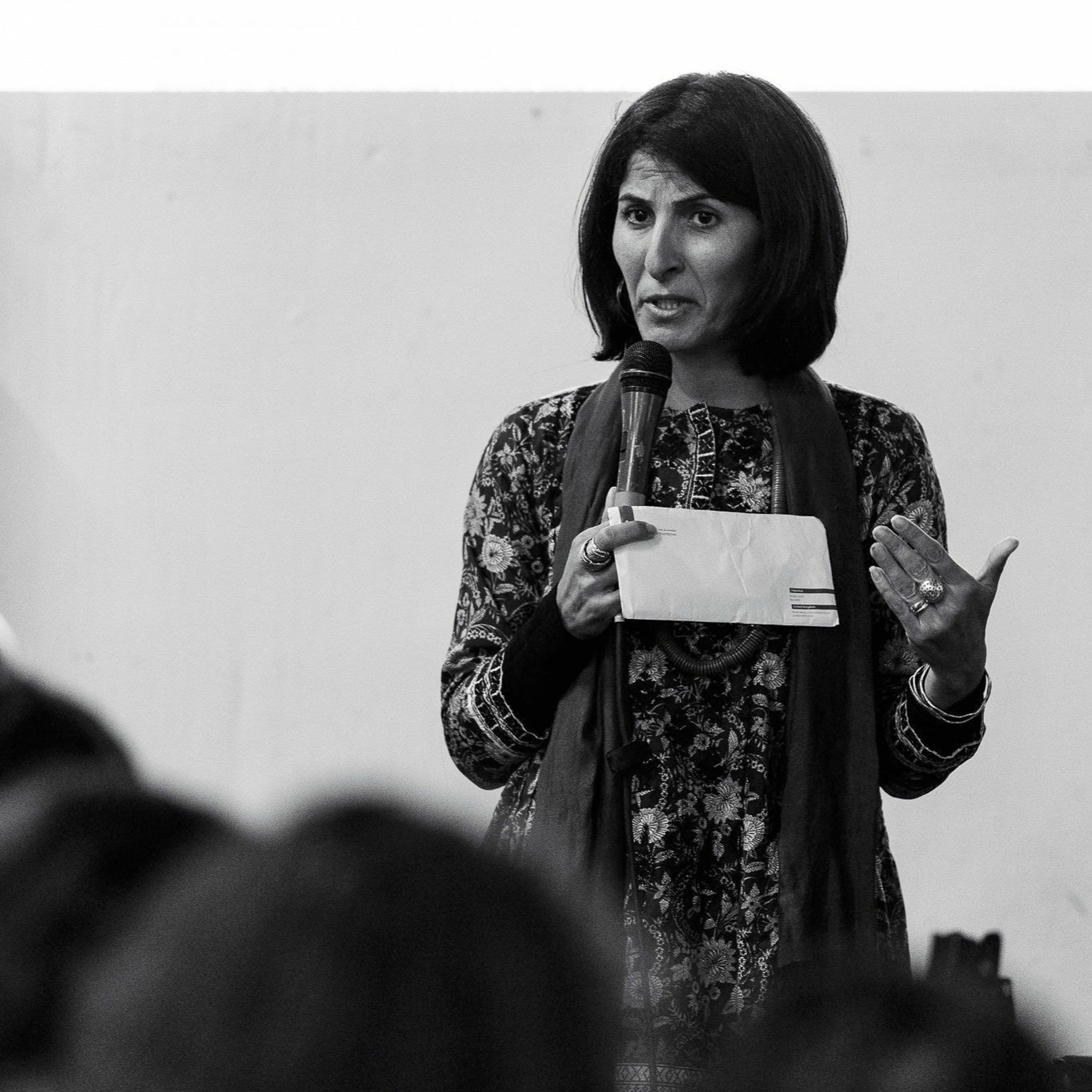
EN / The final day of the “Ambient Revolts” conference sought to explore the politics of artificial intelligence (AAI) in mobility regimes in general and logistics in particular. Two speakers offered ways to address this issue: Evelina Gambino (Italy), who undertakes grassroots inquiries into logistics – today the largest playing field of AI-supported circulation –, focused on the movement of laboring bodies and objects as well as the spaces they create. The architect and researcher Sandi Hilal (Palestine), who works on education in refugee camps, empowering the invisibilized actor of the circulation management regime as a political subject in his or her own right, focused on embodied resistance. This meant making visible labor that is otherwise invisibilized: 1. labor that is supposed to render logistical infrastructure frictionless, enabling seamless circulation of not only goods but also of laboring bodies; and 2. labor as a commodity that is channelled through logistical infrastructure and supposed to arrive just-in-time, and also, profiled via algorithms, to fit in seamlessly in the workplace. Reading Evelina Gambino’s work as an intervention into the former and Sandi Hilal’s into the latter, both gesture towards a politics of AAI that is about the hidden labor of workers becoming ever more invisibilized by AI-driven governmentality. Their research intervenes in logistical AI because it opens up space to think about how to struggle within and against this form of power over laboring bodies – from the point of view of these very laboring bodies. How to organize and struggle within and against logistical power is a question that implicates the most precarious actors in the AI-driven circulation regime: refugees, migrant workers, day laborers, etc. How are they not just instrumentalized by but actually subverting this rising form of infrastructural power? The politics of AAI is then brought to the fore: human labor that is invisibilized within increasingly AI-driven logistics. The recording of the talks was made on November 10, 2018 at the ZK/U and can be listened to by pressing the play button above.
What this episode covers
EN / The final day of the “Ambient Revolts” conference sought to explore the politics of artificial intelligence (AAI) in mobility regimes in general and logistics in particular. Two speakers offered ways to address this issue: Evelina Gambino (Italy), who undertakes grassroots inquiries into logistics – today the largest playing field of AI-supported circulation –, focused on the movement of laboring bodies and objects as well as the spaces they create. The architect and researcher Sandi Hilal (Palestine), who works on education in refugee camps, empowering the invisibilized actor of the circulation management regime as a political subject in his or her own right, focused on embodied resistance. This meant making visible labor that is otherwise invisibilized: 1. labor that is supposed to render logistical infrastructure frictionless, enabling seamless circulation of not only goods but also of laboring bodies; and 2. labor as a commodity that is channelled through logistical infrastructure and supposed to arrive just-in-time, and also, profiled via algorithms, to fit in seamlessly in the workplace. Reading Evelina Gambino’s work as an intervention into the former and Sandi Hilal’s into the latter, both gesture towards a politics of AAI that is about the hidden labor of workers becoming ever more invisibilized by AI-driven governmentality. Their research intervenes in logistical AI because it opens up space to think about how to struggle within and against this form of power over laboring bodies – from the point of view of these very laboring bodies. How to organize and struggle within and against logistical power is a question that implicates the most precarious actors in the AI-driven circulation regime: refugees, migrant workers, day laborers, etc. How are they not just instrumentalized by but actually subverting this rising form of infrastructural power? The politics of AAI is then brought to the fore: human labor that is invisibilized within increasingly AI-driven logistics. The recording of the talks was made on November 10, 2018 at the ZK/U and can be listened to by pressing the play button above.
NOW PLAYING
Ambient Revolts: Sandi Hilal
No transcript for this episode yet
Similar Episodes
Jul 16, 2026 ·51m
Jul 15, 2026 ·38m
Jul 9, 2026 ·45m
Jul 3, 2026 ·75m