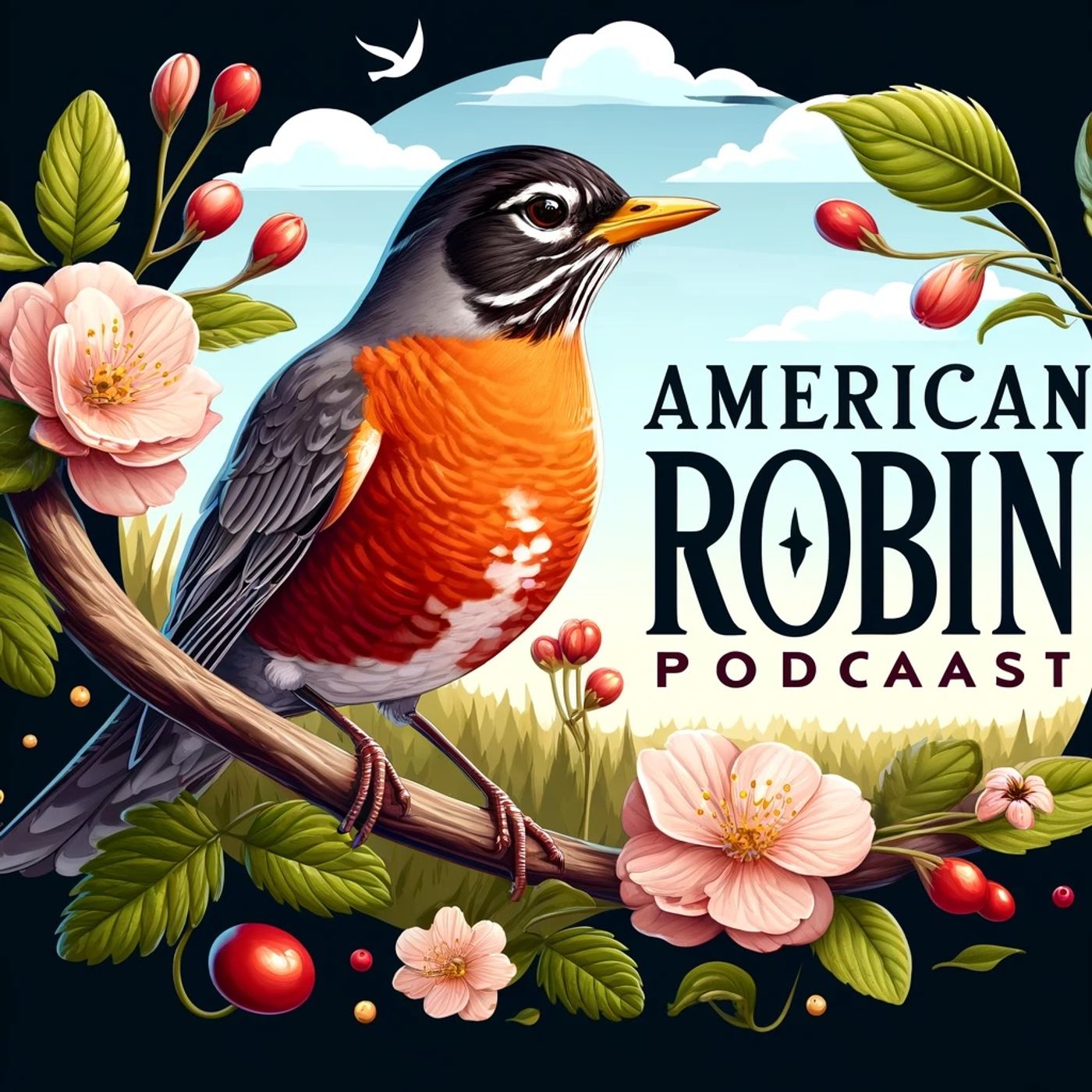
American Robin episode artwork

EPISODE · May 31, 2024 · 7 MIN

American Robin

from American Robin · host Inception Point AI

The American Robin, a beloved and ubiquitous bird found across North America, is a symbol of hope, renewal, and the return of spring. With its bright red breast, gray back, and cheerful song, the robin is one of the most easily recognized and cherished birds on the continent. But there is much more to this fascinating species than meets the eye. At first glance, the American Robin (Turdus migratorius) may seem like a relatively simple bird. Adults have a distinctive red breast, gray back, and white throat, with males and females looking quite similar. Juveniles, however, are speckled with dark spots on their breast, which gradually fade as they mature. These spots serve as camouflage, helping to protect the young birds from predators. One of the most remarkable things about American Robins is their incredible adaptability. These birds can be found in a wide variety of habitats, from the dense forests of the Pacific Northwest to the suburban lawns of New England, and from the rocky mountain slopes of the Rockies to the sandy beaches of the Gulf Coast. As long as there is a source of food and a place to build a nest, robins can thrive. The diet of the American Robin is varied and changes throughout the year. In the spring and summer, when the ground is soft and worms are abundant, robins can often be seen hopping across lawns and gardens, cocking their head to the side as they listen for the telltale sounds of earthworms beneath the surface. With a quick thrust of their beak, they can pull a wriggling worm from the soil and gulp it down in a matter of seconds. But worms are just one part of the robin's diet. These birds also eat a wide variety of insects, including beetles, caterpillars, and grasshoppers, as well as spiders and snails. In the fall and winter, when insects are scarce, robins will switch to eating fruit and berries, including cherries, grapes, and sumac. This ability to adapt to different food sources depending on the season is one of the keys to the robin's success. Another fascinating aspect of robin behavior is their tendency to form large flocks outside of the breeding season. In the fall and winter, robins from across a wide area will gather together in roosts that can number in the thousands or even millions of individuals. These roosts provide safety in numbers and help the birds conserve energy during the cold months. During the breeding season, however, robins become fiercely territorial, with males staking out and defending their nesting sites from rivals. The male's distinctive song, a rich and melodious series of whistles and warbles, serves both to attract a mate and to warn other males away from his territory. Once a pair has formed, the real work begins. Together, the male and female will build a sturdy cup-shaped nest of grass, twigs, and mud, often in the crook of a tree branch or on a ledge. The female will lay between 3-5 bright blue eggs, which both parents take turns incubating for around 12-14 days. When This content was created in partnership and with the help of Artificial Intelligence AI.

The American Robin, a beloved and ubiquitous bird found across North America, is a symbol of hope, renewal, and the return of spring. With its bright red breast, gray back, and cheerful song, the robin is one of the most easily recognized and cherished birds on the continent. But there is much more to this fascinating species than meets the eye. At first glance, the American Robin (Turdus migratorius) may seem like a relatively simple bird. Adults have a distinctive red breast, gray back, and white throat, with males and females looking quite similar. Juveniles, however, are speckled with dark spots on their breast, which gradually fade as they mature. These spots serve as camouflage, helping to protect the young birds from predators. One of the most remarkable things about American Robins is their incredible adaptability. These birds can be found in a wide variety of habitats, from the dense forests of the Pacific Northwest to the suburban lawns of New England, and from the rocky mountain slopes of the Rockies to the sandy beaches of the Gulf Coast. As long as there is a source of food and a place to build a nest, robins can thrive. The diet of the American Robin is varied and changes throughout the year. In the spring and summer, when the ground is soft and worms are abundant, robins can often be seen hopping across lawns and gardens, cocking their head to the side as they listen for the telltale sounds of earthworms beneath the surface. With a quick thrust of their beak, they can pull a wriggling worm from the soil and gulp it down in a matter of seconds. But worms are just one part of the robin's diet. These birds also eat a wide variety of insects, including beetles, caterpillars, and grasshoppers, as well as spiders and snails. In the fall and winter, when insects are scarce, robins will switch to eating fruit and berries, including cherries, grapes, and sumac. This ability to adapt to different food sources depending on the season is one of the keys to the robin's success. Another fascinating aspect of robin behavior is their tendency to form large flocks outside of the breeding season. In the fall and winter, robins from across a wide area will gather together in roosts that can number in the thousands or even millions of individuals. These roosts provide safety in numbers and help the birds conserve energy during the cold months. During the breeding season, however, robins become fiercely territorial, with males staking out and defending their nesting sites from rivals. The male's distinctive song, a rich and melodious series of whistles and warbles, serves both to attract a mate and to warn other males away from his territory. Once a pair has formed, the real work begins. Together, the male and female will build a sturdy cup-shaped nest of grass, twigs, and mud, often in the crook of a tree branch or on a ledge. The female will lay between 3-5 bright blue eggs, which both parents take turns incubating for around 12-14 days. When This content was created in partnership and with the help of Artificial Intelligence AI.

NOW PLAYING

American Robin

0:00 7:59

No transcript for this episode yet

We transcribe on demand. Request one and we'll notify you when it's ready — usually under 10 minutes.

Powering the Middle TJ Wilde The podcast that celebrates the backbone of America, our middle class and small businesses. We dive into the challenges that harm consumers. Threaten businesses and undermine our economy. How do we blend timeless values and traditions with modern technology to secure a brighter future? Come explore how middle class values and small businesses can keep driving the economy, creating jobs, and offering the American dream SPADE: The Podcast Paul Anthony Henderson Jr SPADE: The Podcast stands as a beacon of hope and understanding, addressing critical mental health challenges within the African American community. SPADE (Suicide, Post-Traumatic Stress Disorder, Anxiety, Depression, and Epilepsy) seeks to shine a light on topics often stigmatized and misunderstood. Our mission is to break the silence surrounding these issues, encouraging open dialogue and fostering a culture of support and education. By providing meaningful resources and sharing powerful stories, we aim to empower individuals to confront these challenges head-on and build pathways toward healing. Mental health is a crucial but often overlooked subject in the African American community. It’s time to dismantle the barriers of shame and stigma, ensuring everyone feels safe to speak their truth and seek the help they need. This podcast is more than just a platform—it’s a movement to spark change, spread awareness, and inspire action within families, friendships, and communities. Generally American (A Journey in American English) Christopher M. Chandler, Kris Schauer Hello, Hola, Guten Tag, Bonjour, こんにちは !Welcome everyone, this is a podcast for those wanting to learn about U.S. culture through Standard American English, also known as General American. We talk about various different topics related to the U.S. and the U.S.'s relations with other countries. My co-host and I would like to think of this as more of a journey because you never know where it’ll take us. Plus, since the journey’s more important than the end or the start, we hope that you’ll be willing to join us! Let’s see where it takes us! The Goldbergs Old Time Radio DVD The Goldbergs is a comedy-drama broadcast from 1929 to 1946 on American radio, and from 1949 to 1956 on American television. It was adapted into a 1948 play, Me and Molly; a 1950 film, The Goldbergs; and a 1973 Broadway musical, Molly.

Frequently Asked Questions

How long is this episode of American Robin?

This episode is 7 minutes long.

When was this American Robin episode published?

This episode was published on May 31, 2024.

What is this episode about?

The American Robin, a beloved and ubiquitous bird found across North America, is a symbol of hope, renewal, and the return of spring. With its bright red breast, gray back, and cheerful song, the robin is one of the most easily recognized and...

Can I download this American Robin episode?

Yes, you can download this episode by clicking the download button on the episode player, or subscribe to the podcast in your preferred podcast app for automatic downloads.
URL copied to clipboard!