This is a tote painting the ass. I don't want to do this right now. A bit busy, a bit on the road, I've been traveling, but I didn't, you know, I don't want to half-ass it. I wanted to...so I took 48 hours to cobble this together.
And it's quality. It's a quality piece. This is who killed Teresa. Here is what I found.
Here you are, just get me down. Got tough. I don't need to be remembered. So as I say, I've been away for a while, but I thought I'd be able to update on things.
I want to focus on something that completely passed me by that occurred over the summer. Over the summer, President Biden signed into law the Homicide Victims Families Rights Act, which requires federal agencies, federal agencies. There's the rub. To revisit cold case murder files and apply new technologies to aid and potential breakthroughs.
That's the law. It was co-sponsored by U.S. Senator John Cornyn of Texas. He's a Republican, but it was a bipartisan thing, 17 members involved with it.
And he had this to say about it. This is from his website. This legislation will help ensure federal law enforcement reviews, sometimes decades old cold case files, and applies the latest technologies and investigative standards. This process will help bring grieving families resolution in the midst of tragic circumstances.
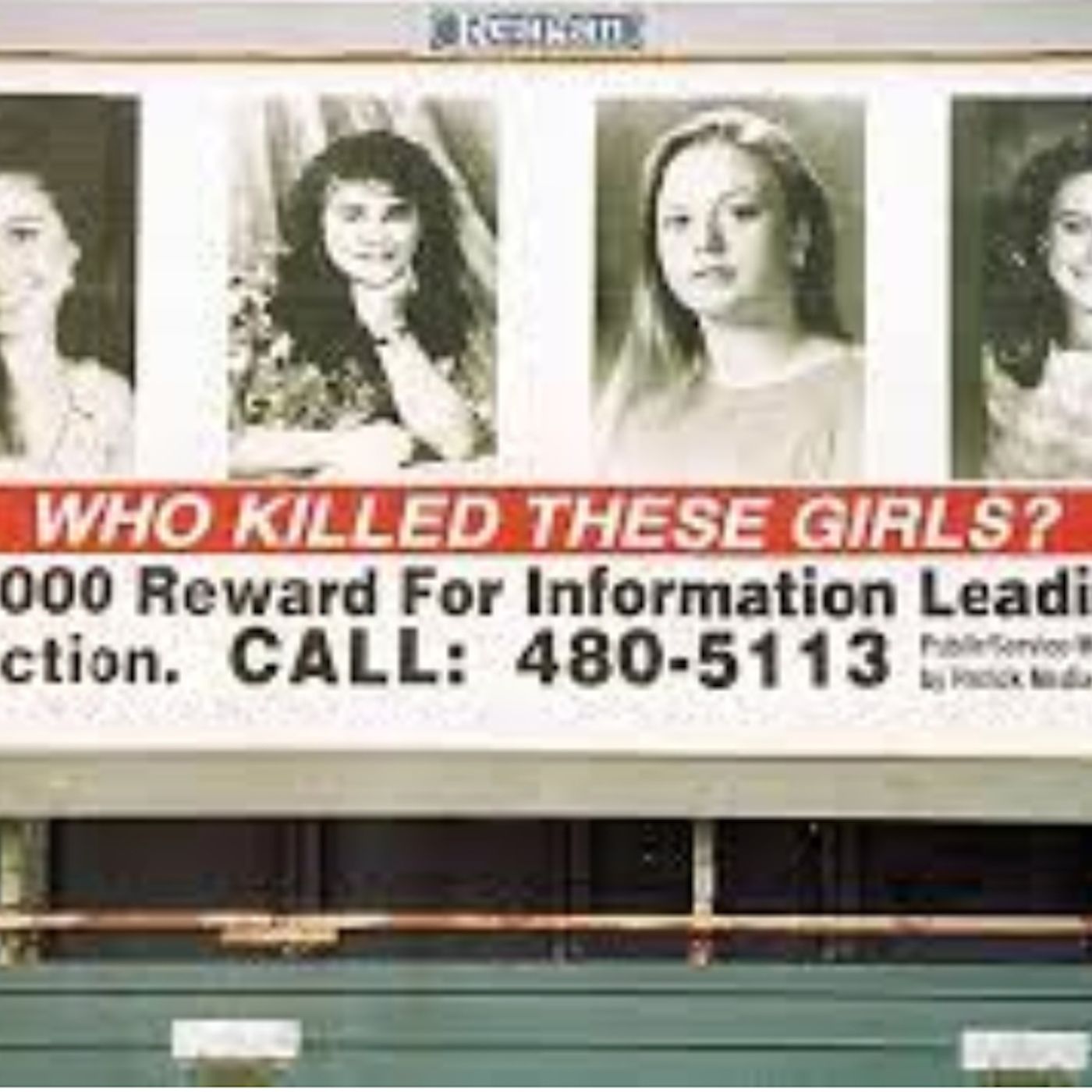
And I am proud of the bipartisan support for this bill, which is now law. The legislation was inspired by people from Texas will be familiar with this equidruple, homicides that claim the lives of four teenage girls in Austin, Texas, over three decades ago, and remain unsolved. Those are the yogurt shop murders. And the nonprofit murder accountability project, which we've talked about before, I think about two or three years, no longer five years ago, and on the rerunning of old episodes, that episode is coming up again.
Those guys are still around, and they were invited to participate in the crafting of the bill. And the murder accountability project estimates there are more than a quarter of a million U.S. homicides since 1980, for which no one has been charged. That's a slab.
The FBI's Criminal Justice Information Services Division estimates that homicide clearance rates in the United States have steadily declined from 90% in the mid 1960s to 62% in 2018. So 62% is getting in the realm of the worst of the worst. We talked about this from a Canadian perspective in a study that was done on homicide clearance rates. I think 60s, you're talking about the worst forces in that study, where of course the Quebec forces, the La Valle-Lungay Montreal, and the provincial wide-sertie, the Quebec forces.
So this new law, it gives and it takes. So it allows family members to request a review by federal law enforcement personnel, the ones not involved in the original investigation. If you look at the law and I posted a link to it on the site, there's a whole set of criteria they have to go through. I'm trying to think of some of them.
One of them was, have you re-interviewed old suspects? And we've talked about that before, the importance of that. Have, has case evidence been retested using current DNA technology, which is critical? And so they have to answer these questions.
And I think the spirit of it is if you answer yes, we're doing that, then you're doing your due diligence and the review is not required. But if you say no to those things, if you're like a Quebec agency and you say, well, we're waiting for the tips to come in, you know, you're going to fail and it's going to trigger a review. So the hope is that the, and here's the thing, the hope is that the new law will trickle down and be adopted by state and local law enforcement, empowering immediate family members to request a cold case review, hold on to that idea. Federal law enforcement agencies would be required to provide annual reports to Congress on what it's, is working and not working in cold case reviews.
That's very interesting and groundbreaking, in my opinion. And as I say, you can review more information about this, about the homicide victims families rights act. I posted links to the murder accountability projects webpage, although it's a web handle, you won't forget, it's murder data.org. But also to the, to the actual law on Congress.gov, the law is HR 3359.
So links to those websites are on my website, which is threeciller.com T H E S A L L O R E point calm. So, you know, the way I interpret this with, with any laws, the proof is in whether it's enforceable or not. And, and I kind of see the road ahead as being filled with kind of traps and line lines. You know, what if there's a disagreement between the families and the law enforcement agency that a new, a new investigation should be launched, although those, you know, those requirements I cited seem pretty clear cut.
And the other big one is, so, so what happens if a law enforcement agency fails to report to Congress? You know, what's, what's the enforcement penalty on that? We've seen the problem with that with the, the Cleary Act, which required colleges and universities to disclose the number of sexual assaults on campus. And, and, you know, history has shown that some people are diligent and some just fail to disclose.
And so, so to say, so what? And take whatever penalty, which to my recollection is minimal, if there is any. So, you know, that's kind of a, that's a troubling aspect of it. And also the, you know, the details seem appear, you know, they seem a little murky to me.
So, I spoke with, um, Michael Arntfield about this, the, he's a former police detective and criminologist. In fact, I think his episode from the old, who killed Teresa podcast from season one just came up. So, it was, it was nice to reconnect with Michael. This is a great thing, Teresa.
People return my emails and my phone calls. I'm no longer this punk kid. And I am, I am, I am forever and eternally is punk kid, but a punk kid whose emails get prompt responses. But seriously, Michael's been really nice lately about a whole host of things.
I told him he's infinitely quotable, which he is, that that's another story we'll save. So, I asked him, I asked him for a little clarification on HR 3, 3, 5, 9, since he's a, he's a board member with, with the murder accountability project. So, he's got the inside scoop on what's going on. And he told me quote, it allows families of victims to seek relief through the courts.
That's interesting. And forced law enforcement to turn over, share unsolved cases in their entirety to vetted third party agencies. So, immediately, you know, he's, he's anticipating a challenge there by mentioning the courts at all. So, and then, you know, this idea of turning over the information, is it directly to the families?
It should be. I know this is something they want to come back, if not all of Canada. And then this idea of third party agencies, there's some confusion on that, but we'll get to that. So, you know, on the surface, it seems like a game changer.
For instance, in the past, groups like the Viduc Society could only step into cold case investigation at the invitation of a host law enforcement agency. So, the legislation gives the appearance that victims families now have the discretion to select an accredited agency like Viduc. However, when I reached out to Viduc, who also returned my emails, they, they seemed to, well, again, it's murky. What they said is, as of now, the bill will not influence how the Viduc Society assists law enforcement with their cold cases.
The bill specifically names federal law enforcement entities, not state and local law enforcement, which encompass the majority of agencies that solicit the Viduc Society. Again, there's the rub. So, I asked, aren't feel to clarify, because it seems funny to me that the law allows for greater oversight by federal investigative agencies, yet the vast majority of cold cases are handled by state and local agencies. When, when, when aren't feel went to check, the FBI could only claim, for instance, six murder investigations in 2020, in which they had a hand.
So, that's, that's when we're talking a backlog of corporate million cases. I know it's just one year and, you know, comparison is 50 or 40 years or something, but that ain't a lot. I mean, a lot. So, so, so Mike said this is true, but again, he pointed to this trickle down idea that it's, it's hoped that the majority of agencies will now follow suit.
And that's, I mean, that's true. It usually takes federal legislation to get things started. But until a state follows the Fed's lead, we're seeing this more in Canada, but, but certainly in the United States, the states act much more independent of the federal government, traditionally than in Canada. But, but in, but until a state sort of takes a stand and says, no, we're, we're going to, we're going to follow the guidelines set out in HR 3359.
This is not going to have a profound effect. For instance, the yogurt shop murders that we were talking about, the case that inspired this law won't have the ability to utilize it as because the investigating force in that case was the Austin Police Department. And also, you know, it remains to be seen what will happen when an agency refuses to turn over documents. If there's, if there is, you know, our field sites, the power to go to the courts, but let's be honest here, only the privileged have the means for a legal challenge.
That's, that's the first problem. The second problem is that these things, when they get tied up in the courts, they take time. And the last thing a cold case has is time. So those, I'm totally unaware that this happened.
The homicide victims families rights act completely. And I would guess you are too, because when I did a quick glance, you know, search engine, nothing, nothing came up except Senator Corn's post on his webpage and a few other things. You know, related to that is this law couldn't be more timely. As US homicide clearance rates continue to decline as we said at the beginning.
And this, it's sort of a perfect storm here, because it's occurring at the same time that crime reporting by local police to the FBI also continues to decline. So it's creating like this perfect storm of case management confusion. Again, according to the murder accountability project homicides increased in 2021 over the previous year, but the data suggested decline in murders because of the under reporting. So you've got this sort of contradictory thing going on.
And it appears the main driver to this is recent changes in required reporting with what is known as the national incident based reporting system, which is known in law enforcement by the acronym, and the neighbors, neighbors is now be it's, I don't know that it's becoming the tool of record. I think it inspires to be the tool of record. But there's there's mass resistance to its usage is still a little history on that in the past. This is dry.
This is dry stuff. I promise not that today's podcast will not be this drag. But but it's I think it's interesting. It is the landscape in which everything else falls out when we when we do an episode or a profile on a case, it is within this landscape.
So it is vitally important. And I may be failing to impart that that importance. However, so traditionally law enforcement agencies reported their crime numbers using the FBI's uniform crime report, UCR, which is a fast but you know really kind of general tool. And it can if you've ever looked at the uniform crime report numbers, they it's so broad it can be inter it can be interpreted in many ways the data, you know, simply simply download the report into Excel and you'll see what I mean.
There's just there's just not a lot of fields. Therefore, there's not a lot of information. Therefore, there's not an ability to sort and sort of cut and pivot and get get to what you want in the more the more fields you have, the more specificity you'll get. In the 1970s, the law enforcement community saw the need for more detailed reporting system.
And that's how neighbors was born. It was approved back in 1988, but it's only recent that the FBI has begun to track down and insist that it's used. And as I said, inputting, you know, neighbors stats is much more detailed and it's time consuming. You know, it's a lot like putting stuff into a vie class, which I've speaking with police officers about it is it's a time suck.
You know, it's really and it also it requires that you learn the database system and neighbors records, case level details for every homicide, robbery, assault, burglary, part one to crime, sexual assaults, et cetera and other major crimes. All of that detail is putting the neighbors on about half of America's police and sheriff's departments have have yet to become compliant with neighbors reporting standards. So simply put some agencies refuse to use neighbors continuing to only provide the UCR summary information or much worse than this is is is a map. We'll just call the map the murder accountability project.
You know, much worse not reporting at all. So this is according to map quote local law enforcement agencies reported only 14,715 homicides while the Centers for Disease Control and Prevention CDC so far have counted 25,98 murders. This means police reported only 56.6% of the nation's homicides in 2021. The worst reporting rate on record.
And if you visit the maps stats page, again, there's a link to his alert com. You can see the drastic differences in reporting sorted by state. For instance, California, which has one of the largest cities in Los Angeles, Illinois, which is Chicago, New York, they're missing over 80% of their homicide cases compared to what the CDC reports. Florida did not report a single homicide in 2021, even though CDC reports that Florida had close to 1500 murders.
For a comparison in North Carolina where I live, there is a discrepancy of about 30 cases between CDC and FBI numbers. That's a reasonable. It's about a 4% difference. And recently, I worked for the city of Durham in North Carolina.
If you don't know, I'm the budget director for the city of Durham. So recently, I was at a council meeting and I had an opportunity to talk to the Durham police department about this because I was presenting the first quarter financial report. And police was there to report on the quarterly crime stats. So I talked to the chief, Chief Andrews, and her command staff, about the kniders.
Durham is not unique in having a female police chief. Carbera where I actually live, I said one for years. I think Chapel Hill just got a woman police chief. This is a trend, our former police chief, Chief Davies, who moved to Tennessee.
I think she's the chief of neither Nashville or Memphis now. Obviously, that's CJ Davis is a woman's trend. Patrice Andrews is, I've had a long relationship with when she was an investigations command staff and now chief. She's great.
And as I said, her whole, her whole command staff are female and really good. So we talk about neighbors and why so many agencies are reluctant to embrace it. And of course, she, her staff talked about the time suck about putting in the numbers. But fortunately, Durham's got this, got like a really great data technician on staff, a guy who just loves doing this kind of stuff.
Jason, he always has. But she also, she also noted the support of the state level, which I think is key, which I know is key. The state of North Carolina was much more proactive in providing training to law enforcement and allowed adequate time for agencies to ramp up to using the system. So other states may not have a bureau of investigation that that are that accommodating with with all the nine non compliance legal action is already underway.
Michael Arenfield mentioned that the murder accountability project has a lawsuit filed against the US Justice Department for thousands of unreported murders. And a map is also seeking to obtain more than 11,000 missing homicide records by contracting state and local government law enforcement agencies. And this is a quote from the chairman of, of Thomas Hargrove, and treating them to report under the old UCR standard to map until they adopt the superior neighbors standards. So at a minimum, he's sort of imploring them to, you know, you know, don't take his approach of not not reporting at all.
At a minimum, at least use the old system. And then Hargrove goes on. We urge all law enforcement agencies to adopt the superior neighbor standard for crime reporting. This is an investment in robust accounting and crime that will assist police makers and local leaders to make wise decisions to assist law enforcement.
We also urge state and local leaders to support our efforts to obtain crime data under the old reporting standards until all law enforcement becomes neighbor's compliant. It's true. If you have critical uniform data, you know, across the country, increasingly in an age where we're transient and criminals move back and forth, that's the only way you can spot trends. Maps, bread and butter is their ability to do crime mapping.
And to be able to visualize associations between, you know, geographically, between, you know, counties and cities. If you go to their site, you will instantly, you know, have that light bulb go off. And as I say, if you're googling for more information on neighbors, I already said it about HR 3359, you're not going to find anything. Sadly, important issues like this have become kind of a dominion of niche reporting and bloggers like myself.
And then finally, if you're Canadian wondering if you might find anything similar happening anytime soon, north of the border, I'd say don't hold your breath. Michael Arnefield, when I asked him on that, he said, I don't see that ever happening in Canada. That doesn't mean that as soon as I publish this, I'm not going to share it, you know, with Senator Pierre Bovenu, who is the standing member for victims' rights in the Canadian Parliament. Of course I am.
I'm going to share this with Pierre and say, hey Pierre, while you're dealing with every other victim's rights issue, can we get something like this in Canada? We don't even have uniform crime reporting. I mean, what we have is pales in comparison to what they have in the States. But, you know, there it is, and so it goes.
No, it's a shame. We're not only one for you to pull it over. Me, and I can't remember, and I don't remember. This is something less wonky, a little more fun.
I was recently in Montreal and I posted some photos on social media of a bike ride I took around Park Jean-Drapole. This is the former site of the World's Fair Expo 67, where at the time it was also referred to in man in his world. For many of us who grew up in Montreal in the 60s, it was foundational. It is ingrained in the tapestry of our memories.
You know, I delayed taking this trip for years. I wanted to do this for many, many years, and always something else came up. I sort of put it on the back burner and said, well, next time. I wish I'd made the trip sooner.
Park Jean-Drapole, named for Jean-Drapole, the former mayor of Montreal, who was instrumental in ensuring that Montreal got the World's Fair and that they did it right, which they did. Of course, all the exhibits and pavilions, I mean, but obviously the majority of it was returned to parkland. Although some exhibits remain, which is kind of extraordinary for me. The views from the park across the St.
Lawrence to the island of Montreal are stunning and just really unique. You rarely get to see Montreal from that perspective. You can see it all the way from the Champlain Bridge to the Jacques Cartier Bridge. The span of those islands is that long where they had the park.
Here's how you do it. Barry Yukam, which is kind of like the central subway station there, used to be Barry the Mountier. You take the yellow line towards Long Gay. The Long Gay line is, I think, it's only three stops.
The idea is to get you to the Long Gay Terminus. You can then use the bus routes. One of those stops is Park Jean-Drapole. You come out of the subway, stop there, and the first thing that meets you is the American Pavilion, the Geo Disc, which took my breath away.
It's iconic you see the photos everywhere on every Facebook page, memory lane, duda. But to walk out of that subway station and see it, it was stunning. I almost dropped to my knees. That's how foundational that memory is for some of us.
Once you're in the park, Montreal is a big sea bike system, like a bike rental system, which is the only way to go. Park is too big to walk, but to bike it is incredible. I did want to touch on this for a listener. One of the pictures I posted on Facebook or something was a photo of the old Canadian Imperial Bank of Commerce building on Ilsanta Helene, which is still there.
The building is still there, and it's in fairly good shape. It even has the old night deposit box around the rear. Traditionally, it's a drop box for money that the daily take, what your business you put in there. Lost wallets, hopefully, people would put in there.
But I took a photo of this drop box covered in cobwebs and fall leaves, which is really cool. At the time of Expo 67, there was a sister bank branch on the second island, Ilan Notre Dame, with a case popular branch. And these identical banks provided essential services to Expo businesses and visitors during the years that the park was in operation. But there's another story that CIBC Bank and, in my reason, for posting it, it's mentioned in Jean-Pierre Charbonneau's foundational book about the heroin trade in the mob in Montreal, the Fivier-Cannadien, the Canadian connection.
I went back and looked. I couldn't find the exact page, but somewhere Charbonneau mentions that the Cautronis, the Montreal mob family, something about using the bank as a drop location for either narcotics or money or possibly just a meeting place between two mobsters. So that's why it was interesting to me. A little known fact, the Cautronis, who were on par in New York of Five Families, can I name them?
Gambino, Benano, Lucache, Genovese, I'm missing one. Anyway, we'll move on. So they were on par with them and had associations with them. And a little known fact is the Cautronis had a contract for providing some of the meat consumed during Expo.
And, of course, it turned out later it was tainted. One of my earliest fondest childhood memories of attending Expo 67 was this delicious meat on a stick. My mom and dad got us at the Jamaican pavilion when we were there as kids. Mm-mm-mm-mm.
I love that. Tainted meat. Closing out here, some brief things. There's recent news that Toronto Police linked DNA and arrested a suspect in the 1983 murders of Aaron Gilmore and Susan Tice.
And this just came out, I think, last night. And people have a gain because of this started asking me about the use of DNA in Quebec cold cases. If you don't know this case, both Gilmore and Tice were found sexually assaulted and strangled to death in their Toronto homes and advances in DNA technologies allowed police to use investigative genetic genealogy. There we go again to narrow down a suspect family.
And from the suspect family, the narrow suspect and arrested him. And the timing in parallel to the recent arrests that we talked about this, I think, recently of Guillain-E-Pothman is striking, but I wouldn't be looking for Quebec to solve any cases in a similar manner any time soon. I've talked about this until I'm blue in the face, but apparently I have to keep bringing it up. Quebec police tossed case evidence in a number of historical murders years ago, years ago.
So that opportunity is not going to be there. And that's said it before, it's going to come home to roost. Right now the Quebec police have been stalling and sort of saying, well, we're learning about ancestral DNA. I'm telling you right now, they are just shucking and jiving until the shoot drops.
And for the record, because I got this asked this again, I'll just make it clear, the bra and underwear that my sister was found in was disposed of by the Sertated Quebec in 1983. Her remaining clothing, you know, her pants shirt, shoes, sweaters, was never recovered. Though I suspect it might have been left, if you followed last spring's podcast, I suspect it might have been left in Regis La Shances' sister's car, the one police impounded in November 1978 after the Aloha Motel Fire. And then finally, I have her earrings, her ring, her watch, which were found on her.
And most importantly, I have the red wallet, which we've discussed. I feel, add in an item. I really don't want to discuss any longer. If you're wondering what all this means, I've linked what it means on those three areas I just talked about so you can go and read about it.
What is interesting, I think, is years ago I spoke for an eternal case to Aaron Gilmore's brother about his sister's murder. And I was planning on doing a story on those cases because I went to college in the area where the murders played out. The bar she was last seen was in Yorkville. And I'd been there, it was kind of a posh place, but I'd been there a few times, I think just up the alleyway from the movie theater on Bloor.
And I believe Tice lived in the annex area, or Jason to the annex. And because Aaron Gilmore was an aspiring fashion designer, I was trying to tie thematically to the Maritie Jean- Who, there's a podcast on that I did years ago about the lumber Baron David Gilmore, who my great grandfather worked for. And I thought Aaron Gilmore was related to David Gilmore. But in speaking with her brother, it turned out that that was not true.
So that was not possible angle that could be pursued. It would have been a unique story. These two men who spawned the offspring of two women who, you know, 100 years later were murdered. But it's not true.
Finally, it took 16 months, but the Quebec corner has finally released their report on the death of Loretta Terriene, the 64 year old found in the industrial section of downtown Sherbrooke. And you will recall this case when first responders arrived, they mistook the flaming corpse for a mannequin, and they tidily disposed of it in a nearby dumpster. And when Terriene's husband later showed up at the police headquarters looking for his lost wife, authorities realized things were not good, that they made an error. So corner has ruled that the cause of death was suicide by asphyxiation and smoke in the inhalation.
We could have guessed that. More importantly, the corner found no fault with police and fire department handling the situation and recommended they undergo more safety training to avoid making future mistakes. Officers said they were confused by the powder residue left by a fire extinguisher, and this led them to thinking her body was a silicone dummy. And we all knew where that extinguisher had come from.
I'm just going to say that. Yeah, yeah, yeah, yeah, yeah, yeah. It's causing me to take a break, but it's a needed break from writing. I'm finished.
The book that case is not here. I have, yeah, I could, I'm waiting for one more piece of information that would provide like one final chapter, but the book basically is finished. It ends with a, with a killer line, I think. It's a quote actually that somebody that was said to me in an interview and it could end, it could end right there, but there's an opportunity for like an epilogue, which is a Sam waiting for one piece of information that will either give me some information that I'm 80% sure I know what it is.
However, if I don't know what it is, it could trigger either be a substantial rewrite or see another book. As much as B and C are paying the ass, they're also ultimately the very, very good things. I would think good things. So I have a draft of what I need to do now.
I spend the month of December editing, which is what I'm going to do as soon as I finish with you guys here. I'm going to go away and spend the December editing and then make up my mind what I want to do after that. After that, I'll tell you this. I would say the result of this is extraordinary.
I mean, I think your hope always is sort of like, my gosh, what if I solved the case? I didn't do that, but I came real close. It was one time, it was one piece of information. I was like, son of a gun.
Am I actually gonna solve this 50 year old thing? It didn't happen and it doesn't matter. It's not really the point, but you've always kind of have it in the back you're in. In some ways, but beyond that, I would say the level of cooperation I got, the quality of the interviews I had access to both were beyond my expectation.
The third thing I would say is the access to first-hand information of particularly police reports from multiple agencies across multiple states was extraordinary. Unredacted, I have enough material here now for several projects, future projects. It's just a question of what to do, how to sort them and what comes next. I haven't really sorted out.
I also have an idea to go back in December or January with a new kind of podcast about Quebec. It would make a great book, but it's so regional and so specific that I'd really have to sell my agent on. What I'd have to say is, yeah, but I can write the shit out of it, so we should go for it. But I'm thinking that that's not gonna happen because, again, it's so particular to a place and time.
It would be hard pulling off, but it's kind of like a cherry on a Sunday in that. It's a case that's known to some, people in the true crime community in Quebec, but no one's done anything with it. And I'm sitting on a shitload of it. It's obscene the amount of information I have on this case.
I'm kind of overwhelmed and I'm not quite sure what the best approach is with it. It's obscene what I have. So I'm just kind of mulling it over. It could be a great podcast.
It really could. I kind of had this idea maybe to do something minimal with it, just to say I've got something, and then this is really shitty. But people do it to me all the time. So baiting a hook that way, and then the logical thing that will come of that is some Quebec film studio will do like a program on it, a docu-drem on it.
And then based on that, I'll steal their information and I'll turn it into an American thing. And that's only doing unto others what they do with me. So that's a consideration to use the Tennessee two-step approach this time. But we'll see.
We'll see. That's it. That's it for today. I hope you have a great and restful holiday this month.
I hope you all do. This has been Who Killed Theresa on your host, John Allor. Have yourselves a great, great day.