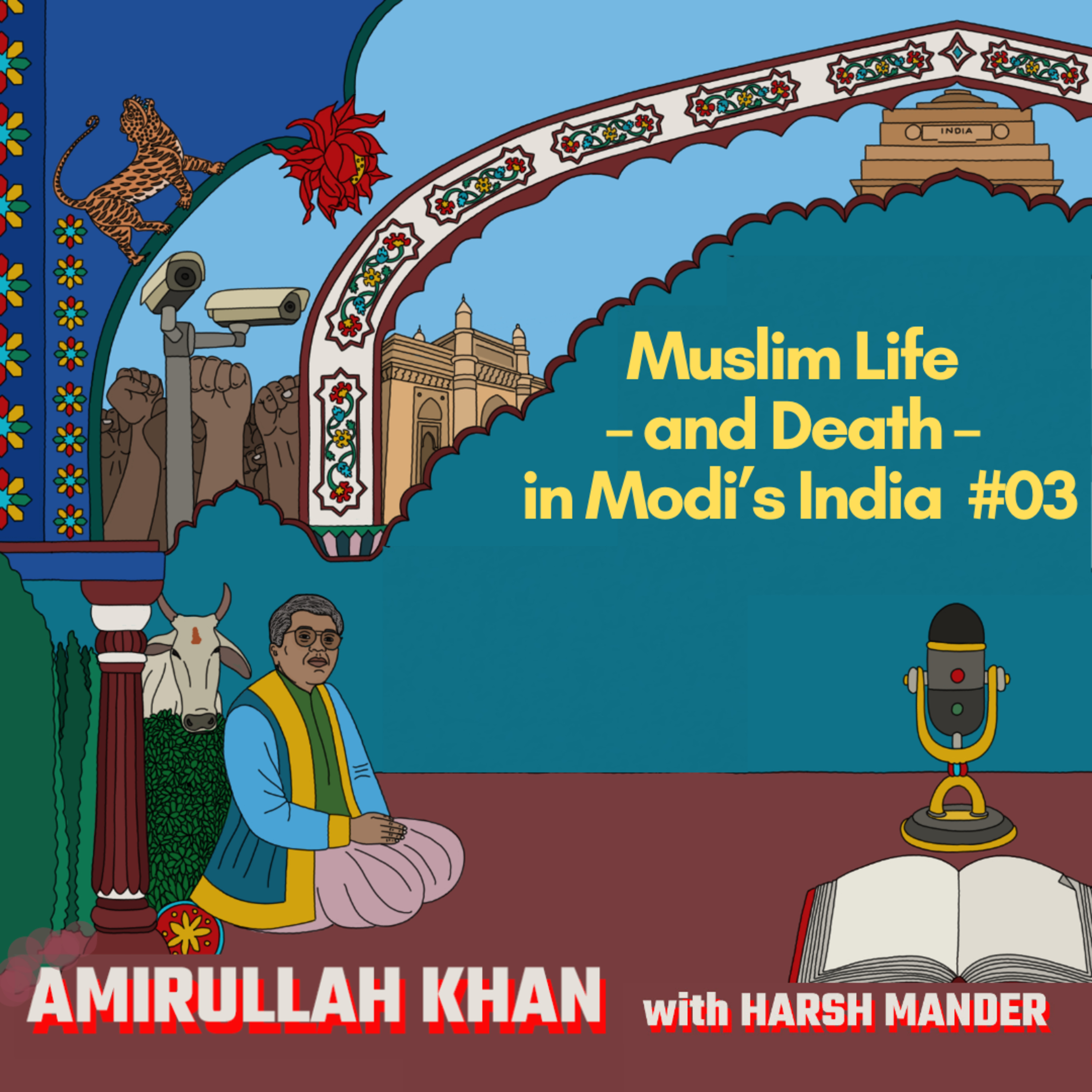
Amirullah Khan & Harsh Mander on the deprivation of India’s Muslims episode artwork

EPISODE · Jun 18, 2025 · 51 MIN

Amirullah Khan & Harsh Mander on the deprivation of India’s Muslims

from Himal Southasian Podcast Channel · host Himal Southasian Podcast Channel

Development economist Amirullah Khan explains the social indicators that show the stark deprivation of the majority of India’s Muslims, especially in education and employment.  He explains the different points in India’s history at which changes occurred. For example, he says, after the 1990s, jobs where being created mostly in India’s service and financial sectors that required higher education. By them, there was a huge drop in the education levels of Muslims compared to the rest of the population. This resulted in as Muslims dropping out of employment as well and much of the Muslim workforce becoming “self-employed”. “In India, self-employed is poor,” Khan says. Khan explains access to healthcare and discrimination in civic and municipal services for Muslims, and where he sees hope for India’s Muslim community.  You can find the full video of this conversation on YouTube. Glossary:- SC, ST, OBC: Scheduled Castes (SC) , Scheduled Tribes (ST), Other Backward Classes (OBC) are demographic categories in India of groups that have been historically discriminated against and marginalised, and therefore identified for affirmative action.- Delhi violence: In early 2020, riots broke out in largely Muslim neighbourhoods in Northeast Delhi while protests against the Citizenship Amendment Act were taking place across the India. More than 50 people, most of them Muslims, were killed and incidents of police brutality and complicity were reported - Sachar committee: A high-level committee headed by Justice Rajendra Sachar and constituted in 2005 by Manmohan Singh, India’s prime minister at the time, to examine the social, economic and educational status of Muslims in the country- PLFS: Periodic Labour Force Survey conducted by the National Statistics office to estimate employment and unemployment indicatorsHimal Southasian is Southasia’s first and only regional news and analysis magazine. Stretching from Afghanistan to Burma, from Tibet to the Maldives, this region of more than 1.4 billion people shares great swathes of interlocking geography, culture and history. Yet today neighbouring countries can barely talk to one another, much less speak in a common voice. For three decades, Himal Southasian has strived to define, nurture, and amplify that voice. Read more: https://www.himalmag.com/Support our independent journalism and become a Patron of Himal: https://www.himalmag.com/support-himalFind us on: https://twitter.com/Himalistanhttps://www.facebook.com/himal.southasianhttps://www.instagram.com/himalistan/

Development economist Amirullah Khan explains the social indicators that show the stark deprivation of the majority of India’s Muslims, especially in education and employment.  He explains the different points in India’s history at which changes occurred. For example, he says, after the 1990s, jobs where being created mostly in India’s service and financial sectors that required higher education. By them, there was a huge drop in the education levels of Muslims compared to the rest of the population. This resulted in as Muslims dropping out of employment as well and much of the Muslim workforce becoming “self-employed”. “In India, self-employed is poor,” Khan says. Khan explains access to healthcare and discrimination in civic and municipal services for Muslims, and where he sees hope for India’s Muslim community.  You can find the full video of this conversation on YouTube. Glossary:- SC, ST, OBC: Scheduled Castes (SC) , Scheduled Tribes (ST), Other Backward Classes (OBC) are demographic categories in India of groups that have been historically discriminated against and marginalised, and therefore identified for affirmative action.- Delhi violence: In early 2020, riots broke out in largely Muslim neighbourhoods in Northeast Delhi while protests against the Citizenship Amendment Act were taking place across the India. More than 50 people, most of them Muslims, were killed and incidents of police brutality and complicity were reported - Sachar committee: A high-level committee headed by Justice Rajendra Sachar and constituted in 2005 by Manmohan Singh, India’s prime minister at the time, to examine the social, economic and educational status of Muslims in the country- PLFS: Periodic Labour Force Survey conducted by the National Statistics office to estimate employment and unemployment indicatorsHimal Southasian is Southasia’s first and only regional news and analysis magazine. Stretching from Afghanistan to Burma, from Tibet to the Maldives, this region of more than 1.4 billion people shares great swathes of interlocking geography, culture and history. Yet today neighbouring countries can barely talk to one another, much less speak in a common voice. For three decades, Himal Southasian has strived to define, nurture, and amplify that voice. Read more: https://www.himalmag.com/Support our independent journalism and become a Patron of Himal: https://www.himalmag.com/support-himalFind us on: https://twitter.com/Himalistanhttps://www.facebook.com/himal.southasianhttps://www.instagram.com/himalistan/

NOW PLAYING

Amirullah Khan & Harsh Mander on the deprivation of India’s Muslims

0:00 51:38

No transcript for this episode yet

We transcribe on demand. Request one and we'll notify you when it's ready — usually under 10 minutes.

That Hoarder: Overcome Compulsive Hoarding That Hoarder Hoarding disorder is stigmatised and people who hoard feel vast amounts of shame. This podcast began life as an audio diary, an anonymous outlet for somebody with this weird condition. That Hoarder speaks about her experiences living with compulsive hoarding, she interviews therapists, academics, researchers, children of hoarders, professional organisers and influencers, and she shares insight and tips for others with the problem. Listened to by people who hoard as well as those who love them and those who work with them, Overcome Compulsive Hoarding with That Hoarder aims to shatter the stigma, share the truth and speak openly and honestly to improve lives. The Small Business Startup School – Business Notes | Financial Literacy | Retail Psychology – For Professionals & Entrepreneurs The Small Business Startup School Inc. Starting or buying a small business? While personal circumstances may vary, business patterns remain timeless. On The Small Business Startup School, we explore strategies, insights, and practical solutions to help entrepreneurs confidently navigate their journey.Hosted by Ola Williams—a retail entrepreneur, fintech founder, and financial coach with over two decades of experience—this podcast marries financial awareness and retail psychology with optimism to deliver actionable takeaways.Join us to learn, grow, and connect as we uncover the keys to business success.Let’s continue to learn together and be encouraged to keep on connecting! DIOSA. Carolina Sanper This podcast is a sacred space created by Carolina Sanper where you connect with your inner wisdom and embody your magnetic feminine power.It is the realization that the mystical realm is where you plant the seeds of your desired reality.It is a portal to your true essence: awareness, presence, and receiving with ease. Welcome home, DIOSA. 🖤 XXX Tech by SOVRYN Dr. Brian Sovryn The crossroads between technology, sensuality, and metaphysics - and the longest running anarchist podcast in the world! Brought to you by Dr. Brian Sovryn.

Frequently Asked Questions

How long is this episode of Himal Southasian Podcast Channel?

This episode is 51 minutes long.

When was this Himal Southasian Podcast Channel episode published?

This episode was published on June 18, 2025.

What is this episode about?

Development economist Amirullah Khan explains the social indicators that show the stark deprivation of the majority of India’s Muslims, especially in education and employment.  He explains the different points in India’s history at which changes...

Can I download this Himal Southasian Podcast Channel episode?

Yes, you can download this episode by clicking the download button on the episode player, or subscribe to the podcast in your preferred podcast app for automatic downloads.
URL copied to clipboard!