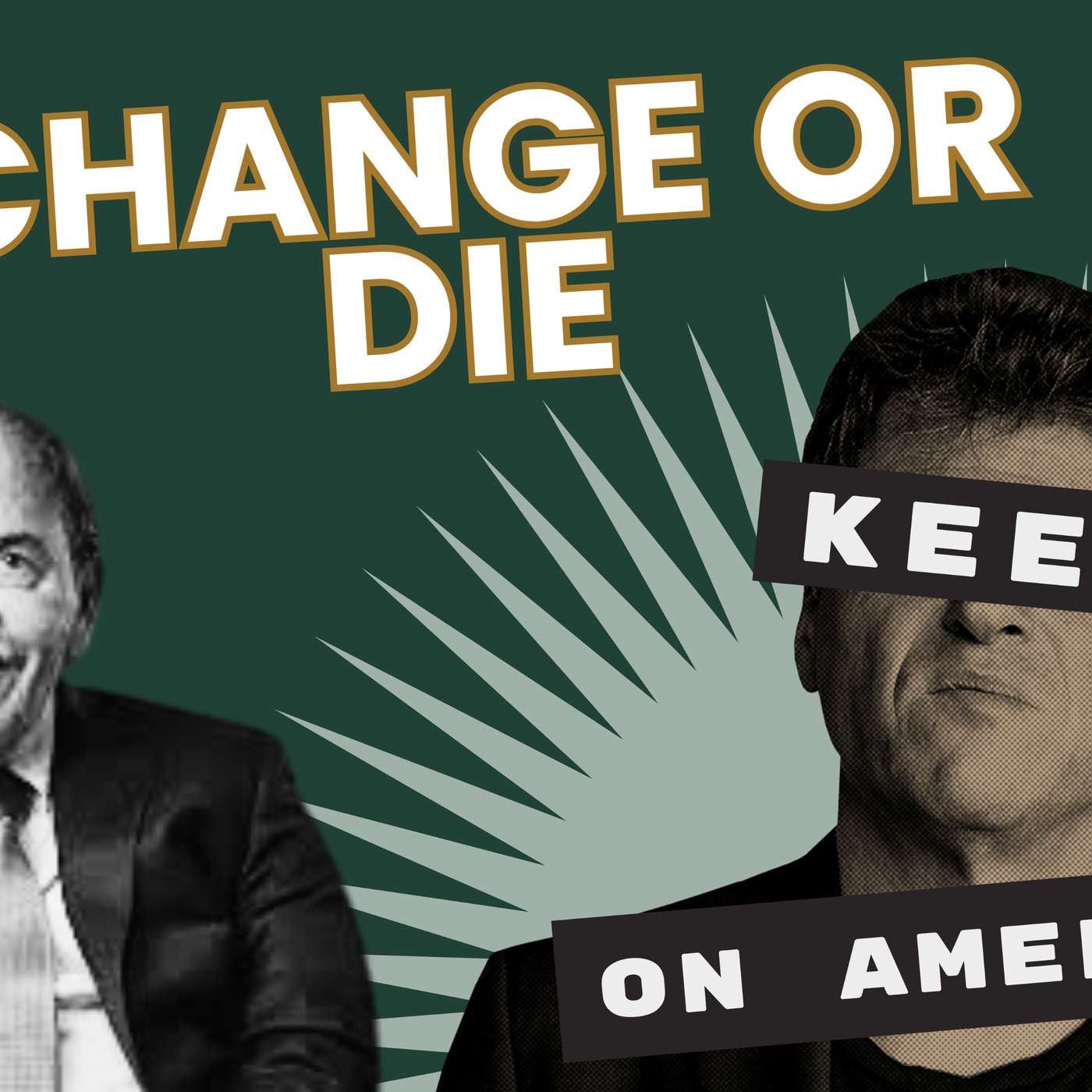
An Act of War? Brandeis President Arthur Levine on Trump’s University Policy episode artwork

EPISODE · Mar 16, 2026 · 47 MIN

An Act of War? Brandeis President Arthur Levine on Trump’s University Policy

from Keen On America · host Andrew Keen

“Had another nation done this, we would regard this as an act of war.” — Arthur Levine, President of Brandeis UniversityForget Iran for a moment. I asked Brandeis President Arthur Levine whether the Trump administration has gone to war with the American university. He paused diplomatically. “Going to war is a very restrictive term,” he answered. Then added: “Had another nation done this, we would regard this as an act of war.” From the president of Brandeis, that’s not a metaphorical dodge. He is, of course, referring to the singling out and bullying of Harvard, Columbia, the University of Pennsylvania and other universities by executive order. Levine trusts nothing like this will happen again. But he also trusted it wouldn’t and shouldn’t have happened in the first place.Levine is back on the show with a new book, From Upheaval to Action: What Works in Changing Higher Ed, co-authored with Scott Van Pelt. Last time we talked, we argued about whether the $320,000 degree is worth it. This time our conversation wasn’t so much about whether the degree is worth the exorbitant price tag, but whether the institution that grants it will survive. Indeed Brandeis is about to announce guaranteed transparent pricing — a necessary revolution in an industry that has, for too long, thrived on financial opacity.A more existential threat to universities like Brandeis is AI. In this week’s That Was The Week tech roundup, Keith Teare noted that even engineers at major tech companies are being told to stop coding and run AI instead. I tell the story of a UC Berkeley student who told his professor he didn’t need to read anymore because AI could do the reading for him. For Levine, this represents a failure of education, not a triumph of technology. Reading and writing are muscles, he says. You don’t build intellectual heft by outsourcing thinking to smart machines.Levine draws the Luddite parallel. He argues the early 19th century craftsmen got better-paid work in factories. Every technological revolution produces fear, displacement, and eventually adaptation, he warns. So are university faculty the modern-day craftsmen? Their work will change, Levine explains. AI will take the routine parts with new more creative jobs emerging. But anyone who tells you they know what those jobs are is making it up, he says.I pushed him on Epstein and the ethical rot of the American elite. He deflected — “we’re talking about a very small number of people” — but eventually conceded that ethics should be woven into every undergraduate subject, not taught as a single standalone course. I’m not sure that goes far enough. When university presidents are resigning because they took money from a child trafficker, it suggests that something is really rotten.On DEI, Levine is surprisingly blunt: drop the term. It’s become a target for both left and right. Replace it with full access to higher education for those who can benefit from it. He sold this full access program to Democrats as equity and to Republicans as workforce development. Both bought it. The label was the problem, he explains, not the policy.Henry Adams went to Harvard in 1850 and said he received an 18th century education for a world preparing for the 20th century. The worst mistake, Levine says, is not adapting to change. On that, Luddite university faculty, and perhaps even Donald Trump, might agree. Five Takeaways•       “Had Another Nation Done This, We Would Regard It as an Act of War”: Brandeis President Arthur Levine chose his words with the care you’d expect from a university president, but the meaning was unmistakable. The Trump administration has singled out Harvard, Columbia, and the University of Pennsylvania, threatened their funding, and imposed regulations by executive order. Had any foreign government done this to American universities, Levine says, we would call it what it is. He trusts it won’t happen again. He also trusted it wouldn’t happen in the first place.•       Brandeis Is About to Announce Transparent Pricing: Brandeis will soon tell prospective students exactly what they’ll pay — not the sticker price minus a mysterious financial aid package, but the actual number, guaranteed. It’s a small revolution in an industry that has thrived for decades on opacity, and it may force other universities to follow or explain why they won’t.•       AI Represents a Failure of Education, Not a Triumph of Technology: A Berkeley student told his professor he didn’t need to read anymore because AI could do the reading for him. Levine’s response is blunt: reading and writing are muscles, and you don’t build intellectual muscle by outsourcing thinking to smart machines. He speaks from experience — he used AI for his own research and half the data came back wrong, with sources that turned out to be hallucinations.•       Drop the Term DEI and Replace It with Full Access: Levine is surprisingly direct on this: the term DEI has become a target for both left and right, and it no longer serves whatever purpose it once had. He recommends replacing it with a simpler goal — full access to higher education for those who can benefit from it. He tested this framing himself, selling the same programme to Democrats as equity and to Republicans as workforce development. Both bought it. The label was the problem, not the policy.•       The Worst Mistake a University Can Make Is Not Changing: Henry Adams went to Harvard in 1850 and later said he had received an 18th century education for a world preparing for the 20th century. Levine’s fear is that American universities are making the same mistake again — delivering a 20th century education for a world that has already moved into the 21st. The worst thing any institution can do right now, he says, is keep doing what it’s always done and expect the same results. On that, the Luddites, and perhaps even Donald Trump, might agree. About the GuestArthur Levine is the president of Brandeis University and president emeritus of Columbia University’s Teachers College and the Woodrow Wilson National Fellowship Foundation. His new book is From Upheaval to Action: What Works in Changing Higher Ed (Johns Hopkins University Press, 2026), co-authored with Scott Van Pelt.References:•       From Upheaval to Action: What Works in Changing Higher Ed by Arthur Levine and Scott Van Pelt (2026) — the book under discussion.•       Previous episode: Is That $320,000 College Degree Really Worth It? — Levine’s first appearance on the show, September 2025.•       

“Had another nation done this, we would regard this as an act of war.” — Arthur Levine, President of Brandeis UniversityForget Iran for a moment. I asked Brandeis President Arthur Levine whether the Trump administration has gone to war with the American university. He paused diplomatically. “Going to war is a very restrictive term,” he answered. Then added: “Had another nation done this, we would regard this as an act of war.” From the president of Brandeis, that’s not a metaphorical dodge. He is, of course, referring to the singling out and bullying of Harvard, Columbia, the University of Pennsylvania and other universities by executive order. Levine trusts nothing like this will happen again. But he also trusted it wouldn’t and shouldn’t have happened in the first place.Levine is back on the show with a new book, From Upheaval to Action: What Works in Changing Higher Ed, co-authored with Scott Van Pelt. Last time we talked, we argued about whether the $320,000 degree is worth it. This time our conversation wasn’t so much about whether the degree is worth the exorbitant price tag, but whether the institution that grants it will survive. Indeed Brandeis is about to announce guaranteed transparent pricing — a necessary revolution in an industry that has, for too long, thrived on financial opacity.A more existential threat to universities like Brandeis is AI. In this week’s That Was The Week tech roundup, Keith Teare noted that even engineers at major tech companies are being told to stop coding and run AI instead. I tell the story of a UC Berkeley student who told his professor he didn’t need to read anymore because AI could do the reading for him. For Levine, this represents a failure of education, not a triumph of technology. Reading and writing are muscles, he says. You don’t build intellectual heft by outsourcing thinking to smart machines.Levine draws the Luddite parallel. He argues the early 19th century craftsmen got better-paid work in factories. Every technological revolution produces fear, displacement, and eventually adaptation, he warns. So are university faculty the modern-day craftsmen? Their work will change, Levine explains. AI will take the routine parts with new more creative jobs emerging. But anyone who tells you they know what those jobs are is making it up, he says.I pushed him on Epstein and the ethical rot of the American elite. He deflected — “we’re talking about a very small number of people” — but eventually conceded that ethics should be woven into every undergraduate subject, not taught as a single standalone course. I’m not sure that goes far enough. When university presidents are resigning because they took money from a child trafficker, it suggests that something is really rotten.On DEI, Levine is surprisingly blunt: drop the term. It’s become a target for both left and right. Replace it with full access to higher education for those who can benefit from it. He sold this full access program to Democrats as equity and to Republicans as workforce development. Both bought it. The label was the problem, he explains, not the policy.Henry Adams went to Harvard in 1850 and said he received an 18th century education for a world preparing for the 20th century. The worst mistake, Levine says, is not adapting to change. On that, Luddite university faculty, and perhaps even Donald Trump, might agree. Five Takeaways•       “Had Another Nation Done This, We Would Regard It as an Act of War”: Brandeis President Arthur Levine chose his words with the care you’d expect from a university president, but the meaning was unmistakable. The Trump administration has singled out Harvard, Columbia, and the University of Pennsylvania, threatened their funding, and imposed regulations by executive order. Had any foreign government done this to American universities, Levine says, we would call it what it is. He trusts it won’t happen again. He also trusted it wouldn’t happen in the first place.•       Brandeis Is About to Announce Transparent Pricing: Brandeis will soon tell prospective students exactly what they’ll pay — not the sticker price minus a mysterious financial aid package, but the actual number, guaranteed. It’s a small revolution in an industry that has thrived for decades on opacity, and it may force other universities to follow or explain why they won’t.•       AI Represents a Failure of Education, Not a Triumph of Technology: A Berkeley student told his professor he didn’t need to read anymore because AI could do the reading for him. Levine’s response is blunt: reading and writing are muscles, and you don’t build intellectual muscle by outsourcing thinking to smart machines. He speaks from experience — he used AI for his own research and half the data came back wrong, with sources that turned out to be hallucinations.•       Drop the Term DEI and Replace It with Full Access: Levine is surprisingly direct on this: the term DEI has become a target for both left and right, and it no longer serves whatever purpose it once had. He recommends replacing it with a simpler goal — full access to higher education for those who can benefit from it. He tested this framing himself, selling the same programme to Democrats as equity and to Republicans as workforce development. Both bought it. The label was the problem, not the policy.•       The Worst Mistake a University Can Make Is Not Changing: Henry Adams went to Harvard in 1850 and later said he had received an 18th century education for a world preparing for the 20th century. Levine’s fear is that American universities are making the same mistake again — delivering a 20th century education for a world that has already moved into the 21st. The worst thing any institution can do right now, he says, is keep doing what it’s always done and expect the same results. On that, the Luddites, and perhaps even Donald Trump, might agree. About the GuestArthur Levine is the president of Brandeis University and president emeritus of Columbia University’s Teachers College and the Woodrow Wilson National Fellowship Foundation. His new book is From Upheaval to Action: What Works in Changing Higher Ed (Johns Hopkins University Press, 2026), co-authored with Scott Van Pelt.References:•       From Upheaval to Action: What Works in Changing Higher Ed by Arthur Levine and Scott Van Pelt (2026) — the book under discussion.•       Previous episode: Is That $320,000 College Degree Really Worth It? — Levine’s first appearance on the show, September 2025.•

NOW PLAYING

An Act of War? Brandeis President Arthur Levine on Trump’s University Policy

0:00 47:02

No transcript for this episode yet

We transcribe on demand. Request one and we'll notify you when it's ready — usually under 10 minutes.

The Small Business Startup School – Business Notes | Financial Literacy | Retail Psychology – For Professionals & Entrepreneurs The Small Business Startup School Inc. Starting or buying a small business? While personal circumstances may vary, business patterns remain timeless. On The Small Business Startup School, we explore strategies, insights, and practical solutions to help entrepreneurs confidently navigate their journey.Hosted by Ola Williams—a retail entrepreneur, fintech founder, and financial coach with over two decades of experience—this podcast marries financial awareness and retail psychology with optimism to deliver actionable takeaways.Join us to learn, grow, and connect as we uncover the keys to business success.Let’s continue to learn together and be encouraged to keep on connecting! PodQuesting Dwight J Randolph- WolfShield Media PodQuesting: -By WolfShield Media and Dwight J RandolphJoin us on an exciting journey to master the world of fiction podcasting! At PodQuesting, we document our quest to improve and innovate, sharing valuable insights, strategies, and behind-the-scenes tips along the way. Whether you're an experienced podcaster or just starting your first show, our podcast is your go-to resource for everything podcasting.Discover practical advice, creative techniques, and lessons from our own experiences as we explore the ever-evolving podcasting landscape. Ready to level up your skills and embark on this adventure with us? Tune in and join the quest!Have questions or feedback? Reach out to us at [email protected] and visit our website:WolfShield.Media LIGHTS, CAMERA, SMILE! Creatives Club Media Lights, Camera, Smile, is a podcast for anyone with a dream to share something with the world, out of the overflow of themselves - be it their mind, their heart, their personalities, and much more. Each of us are alive in this moment in time, with an innate ability to have ideas and create various things to benefit both ourselves and the people around us for a reason, and here, you will find the encouragement, the inspiration, and the motivation to do just that. Hosted by Cicily, founder of Creatives Club, she dives into various topics surrounding creativity and business. Exploring entrepreneurship for creatives in a corporate reality, sharing tips and tricks in a media centered company, answering questions regarding what a creative actually is are just a few of the things discussed on this podcast. Be encouraged to create for yourself as Cicily gets vulnerable by pivoting the camera to herself for the first time.To submit questions for Cicily to answer, or have her address certain t Kaizen Blueprint Aldo Chandra "Kaizen" is a Japanese term for continuous improvement. This podcast provides a blueprint to learn about health, wealth, relationships and everything else in between. Through our podcast, we strive to inspire, educate, and motivate our audience to cultivate a mindset of lifelong learning, productivity, and personal development. By sharing insights, strategies, and practical tips, we aim to guide listeners on their journey towards realizing their fullest potential, fostering success, and creating lasting positive change.

Frequently Asked Questions

How long is this episode of Keen On America?

This episode is 47 minutes long.

When was this Keen On America episode published?

This episode was published on March 16, 2026.

What is this episode about?

“Had another nation done this, we would regard this as an act of war.” — Arthur Levine, President of Brandeis UniversityForget Iran for a moment. I asked Brandeis President Arthur Levine whether the Trump administration has gone to war with the...

Is there a transcript available for this episode?

Yes, a full transcript is available for this episode. You can read the complete transcript on the episode page.

Can I download this Keen On America episode?

Yes, you can download this episode by clicking the download button on the episode player, or subscribe to the podcast in your preferred podcast app for automatic downloads.
URL copied to clipboard!