EPISODE · Apr 29, 2026 · 1H 8M
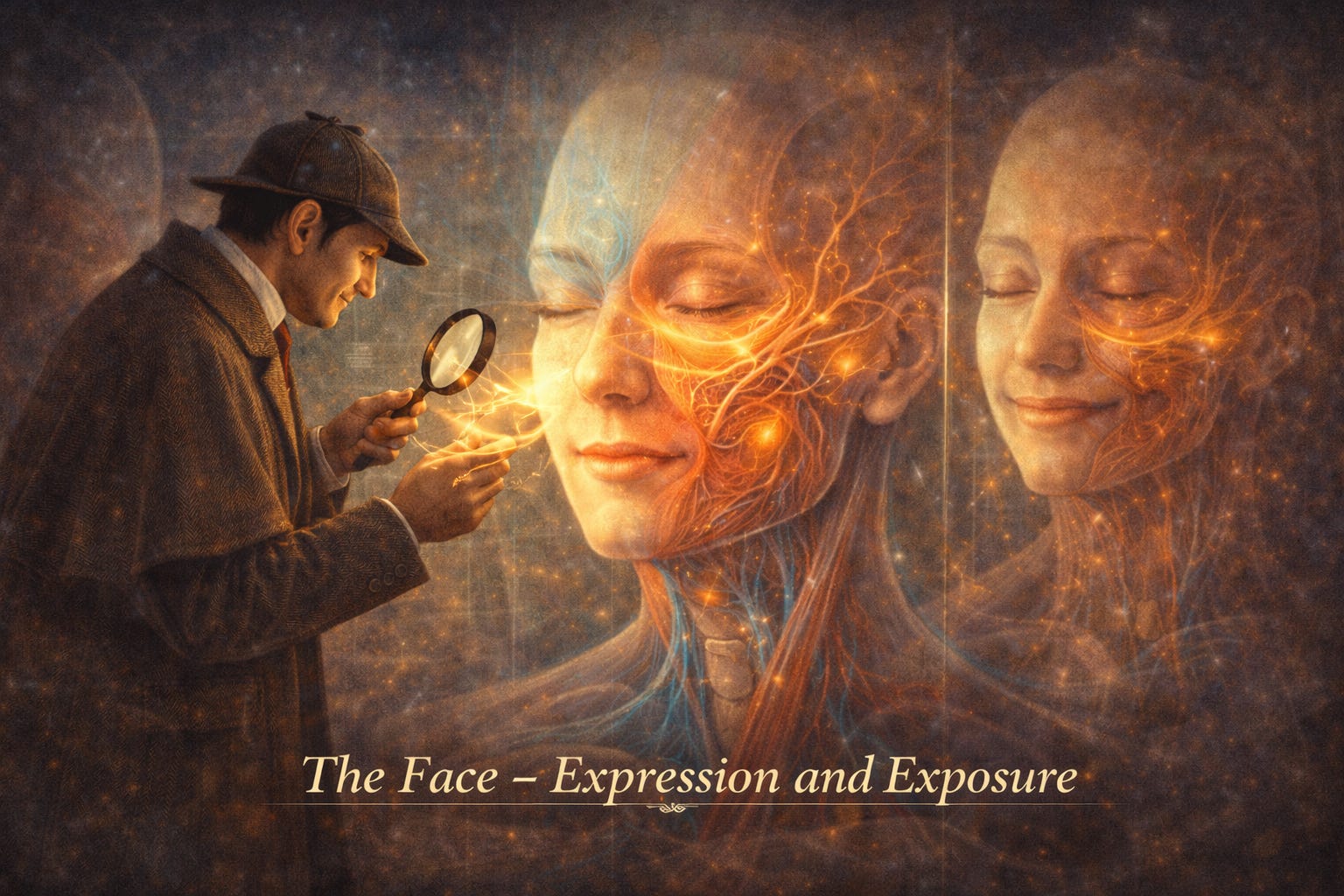
ANAHN 08: The Face - Expression, Emotion, and Exposure
from Clinical Deep Dives · host Dr Manaan Kar Ray
If the neck was a corridor, the face is a stage.But this is not a passive surface.It is a living interface where structure meets meaning.The face is where:* Muscles do not just move - they express* Nerves do not just transmit - they interpret* Blood does not just flow - it reveals life in colour and warmthAnd yet, beneath this expressive surface lies a system that is clinically vulnerable, anatomically intricate, and dangerously connected.The Face: A Functional IdentityThe superficial face is built from:* Thin skin* Highly vascular connective tissue* Interwoven muscles* Dense neural networksUnlike most of the body, the soft tissue is thin over bone, allowing structure to be easily palpated and movement to be highly visibleThe face is not built for protection.It is built for communication.The Defining Feature: Muscles of ExpressionThese muscles are unique in the human body.* They arise from the second pharyngeal arch* They are innervated by the facial nerve (CN VII)* They insert into skin, not boneThis single fact changes everything.When they contract:They do not move joints - they reshape emotion.They gather around orifices:* Eyes* Nose* MouthAnd act in coordinated groups to produce:* Smiles* Frowns* Blinks* Speech articulationThe face is an orchestra where no muscle plays alone.The Scalp: Layers and the “Danger Space”The scalp is not just a covering - it is a layered system:* Skin* Fibroadipose layer* Epicranius muscle (frontalis + occipitalis)* Galea aponeurotica* Loose connective tissue (danger space)* PericraniumThis “danger space” allows movement - but also allows infection to spread deeply.Vascularity: A Face Full of FlowThe face is exceptionally vascular.* Supplied by branches of both:* External carotid artery* Internal carotid artery* Forms extensive anastomotic networksThis leads to two key realities:1. Bleeding is profuse and difficult to control2. Healing is rapid and resilientThe face bleeds easily - but it also recovers beautifully.The Facial Artery: The Signature PathwayThe facial artery takes a tortuous, winding course:* Crosses the mandible* Travels towards the corner of the mouth* Ascends along the nose* Ends near the eye as the angular arteryIts branches supply:* Lips* Nose* CheekIt is a vessel that follows expression itself.Venous System: The Hidden RiskUnlike many veins in the body:* Facial veins are valvelessThis means blood can flow in either direction.And critically:* They connect to the cavernous sinus inside the skullThis is where beauty meets danger.The “Danger Triangle” of the FaceA small region carries disproportionate risk:* Upper lip* Nose* Area to medial eyeInfection here can travel via venous pathways to the cavernous sinus, leading to:* Thrombosis* Brain involvement* Potential deathA seemingly trivial lesion can become a neurological emergency.Sensory Innervation: The Trigeminal MapThe face is exquisitely sensitive due to the trigeminal nerve (CN V).It divides into three territories:* V1 (Ophthalmic): forehead, upper eyelid, nose* V2 (Maxillary): cheek, upper lip* V3 (Mandibular): lower lip, chin, jawThere is overlap, increasing sensitivity and redundancy.The face feels the world in three overlapping maps.Motor Innervation: The Facial Nerve (CN VII)The facial nerve exits the skull and divides into five key branches:* Temporal* Zygomatic* Buccal* Mandibular* CervicalThese branches form a plexus within the parotid gland before radiating outward.This is the nerve of:* Expression* Symmetry* IdentityThe Buccinator: The Hidden WorkerOften overlooked, but essential:* Compresses cheek* Keeps food between teeth* Assists speech and blowingIt is the quiet stabiliser beneath expression.Clinical Insight: When Expression FailsFacial nerve injury (e.g. Bell palsy):* Drooping face* Inability to close eye* Loss of expression* Speech difficultyTrigeminal neuralgia:* Severe facial pain* Triggered by light touch* Involves sensory pathwaysFacial infections:* Can spread intracranially due to venous connectionsThe face is where dysfunction is not hidden - it is seen immediately.Key Takeaways* Facial muscles insert into skin and create expression* All muscles of facial expression are innervated by CN VII* Sensory supply is via the three divisions of CN V* The face is highly vascular with extensive arterial anastomoses* Facial veins are valveless → bidirectional flow* The danger triangle allows infection to spread to the cavernous sinus* The facial nerve branches within the parotid gland* The buccinator is key for mastication and oral control This is a public episode. If you'd like to discuss this with other subscribers or get access to bonus episodes, visit drmanaankarray.substack.com/subscribe
NOW PLAYING
ANAHN 08: The Face - Expression, Emotion, and Exposure
No transcript for this episode yet
Similar Episodes
Jun 4, 2025 ·9m
May 21, 2025 ·11m