
EPISODE · May 1, 2024 · 4 MIN
Anne Frank
from Historical Snapshots · host Historical Snapshots
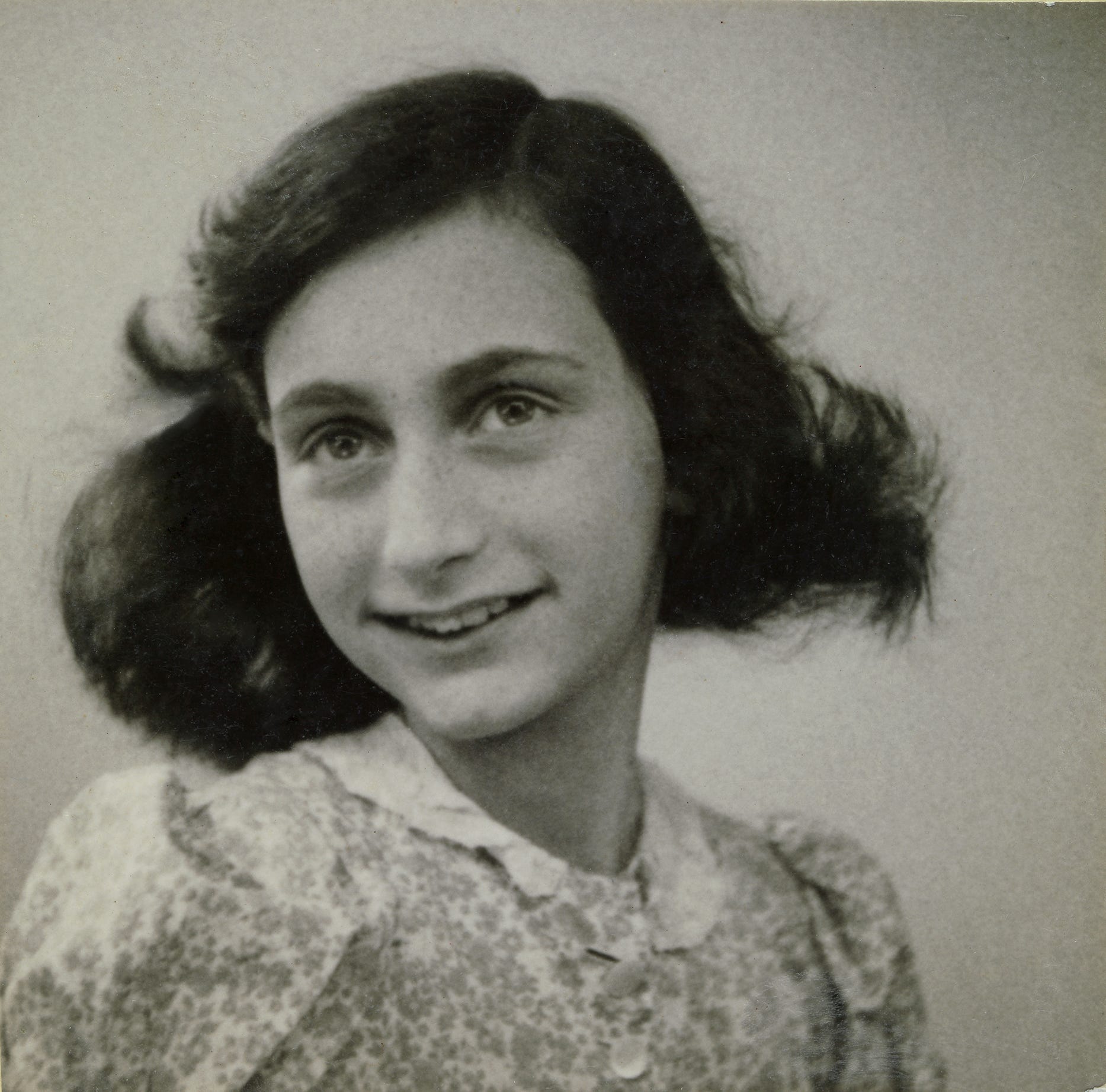
"Of the multitude who throughout history have spoken for human dignity in times of great suffering and loss, no voice is more compelling than that of Anne Frank." - President John F. Kennedy Anne Frank was born to a Jewish family in Frankfurt, Germany, in 1929. A few years later, her family moved to Amsterdam after the Nazis came to power in Germany. Then, in 1940, Germany invaded and took over the Netherlands. For two years, the family experienced many changes. The Nazis implemented anti-Jewish laws that took away many rights. As Anne would write in her diary on June 20, 1942, "After May 1940 the good times were few and far between: first there was the war, then the capitulation and then the arrival of the Germans, which is when the trouble started for the Jews. Our freedom was severely restricted by a series of anti-Jewish decrees: Jews were required to wear a yellow star: Jews were required to turn in their bicycles! Jews were forbidden to use street-cars! Jews were forbidden to ride in cars, even their own! Jews were required to do their shopping between 3 and 5 P.M.! Jews were required to frequent only Jewish-owned barbershops and beauty parlors! Jews were forbidden to be out on the streets between 8 P.M. and 6 A.M.! Jews were forbidden to attend theaters, movies or any other forms of entertainment; Jews were forbidden to use swimming pools, tennis courts, hockey fields or any other athletic fields; Jews were forbidden to go rowing; Jews were forbidden to take part in any athletic activity in public; Jews were forbidden to sit in their gardens or those of their friends after 8 P.M.; Jews were forbidden to visit Christians in their homes; Jews were required to attend Jewish schools, etc. You couldn't do this and you couldn't do that, but life went on." Throughout this time, Anne's father, Otto, tried to secure a visa to move the family to the U.S. Unable to do so, he began preparing a three-story space above his office as a hiding place. He spent a year stocking the annex with all the necessities. In 1942, when the family learned that Anne's older sister was to be deported to a work camp, they went into hiding. Anne, who loved to write and dreamt of being a journalist or writer, was given a diary for her thirteenth birthday. In it, she wrote about life in hiding, growing up, being in love, of everything happening. In one of her last entries, written on July 15, 1944, Anne wrote, "It's difficult in times like these: ideals, dreams and cherished hopes rise within us, only to be crushed by grim reality. It's a wonder I haven't abandoned all my ideals, they seem so absurd and impractical. Yet I cling to them because I still believe, in spite of everything, that people are truly good at heart." A few weeks later, someone betrayed Anne and her family. They were arrested and sent to concentration camps. Anne and her sister Margot were eventually transferred to the Bergen-Belsen concentration camp, where they both died within days of each other in early March 1945, likely as a result of typhus. Anne was just 15 years old. After the war, Anne's father, the sole family survivor, returned to Amsterdam and was given Anne's diary by Miep Gies, one of the Dutch citizens who had helped hide the Frank family and had discovered the diary after their arrest. Deeply moved by Anne's writings, Otto fulfilled his daughter's wish of becoming a writer. He worked tirelessly to have her diary published. Anne's diary, "The Diary of a Young Girl," was published in Dutch in 1947. Over the years, it has been translated into many languages and has become widely read. Though Anne never had the chance to become a journalist, her words live on through the diary and continue to influence many worldwide. Historical Snapshots is a reader-supported publication. Become a paid subscriber to receive long-form stories and help support history storytelling. Sources: * “Anne Frank.” Wikipedia, Wikimedia Foundation, https://en.wikipedia.org/wiki/Anne_Frank * Frank, Anne. The Diary of a Young Girl. United Kingdom, Penguin, 1997. * Hasian, Marouf. “Anne Frank, Bergen-Belsen, and the Polysemic Nature of Holocaust Memories.” Rhetoric and Public Affairs, vol. 4, no. 3, 2001, pp. 349–74. JSTOR, http://www.jstor.org/stable/41940587. Accessed 1 May 2024. * "Passport photo Anne Frank, May 1942." Photo collection Anne Frank House, Amsterdam. https://www.flickr.com/photos/collection_annefrankhouse/31927397212 / Wikimedia Commons This is a public episode. If you'd like to discuss this with other subscribers or get access to bonus episodes, visit historicalsnapshots.substack.com/subscribe
Embed this episode
Ready to play
Anne Frank
No transcript for this episode yet
Similar Episodes
No similar episodes found.