
EPISODE · Jun 29, 2020 · 54 MIN
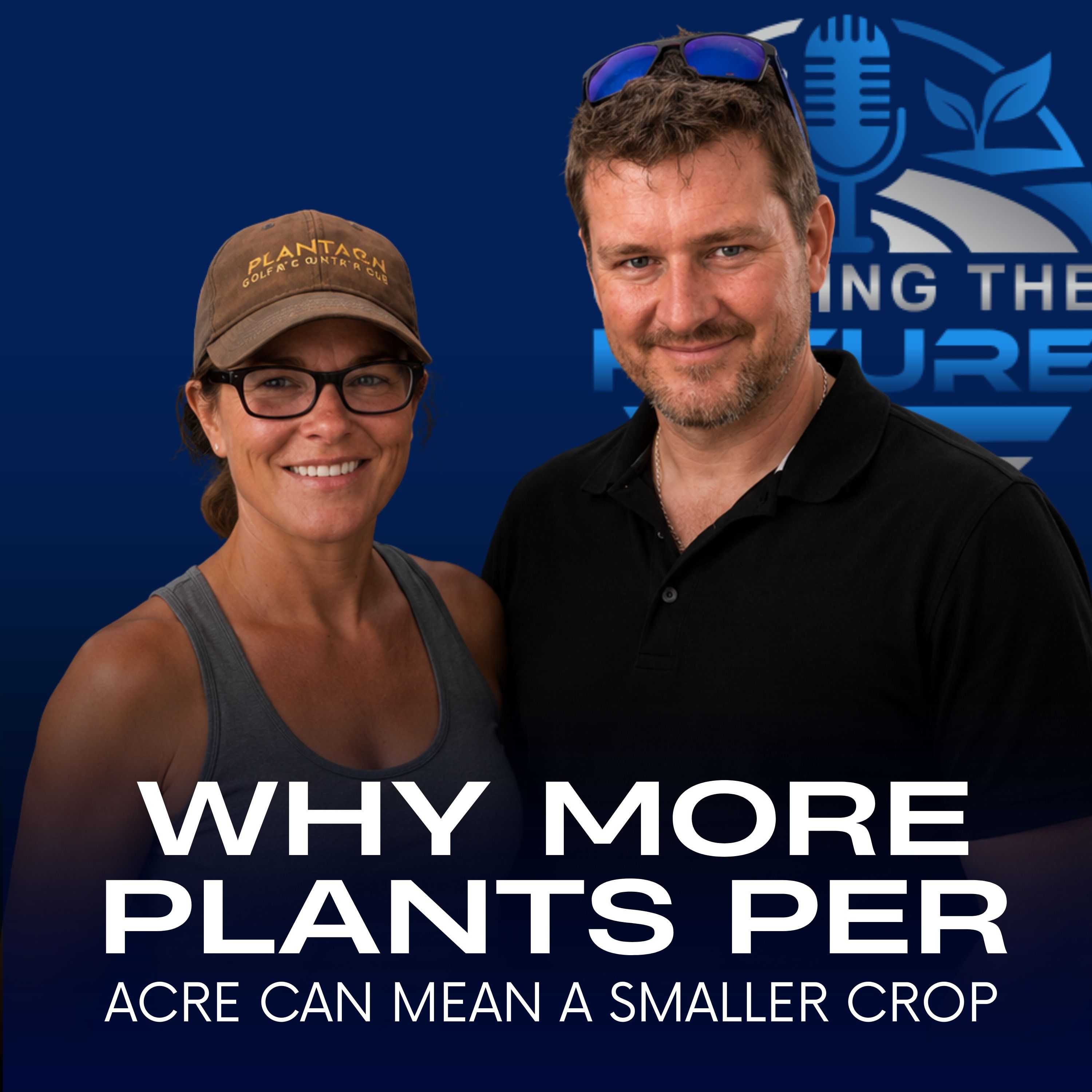
Why More Plants Per Acre Can Mean a Smaller Crop
from Growing the Future · host Brunel Sabourin, Jennifer Sabourin, Dan Aberhart
Brunel and Jen Sabourin started Antara Agronomy because they were tired of telling growers "it depends." Farming heavy Red River Valley clay themselves, they built an independent agronomy practice around one rule: no recommendation without a real, local, replicated trial behind it. Their on-farm research network runs 15 to 20 producers a year, each hosting two field-scale trials, pooled into results from 40 trials across a 20 mile radius. What comes out of that data cuts against a lot of default habits. In dry years, a higher seeding rate can actually shrink the crop because of plant to plant competition for limited moisture. Fungicide only earns its cost when there's actual disease pressure in the field, not because the calendar says spray season is here. What's Inside Why higher seeding rates can produce a smaller crop in a dry year, and what that means for how you set populations at seeding How Antara's on-farm research network turns two trials on your own land into results pooled from 40 trials across the region Why a minimum of 4, ideally 6, replicated strips is the difference between real data and a guess The case for skipping a budgeted fungicide pass when there's no disease pressure in the field, and what that actually saves What 200 feet of glacial lake bed clay means for drainage, nutrient availability, and every agronomic decision in the Red River Valley Why the Sabourins launched the Red River Soil Health Summit in heavy clay country where cover crops were considered close to impossibleConnect with Growing the Future Website: growingthefuture.ca YouTube: Growing the Future Instagram: @growingthefuturepodcast LinkedIn: Growing the Future Register for the Convergence Conference at convergence.ag and stay updated by subscribing to the Growing the Future Podcast at growingthefuturepodcast.ca.
Embed this episode
What this episode covers
Dan speaks with Bru and Jenn of Antara Agronomy. Bru the big picture thinker, and Jenn as the one who get's things done, their family business aims to marry the economics with the agronomics, finding ways to provide better crops to farmers in the Red River Valley.
Ready to play
Why More Plants Per Acre Can Mean a Smaller Crop
No transcript for this episode yet
Similar Episodes
No similar episodes found.
Similar Podcasts
No similar podcasts found.