
EPISODE · Feb 20, 2026 · 34 MIN
Antarctica's February 2026 Ring of Fire Annular Solar Eclipse
from The World Between Us · host Norse Studio
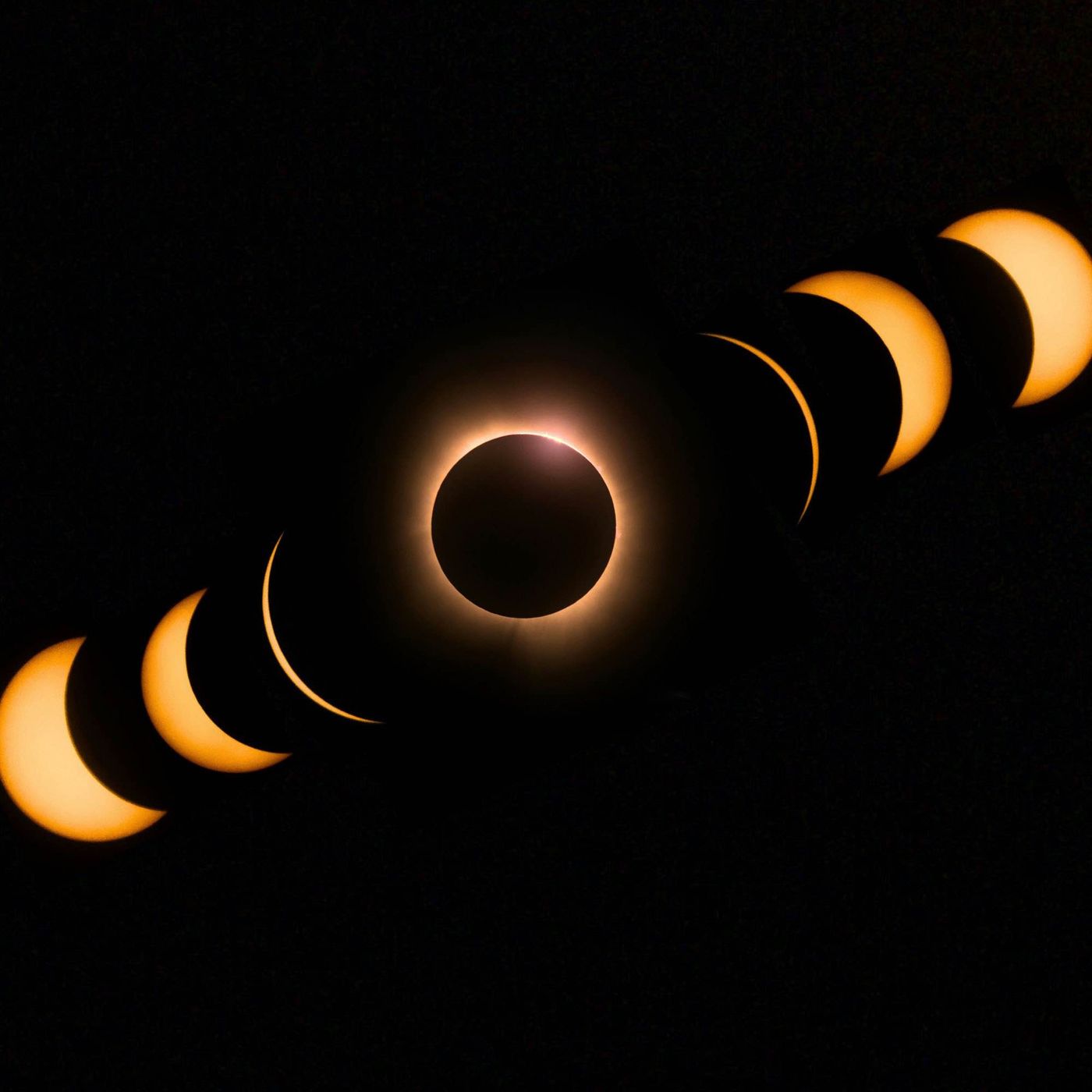
The year 2026 is set to be a "golden age" for celestial observers, featuring two solar eclipses and two lunar eclipses. The primary highlight is the total solar eclipse on August 12, 2026, which will be the first of its kind visible in Iceland since 1954 and the first in continental Europe since 2006.The Total Solar Eclipse: August 12, 2026This event will trace a path of totality across Russia, Greenland, Iceland, Spain, and a small portion of Portugal.• Iceland: The west coast of Iceland will be a premier viewing location. Reykjavik will experience approximately 1 minute and 1 second of totality starting at 5:48 PM GMT. The longest duration of totality on land will occur at Látrabjarg, leading to significant tourism preparations in this remote area.• Spain: The eclipse will pass over northern Spain and the Balearic Islands shortly before sunset. Major cities in the path include A Coruña, Bilbao, Zaragoza, Valencia, and Palma.• Sea Expeditions: The waters around Iceland and Greenland will be busy with at least 13 cruise and expedition ships designed to maximize viewing time and find clear skies, with some vessels even heading to the remote Scoresby Sund in Greenland.The Annular Solar Eclipse: February 17, 2026The first solar event of the year is an annular eclipse, often called a "ring of fire". This occurs when the Moon is too far from Earth to completely cover the Sun, leaving a glowing ring of sunlight visible.• Visibility: This striking effect will be visible almost exclusively from Antarctica.• Partial Views: Residents in the southern tips of South America (Argentina, Chile) and parts of Africa (South Africa, Mozambique, Madagascar) will be able to see a partial eclipse.Lunar Eclipses of 2026Solar and lunar eclipses typically come in pairs.1. March 3, 2026: A total lunar eclipse will occur, frequently referred to as a "Blood Moon" due to the red tint the Moon takes on while in Earth's shadow. It will be visible across North America, Asia, Australia, and the Pacific.2. August 28, 2026: A partial lunar eclipse will follow the total solar eclipse by approximately two weeks, visible over North and South America, Europe, and Africa.Fascinating Animal BehaviorScientific studies, such as one conducted at Riverbanks Zoo during the 2017 eclipse, show that roughly 75% of animal species exhibit behavioral changes during totality.• Evening Responses: The most common reaction is the commencement of nighttime routines. Gorillas, elephants, and various birds were observed returning to their dens or roosts.• Anxiety: Some animals, including giraffes, baboons, and flamingos, displayed signs of apparent anxiety, such as huddling, pacing, or coordinated running.• Novel Behavior: Interestingly, Galapagos tortoises exhibited unique behaviors like congregating and gazing skyward just before totality.Observation and Safety Tips• Eye Protection: It is never safe to look directly at a partial or annular eclipse without certified ISO 12312-2 compliant solar glasses. Only during the few minutes of totality (when the Sun is completely blocked) is it safe to remove protection.• Photography: To capture the eclipse, use a solar filter on camera lenses at all times except during totality. For professional results, a tracking mount is recommended to keep the Sun centered as it moves across the sky.• Weather Planning: Climatology suggests that Spain and Mallorca offer the highest probability of clear skies, while the Arctic regions are historically prone to cloud cover.AI tools were used in the translation. Hosted on Acast. See acast.com/privacy for more information.Become a supporter of this podcast: https://www.spreaker.com/podcast/the-world-between-us--6886561/support.
Embed this episode
NOW PLAYING
Antarctica's February 2026 Ring of Fire Annular Solar Eclipse
No transcript for this episode yet
Similar Episodes
No similar episodes found.
Similar Podcasts
No similar podcasts found.