
EPISODE · Sep 5, 2026 · 43 MIN
Antigonight still going strong despite budget cuts
from Let's Talk Antigonish Podcast · host Let's Talk Antigonish
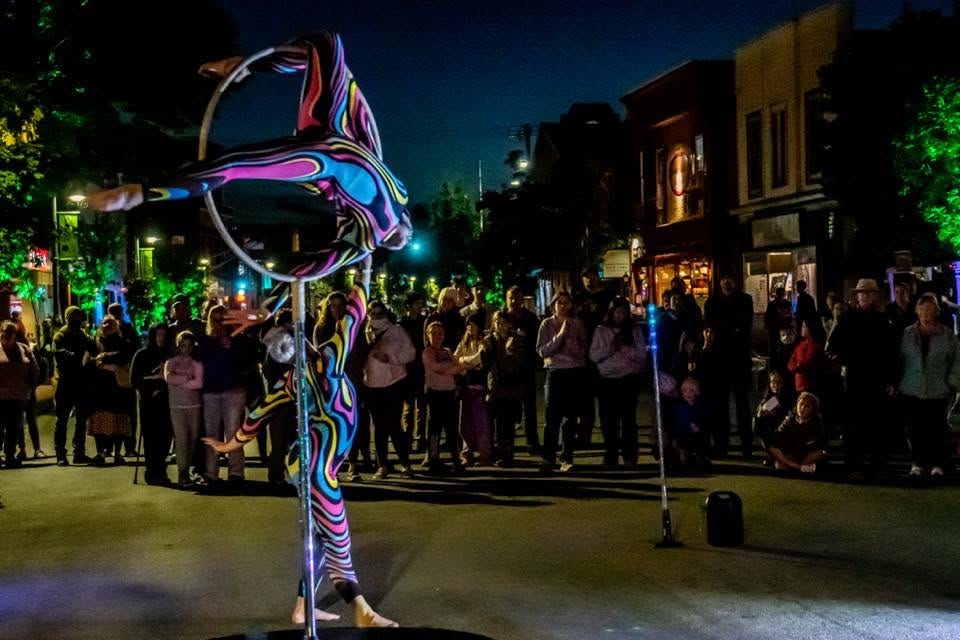
Justin sat down with Kyra Lambert (Artistic Director and Curator of Antigonight Arts After Dark Festival) and Abby Fraser (Festival Coordinator) to discuss this year’s Antigonight (taking place on September 19th), and what will be changing thanks to the provincial budget cuts to the arts. What is Antigonight?First, a primer for anyone who hasn’t been: Antigonight Arts After Dark is a free, fully accessible public arts festival that happens after dark in downtown Antigonish. No tickets. No mandatory stay time. No pressure. You walk around, you encounter both large- and small-scale art installations — light displays, participatory crafts, performance pieces, shadows and movement — and you engage with them however you like, or you don’t, and you move on to the next one. Some people come away having made something themselves. All of it is free. Quite a lot of it is genuinely surprising in the best way.The nighttime setting is part of the design, not just the name. Darkness invites artists who play with light and shadow and movement in ways that a gallery setting doesn’t permit. A lot of the pieces presented at Antigonight are first public showings — artists taking a shot with work that’s new or ambitious. That’s also by design.Last year the festival drew nearly 3,000 visitors across the event. This year the festival is concentrating itself around the public library, Creighton Lane, and back toward the Piper’s Pub parking lot — a more compact footprint than in some previous years, which is partly about creating a denser energy and more buzz.16 Years, Down to One NightAntigonight is in its sixteenth year, which Kyra describes as genuinely impressive and credits in large part to Fenn Martin (friend of the podcast) whom she calls a visionary, a person of enormous energy and chutzpah. It was Fenn who stewarded the festival, under the umbrella of Antigonish Culture Alive, into what it has become: a festival that employs artists and arts workers and brings new ideas into town. The festival has classically run for two nights. This year it runs for one.The reason is money. Since 2024, the operational budget for Antigonight has been cut in half; a direct consequence of Nova Scotia’s provincial arts funding cuts. Kyra says that saying it sucks is the understatement of the year. The team has been using grant funding to the last nickel, as they always do, and this year they predict they will still go into the red simply to properly pay their artists, vendors, and staff. They have turned away artists with genuinely good projects—work that would have enriched the community—because they couldn’t afford to take it on. The community table-setting first night, which functioned as a welcoming, low-pressure entry point into the festival for people who find arts events intimidating, is gone this year for the same reason.Paying artists is the non-negotiable. The festival’s entire philosophical foundation is that artists deserve to be properly compensated for their work, and Kyra is clear: that is not on the table as a place to cut. So they cut elsewhere, and this year that means one night instead of two.This Year’s Theme and ArtistsThe theme for the 2026 festival is Turning Tides. Kyra is careful about how she frames it: the prompt she sent to artists was to radically imagine what it would look like if the tides turned for the better. Not a lament, a provocation. What do you need in a better world? What can we imagine together?The lineup this year leans local. The Willows Bend Collective—a group of willow weavers and practitioners of regenerative coppice agriculture—will be doing live weaving tutorials where festival-goers can make their own pieces using willow branches cut and grown right here in Antigonish, alongside large-scale installations of the team’s own collaborative work. Michelle Sylliboy returns, described simply as a local legend. And Diane Langevin, who is completing her MFA through NSCAD, brings a series Kyra first saw at the Halifax library system: a Mi’kmaq-rooted body of work about sea creatures that serve as portents of things to come, which Kyra says maps onto the Turning Tides theme with almost uncanny elegance.The Funding Reality, HonestlyThis is the conversation the episode has really been building toward. Antigonish Culture Alive, like arts organizations across rural and coastal Nova Scotia, has been pushed toward the business community and individual donors to make up the shortfall. The problem, as Kyra points out, is that every other arts organization is doing exactly the same thing simultaneously, which means local businesses are receiving more funding asks than ever before at exactly the moment when their own revenues are under pressure from broader economic conditions. The well is being drawn from by more people just as the water level drops.Municipal funding bodies are under their own strain. Kyra says plainly that she cannot in good conscience tell the town to fund Antigonight when that money could go to housing or food support. She believes that arts are a base need. She also believes people need roofs and food. Working out how to navigate that tension when everyone is sharing the same small pot of money is the problem she can’t solve from where she sits.The deeper point she makes is about what gets lost when rural and coastal arts programming is underfunded. The things Nova Scotia points to with pride—the culture, the music, the identity—largely didn’t originate in Halifax. The Rankins, she notes by way of example. The Antigonish Movement ConnectionOne of the more striking moments in the conversation comes when Kyra talks about how the team has been thinking about their situation in terms of the Antigonish Movement itself. She recently watched a National Film Board documentary about Moses Coady and Father Jimmy Tompkins, and one line from it stuck: You are poor enough to need it, and you are smart enough to do it. She’s applied it directly to the arts community’s current predicament. The funding isn’t coming from the province in the way it used to. The answer isn’t to wait for it. It’s to organize, to build the thing from the ground up, to pool what’s available and use it well.One such examples is the MOU recently signed on closing night of Festival Antigonish this past weekend. An agreement between Antigonish Culture Alive and Festival Antigonish to collaborate on the long-discussed idea of a dedicated arts centre for the town. Kyra calls this deeply futurist. It’s not government-led. It’s not guaranteed. But it is tangible evidence that the arts organizations in Antigonish are thinking seriously about how to be interdependent, how to build something lasting, how to function even without the provincial support they’ve been relying on. Hope, as she says, is not a plan. On Paying Artists and the Union That Doesn’t ExistOne of the deeper discussions in the episode is about free labor in the arts — a thing that has always existed, that everyone in the room has participated in as both provider and recipient, and that is now getting worse. Kyra makes a distinction that matters: Antigonight pays artists properly, full stop, even going into the red to do it. But she worries deeply about what happens when other organizations, stripped of their grant funding, start asking artists to work for less or for nothing. Her dream is a union for arts workers. She knows how complicated it would be across different mediums with different material costs and different labor requirements. She knows “union” is a word some people flinch at. But the protections ACTRA has built for screen performers, as well as EQUITY and SAG and others, are exactly the model: collective bargaining that establishes that your work has value and that you cannot be asked to give it away indefinitely. Until something like that exists for the broader arts community, artists are on their own.She also cites a statistic from a book by Nova Scotia’s own Kate Beaton: if your household income as a child was over $100,000, you are ten times more likely to become a professional artist than if your household income was $50,000. What gets produced as culture, what gets shared as a common identity, is filtered through class and money long before anyone makes a conscious curatorial decision. Part of what Antigonight specifically tries to do is resist that — deliberately deprioritizing MFA and BFA credentials in its artist selection. Is the work good? Will people connect with it? Will it challenge something? That’s the question. The letters behind someone’s name are not.On AIJustin drops the subject of AI in toward the end. Kyra would like all of it to burn down—her precise words—and finds the idea of AI generating art not just philosophically wrong but politically incoherent. Art is the process of making it. Outsourcing that process to what she calls an environmental suck machine is, in her view, antithetical to what art is for. Abby agrees: if you’ve involved AI, it’s not art anymore — it’s scraped data, and it’s theft from the people whose actual work trained the model.The Antigonight application explicitly forbids AI use. You can call in your application, draw it, or present it in any alternative modality you choose. But you cannot populate it with AI. If you do, you’re out. That policy was not a difficult decision for the board.September 19th is fast approachingThe final message from both guests is filled with excitement for the upcoming festival: Antigonight happens September 19th in downtown Antigonish, and it is free, accessible, and family-friendly. The team is stubborn and talented and committed to making it happen regardless of what the budget looks like. If you’ve been before, come back. If you’ve never been, this is the year to start.If you want to support the festival: donate online. Volunteer on the night — setup, teardown, artist support, friendly face guiding people through the installations. Reach out via their website at this link.As Justin puts it at the close: the Festival may be smaller, but it’s still mighty. Kyra’s correction: mightier, even still.Thanks to Whidden Park Campground and Healing Arts Reconciling People (HARP): The People’s Press, Community Sponsors of the Let’s Talk Antigonish Podcast.Interested in becoming a sponsor? Email us at [email protected] Get full access to Let's Talk Antigonish at letstalkantigonish.substack.com/subscribe
Embed this episode
Ready to play
Antigonight still going strong despite budget cuts
No transcript for this episode yet
Similar Episodes
No similar episodes found.
Similar Podcasts
No similar podcasts found.