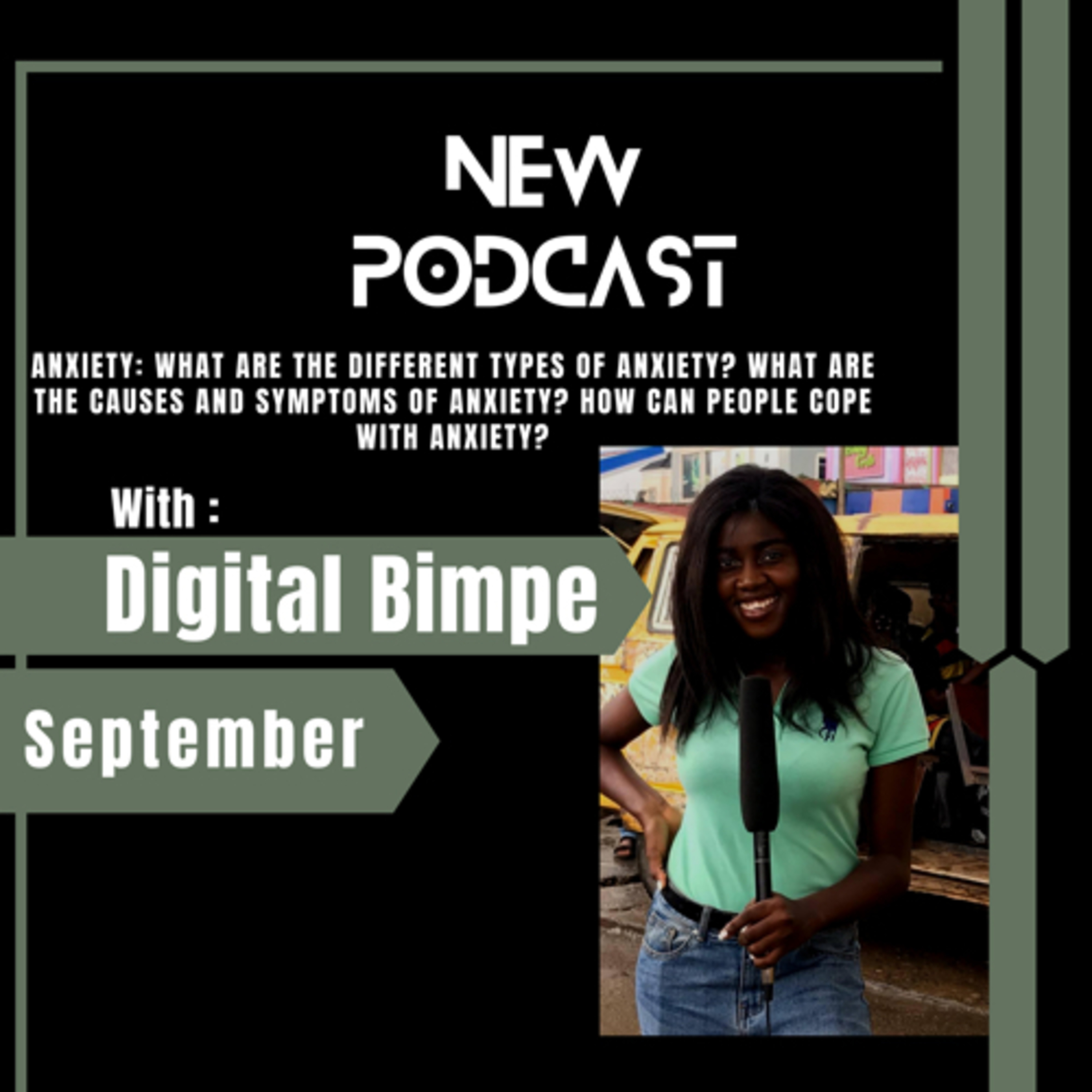
Anxiety: What are the different types of anxiety? - Digital Bimpe  episode artwork

EPISODE · Sep 23, 2023 · 16 MIN

Anxiety: What are the different types of anxiety? - Digital Bimpe

from Digital Bimpe Podcast & Tv · host Digital Bimpe

* Anxiety: What are the different types of anxiety? What are the causes and symptoms of anxiety? How can people cope with anxiety? Different types of anxiety: * Generalized anxiety disorder (GAD): GAD is characterized by excessive worry and anxiety about a variety of things, such as work, health, and relationships. People with GAD may have difficulty controlling their worries, even when there is no real threat. * Panic disorder: Panic disorder is characterized by recurrent and unexpected panic attacks. Panic attacks are sudden episodes of intense fear that come on quickly and reach their peak within minutes. People with panic disorder may worry about having future panic attacks, which can lead them to avoid situations where they might have a panic attack. * Social anxiety disorder (SAD): SAD is characterized by intense anxiety or fear of social situations. People with SAD may worry about being judged or evaluated by others, or they may fear that they will do something embarrassing. * Specific phobias: Specific phobias are intense fears of specific objects or situations, such as spiders, heights, or flying. People with specific phobias may go to great lengths to avoid their phobic object or situation. * Agoraphobia: Agoraphobia is characterized by fear of being in places or situations where escape might be difficult or embarrassing. People with agoraphobia may avoid going to places such as crowded stores, open spaces, or public transportation. Causes of anxiety: The exact cause of anxiety is not fully known, but it is thought to be caused by a combination of genetic and environmental factors. Some people may be more genetically predisposed to anxiety than others. Anxiety can also be triggered by stressful life events, such as the death of a loved one, job loss, or a traumatic experience. Symptoms of anxiety: Anxiety can cause a variety of physical and emotional symptoms, including: * Restlessness or feeling on edge * Feeling tense or wound-up * Increased heart rate * Breathing rapidly (hyperventilation) * Sweating * Trembling * Feeling weak or tired * Trouble concentrating or thinking about anything other than the present worry * Having trouble sleeping * Trouble controlling worry * Having the urge to avoid things that trigger anxiety How to cope with anxiety: There are a number of things that people can do to cope with anxiety, including: * Exercise: Exercise is a great way to reduce stress and anxiety. Aim for at least 30 minutes of moderate-intensity exercise most days of the week. * Relaxation techniques: Relaxation techniques such as deep breathing, meditation, and yoga can help to calm the mind and body. * Cognitive-behavioral therapy (CBT): CBT is a type of therapy that can help people to identify and change negative thoughts and behaviors that contribute to their anxiety. * Medication: Medication can be helpful in some cases of anxiety. There are a number of different medications available, and your doctor can help you to choose the right one for you. If you are struggling with anxiety, it is important to seek professional help. A therapist can teach you coping skills and help you to develop a treatment plan that is right for you. Sources info 1. www.colorado-disability-lawyer.com/disabling-conditions/mental-health-disorders/ Website Link to Contact Me for Advert & Collaboration ⬇️ https://digitalbimpe.disha.page/

* Anxiety: What are the different types of anxiety? What are the causes and symptoms of anxiety? How can people cope with anxiety? Different types of anxiety: * Generalized anxiety disorder (GAD): GAD is characterized by excessive worry and anxiety about a variety of things, such as work, health, and relationships. People with GAD may have difficulty controlling their worries, even when there is no real threat. * Panic disorder: Panic disorder is characterized by recurrent and unexpected panic attacks. Panic attacks are sudden episodes of intense fear that come on quickly and reach their peak within minutes. People with panic disorder may worry about having future panic attacks, which can lead them to avoid situations where they might have a panic attack. * Social anxiety disorder (SAD): SAD is characterized by intense anxiety or fear of social situations. People with SAD may worry about being judged or evaluated by others, or they may fear that they will do something embarrassing. * Specific phobias: Specific phobias are intense fears of specific objects or situations, such as spiders, heights, or flying. People with specific phobias may go to great lengths to avoid their phobic object or situation. * Agoraphobia: Agoraphobia is characterized by fear of being in places or situations where escape might be difficult or embarrassing. People with agoraphobia may avoid going to places such as crowded stores, open spaces, or public transportation. Causes of anxiety: The exact cause of anxiety is not fully known, but it is thought to be caused by a combination of genetic and environmental factors. Some people may be more genetically predisposed to anxiety than others. Anxiety can also be triggered by stressful life events, such as the death of a loved one, job loss, or a traumatic experience. Symptoms of anxiety: Anxiety can cause a variety of physical and emotional symptoms, including: * Restlessness or feeling on edge * Feeling tense or wound-up * Increased heart rate * Breathing rapidly (hyperventilation) * Sweating * Trembling * Feeling weak or tired * Trouble concentrating or thinking about anything other than the present worry * Having trouble sleeping * Trouble controlling worry * Having the urge to avoid things that trigger anxiety How to cope with anxiety: There are a number of things that people can do to cope with anxiety, including: * Exercise: Exercise is a great way to reduce stress and anxiety. Aim for at least 30 minutes of moderate-intensity exercise most days of the week. * Relaxation techniques: Relaxation techniques such as deep breathing, meditation, and yoga can help to calm the mind and body. * Cognitive-behavioral therapy (CBT): CBT is a type of therapy that can help people to identify and change negative thoughts and behaviors that contribute to their anxiety. * Medication: Medication can be helpful in some cases of anxiety. There are a number of different medications available, and your doctor can help you to choose the right one for you. If you are struggling with anxiety, it is important to seek professional help. A therapist can teach you coping skills and help you to develop a treatment plan that is right for you. Sources info 1. www.colorado-disability-lawyer.com/disabling-conditions/mental-health-disorders/ Website Link to Contact Me for Advert & Collaboration ⬇️ https://digitalbimpe.disha.page/

NOW PLAYING

Anxiety: What are the different types of anxiety? - Digital Bimpe

0:00 16:12

No transcript for this episode yet

We transcribe on demand. Request one and we'll notify you when it's ready — usually under 10 minutes.

That Hoarder: Overcome Compulsive Hoarding That Hoarder Hoarding disorder is stigmatised and people who hoard feel vast amounts of shame. This podcast began life as an audio diary, an anonymous outlet for somebody with this weird condition. That Hoarder speaks about her experiences living with compulsive hoarding, she interviews therapists, academics, researchers, children of hoarders, professional organisers and influencers, and she shares insight and tips for others with the problem. Listened to by people who hoard as well as those who love them and those who work with them, Overcome Compulsive Hoarding with That Hoarder aims to shatter the stigma, share the truth and speak openly and honestly to improve lives. The Small Business Startup School – Business Notes | Financial Literacy | Retail Psychology – For Professionals & Entrepreneurs The Small Business Startup School Inc. Starting or buying a small business? While personal circumstances may vary, business patterns remain timeless. On The Small Business Startup School, we explore strategies, insights, and practical solutions to help entrepreneurs confidently navigate their journey.Hosted by Ola Williams—a retail entrepreneur, fintech founder, and financial coach with over two decades of experience—this podcast marries financial awareness and retail psychology with optimism to deliver actionable takeaways.Join us to learn, grow, and connect as we uncover the keys to business success.Let’s continue to learn together and be encouraged to keep on connecting! DIOSA. Carolina Sanper This podcast is a sacred space created by Carolina Sanper where you connect with your inner wisdom and embody your magnetic feminine power.It is the realization that the mystical realm is where you plant the seeds of your desired reality.It is a portal to your true essence: awareness, presence, and receiving with ease. Welcome home, DIOSA. 🖤 XXX Tech by SOVRYN Dr. Brian Sovryn The crossroads between technology, sensuality, and metaphysics - and the longest running anarchist podcast in the world! Brought to you by Dr. Brian Sovryn.

Frequently Asked Questions

How long is this episode of Digital Bimpe Podcast & Tv?

This episode is 16 minutes long.

When was this Digital Bimpe Podcast & Tv episode published?

This episode was published on September 23, 2023.

What is this episode about?

* Anxiety: What are the different types of anxiety? What are the causes and symptoms of anxiety? How can people cope with anxiety? Different types of anxiety: * Generalized anxiety disorder (GAD): GAD is characterized by excessive worry and...

Can I download this Digital Bimpe Podcast & Tv episode?

Yes, you can download this episode by clicking the download button on the episode player, or subscribe to the podcast in your preferred podcast app for automatic downloads.
URL copied to clipboard!