
EPISODE · Jun 16, 2025 · 33 MIN
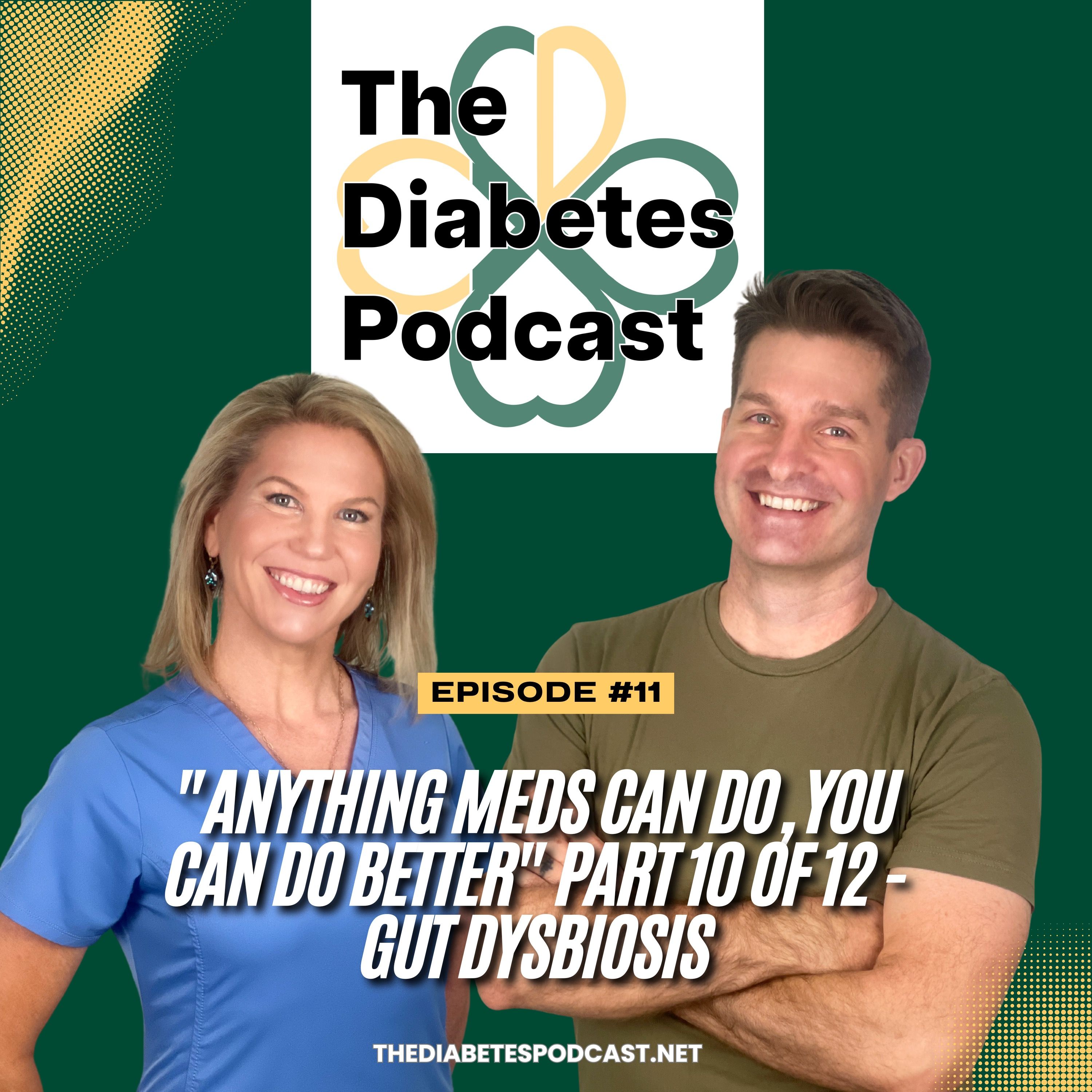
"Anything Meds Can Do, You Can Do Better" Part 10 of 12 - Gut Dysbiosis
from The Diabetes Podcast® · host Empowered Diabetes
Gut Dysbiosis and Type 2 Diabetes: A Simple Guide to a Happy GutLove the podcast but hate taking notes? The Diabetes Podcast Blog compresses every episode into a bulleted, 10 minute read AND has the podcast embedded so you can listen as you read along! Check it out at https://empowereddiabetes.com/diabetes-podcast-blogRichie and Amber break down Gut Dysbiosis, why your gut bugs matter for insulin resistance, and how simple foods can help. Learn easy wins, fun “Healthy Gut Bingo,” and what to eat this week.Episode summaryType 2 diabetes is driven by insulin resistance. One big, hidden driver is your gut. In this episode, Richie and Amber explain Gut Dysbiosis in plain words. We talk about “good bugs,” “bad bugs,” leaky gut, and what that means for blood sugar. You’ll learn how your gut bacteria make short‑chain fatty acids (SCFAs) that lower inflammation and help insulin work better. You’ll also get a grocery list to feed your good bugs.We keep it real, simple, and a little funny. Yes, we even talk about fecal transplants. Yes, Richie asks about being a “donor.” And yes—leeks prevent leaks.What we coverWhat a healthy gut looks likeWhat Gut Dysbiosis is and why it mattersLeaky gut, inflammation, and insulin resistanceGLP‑1, SCFAs, and your gut liningHow meds like metformin and GLP‑1 RAs fit inFoods that feed the “good guys”Why food diversity is keyA simple weekly plan you can start todayKey takeawaysGut Dysbiosis = an imbalance of gut bacteria. Too few “good guys,” too many “troublemakers.”A healthy gut makes SCFAs (like butyrate) that calm inflammation, protect the gut lining, and help insulin work.Leaky gut lets toxins (like LPS) into the blood. That sparks chronic inflammation and blocks insulin signals.Dysbiosis can lower GLP‑1, raise insulin resistance, push fat storage, and worsen blood sugar.Food is powerful. Feed your good bugs with fiber, polyphenols, resistant starch, and fermented foods.Diversity matters. More plant variety = more microbe diversity = better gut health.Move your body daily. Activity also helps a healthy microbiome.Healthy gut 101Your gut is home to trillions of microbes. They help with digestion, immunity, and metabolism.Good bugs digest fiber and make SCFAs: butyrate, acetate, propionate.These SCFAs reduce inflammation, support the gut barrier, and improve insulin sensitivity.Certain stars:Akkermansia muciniphila: supports the gut lining (barrier).Roseburia intestinalis: makes butyrate; helps glucose uptake.Some Bacteroidetes species are linked to leanness and better insulin sensitivity.What is Gut Dysbiosis?An imbalance of gut microbes. Not enough beneficial ones. Too many harmful ones.Drivers: poor diet, low fiber, low plant variety, high added sugar, frequent antibiotics, chronic stress, low activity.Effects:Leaky gut: toxins slip into blood.Inflammation rises and blocks insulin signaling.GLP‑1 drops. Blood sugar rises. Fat storage goes up.Over time, this can tie into kidney, nerve, and vessel issues.Leaky gut, simplyYour gut lining should be tight. It should keep gut stuff in the gut.With leaky gut, tiny gaps open. Toxins like LPS get into your blood.Your immune system reacts. Inflammation grows.Inflammation makes insulin’s job harder. That pushes insulin resistance.Meds and tools we mentionMetformin: May help the gut microbiota balance. It can still cause tummy issues for some people.GLP‑1 receptor agonists: Mimic the hormone that dysbiosis can lower. They can help insulin work and slow stomach emptying.Antibiotics: Can wipe out good and bad bugs. Use only when needed.Tests and transplants:Stool tests exist, but use and access vary.Fecal microbiota transplant (FMT) can help some gut conditions. It is not a DIY side hustle, Richie.Eat to beat Gut DysbiosisWe want foods that feed the right microbes, make SCFAs, and protect the gut lining. Aim for plants, fiber, polyphenols, resistant starch, and fermented foods.Polyphenol‑rich foods (support Akkermansia and insulin sensitivity)CranberriesPomegranateRed/purple grapesGreen teaBlueberriesCocoa powder or dark cocoa (not candy bars)Inulin‑rich prebiotics (gut barrier support)GarlicOnionsAsparagusLeeks (“leeks prevent leaks!”)ArtichokesResistant starch and beta‑glucans (support Roseburia; more butyrate)Potatoes and sweet potatoesGreen bananas (very little to no yellow)Steel‑cut oatsOld‑fashioned oatsBarleyFermented foods (boost Lactobacillus strains and diversity)Sauerkraut (L. plantarum)Kimchi (L. plantarum)Kefir (L. casei)Yogurt with live cultures (watch added sugar)Sourdough (L. fermentum)Fermented olives (harder to find, but a plus)Omega‑3 plant sources (support a calm immune system)Chia seedsFlax seedsWalnutsDiverse fiber sources (help Bacteroides fragilis and balance the immune system)Many colors of fruits and veggiesMany kinds of whole grains and beansDark leafy greens (kale, turnip greens)Why food diversity mattersEating the same thing every day feeds only a few bugs. Different plants feed different microbes. More plant variety = more microbe diversity. That brings:Better gut liningMore SCFAsLower inflammationBetter insulin sensitivityTip: Think “dietary bingo.” Try to reach 30 different plants in a week. That includes fruits, veggies, beans, whole grains, nuts, seeds, herbs, and spices.Start here: 7‑day “Healthy Gut Bingo” mini‑planPick 1–2 ideas per day. Mix and match. Keep it simple.Day 1Breakfast: Plain yogurt + blueberries + ground flaxAdd green teaDay 2Lunch: Barley or steel‑cut oats salad with cherry tomatoes, onions, and parsleySide: SauerkrautDay 3Snack: Green banana slices with peanut butterDinner: Roasted sweet potatoes + garlic and leeksDay 4Breakfast: Overnight oats with cocoa powder and strawberriesDrink: Water or unsweet teaDay 5Lunch: Kale salad with walnuts, grapes, and olive oilSide: KimchiDay 6Dinner: Bean chili with onions, garlic, and spicesDessert: Pomegranate arilsDay 7Breakfast: Kefir smoothie with cranberriesWalk: 20–30 minutes after a mealMove daily. Even a short walk after meals helps.Fun lines we loved“Leeks prevent leaks.”“Healthy Gut Bingo” is live at TheDiabetesPodcast.net.Richie asks about becoming a fecal transplant donor. Amber is…not sold.Timestamps00:00 — Welcome and why the gut matters in type 2 diabetes01:30 — Healthy gut basics and SCFAs03:00 — GLP‑1, insulin sensitivity, and the gut lining04:30 — What is Gut Dysbiosis?05:30 — Leaky gut and inflammation explained09:30 — Why this adds up over years10:30 — Dysbiosis, GLP‑1 drop, and insulin resistance11:00 — Metformin, GLP‑1 RAs, and antibiotics13:00 — Prebiotics, probiotics, and food vs. pills16:00 — Firmicutes, Bacteroidetes, and what to encourage18:00 — What to eat: polyphenols, inulin, resistant starch21:00 — Fermented foods and sugar cautions24:00 — Diverse fibers, grains, and plant variety29:00 — Simple action steps and movement30:00 — Healthy Gut Bingo + free downloadNotes and mentions2022 research suggests Dysbiosis contributes to insulin resistance and ties into diabetes complications (kidney, nerve, and vascular).Metformin may help gut microbiota balance; it can still cause GI side effects.GLP‑1 receptor agonists help mimic hormone signals that can be low in Dysbiosis.Antibiotics can wipe out good and bad bugs.Try “Healthy Gut Bingo”Download the free Healthy Gut Bingo at here. Aim to hit more plant squares each week. If you got 10 last week, shoot for 11 this week. Small steps win. Disclaimer:The information in this podcast is for educational and informational purposes only. It is not medical advice, diagnosis, or treatment, and it does not replace a one-on-one relationship with your physician or qualified healthcare professional. Always talk with your doctor, pharmacist, or care team before starting, stopping, or changing any medication, supplement, exercise plan, or nutrition plan—especially if you have diabetes, prediabetes, heart, liver, or kidney conditions, or take prescription drugs like metformin or insulin.Results vary from person to person. Examples, statistics, or studies are shared to educate, not to promise outcomes. Any discussion of medications, dosing, or side effects is general in nature and may not be appropriate for your specific situation. Do not ignore professional medical advice or delay seeking it because of something you read or heard here. If you think you are experiencing an emergency or severe side effects (such as persistent vomiting, severe diarrhea, signs of dehydration, allergic reaction, or symptoms of lactic acidosis), call your local emergency number or seek urgent care right away.We strive for accuracy, but health information changes over time. We make no guarantees regarding completeness, timeliness, or suitability of the content and assume no liability for actions taken or not taken based on this material. Use of this content is at your own risk.Links or references to third-party resources are provided for convenience and do not constitute endorsement. By reading, listening, or using this information, you agree to these terms and understand that you are responsible for your own health decisions in partnership with your licensed healthcare provider.
Embed this episode
What this episode covers
Discover how Gut Dysbiosis drives insulin resistance and type 2 diabetes—and how to fix it with simple foods and daily moves. In this lively episode, Amber Wilhoit (RD/LD, CDCES) and Richie Wilhoit (TRS-C) break down the gut microbiome, leaky gut, LPS toxins, SCFAs (butyrate, acetate, propionate), and GLP-1 in plain language, then show you how plant diversity, polyphenols, inulin, resistant starch, and fermented foods like sauerkraut, kimchi, kefir, and sourdough can restore your gut barrier, lower inflammation, and improve blood sugar. You’ll get practical grocery swaps, “leeks prevent leaks” tips, and a free Healthy Gut Bingo at TheDiabetesPodcast.net, plus where metformin, GLP-1 RAs, antibiotics, stool tests, and even FMT fit into the story—so you can build a happier gut, better insulin sensitivity, and a stronger path to remission.
NOW PLAYING
"Anything Meds Can Do, You Can Do Better" Part 10 of 12 - Gut Dysbiosis
No transcript for this episode yet
Similar Episodes
No similar episodes found.
Similar Podcasts
No similar podcasts found.