
EPISODE · Feb 27, 2026 · 25 MIN
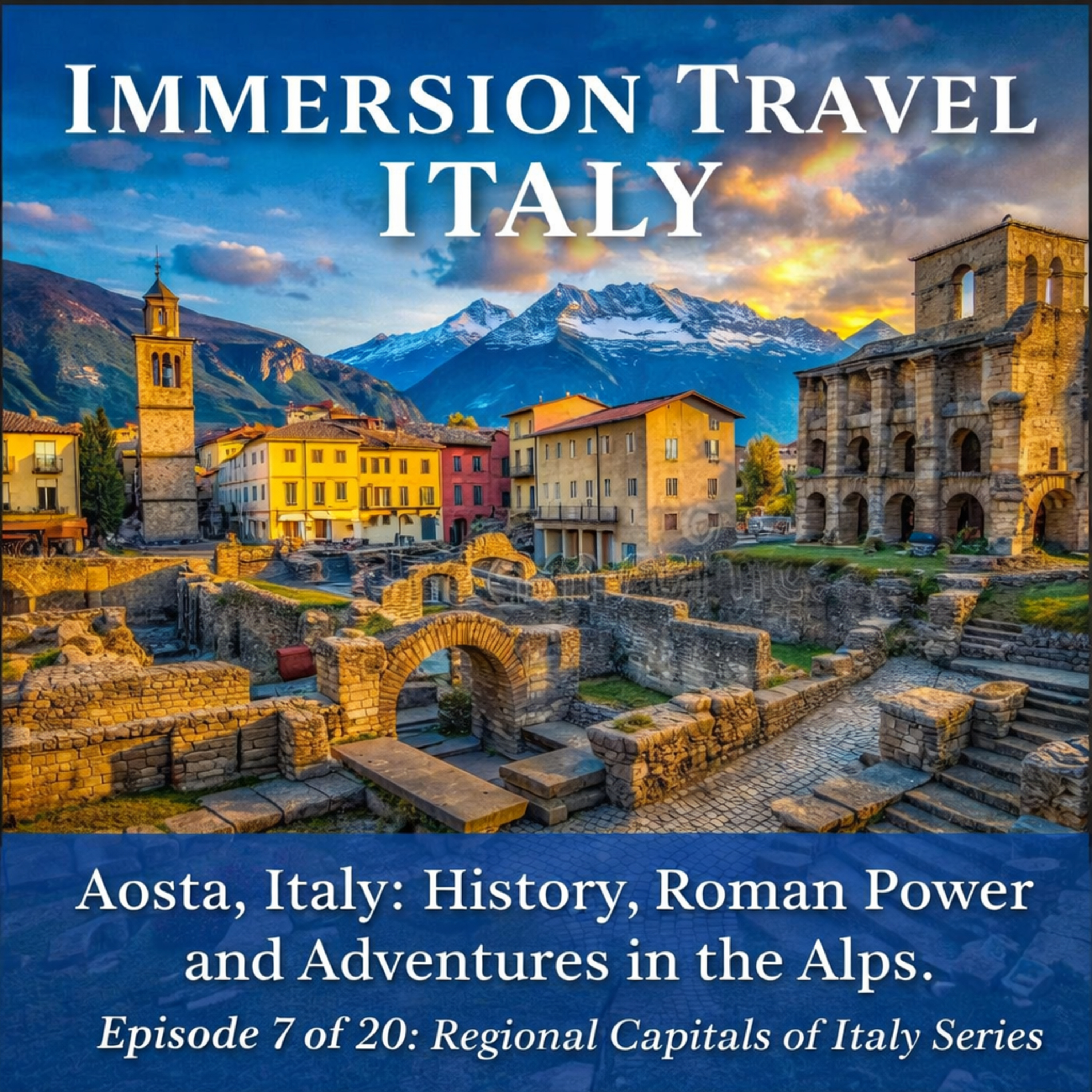
Aosta, Italy: History, Roman Power, Skiing, Hiking, Trekking, and Cycling in the Alps. Episode 7, Regional Capitals of Italy Series
from Immersion Travel Italy · host Katerina Ferrara
In this episode of Immersion Travel Italy, travel author and host Katerina Ferrara takes you to Aosta, the capital of the Val d’Aosta, Italy’s smallest and least populated region, nestled deep in the Italian Alps at the crossroads of Italy, France, and Switzerland. Episode 7 of 20 in the Regional Capitals of Italy Series.With just over 30,000 residents in the city and roughly 125,000 in the entire region, the Val d’Aosta feels intimate, grounded, and deeply shaped by its landscape. Yet despite its size, this valley has played an outsized role in European history for more than two thousand years.Founded by the Romans in 25 BC as Augusta Praetoria, Aosta remains one of the most legible Roman cities in Italy. You can still walk the original Roman grid, pass through monumental gates like the Porta Praetoria, stand beneath the Arch of Augustus, and see a Roman theatre rising dramatically against snow-capped peaks. Unlike cities layered over centuries of demolition and rebuilding, Aosta evolved inside its Roman shell. The past was never erased. It was absorbed.Surrounded by some of the highest mountains in Europe, including Mont Blanc, Monte Rosa, Gran Paradiso, and the Matterhorn, the Val d’Aosta has always been defined by movement. Traders, pilgrims, armies, emperors, and modern travelers all passed through this valley because they had to. Control the passes, and you control the route between northern Europe and Italy.That geography shaped everything, from medieval towers and Savoy castles to one of Napoleon’s most humbling moments at the Fort of Bard, where stone and terrain forced his army to adapt.Today, the Val d’Aosta is often associated with winter skiing, and rightly so. Resorts like Courmayeur, Cervinia, La Thuile, and Pila make this one of Italy’s premier alpine winter destinations. But this episode explores why the region is far more than a ski playground. Summer brings hiking, cycling, climbing, and nature travel, especially in Gran Paradiso National Park, Italy’s oldest national park. Spring and fall reveal a quieter, deeply local side of the valley focused on food, festivals, and daily life.Aosta itself anchors the region year-round. It is not a resort town. It is a living city where Roman ruins, medieval churches, cafés, markets, and alpine culture exist side by side.This episode covers:Aosta’s Roman foundations and surviving monumentsMedieval towers, Savoy rule, and French influenceNapoleon and the strategic Alpine passesAutonomy, bilingual identity, and modern lifeWalking Aosta on footTraditional Valdostan food and mountain cuisineDay trips including Bard, Courmayeur, Pré-Saint-Didier, and CerviniaYear-round activities from skiing to hikingWhether you are planning a trip to northern Italy, curious about Roman cities in the Alps, or looking for a destination that blends history, mountains, and culture without crowds, Aosta offers a powerful and often overlooked story.🎧 This episode has a companion blog with additional travel planning tips at katerinaferrara.comFor more immersive travel guides and festival-focused journeys through Italy, explore Katerina’s books, including:Ultimate Festival and Travel Guide SicilyUltimate Festival and Travel Guide PugliaUltimate Festival and Travel Guide Rome & BeyondVenice and the VenetoSicilia in Festa (Dual Language Edition)Immersion Travel Italy is about traveling slowly, intentionally, and with context.Because places like Aosta do not just want to be seen.They want to be understood.
Embed this episode
Ready to play
Aosta, Italy: History, Roman Power, Skiing, Hiking, Trekking, and Cycling in the Alps. Episode 7, Regional Capitals of Italy Series
No transcript for this episode yet
Similar Episodes
No similar episodes found.