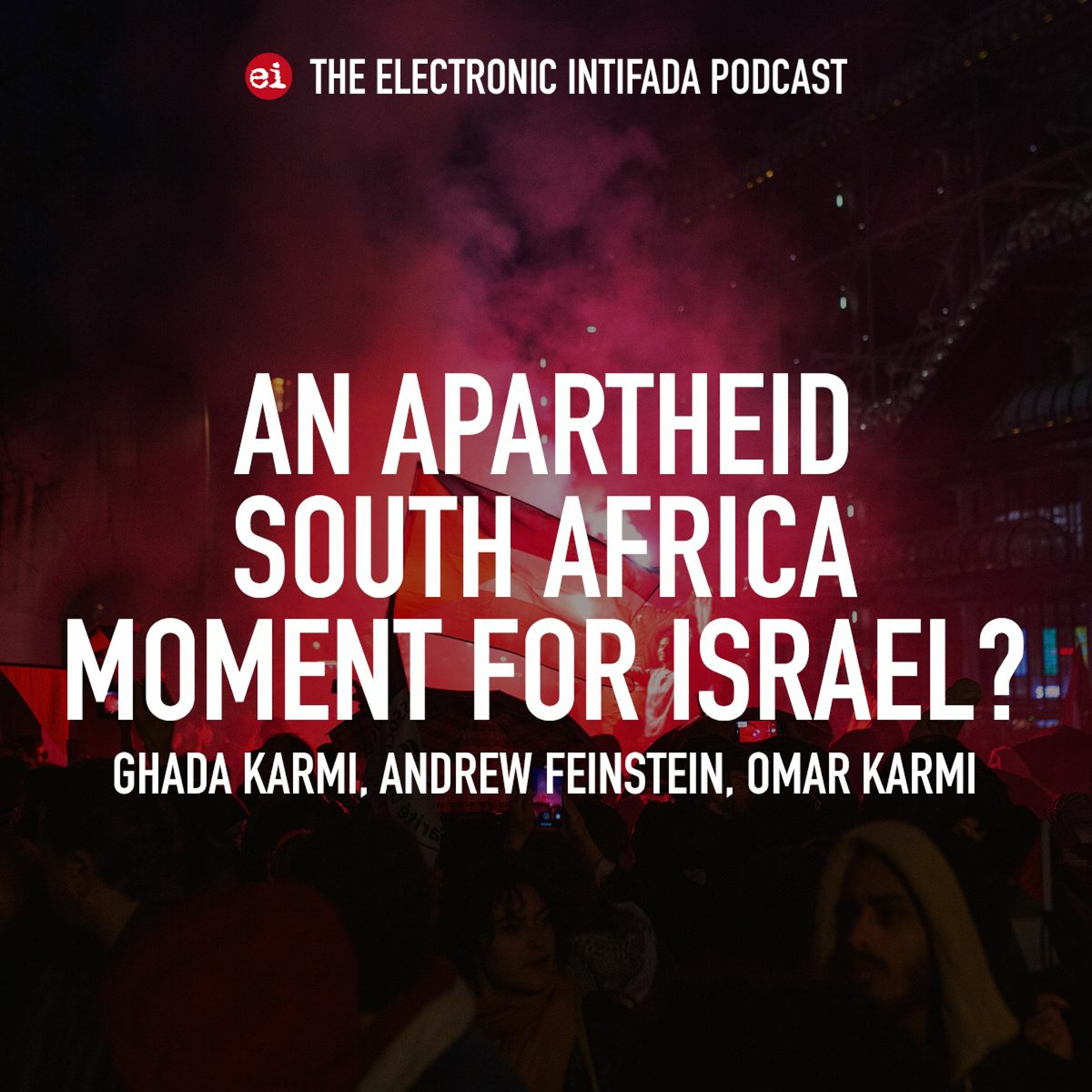
Apartheid South Africa moment for Israel? with Ghada Karmi & Andrew Feinstein episode artwork

EPISODE · Apr 17, 2024 · 1H 17M

Apartheid South Africa moment for Israel? with Ghada Karmi & Andrew Feinstein

from The Electronic Intifada · host The Electronic Intifada

Over the past six months, millions of people worldwide have taken to the streets to demonstrate in solidarity with Palestine and to demand that their governments call for a permanent ceasefire in Gaza. Many governments have responded and even the US abstained – rather than vetoed – a UN Security Council Resolution in March calling for a temporary ceasefire during the Muslim holy month of Ramadan. Spain, Ireland, Slovenia and Malta have also committed to recognizing a Palestinian state, joining eight other EU member states, including Poland and Sweden who have already done so, even though the EU as a whole has yet to take this step. Nevertheless, Israel has continued its genocide in Gaza, seemingly unconcerned. And crucially, Israel’s most important allies, the US and the UK, have remained largely unmoved and continue to support Israel diplomatically and militarily, with little to no regard for popular feeling. This prompts the question of whether we have reached the limits of what Palestine activism can achieve or whether the current popular momentum can turn into an Apartheid South Africa moment, a moment of global solidarity that led inexorably to the collapse of South Africa’s racist regime. To discuss this, and more about the parallels and differences between Palestine activism and the anti-Apartheid movement, The Electronic Intifada talked to two veteran activists. Ghada Karmi has authored several books on Palestine, including her latest, One State: The Only Democratic Future for Palestine-Israel, as well as a memoir, In Search of Fatima that detailed her family’s flight from Jerusalem during the 1947-49 Nakba. Andrew Feinstein was a long-time anti-apartheid activist who became a parliamentarian for Nelson Mandela’s African National Congress party after the country’s first free elections in 1994.

Over the past six months, millions of people worldwide have taken to the streets to demonstrate in solidarity with Palestine and to demand that their governments call for a permanent ceasefire in Gaza. Many governments have responded and even the US abstained – rather than vetoed – a UN Security Council Resolution in March calling for a temporary ceasefire during the Muslim holy month of Ramadan. Spain, Ireland, Slovenia and Malta have also committed to recognizing a Palestinian state, joining eight other EU member states, including Poland and Sweden who have already done so, even though the EU as a whole has yet to take this step. Nevertheless, Israel has continued its genocide in Gaza, seemingly unconcerned. And crucially, Israel’s most important allies, the US and the UK, have remained largely unmoved and continue to support Israel diplomatically and militarily, with little to no regard for popular feeling. This prompts the question of whether we have reached the limits of what Palestine activism can achieve or whether the current popular momentum can turn into an Apartheid South Africa moment, a moment of global solidarity that led inexorably to the collapse of South Africa’s racist regime. To discuss this, and more about the parallels and differences between Palestine activism and the anti-Apartheid movement, The Electronic Intifada talked to two veteran activists. Ghada Karmi has authored several books on Palestine, including her latest, One State: The Only Democratic Future for Palestine-Israel, as well as a memoir, In Search of Fatima that detailed her family’s flight from Jerusalem during the 1947-49 Nakba. Andrew Feinstein was a long-time anti-apartheid activist who became a parliamentarian for Nelson Mandela’s African National Congress party after the country’s first free elections in 1994.

NOW PLAYING

Apartheid South Africa moment for Israel? with Ghada Karmi & Andrew Feinstein

0:00 1:17:58

No transcript for this episode yet

We transcribe on demand. Request one and we'll notify you when it's ready — usually under 10 minutes.

Frequently Asked Questions

How long is this episode of The Electronic Intifada?

This episode is 1 hour and 17 minutes long.

When was this The Electronic Intifada episode published?

This episode was published on April 17, 2024.

What is this episode about?

Over the past six months, millions of people worldwide have taken to the streets to demonstrate in solidarity with Palestine and to demand that their governments call for a permanent ceasefire in Gaza. Many governments have responded and even the US...

Can I download this The Electronic Intifada episode?

Yes, you can download this episode by clicking the download button on the episode player, or subscribe to the podcast in your preferred podcast app for automatic downloads.
URL copied to clipboard!