
EPISODE · Feb 20, 2026 · 39 MIN
Apoorv Shaligram on e-TRNL Energy’s efforts to innovate better cell architectures
from India Tech Report – India Tech Report · host Hari Arakali
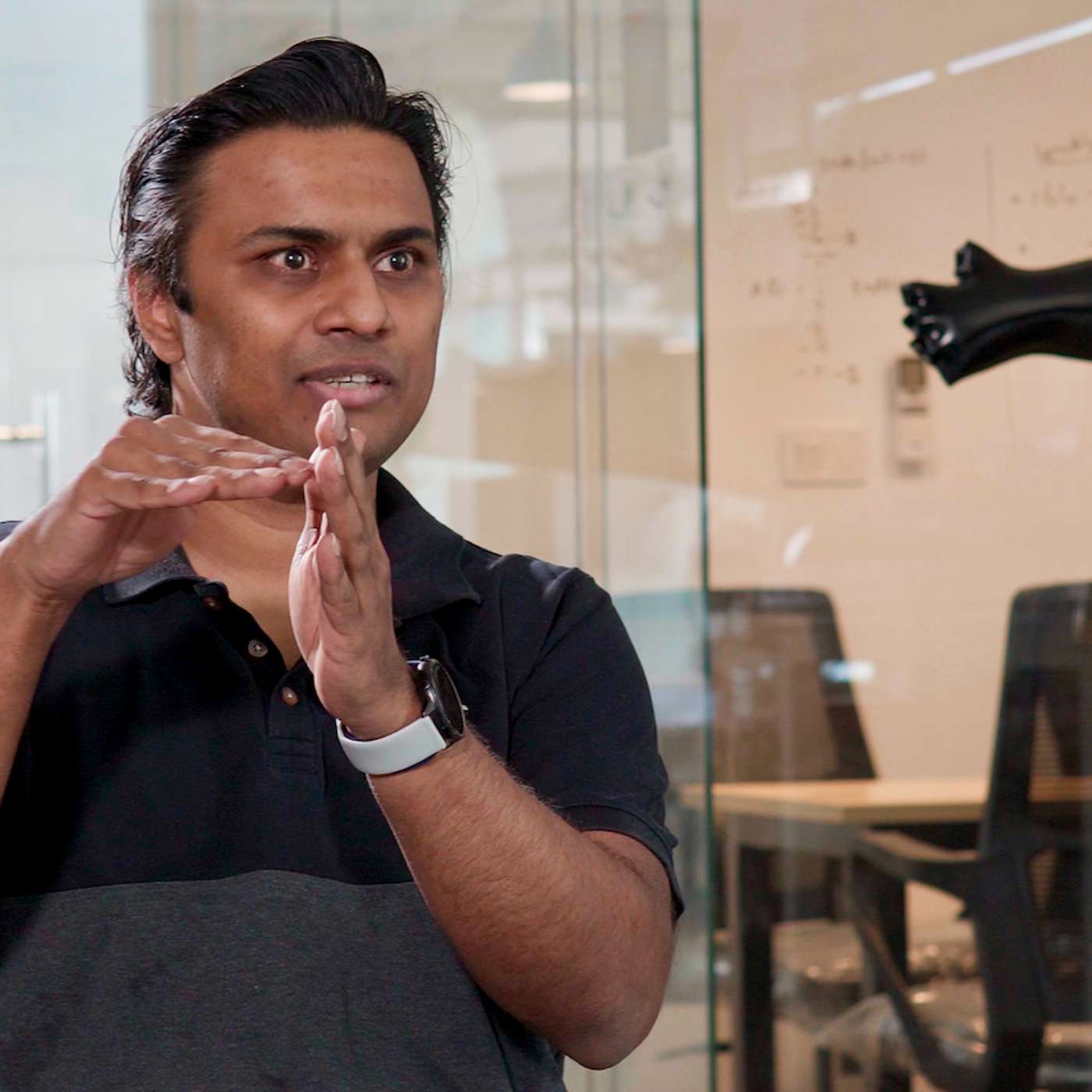
In this episode I’m joined by Apoorv Shaligram, founder and CEO of e-TRNL Energy. Apoorv, and his fellow founder Uttam Sen, IIT Bombay alumni both, and their team are tackling the electric vehicle industry’s most critical “wants”: high levels of safety and fast charging.While battery chemistry has attracted a lot of innovation effort, e-TRNL is focusing on the cell architecture instead. Their core innovation, 3D Electrode Architecture (3DEA), moves away from the traditional 2D thin-layered designs found in everything from smartphones to current EVs.By fundamentally changing how current flows inside the cell, 3DEA reduces resistance and heat at the source, Apoorv explains. This makes batteries “super resilient” to thermal waste – the excess heat generated within a battery cell during its operation, primarily caused by internal resistance – preventing the catastrophic “cascading” fires in some EV batteries.Chapters(00:00) Origins and the Vision for Indian Energy IndependenceApoorv discusses his background at Michigan State and IIT Bombay, the early challenges of building “know-how” from YouTube videos, and the motivation to build home-grown battery technology for India’s energy transition.(04:36) Addressing EV Consumer “Wants”: Safety and Fast ChargingAn exploration of why current battery technology fulfills basic necessities but not the “wants” of the industry, specifically focusing on the need for 15-minute charging and fundamental safety improvements.(07:21) Reinventing Manufacturing: The 8-Step Modular ProcessApoorv explains how e-TRNL reinvented the traditional 24-step manufacturing process into a more efficient 8-step operation using modular, container-sized units to reduce energy and environment control costs.(12:26) Unpacking 3D Electrode Architecture (3DA)A deep dive into the company’s core innovation: moving from traditional 2D “tape” layers to a 3D honeycomb design that reduces internal resistance and heat, solving safety and charging issues at the design level.(18:21) Prismatic Innovations and the Road to 2027Discussion on the company’s patented prismatic cell architecture, the limitations of 30-year-old “magnetic tape” manufacturing standards, and the roadmap to hit pilot manufacturing by early 2027.(24:44) Barriers to EV Adoption and the “Know-How” ChallengeApoorv identifies convenience and safety as the primary limiters for EV adoption in India and discusses the difficulty of finding specialized battery talent within the country.(31:26) The 27.5 Crore Seed Round and Investor EvolutionDetails on the recent funding round led by I-Group and Alpha, and how the investor discourse around deep tech and hardware has shifted significantly since 2021.(36:03) Fundraising Best Practices and Mitigating Deep Tech RiskAdvice for aspiring founders on clearly communicating a roadmap, managing expectations regarding manufacturing timelines, and learning from global industry failures.Beyond safety, this architecture unlocks the capability for 15-minute fast charging and longer-lasting, lighter battery packs, he says.Apoorv also explains how they have verticalized their technology stack, putting together manufacturing processes from the ground up: They have also condensed the conventional 24-step manufacturing process into a precise 8-step operation. And the entrepreneurs envision modular, container-sized factories that reduce energy consumption and that are better suited to markets that lack large-scale adoption.In this episode, Apoorv also talks about how India’s deep tech landscape is changing, with the government catalysing the discourse in the country. And we takeaway some lessons from e-TRNL’s recent Rs. 27.4 crore seed round, and the roadmap to hit full-scale manufacturing.
Embed this episode
Ready to play
Apoorv Shaligram on e-TRNL Energy’s efforts to innovate better cell architectures
No transcript for this episode yet
Similar Episodes
No similar episodes found.
Similar Podcasts
No similar podcasts found.