
EPISODE · Oct 16, 2026 · 38 MIN
Appalachian Autumn
from Soundwalk · host Chad Crouch
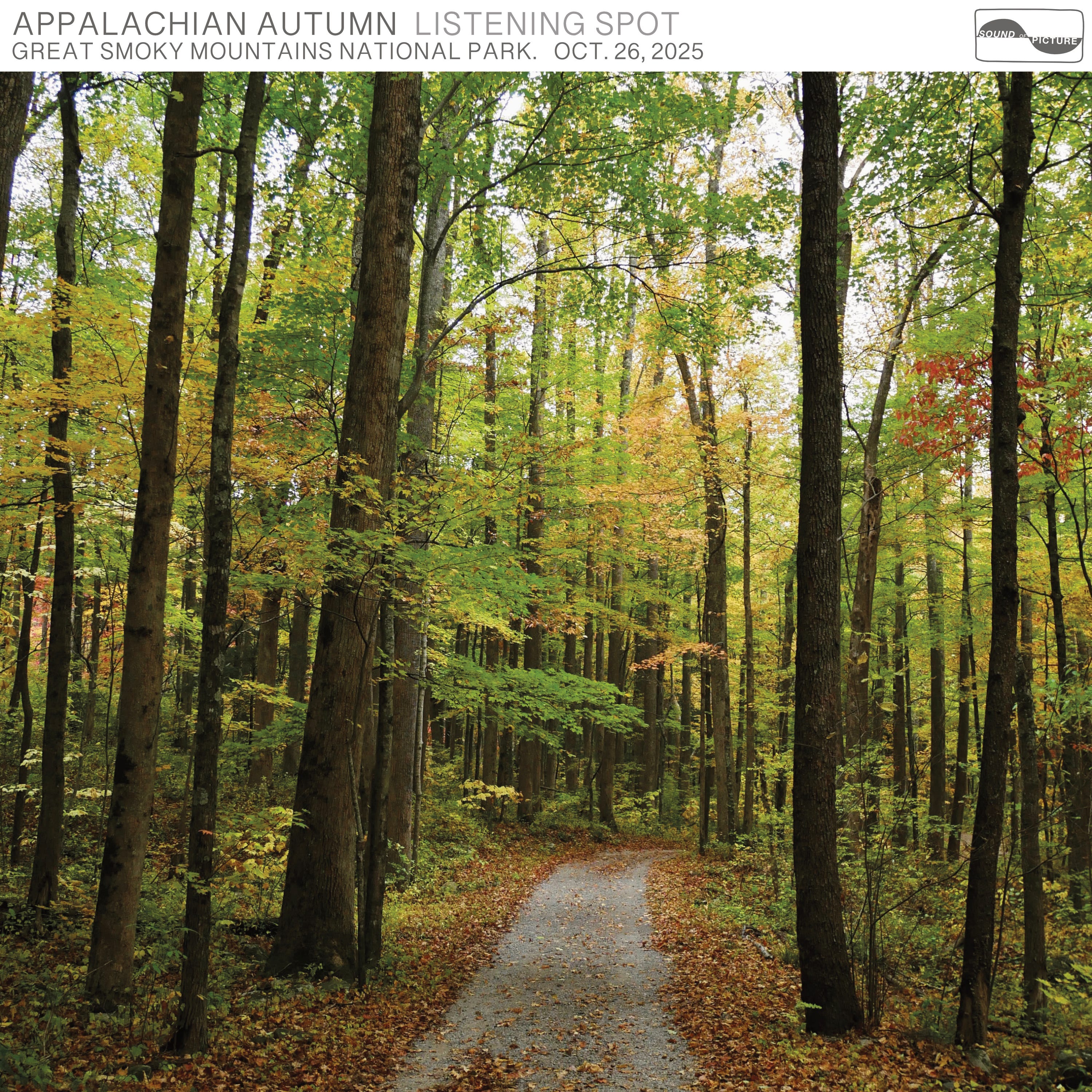
I wasn’t sure what to expect from the soundscape of the Smoky Mountains in October. I’d been there in the fall 25 years ago, but my memories were mostly confined to images, and a generalized sense of topography. What I found on return was a soundscape of crickets in the valleys, stridulating in a glacial crescendo—from a murmur in the afternoon to a full-blown cacophony in the gloaming of dusk. This was not new to me. It was the sound early autumn from my childhood, living among fields and orchards on the fringe of suburbia. The soundscape that was truly novel to me, that I’m sharing today, has a little bit of that: the breathing hum of crickets in the early evening. But the real soundmarks come from mammals—squirrels, more plentiful and more active than I can ever recall hearing. This was the sound of peak mast season. What is mast season? Mast was a term that was new to me. It is taken to mean the food that comes from bushes and trees: fruits, nuts, and seeds. “Hard mast” is principally acorns, beech nuts and hickory nuts, here in the Sugarlands, the western foothills of the Great Smokies. A “mast year” is a particularly abundant year for acorn and nut production, and every indication suggests 2025 was a genuine mast year in southern Appalachia. A 2025 article described, “oak production as the heaviest since 2012, with beech crops heavy enough that ground beneath beech trees was ‘littered with hulls... after squirrels feasted.’" I was hearing a squirrel feast! Here in the Sugarlands, hardwoods and oak forest commingle, so there's a lot of mast dropping in a small area. Squirrels get frantic and vocal during the harvest push before winter arrives—chattering, barking, leaf-rustling, and branch-shaking as they work the canopy. It was this abundance, this sense of life in the trees that encouraged me to reach for woodwinds and harmonium-like sounds in my composition. I wanted it to conjure that peace that comes after a hard day’s work feeling. The music bears more than a passing resemblance to my vinyl LP release Wildwood Trail Soundwalk earlier this year. Both are built up very simply with sets of slowly morphing chords, stacked in equal measure, set in a slow, breathing tempo. I rarely have the conviction that any one album is a good starting place for getting to know my work, but as I listen now and write this, it strikes me that this may at least be more accessible than many others. The music is uncomplicated, warm and reassuring. The sound of humming crickets, the rustle of crisp leaves, the crystalline “kuk-quaa” of squirrels chiming out, all come together in a soothing velvet haze—like the “Smoky” blue air from the faraway mountaintops coming down to settle in the valleys, in the slow transition to nightfall. Thanks for listening and reading along. Appalachian Autumn is available under the artist name Listening Spot on all streaming platforms Friday, October 16th. This is a public episode. If you'd like to discuss this with other subscribers or get access to bonus episodes, visit chadcrouch.substack.com/subscribe
Embed this episode
Ready to play
Appalachian Autumn
No transcript for this episode yet
Similar Episodes
No similar episodes found.