Are influencers turning beloved Seoul destinations into tourist traps? episode artwork

EPISODE · Apr 28, 2026 · 7 MIN

Are influencers turning beloved Seoul destinations into tourist traps?

from Korea JoongAng Daily - Daily News from Korea · host FERGUS GOODALL SMITH

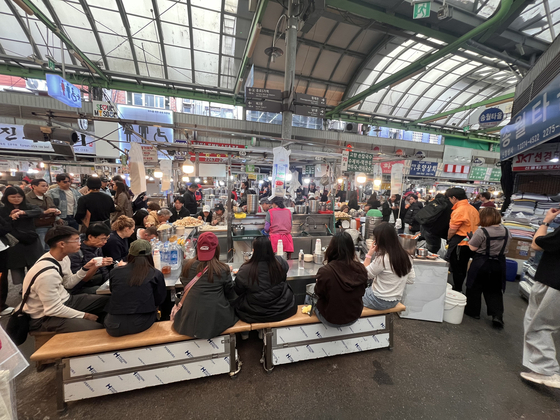
This article is by Fergus Goodall Smith and read by an artificial voice. Residents of Seoul are stuck between a rock and a hard place. While tourism is one of the economic backbones of the city, many are decrying its effect on the price of goods at beloved food spots such as Gwangjang Market. Some restaurants thrive while others struggle, as social media now funnels overwhelming crowds into a handful of venues. Still, that intensity can push out locals, raise prices and leave competing businesses with little foot traffic. Social media has become one of the most common ways for tourists to plan their to-do lists. Just type in "Seoul" on Instagram and start scrolling. Food and travel influencers recommending the best salt bread, tteokbokki (spicy rice cakes) and mandu (dumplings) in all of Seoul — those are the kind of videos you'll find. The price of popularity Gwangjang Market is packed with people, many of whom are tourists. Here, Gohyang Kalguksu, more commonly known as the "Netflix Lady" stand, offers a bowl of dumpling soup for 7,000 won ($5) and almost always has a line of people waiting to be seated. In fact, the owner had to keep rushing away from our interview to serve banchan (side dishes) to new customers. People think these kinds of tourist trap businesses are a problem — one fueled by trends shaped by social and corporate media — that leads to higher prices and a drop in quality and authenticity. "Man, I really don't want to say this, but at this point, I want to say that Gwangjang and Myeongdong's rip-off prices are somewhat the fault of the tourists. Spread the word. Don't go to these tourist traps, and break the vicious cycle," wrote Reddit user jkpatches in a thread debating the touristification of Seoul's markets. "The majority of tourists are ignorant of local prices, and [...] even many locals aren't aware of food costs. I'm sure folks wouldn't bat an eye at paying 2 pounds [$2.70] or [2] euros [$2.30] for some overpriced rice cake," added another user, jae343. Most business owners, of course, don't mind the tourists. "It's good. People come after seeing Gwangmyeong Market itself on social media more than specific restaurants," Hwang Doo-jin, the manager of Hansabal Pocha at Gwangjang Market, said, referring to the portmanteau of Gwangjang Market and Myeongdong. According to jkpatches, it's "common knowledge" that places such as Gwangjang Market are overpriced. As a result, people began recommending other markets, including Mangwon and Tongin, on the Reddit thread. The Korea JoongAng Daily went to these spots. Mangwon Market has a completely different vibe from Gwangjang's. The former is much less busy, and its avenues are mostly filled with Koreans, not tourists. You can buy potato croquettes for 1,000 won, a large bowl of kalguksu (knife-cut noodles) for 4,500 won and gimbap (seaweed rice rolls) for 3,500 won. Similarly, Tongjin Market maintains affordable prices while having fewer people, including tourists, than Gwangjin Market does. A huge pile of oil tteokbokki costs 5,000 won — a reasonable price for the serving. The same goes for takoyaki (Japanese fried octopus dumplings). Che-yung, who works at a takoyaki stand, said the food is cheaper at Tongin than it is at Gwangjang. "There are more tourists at Gwangjang, and that makes [its food] more expensive." He confirmed that he still sees influencers at Tongin and that they're generally good for the business. However, this seems to be the exact opposite of what people want: for local markets to be "discovered" in the way that Gwangjang was, leading to ramped-up prices. "It's sad and ironic that the more a place becomes popular with tourists looking for an 'authentic' experience, the less authentic that it becomes," wrote Reddit user Letter_Effective. "Mangwon is [so] nice, but I fear as more people discover it, it [...] will fall into the same problem," another Redditor on the thread, Fellers, added, referring to increased prices. This problem also...

This article is by Fergus Goodall Smith and read by an artificial voice. Residents of Seoul are stuck between a rock and a hard place. While tourism is one of the economic backbones of the city, many are decrying its effect on the price of goods at beloved food spots such as Gwangjang Market. Some restaurants thrive while others struggle, as social media now funnels overwhelming crowds into a handful of venues. Still, that intensity can push out locals, raise prices and leave competing businesses with little foot traffic. Social media has become one of the most common ways for tourists to plan their to-do lists. Just type in "Seoul" on Instagram and start scrolling. Food and travel influencers recommending the best salt bread, tteokbokki (spicy rice cakes) and mandu (dumplings) in all of Seoul — those are the kind of videos you'll find. The price of popularity Gwangjang Market is packed with people, many of whom are tourists. Here, Gohyang Kalguksu, more commonly known as the "Netflix Lady" stand, offers a bowl of dumpling soup for 7,000 won ($5) and almost always has a line of people waiting to be seated. In fact, the owner had to keep rushing away from our interview to serve banchan (side dishes) to new customers. People think these kinds of tourist trap businesses are a problem — one fueled by trends shaped by social and corporate media — that leads to higher prices and a drop in quality and authenticity. "Man, I really don't want to say this, but at this point, I want to say that Gwangjang and Myeongdong's rip-off prices are somewhat the fault of the tourists. Spread the word. Don't go to these tourist traps, and break the vicious cycle," wrote Reddit user jkpatches in a thread debating the touristification of Seoul's markets. "The majority of tourists are ignorant of local prices, and [...] even many locals aren't aware of food costs. I'm sure folks wouldn't bat an eye at paying 2 pounds [$2.70] or [2] euros [$2.30] for some overpriced rice cake," added another user, jae343. Most business owners, of course, don't mind the tourists. "It's good. People come after seeing Gwangmyeong Market itself on social media more than specific restaurants," Hwang Doo-jin, the manager of Hansabal Pocha at Gwangjang Market, said, referring to the portmanteau of Gwangjang Market and Myeongdong. According to jkpatches, it's "common knowledge" that places such as Gwangjang Market are overpriced. As a result, people began recommending other markets, including Mangwon and Tongin, on the Reddit thread. The Korea JoongAng Daily went to these spots. Mangwon Market has a completely different vibe from Gwangjang's. The former is much less busy, and its avenues are mostly filled with Koreans, not tourists. You can buy potato croquettes for 1,000 won, a large bowl of kalguksu (knife-cut noodles) for 4,500 won and gimbap (seaweed rice rolls) for 3,500 won. Similarly, Tongjin Market maintains affordable prices while having fewer people, including tourists, than Gwangjin Market does. A huge pile of oil tteokbokki costs 5,000 won — a reasonable price for the serving. The same goes for takoyaki (Japanese fried octopus dumplings). Che-yung, who works at a takoyaki stand, said the food is cheaper at Tongin than it is at Gwangjang. "There are more tourists at Gwangjang, and that makes [its food] more expensive." He confirmed that he still sees influencers at Tongin and that they're generally good for the business. However, this seems to be the exact opposite of what people want: for local markets to be "discovered" in the way that Gwangjang was, leading to ramped-up prices. "It's sad and ironic that the more a place becomes popular with tourists looking for an 'authentic' experience, the less authentic that it becomes," wrote Reddit user Letter_Effective. "Mangwon is [so] nice, but I fear as more people discover it, it [...] will fall into the same problem," another Redditor on the thread, Fellers, added, referring to increased prices. This problem also...

NOW PLAYING

Are influencers turning beloved Seoul destinations into tourist traps?

0:00 7:49

No transcript for this episode yet

We transcribe on demand. Request one and we'll notify you when it's ready — usually under 10 minutes.

No similar episodes found.

No similar podcasts found.

Frequently Asked Questions

How long is this episode of Korea JoongAng Daily - Daily News from Korea?

This episode is 7 minutes long.

When was this Korea JoongAng Daily - Daily News from Korea episode published?

This episode was published on April 28, 2026.

What is this episode about?

This article is by Fergus Goodall Smith and read by an artificial voice. Residents of Seoul are stuck between a rock and a hard place. While tourism is one of the economic backbones of the city, many are decrying its effect on the price of goods at...

Can I download this Korea JoongAng Daily - Daily News from Korea episode?

Yes, you can download this episode by clicking the download button on the episode player, or subscribe to the podcast in your preferred podcast app for automatic downloads.
URL copied to clipboard!