
EPISODE · Mar 9, 2026 · 14 MIN
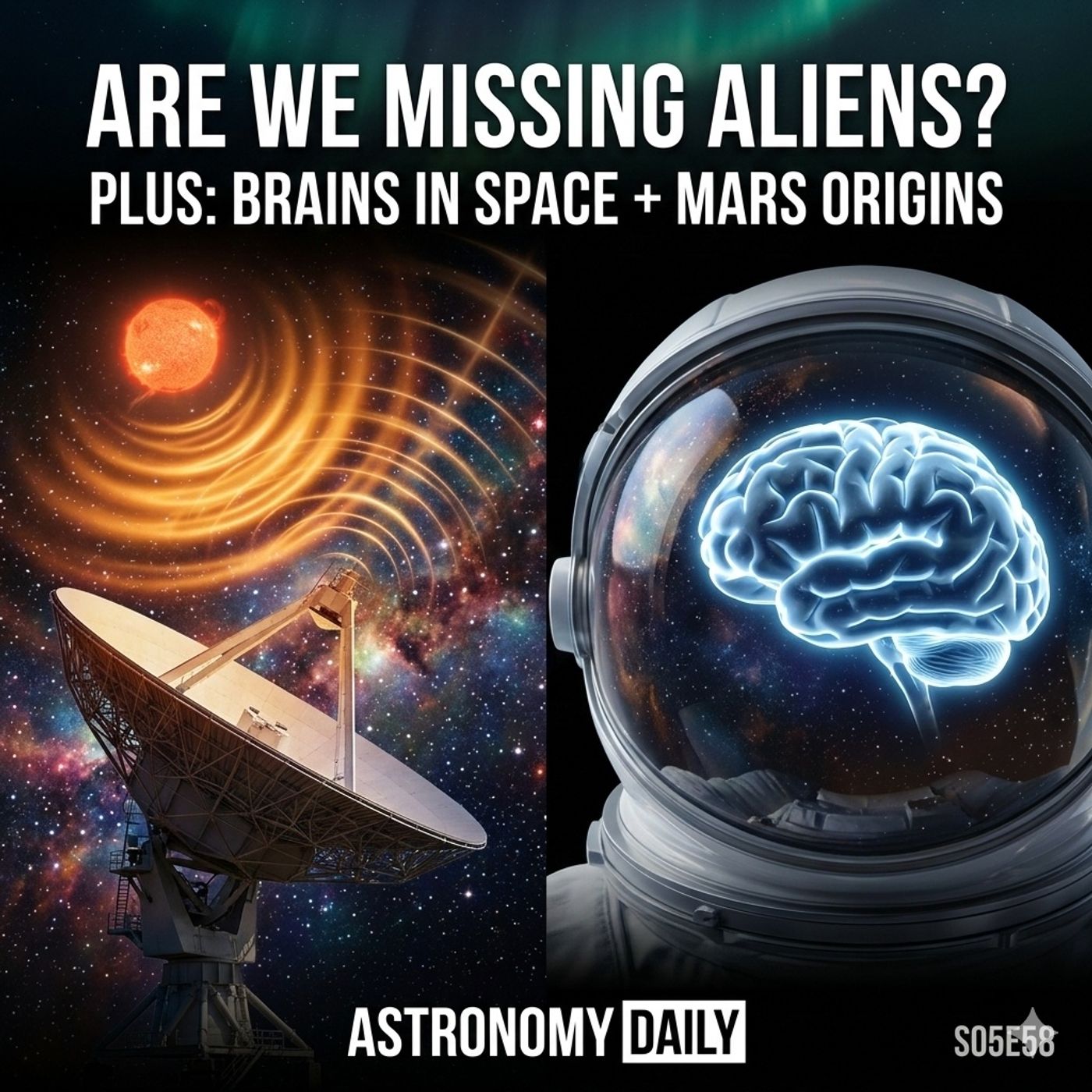
Are We Missing Alien Signals? Space Weather, Brain Changes and the Mars Life Question
from Astronomy Daily: Space News Updates · host bitesz.com
In today's episode, Anna and Avery explore five of the week's most compelling space and astronomy stories: a new SETI Institute study suggesting stellar space weather could be scrambling alien radio signals before they even leave their home systems; groundbreaking research revealing that spaceflight physically shifts and deforms the human brain inside the skull; the impressive engineering story behind Roscosmos restoring Baikonur's launch pad in record time ahead of the Progress MS-33 mission; a surprising new finding from Nature that Earth's elliptical orbit plays a much bigger role in shaping El Niño and global weather patterns than previously thought; and the endlessly fascinating question of whether asteroid impacts could allow microbes to travel between planets — including the possibility that life on Earth may have originated on Mars. Stories Covered • Why SETI may be missing alien radio signals — space weather around distant stars could be smearing narrowband signals beyond the reach of current detectors (SETI Institute, March 2026) • Spaceflight physically shifts and deforms the brain inside the skull — new MRI study of 26 astronauts published in PNAS reveals extent of microgravity's neurological impact (University of Florida, March 2026) • Baikonur's Site 31/6 launch pad fully restored after November 2025 damage — over 150 workers complete repairs in under two months, clearing path for Progress MS-33 on March 22 (NASASpaceFlight, March 2026) • Earth's distance from the Sun found to dramatically alter seasons — new Nature study shows orbital eccentricity drives its own annual cycle in the Pacific cold tongue, influencing El Niño over millennia (UC Berkeley, March 2026) • Did Earth life begin on Mars? New research examines how asteroid impacts could allow microbes to travel between planets via ejected rock (Universe Today, March 2026) Connect With Us Website: astronomydaily.io Twitter/X, Instagram, TikTok, YouTube, Tumblr: @AstroDailyPod Part of the Bitesz.com Podcast NetworkBecome a supporter of this podcast: https://www.spreaker.com/podcast/astronomy-daily-latest-space-news--5648921/support.Sponsor Details:Ensure your online privacy by using NordVPN. To get our special listener deal and save a lot of money, visit www.astronomydaily.io/nordvpn. You'll be glad you did!Get the best secure and private email on the planet. Stop your Government, google and who knows who else spying on every email you write. Do what we did and use ProtonMail. They beleive in privacy and there are no ads in their business model...yet they still provide a free forever service. Check them out and get out special deal at www.astronomydaily.io/protonmailBecome a supporter of Astronomy Daily by joining our Supporters Club. Commercial free episodes daily are only a click way... Click HereThis episode includes AI-generated content.
Embed this episode
Ready to play
Are We Missing Alien Signals? Space Weather, Brain Changes and the Mars Life Question
No transcript for this episode yet
Similar Episodes
No similar episodes found.
Similar Podcasts
No similar podcasts found.