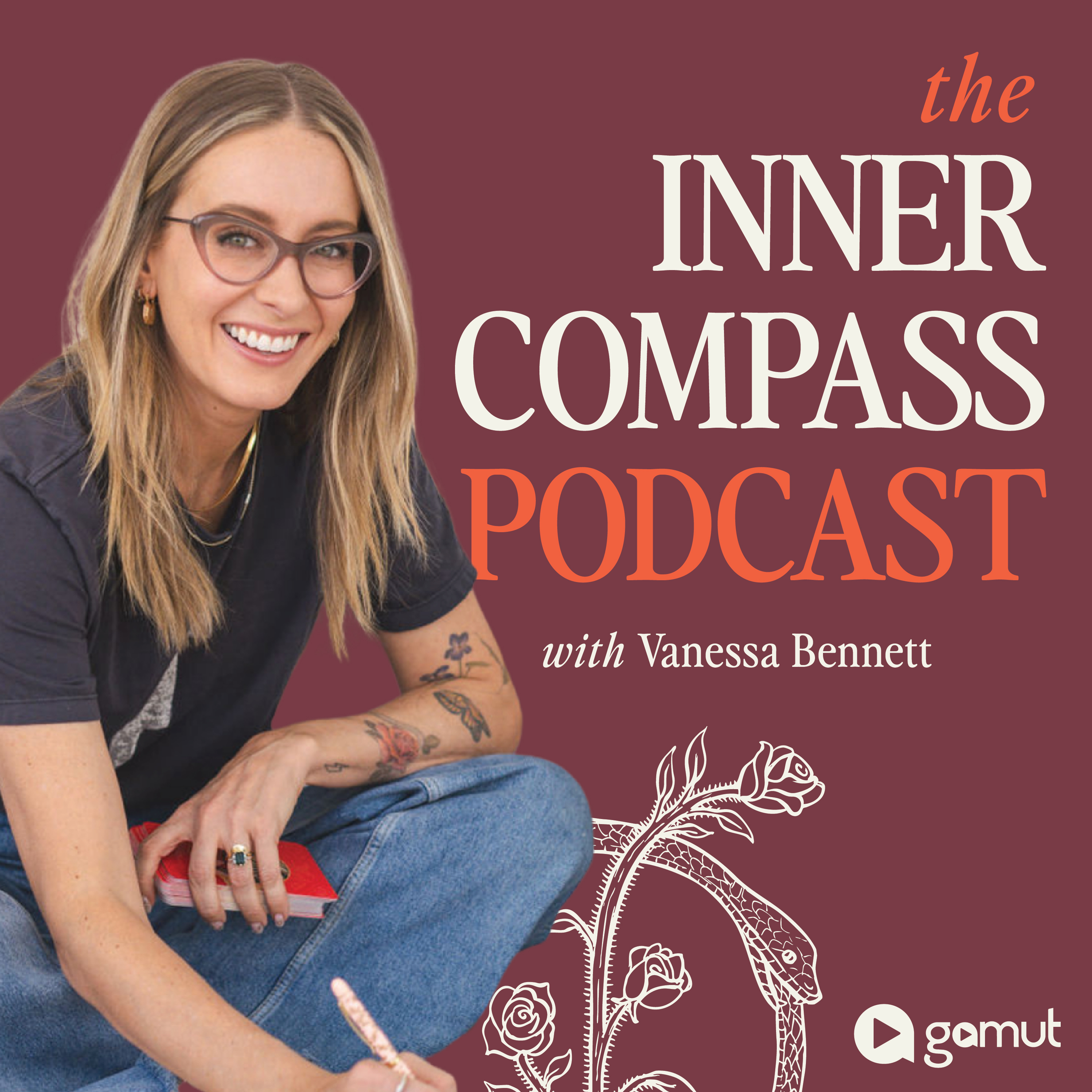
Are You Actually Healing, or Are You Trying to Become More Acceptable? episode artwork

EPISODE · Jul 1, 2026 · 27 MIN

Are You Actually Healing, or Are You Trying to Become More Acceptable?

from The Inner Compass Podcast with Vanessa Bennett

What if some of what we call healing is actually an argument with the Self?In this episode, Vanessa explores the fantasy that enough therapy, coaching, spirituality, or self-development will eventually turn us into someone without friction: endlessly patient, available, social, regulated, and easy to love. Through Jung’s ideas of persona, Self, and shadow, along with research on self-discrepancy, ACT, self-compassion, and self-concept clarity, we look at the grief of realizing the idealized self may never arrive. The invitation is not resignation, but reality contact: meeting the actual self with enough honesty and tenderness to build a life that finally fits.Take the quiz here https://www.vanessabennett.com/space-holder-quizReference Links:• Carl Jung — PersonaUse for: Persona as the social face / adaptation to society.Link: https://iaap.org/jung-analytical-psychology/short-articles-on-analytical-psychology/persona-2/Note: This supports the episode’s distinction between persona/social acceptability and deeper wholeness.• Carl Jung — ShadowUse for: Shadow as hidden or repressed parts of the personality, including not only “dark” material but also instincts, reactions, insights, and creative impulses.Link: https://www.thesap.org.uk/articles-on-jungian-psychology-2/about-analysis-and-therapy/the-shadow/Note: This supports the reframe that the shadow can include disowned sensitivity, need, rest, introversion, and unlived life.• E. Tory Higgins — Self-Discrepancy TheoryUse for: Actual self, ideal self, and ought self; different emotional effects of falling short of the ideal vs ought self.Link: https://www.researchgate.net/publication/19545638_Self-Discrepancy_A_Theory_Relating_Self_and_AffectNote: Original 1987 theory connecting self-discrepancy with affect.• Acceptance and Commitment Therapy / Psychological FlexibilityUse for: Acceptance as reality contact, not resignation; psychological flexibility as staying in contact with the present while moving toward values.Link: https://pmc.ncbi.nlm.nih.gov/articles/PMC3635495/Note: Useful source for ACT and psychological flexibility.• Kristin Neff — Self-CompassionUse for: Self-kindness, common humanity, and mindfulness as the three core components of self-compassion.Link: https://self-compassion.org/what-is-self-compassion/Note: Supports the episode’s point that acceptance without warmth can still become contempt.• D. W. Winnicott — The Capacity to Be AloneUse for: The capacity to be alone as developing through the experience of being alone in the presence of another.Link: https://pep-web.org/search/document/IJP.039.0416ANote: Supports the idea of presence without performance or agenda.• Campbell et al. — Self-Concept ClarityUse for: Self-concept clarity as clear, confident, consistent, and stable self-beliefs.Link: https://www2.psych.ubc.ca/~heine/docs/1996scc.pdfNote: Original 1996 paper on self-concept clarity.• Self-Concept Clarity and Subjective Well-BeingUse for: Research linking self-concept clarity with well-being.Link: https://pmc.ncbi.nlm.nih.gov/articles/PMC10064969/Note: Helpful current/recent support for the wellbeing connection.For educational purposes only. This isn’t therapy.If you want to go deeper, check out the written companion on Substack and explore community + training at https://www.vanessaBennett.com.Additional ResourcesExplore: VanessaBennett.comBook: The Motherhood MythCommunity: Inner Compass CollectiveTraining: Inner Compass AcademyConnect with Inner CompassFollow on InstagramConnect with Vanessa Bennett:Follow on InstagramFollow on TikTokLearn more on SubstackConnect with Vanessa Bennett on LinkedInSee Privacy Policy at https://art19.com/privacy and California Privacy Notice at https://art19.com/privacy#do-not-sell-my-info.

What if some of what we call healing is actually an argument with the Self?In this episode, Vanessa explores the fantasy that enough therapy, coaching, spirituality, or self-development will eventually turn us into someone without friction: endlessly patient, available, social, regulated, and easy to love. Through Jung’s ideas of persona, Self, and shadow, along with research on self-discrepancy, ACT, self-compassion, and self-concept clarity, we look at the grief of realizing the idealized self may never arrive. The invitation is not resignation, but reality contact: meeting the actual self with enough honesty and tenderness to build a life that finally fits.Take the quiz here https://www.vanessabennett.com/space-holder-quizReference Links:• Carl Jung — PersonaUse for: Persona as the social face / adaptation to society.Link: https://iaap.org/jung-analytical-psychology/short-articles-on-analytical-psychology/persona-2/Note: This supports the episode’s distinction between persona/social acceptability and deeper wholeness.• Carl Jung — ShadowUse for: Shadow as hidden or repressed parts of the personality, including not only “dark” material but also instincts, reactions, insights, and creative impulses.Link: https://www.thesap.org.uk/articles-on-jungian-psychology-2/about-analysis-and-therapy/the-shadow/Note: This supports the reframe that the shadow can include disowned sensitivity, need, rest, introversion, and unlived life.• E. Tory Higgins — Self-Discrepancy TheoryUse for: Actual self, ideal self, and ought self; different emotional effects of falling short of the ideal vs ought self.Link: https://www.researchgate.net/publication/19545638_Self-Discrepancy_A_Theory_Relating_Self_and_AffectNote: Original 1987 theory connecting self-discrepancy with affect.• Acceptance and Commitment Therapy / Psychological FlexibilityUse for: Acceptance as reality contact, not resignation; psychological flexibility as staying in contact with the present while moving toward values.Link: https://pmc.ncbi.nlm.nih.gov/articles/PMC3635495/Note: Useful source for ACT and psychological flexibility.• Kristin Neff — Self-CompassionUse for: Self-kindness, common humanity, and mindfulness as the three core components of self-compassion.Link: https://self-compassion.org/what-is-self-compassion/Note: Supports the episode’s point that acceptance without warmth can still become contempt.• D. W. Winnicott — The Capacity to Be AloneUse for: The capacity to be alone as developing through the experience of being alone in the presence of another.Link: https://pep-web.org/search/document/IJP.039.0416ANote: Supports the idea of presence without performance or agenda.• Campbell et al. — Self-Concept ClarityUse for: Self-concept clarity as clear, confident, consistent, and stable self-beliefs.Link: https://www2.psych.ubc.ca/~heine/docs/1996scc.pdfNote: Original 1996 paper on self-concept clarity.• Self-Concept Clarity and Subjective Well-BeingUse for: Research linking self-concept clarity with well-being.Link: https://pmc.ncbi.nlm.nih.gov/articles/PMC10064969/Note: Helpful current/recent support for the wellbeing connection.For educational purposes only. This isn’t therapy.If you want to go deeper, check out the written companion on Substack and explore community + training at https://www.vanessaBennett.com.Additional ResourcesExplore: VanessaBennett.comBook: The Motherhood MythCommunity: Inner Compass CollectiveTraining: Inner Compass AcademyConnect with Inner CompassFollow on InstagramConnect with Vanessa Bennett:Follow on InstagramFollow on TikTokLearn more on SubstackConnect with Vanessa Bennett on LinkedIn See Privacy Policy at https://art19.com/privacy and California Privacy Notice at https://art19.com/privacy#do-not-sell-my-info.

NOW PLAYING

Are You Actually Healing, or Are You Trying to Become More Acceptable?

0:00 27:19

No transcript for this episode yet

We transcribe on demand. Request one and we'll notify you when it's ready — usually under 10 minutes.

Frequently Asked Questions

How long is this episode of The Inner Compass Podcast with Vanessa Bennett?

This episode is 27 minutes long.

When was this The Inner Compass Podcast with Vanessa Bennett episode published?

This episode was published on July 1, 2026.

What is this episode about?

What if some of what we call healing is actually an argument with the Self?In this episode, Vanessa explores the fantasy that enough therapy, coaching, spirituality, or self-development will eventually turn us into someone without friction:...

Can I download this The Inner Compass Podcast with Vanessa Bennett episode?

Yes, you can download this episode by clicking the download button on the episode player, or subscribe to the podcast in your preferred podcast app for automatic downloads.
URL copied to clipboard!